
Why the Tween Years Are a Turning Point for Neurodivergent Children
Tweens (ages 8–12) with ADHD, autism, learning differences, or other neurodivergent profiles face a uniquely intense developmental window — and with the right strategies, tools, and advocacy, they can thrive socially, academically, and emotionally.
In this article
Picture this: your 10-year-old comes home from school, slams their backpack down, and can't tell you what went wrong — only that everything did. For neurotypical kids, the tween years are already a pressure cooker. For neurodivergent children — those with ADHD, autism spectrum disorder (ASD), dyslexia, sensory processing differences, anxiety, or other learning profiles — ages 8 to 12 can feel like running a race where the rules keep changing.
According to the U.S. Centers for Disease Control and Prevention (CDC), approximately 1 in 36 children in the United States has been identified with autism spectrum disorder, and roughly 1 in 9 children aged 3–17 has been diagnosed with ADHD. That's millions of families navigating this exact tween window right now.
This guide will help you understand:
1. Why the Tween Years Are a Turning Point for Neurodivergent Children
The tween stage is not just "bigger kid, bigger problems" — it represents a genuine neurological and social inflection point that hits neurodivergent children especially hard.
Between ages 8 and 12, the prefrontal cortex — the brain's command centre for planning, impulse control, and emotional regulation — is undergoing rapid but uneven development. For children with ADHD or autism, this development is already atypical, which means the gap between your child and their peers can feel like it's widening, even if your child is making real progress.
At the same time, social dynamics shift dramatically. Friendships become more nuanced, peer hierarchies solidify, and unwritten social rules multiply. A child who managed reasonably well in a structured primary classroom may suddenly struggle when group projects, locker combinations, changing classrooms, and middle-school social politics all arrive at once.
What Changes Academically
- Homework volume increases significantly - Reading comprehension and written expression tasks demand more working memory - Maths moves from concrete to abstract (fractions, algebra concepts) - Multiple teachers replace one familiar adult
What Changes Socially
- Peer comparison intensifies - Sarcasm, irony, and subtext dominate conversation - Exclusion becomes more deliberate and harder to detect
Action today: Sit with your child this week and ask them to rate (1–10) how school feels right now — not grades, but the experience. Their answer will tell you more than any report card.
2. Navigating School Accommodations: IEPs, 504 Plans, and What to Actually Ask For
A well-crafted school plan is the single most powerful tool in your tween's toolkit — but most parents don't know how specific to get.
In the United States, children with disabilities are entitled to a Free Appropriate Public Education (FAPE) under the Individuals with Disabilities Education Act (IDEA). Children who don't qualify for an Individualized Education Program (IEP) may still qualify for a 504 Plan under the Rehabilitation Act, which covers a broader range of functional needs without requiring a specific educational disability category.
IEP vs. 504: A Quick Distinction
An IEP is a legally binding document that includes specialised instruction, measurable goals, and related services (speech therapy, occupational therapy, etc.). A 504 Plan provides accommodations and modifications but does not include specialised instruction. For many tweens with ADHD or mild autism, a 504 can be transformative — but it requires you to ask for the right things.
Accommodations Worth Fighting For
Action today: Download your school district's Special Education Parent Rights document (it must be provided to you free of charge) and highlight every right you didn't know you had.
3. Sensory Regulation in the Tween Years: Tools That Work Without the Stigma
Sensory processing differences don't disappear at age 8 — they often become more complex as children become more socially aware of how they appear to peers.
The goal at this age is to shift from adult-managed sensory breaks to child-initiated self-regulation. That means the tools need to be discreet, effective, and — critically — something your tween is willing to actually use in front of classmates.
Classroom-Ready Sensory Tools
Tactile fidgets remain the most evidence-supported category of sensory tools for improving attention and reducing anxiety in children with ADHD and autism. A 2015 study published in the American Journal of Occupational Therapy found that children with ADHD who used fidget tools showed measurable improvements in attention during seated tasks.
For tweens specifically, the criteria are different from younger children:

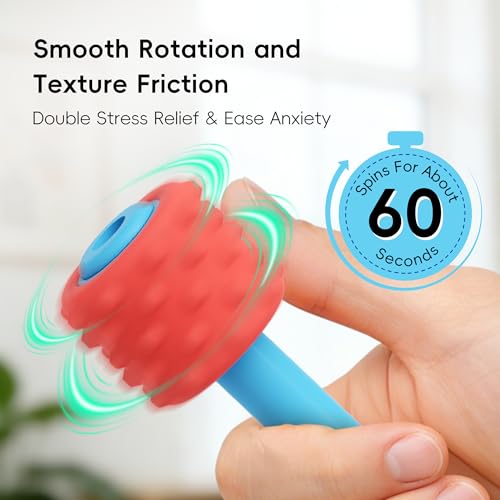
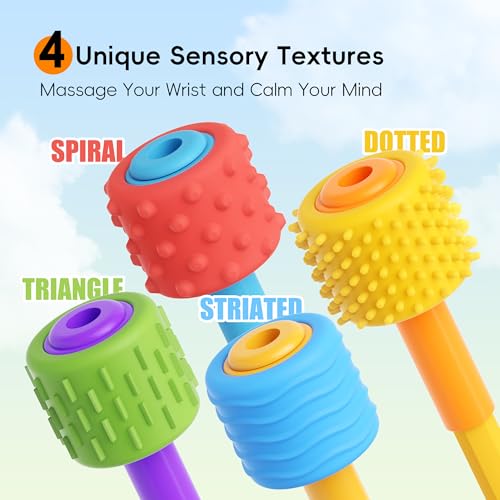
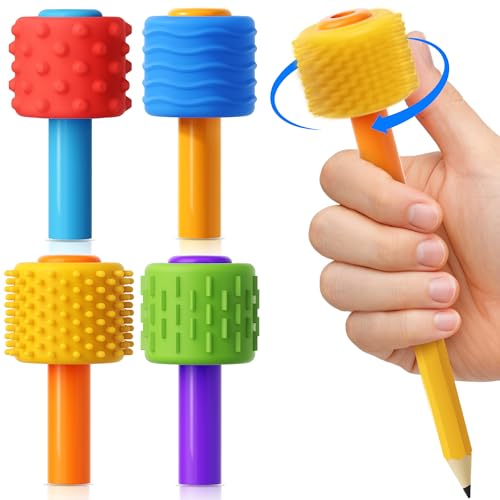
4 in 1 Pencil Fidgets for ADHD & Autism Anxiety Relief,60s Continuous Spin Pencil Topper with Textured Spinners,Silent Sensory Stress Relief Tool for Focus & Calm,Fidget Pen Flipper for Home&Classroom
- 【Sensory Fidget Pencil Grips – Quiet Classroom Tool】These pencil grips feature unique textures and smooth rota
- 【Fidget Spinner for Quiet Sensory Play】More than just a grip, this tool features a built-in fidget spinner tha
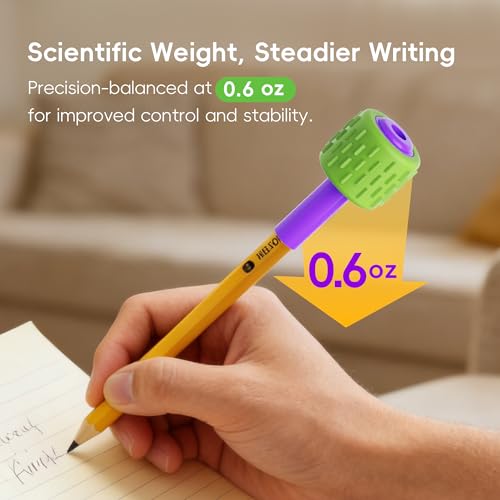
- 【Built-in Weights Reduce Hand Fatigue】Each grip weighs 0.6 oz to balance the pencil perfectly, stabilizing han
The ELETIUO pencil fidget toppers are a particularly smart choice for this age group because they're attached to the pencil your child is already using — there's nothing extra to explain to a classmate. The 60-second spin time provides sustained proprioceptive input without requiring repeated manipulation.
For home use, a more tactile option like the Pushpeel Sensory Activity Board offers screen-free decompression after school — the period when many neurodivergent tweens hit a sensory wall after holding themselves together all day.
Action today: Let your tween pick one sensory tool they'd actually be willing to keep in their pencil case. Ownership of the choice matters enormously at this age.
4. Executive Function: The Hidden Curriculum Neurodivergent Tweens Struggle With Most
Executive function — the cluster of mental skills that includes working memory, flexible thinking, and self-control — is the area where neurodivergent tweens most often fall behind, even when their raw intelligence is high.
Dr. Russell Barkley, a clinical psychologist and one of the world's leading researchers on ADHD, has described ADHD as fundamentally a disorder of executive function rather than attention per se. His framework helps explain why a child can hyperfocus on a video game for two hours but cannot begin a homework assignment.
For tweens, executive function challenges show up as:
Practical Executive Function Scaffolds
- Visual schedules posted at eye level (yes, still useful at 11) - Analogue clocks in homework spaces — digital clocks don't support time sense as effectively - "First-Then" boards for homework sequences - Body-doubling — doing homework in the same room as a parent or sibling, even silently - Tactile anchors during focus tasks — a worry stone or textured fidget on the desk can help maintain alertness without distraction
The Kyerivs Silicone Worry Stones 6-Pack works well here — the rolling ball in the centre provides just enough proprioceptive input to keep hands busy while the brain works, without pulling attention away from the task.
Action today: For one week, time how long your child's homework actually takes versus how long they estimated. Share the data with them — not as criticism, but as fascinating information about how their brain works.
5. Social Skills and Friendships: Supporting Connection Without Forcing It
Friendship is both the thing neurodivergent tweens most want and the area where they most often feel they're failing.
Social skills groups, once the dominant intervention model, have evolved significantly. The UCLA PEERS® program (Program for the Education and Enrichment of Relational Skills), developed by Dr. Elizabeth Laugeson, is currently the most rigorously researched social skills intervention for adolescents and teens with autism and ADHD, with randomised controlled trials showing lasting improvements in social knowledge and friendship quality.
What Actually Helps at This Age
What to Avoid
- Forcing your child into social situations they've identified as overwhelming - Comparing their social life to siblings' or "typical" peers - Prioritising quantity of friends over quality of connection
Action today: Ask your child who they feel most comfortable around — not who they wish they were friends with, but who actually makes them feel okay. Then find one low-pressure way to support that connection this month.
6. Building Self-Advocacy and Neurodivergent Identity in Tweens
The tween years are when children begin forming a coherent sense of who they are — and for neurodivergent kids, how they understand their diagnosis is directly linked to their mental health trajectory.
Research published in the journal Autism (2019) found that autistic adults who had developed a positive autistic identity reported significantly lower rates of depression and anxiety than those who experienced their diagnosis primarily as a deficit label. The groundwork for that identity is laid in middle childhood.
Language Matters
Many families wrestle with identity-first language ("autistic child") versus person-first language ("child with autism"). The autistic community increasingly prefers identity-first language, though individual preferences vary. Ask your child which feels right to them — and follow their lead.
Teaching Self-Advocacy Step by Step
1. Name it: Help your child understand their diagnosis in accurate, non-shaming terms 2. Explain it: Practice how to tell a trusted adult what they need ("I focus better when I can use a fidget") 3. Request it: Role-play asking a teacher for an accommodation 4. Evaluate it: Reflect together on whether the accommodation helped
The FlufiFiea Sensory Suction Strips are a useful prop for this kind of role-play — your child can practice explaining to you why they want to use them at school, which builds the exact language they'll need with teachers.
Action today: Have one conversation this week where you explicitly name one of your child's neurodivergent strengths — hyperfocus, pattern recognition, creative thinking, honesty — and connect it directly to their diagnosis. "That's your ADHD brain being brilliant at this."
7. Choosing the Right Sensory Tools: A Comparison Guide
Not every fidget works for every child. Here's a practical comparison to help you match the tool to the setting and your child's specific sensory profile.
| Sensory Tool Type | Best Setting | Sensory Input | Noise Level | Discreet for Tweens? | Recommended Product | Price Range |
|---|---|---|---|---|---|---|
| Pencil-top spinner fidget | Classroom, homework desk | Proprioceptive + visual | Silent | ✓ Yes — attached to pencil | ELETIUO Pencil Fidget Toppers | ~$10 |
| Silicone activity board | Home, travel, waiting rooms | Tactile + cognitive | Silent | Moderate — larger size | Pushpeel Sensory Activity Board | ~$20 |
| Textured worry stones | Pocket, desk, anywhere | Tactile + proprioceptive | Silent | ✓ Yes — pocket-sized | Kyerivs Silicone Worry Stones | ~$8 |
| Sensory suction strips | Desk surface, binder | Tactile | Silent | ✓ Yes — sticks to surface | FlufiFiea Sensory Suction Strips | ~$6 |
| Textured fidget stones | Desk, calm-down corner | Tactile + proprioceptive | Silent | ✓ Yes — small and subtle | KLT Textured Fidget Stones | ~$7 |
| Magnetic ferrite stones | Home, therapy, desk | Tactile + creative/kinetic | Near-silent | Moderate — best for older tweens | Aukit 550pcs Ferrite Stones | ~$14 |
Expert Insights
The tween years with a neurodivergent child can feel relentless — the forms, the meetings, the meltdowns, the worry about friendships. But this is also the window when everything you invest lands. The strategies your child internalises now, the language they develop for their own needs, the one teacher who finally gets them — these things compound. You are not just managing a difficult phase. You are building a human who will eventually navigate the world with more self-knowledge than most adults ever develop.
The most quotable truth in all of this: knowing how your brain works is a superpower — and your job is to help your child claim it.
If this guide helped you see your tween a little more clearly, save it, share it with your child's teacher, or pass it to another parent who's in the thick of it. You're not alone in this — and neither is your kid.
Sources & References
- Centers for Disease Control and Prevention. "Data & Statistics on Autism Spectrum Disorder." 2023. https://www.cdc.gov/autism/data-research/index.html
- Centers for Disease Control and Prevention. "ADHD Data and Statistics." 2023. https://www.cdc.gov/adhd/data/index.html
- Individuals with Disabilities Education Act (IDEA). U.S. Department of Education. https://sites.ed.gov/idea/
- Barkley, Russell A. "Executive Functions: What They Are, How They Work, and Why They Evolved." Guilford Press, 2012.
- Laugeson, Elizabeth A., et al. "Evidence-Based Social Skills Training for Adolescents with Autism Spectrum Disorders: The UCLA PEERS Program." Journal of Autism and Developmental Disorders, 2012.
- Fedewa, Alicia L., and Ahn, Soyeon. "The Effects of Physical Activity and Physical Fitness on Children's Achievement and Cognitive Outcomes." Research Quarterly for Exercise and Sport, 2011.
- Schilling, Denise L., et al. "Classroom Seating for Children with Attention Deficit Hyperactivity Disorder: Therapy Balls versus Chairs." American Journal of Occupational Therapy, 2003.
- Mazurek, Micah O., et al. "Anxiety, Sensory Over-Responsivity, and Gastrointestinal Problems in Children with Autism Spectrum Disorders." Journal of Abnormal Child Psychology, 2013.
- Gillespie-Lynch, Kristen, et al. "Whose Expertise Is It? Evidence for Autistic Adults as Critical Autism Experts." Frontiers in Psychology, 2017.
- Child Mind Institute. "Why Kids Have More Trouble After School." childmind.org. https://childmind.org/article/why-kids-have-more-trouble-after-school/
- Miller, Lucy Jane. "Sensational Kids: Hope and Help for Children with Sensory Processing Disorder." Penguin/Perigee, 2014.
- Hallowell, Edward M., and Ratey, John J. "ADHD 2.0." Ballantine Books, 2021.
Frequently Asked Questions
My child was diagnosed with ADHD at age 7 — do I need to update their school plan now that they're in upper primary?
My autistic tween refuses to use any fidget toys at school because they don't want to stand out. What can I do?
How do I know if my tween's emotional meltdowns are autism/ADHD-related or just normal tween behaviour?
Should I tell my child's teachers about their diagnosis?
Are sensory fidget tools actually evidence-based, or are they just a trend?
My child's school says fidget toys are "distracting to other students" and won't allow them. What are my options?
My tween has both ADHD and anxiety. Is that common, and does it change the approach?
Was this helpful?
Thanks — your feedback helps us pick what to write next.


