How the Tween Brain Actually Learns (And Why It Changes Everything)
The tween years (ages 8–12) are a pivotal academic window — executive function is maturing, study habits are forming, and the right support now can shape a child's relationship with learning for life.

In this article
Picture this: your 10-year-old sits down to do homework, stares at a blank page for 25 minutes, then announces they're "done." Sound familiar? You're not alone. According to the American Psychological Association's "Stress in America" survey, children aged 8–12 consistently report school as one of their top three stressors — and parents often feel just as lost about how to help.
The tween years are not just a waiting room between childhood and adolescence. They are a genuine developmental sweet spot where academic habits, learning identity, and emotional resilience around school are actively being wired. Miss this window, and you're playing catch-up in high school. Lean into it, and you give your child tools they'll use for the rest of their education.
In this guide, you'll understand:
1. How the Tween Brain Actually Learns (And Why It Changes Everything)
The single most important thing to understand about tween education is that the prefrontal cortex — the brain's planning and impulse-control centre — is under active construction between ages 8 and 12.
This means your child isn't being difficult when they forget to write down assignments or can't start a project without a nudge. Their brain's project-management software is still installing. Neuroscientist Dr. Sarah-Jayne Blakemore, Professor of Cognitive Neuroscience at University College London and author of Inventing Ourselves, has spent two decades mapping this development and describes adolescent brain maturation as a gradual, uneven process that begins in middle childhood — well before the teenage years most parents are braced for.
What This Means in Practice
- Working memory (holding information while using it) improves steadily through this period — but it still gets overloaded easily - Cognitive flexibility (switching between tasks) is developing but unreliable under stress - Metacognition (knowing what you know) is just emerging — your child genuinely may not realise they don't understand something
2. Building an Organisation System That Actually Sticks
Disorganisation is the silent grade-killer for tweens. A child who understands the material but can't find the worksheet, forgot to write the due date, or loses the permission slip is going to underperform — and feel terrible about it.
The research is clear: external organisation systems compensate for immature executive function until the brain catches up. The goal isn't to organise for your child forever — it's to give them a concrete system they can eventually own themselves.
The Three-Folder Method
Many school counsellors recommend a simple three-category system: 1. To Do — anything with a deadline 2. In Progress — active projects 3. Done / File — completed work to keep
A dedicated physical organiser makes this tangible and tactile, which matters for tweens who are still very hands-on learners.
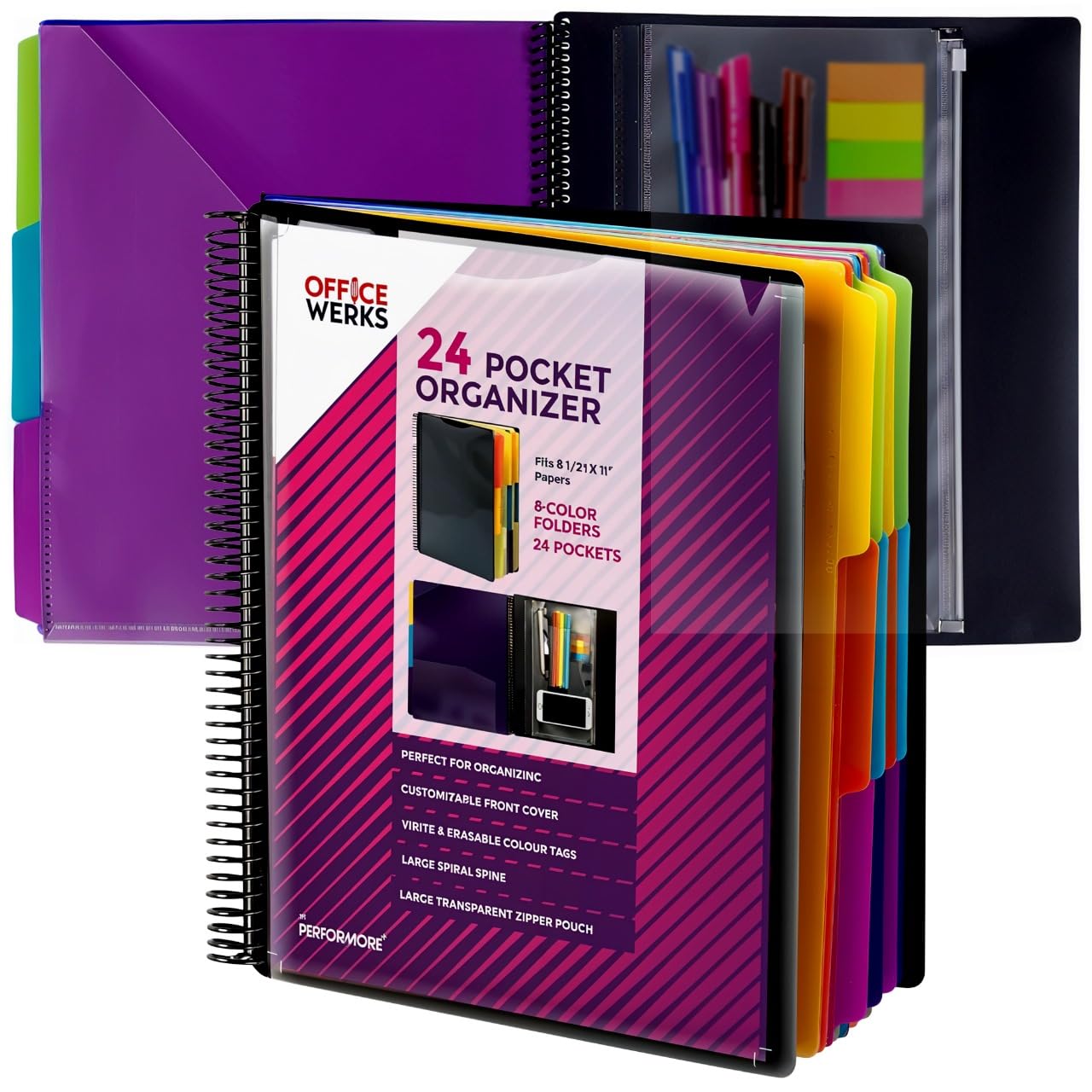

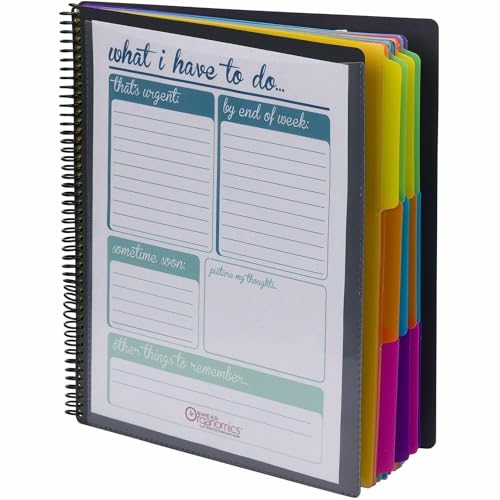
Smead Project Organizer, 24 Pockets, Grey with Assorted Bright Tabs, Tear Resistant Poly, 1/3-Cut Tabs, Letter Size (89206)
- ENHANCED ORGANIZATION: Organize your paperwork with this letter-sized (10.25” x 11.75”) document organizer wit
- EFFORTLESS SORTING: This plastic folder organizer with 24 pockets provides ample space to sort and categorize
- PRACTICAL DESIGN: The slash pockets can hold up to 25 sheets each; the spiral-bound design allows the office s
The Smead 24-Pocket Project Organizer is ideal here — its 24 labelled pockets let your tween create subject-by-subject sections and status categories, and the write-and-erase tabs mean the system can evolve as their schedule changes. At $16.14 with a 4.8-star rating from over 11,000 reviewers, it's one of the most consistently praised organisers for this age group.
For a lighter, backpack-friendly option, the Sooez Accordion File Organizer is a $4.99 pick that fits 250+ sheets and comes in bright colours tweens actually want to use.
3. Homework: How Much Is Too Much, and How to Make It Count
Homework is one of the most debated topics in education research — and the evidence for tweens is more nuanced than most parents realise.
The National Education Association (NEA) and the National PTA both endorse the "10-minute rule": roughly 10 minutes of homework per grade level per night. That means a 4th grader (age 9–10) should have around 40 minutes, and a 6th grader (age 11–12) around 60 minutes. Research by Harris Cooper, Professor Emeritus at Duke University and the leading meta-analyst on homework, confirms that beyond these amounts, additional homework in elementary and middle school shows no measurable academic benefit — and can actively increase anxiety.
Making Homework Time Work
Stock the homework station with a good sticky-note system for flagging questions and marking pages. Mr. Pen's 410-piece Sticky Note Set includes ruled, dotted, and blank notes plus 150 index tabs — perfect for colour-coded subject flagging and leaving "I'm stuck here" markers for teacher follow-up.
4. Spotting and Supporting Learning Differences in the Tween Years
The tween window is when many learning differences become impossible to ignore — not because they've suddenly appeared, but because academic demands have scaled up to meet (and exceed) a child's coping strategies.
Dyslexia affects approximately 15–20% of the population, according to the International Dyslexia Association. ADHD affects around 9.4% of children aged 2–17 in the US, per the CDC. Both are frequently identified or re-evaluated between ages 8 and 12 as reading, written expression, and multi-step maths demands increase.
Signs Worth Taking Seriously
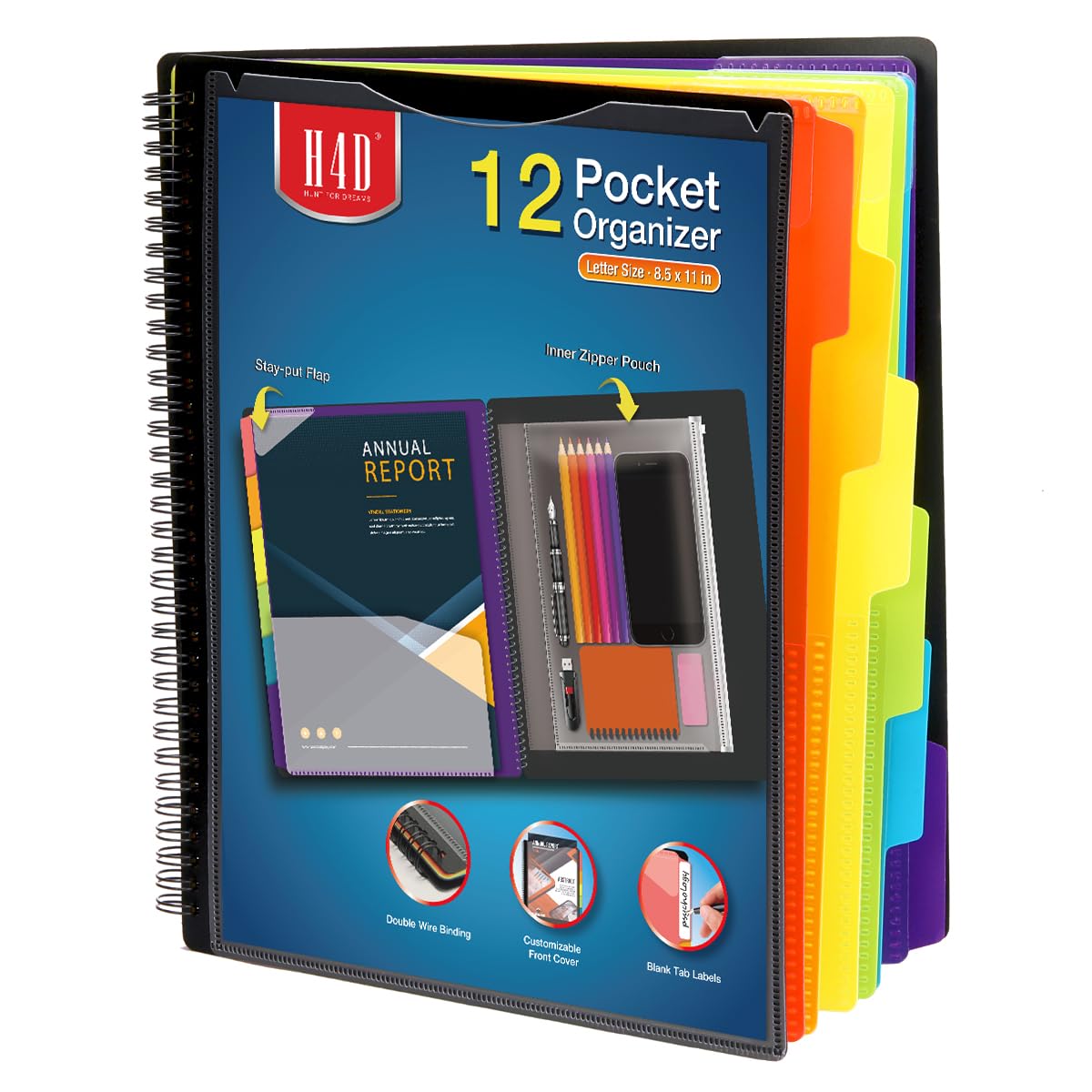
If your child has an IEP or 504 plan, keeping their accommodations paperwork organised and accessible is critical. The Forvencer 12-Pocket Project Organizer has a built-in zipper pouch and 36 sticky labels — ideal for keeping assessment reports, accommodation letters, and communication logs in one place.
5. Navigating Grades, Tests, and Academic Pressure
Academic pressure on tweens has measurably increased over the past two decades. A 2019 report by the American Psychological Association found that 45% of teens (beginning in the tween years) cited school as a significant source of stress — and that parental expectations around grades were a primary driver.
This doesn't mean you should be indifferent to your child's grades. It means how you engage with academic performance matters enormously.
The Difference Between Support and Pressure
For test prep, structured note organisation helps enormously. Forvencer's 10-Pack Binder Pockets slot into any 3-ring binder and let your tween create subject-specific review sections that are easy to pull out and study from.
6. How to Be an Effective School Advocate for Your Tween
Your relationship with your child's school is one of the most underused tools in your parenting toolkit. Research consistently shows that parental engagement — particularly the quality (not just quantity) of school involvement — correlates with better academic and social outcomes.
The key shift in the tween years: your child needs to start attending and contributing to their own parent-teacher conversations. This builds self-advocacy skills they'll need urgently in high school and beyond.
Building a Productive Teacher Relationship
7. Comparison Table: Organisation Tools for Tween Learners
| Tool Type | Best For | Capacity | Portability | Durability | Recommended Product | Price |
|---|---|---|---|---|---|---|
| Large multi-pocket organiser | Subject + status sorting, desk use | 24 pockets, 25 sheets each | Moderate (spiral-bound) | Tear & water resistant poly | Smead 24-Pocket Organizer | $16.14 |
| Accordion file folder | Backpack-friendly daily use | 5 pockets, 250+ sheets | High (slim profile) | Expandable spine, durable | Sooez Accordion Organizer | $4.99 |
| Spiral pocket binder | Homework + project tracking | 12 pockets, ~480 sheets | High (binder format) | Polypropylene, tear-proof | Forvencer 12-Pocket Binder | $7.99 |
| Sticky note set | Flagging, annotating, planning | 410 pieces + 150 tabs | Very high (fits any bag) | Standard paper | Mr. Pen Sticky Note Set | $6.98 |
| Binder pocket inserts | 3-ring binder subject dividers | 50+ sheets per pocket | High (fits in binder) | Acid-free polypropylene | Forvencer Binder Pockets 10-Pack | $7.99 |
| Compact accordion folder | Parent/teacher communication log | 8 pockets, letter-size | Very high (bag-sized) | Lightweight, labelled | SKYDUE Accordion File Organizer | $5.98 |
Expert Insights
The tween years can feel like a race — more subjects, higher stakes, louder comparisons. But the parents who look back and feel good about this period are almost never the ones who pushed hardest on grades. They're the ones who helped their child build a system, stayed curious about their learning, and kept the relationship with school warm even when it got hard.
The most powerful thing you can do right now is not find a better tutor or a harder workbook. It's to sit beside your child this week, ask what they find genuinely interesting at school, and listen like the answer matters. Because it does — and so do they.
If this guide helped, save it for back-to-school season, share it with another tween parent, or bookmark it for when the homework battles begin. You've got this.
Sources & References
- American Psychological Association. "Stress in America Survey." 2022. https://www.apa.org/news/press/releases/stress
- Centers for Disease Control and Prevention. "Data and Statistics on Children's Mental Health — ADHD." 2022. https://www.cdc.gov/childrensmentalhealth/adhd.html
- Centers for Disease Control and Prevention. "The Association Between School-Based Physical Activity, Including Physical Education, and Academic Performance." 2013. https://www.cdc.gov/healthyschools/health_and_academics/pdf/pa-pe_paper.pdf
- Cooper, Harris. "Homework." American Psychological Association. 2001. https://www.apa.org/pubs/books/4316015
- Dweck, Carol S. Mindset: The New Psychology of Success. Random House, 2006.
- International Dyslexia Association. "Dyslexia Basics." 2023. https://dyslexiaida.org/dyslexia-basics/
- National Education Association. "Research Spotlight on Homework." NEA Reviews of the Research on Best Practices in Education. https://www.nea.org/professional-excellence/student-engagement/tools-tips/research-spotlight-homework
- Blakemore, Sarah-Jayne. Inventing Ourselves: The Secret Life of the Teenage Brain. PublicAffairs, 2018.
- Grolnick, Wendy S., and Richard M. Ryan. "Parent Styles Associated with Children's Self-Regulation and Competence in School." Journal of Educational Psychology, 81(2), 143–154. 1989.
- Darling-Hammond, Linda. The Flat World and Education: How America's Commitment to Equity Will Determine Our Future. Teachers College Press, 2010.
Frequently Asked Questions
My tween says they "don't have any homework" every night — what do I do?
How do I know if my child needs a tutor?
My 11-year-old is already stressed about getting into a good high school. Is this normal?
Should I let my tween use technology for studying?
My child's teacher says they're not reaching their potential. What does that actually mean?
How much should I help with homework?
What's the best way to set up a homework station for a tween?
Was this helpful?
Thanks — your feedback helps us pick what to write next.