Physical Development: Growth Spurts, Puberty Signals, and Motor Skills
Children aged 9–12 are in a distinct developmental window — not quite teenagers, but far beyond young childhood — marked by rapid brain rewiring, early puberty signals, and a fundamental shift in how they relate to peers and authority.

In this article
Your nine-year-old woke up last Tuesday taller than they were on Monday — or at least it felt that way. Then they rolled their eyes at something you said, retreated to their room, and emerged an hour later wanting a hug. Welcome to late childhood: one of the most fascinating, occasionally baffling, and genuinely important developmental windows in the first twelve years of life.
According to the U.S. Centers for Disease Control and Prevention (CDC), middle childhood (roughly ages 6–11) is a period when children's brains are as plastic and change-hungry as at almost any other point in development. The 9-to-12 stretch sits right at the pivot — still children in so many ways, but quietly becoming someone new.
By the end of this guide you'll understand:
1. Physical Development: Growth Spurts, Puberty Signals, and Motor Skills
Your tween's body is changing on its own timetable, and that timetable varies enormously between children.
What's Happening Physically
For girls, the first signs of puberty — breast budding, pubic hair, a growth spurt — typically begin between ages 8 and 13, with the average onset around age 10–11 (American Academy of Pediatrics, AAP). For boys, testicular growth usually starts between 9 and 14, with the major height spurt arriving a year or two later than girls'. This means a fifth-grade classroom can contain children who look anywhere from 8 to 15 years old, and that's entirely within normal range.
Beyond puberty, fine and gross motor skills are also maturing. Children this age can handle increasingly complex physical tasks — multi-step sports plays, detailed craft work, musical instruments — because their cerebellum and motor cortex are refining their coordination networks.
What to Watch For
2. Brain Development: Abstract Thinking, Risk, and the Unfinished Prefrontal Cortex
The single most useful thing you can know about your 9-to-12-year-old's brain is that it is under major renovation.
The Science in Plain Language
Neuroimaging research summarised by the National Institute of Mental Health (NIMH) shows that the prefrontal cortex — the region responsible for impulse control, planning, and weighing consequences — is not fully mature until the mid-twenties. During the tween years, the brain is actively pruning unused neural connections and strengthening high-use pathways, a process called synaptic pruning. The result is a child who can suddenly grasp metaphor, sarcasm, and hypothetical reasoning ("What would happen if…?") but who still struggles to pause before reacting.
At the same time, the limbic system — the emotional, reward-seeking centre — is highly active. This creates the classic tween paradox: sophisticated thinking coexisting with surprisingly impulsive behaviour.
What This Means Day-to-Day



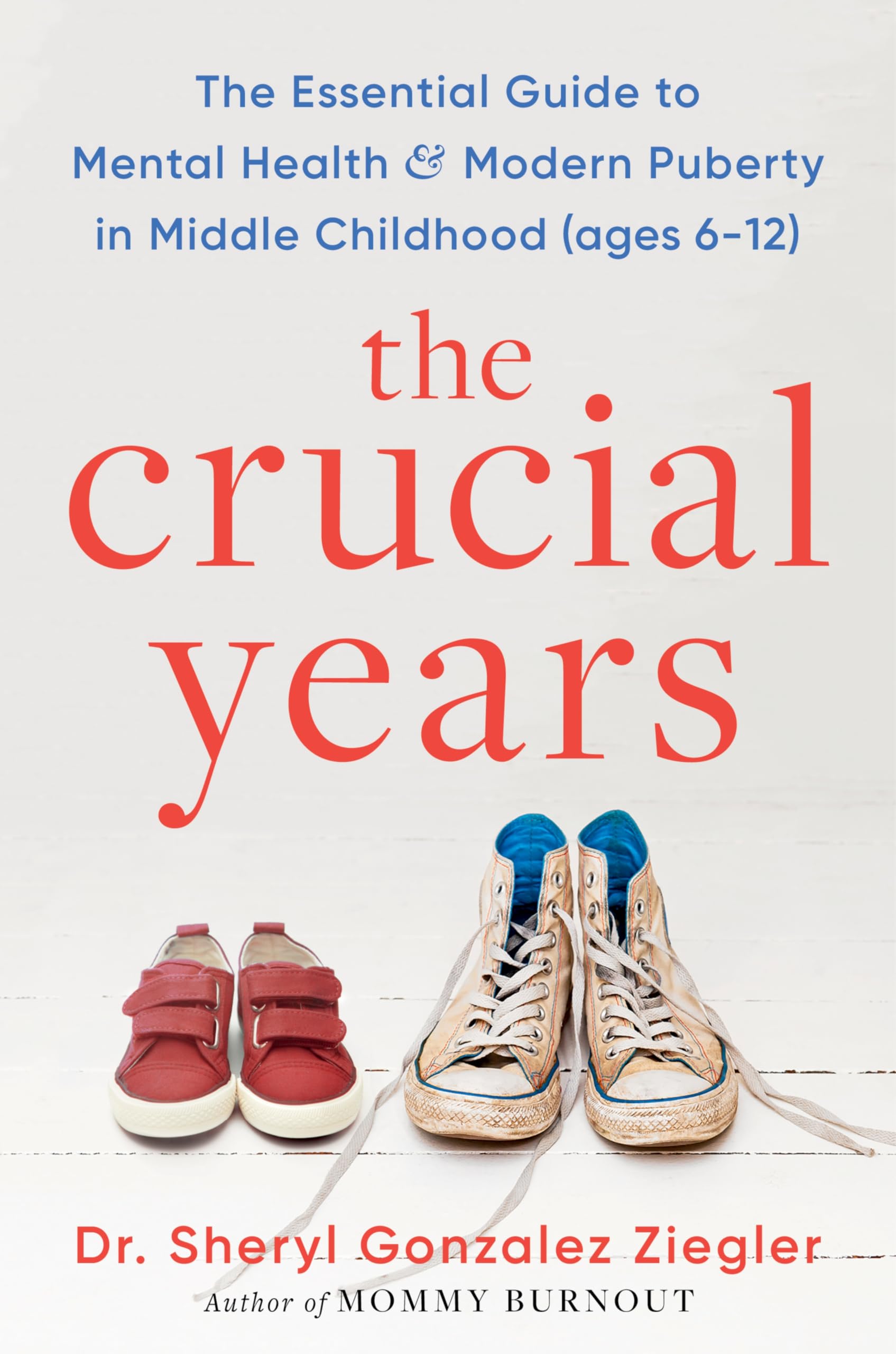
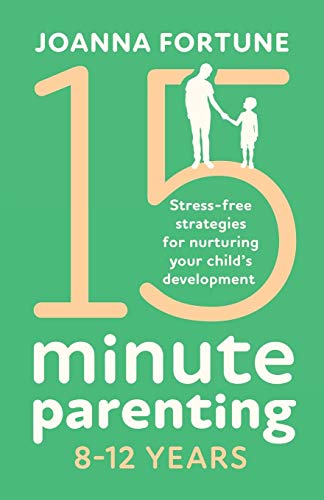
15-Minute Parenting 8-12 Years: Stress-free strategies for nurturing your child's development (The Language of Play)
- Health, Fitness & Dieting
- Psychology & Counseling
- Child Psychology
3. Emotional Development: Identity, Independence, and Big Feelings
Between 9 and 12, your child is quietly asking one of the biggest questions of their life: Who am I?
The Identity Project
Developmental psychologist Erik Erikson described middle childhood through early adolescence as the stage of industry vs. inferiority — children are working hard to feel competent and valued. By around age 10–11, this shifts toward early identity exploration: they start testing opinions, values, and styles to see what fits.
You'll notice: - Strong preferences about clothes, music, and friend groups - Pushback on family rules that feel arbitrary - Heightened sensitivity to perceived criticism or embarrassment - A growing inner life they may not share with you as freely as before
None of this is rejection. It is developmental work.
Emotional Regulation Is Still a Skill in Progress
Because the prefrontal cortex is still maturing, emotional regulation — the ability to feel a big feeling without being hijacked by it — is genuinely hard for tweens. Research published in the journal Child Development has consistently shown that co-regulation with a calm adult remains important well into adolescence; your regulated nervous system helps regulate theirs.
Journals and reflective writing can be powerful tools for children who process internally. If your child leans toward reading as a way to understand themselves, No Longer Little: Parenting Tweens with Grace and Hope offers a thoughtful, parent-facing perspective on supporting emotional growth through this stage. For girls specifically, Guiding Your Tween Girl addresses the particular emotional landscape of ages 8–12 with warmth and practical depth.


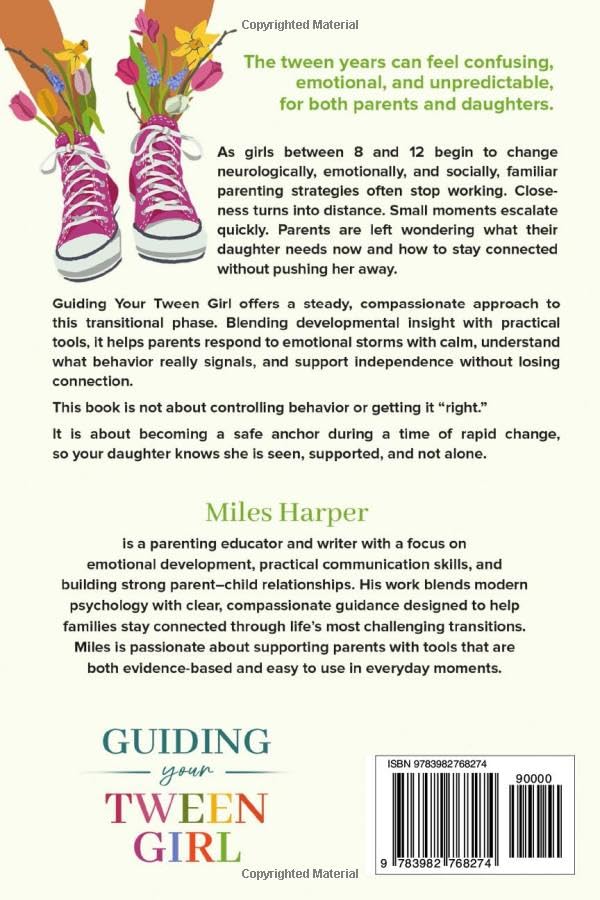


Guiding Your Tween Girl: Stay Close, Build Confidence & Navigate the Big Feelings of Ages 8 – 12
- Relationships
- Conflict Management
- Image Unavailable Image not available forColor:
4. Social Development: Peer Relationships, Belonging, and the Shifting Parent Role
If it feels like your child's friends have become more important than you, that's because — developmentally speaking — they have. And that's exactly right.
Why Peers Matter So Much Now
The AAP notes that peer relationships in middle childhood serve as the primary arena for practising social skills: negotiation, conflict resolution, loyalty, exclusion, and repair. Children this age are learning how groups work, how hierarchies form, and how to navigate them. This is not trivial socialisation — it's foundational to adult functioning.
Healthy peer development looks like:
Red Flags Worth Noting
- Persistent social withdrawal or loss of previously enjoyed friendships - Frequent complaints of being excluded or bullied (take these seriously — the CDC identifies peer victimisation as a significant risk factor for anxiety and depression in this age group) - Inability to manage any conflict without adult intervention by age 11–12
For parents finding the social dynamics genuinely tricky to navigate, How to Hug a Porcupine is one of the most practical and honestly titled books on tween relationships available — 462 parent reviewers can't be wrong.


The Preteen Playbook: Proven Strategies for Parenting Tweens Without the Drama: What Kids 9–12 Really Need for Calm, Confident, and Connected Years
- Relationships
- Conflict Management
- Image Unavailable Image not available forColor:
5. Cognitive and Academic Development: Learning, Curiosity, and Executive Function
Late childhood is when academic life gets serious — and when the gap between children who enjoy learning and those who are starting to disengage becomes visible.
What's Developmentally On Track
By age 9–10, most children can:
By age 11–12, many can engage in early formal logical reasoning — the foundation of algebra, scientific method, and structured argument.
Executive Function: The Hidden Curriculum
Executive function skills — planning, organisation, task initiation, flexible thinking — are developing rapidly but unevenly in this age group. A child who is intellectually capable may still struggle to start a homework assignment, keep track of multiple deadlines, or shift gears when a plan changes. This is neurologically normal and not laziness.
For parents who want a deeper framework for supporting learning at home without turning every evening into a battle, 15-Minute Parenting 8–12 Years offers structured, low-pressure strategies grounded in child psychology.
6. What Parents Can Do: Staying Connected Through the Tween Years
The research on what actually helps tweens thrive is reassuringly clear — and it centres on you.
The Authoritative Middle Ground
Decades of developmental research, much of it building on the work of psychologist Diana Baumrind, consistently shows that authoritative parenting — warm, responsive, and clear on boundaries — produces better outcomes for tweens than either permissive or authoritarian approaches. This means:
Practical Connection Strategies
- One-on-one time without an agenda, even 15–20 minutes a week, signals that your child matters to you as a person - Side-by-side activities (cooking, driving, walking) often produce more conversation than face-to-face check-ins - Curiosity over correction — lead with questions before advice - Stay in their world — know their favourite YouTuber, their current obsession, their friendship landscape



Your Ten- to Fourteen-Year-Old
- Parenting & Relationships
- School-Age Children
- Image Unavailable Image not available forColor:
For a research-grounded, comprehensive look at the 10-to-14 window specifically, Your Ten- to Fourteen-Year-Old by Louise Bates Ames and Frances Ilg remains one of the most cited parent resources for this age band. And if you're looking for a single practical playbook, The Preteen Playbook offers concrete, drama-reducing strategies for the everyday challenges of this stage.





No Longer Little: Parenting Tweens with Grace and Hope
- Religion & Spirituality
- Christian Books & Bibles
- Christian Living
Tween Development at a Glance: What to Expect by Age
| Age | Physical Milestones | Cognitive Milestones | Emotional/Social Milestones | Recommended Reading |
|---|---|---|---|---|
| 9 years | Growth steady; early puberty signs possible in girls | Logical thinking improving; enjoys rules and fairness | Strong sense of right/wrong; close same-sex friendships | 15-Minute Parenting 8–12 Years |
| 10 years | Girls' growth spurt often begins; boys' voices may start changing | Abstract reasoning emerging; loves debate and "what if" | Identity exploration begins; peer opinions matter greatly | How to Hug a Porcupine |
| 11 years | Puberty well underway for many girls; boys beginning | Can handle multi-step planning; metacognition developing | Emotional intensity peaks; friendship loyalty paramount | Your Ten- to Fourteen-Year-Old |
| 12 years | Boys' growth spurt often begins; physical self-consciousness high | Formal logical reasoning possible; academic pressure rises | Identity solidifying; parent relationship tested but vital | The Preteen Playbook |
Expert Insights
Conclusion
Late childhood is one of those stages that sneaks up on you. One day you have a child who still wants to hold your hand in the car park; the next they're negotiating curfews and rolling their eyes at your music. Both children are the same person — someone who needs you enormously, just differently than before.
The research is clear: your relationship remains the most protective factor in your tween's development. Not the right school, not the right activities, not the right screen-time rules. You. Staying curious, staying warm, and staying present through the eye-rolls is the work.
The tweens who thrive aren't the ones whose parents had all the answers — they're the ones whose parents stayed in the conversation.
If this guide was helpful, save it for the moments when things feel hard, share it with another parent in the thick of it, and come back to tinymindsworld.com for more evidence-based guidance across every stage of childhood.
Sources & References
- American Academy of Pediatrics (AAP). "Middle Childhood." HealthyChildren.org. 2023. https://www.healthychildren.org
- Centers for Disease Control and Prevention (CDC). "Child Development: Middle Childhood (6–11 years)." 2023. https://www.cdc.gov/ncbddd/childdevelopment/positiveparenting/middle.html
- National Institute of Mental Health (NIMH). "The Teen Brain: 7 Things to Know." 2023. https://www.nimh.nih.gov/health/publications/the-teen-brain-7-things-to-know
- World Health Organization (WHO). "Physical Activity Recommendations for Children." 2020. https://www.who.int/news-room/fact-sheets/detail/physical-activity
- Baumrind, D. "Effects of Authoritative Parental Control on Child Behavior." Child Development, 37(4), 887–907. 1966.
- Fagell, Phyllis L. Middle School Matters. Da Capo Lifelong Books, 2019.
- Erikson, E. H. Childhood and Society. W. W. Norton & Company, 1950.
- American Academy of Pediatrics (AAP). "Media and Young Minds." Pediatrics, 138(5). 2016. https://doi.org/10.1542/peds.2016-2591
Frequently Asked Questions
Is it normal for my 9-year-old to already show signs of puberty?
My 11-year-old seems to prefer friends over family — should I be worried?
How much screen time is appropriate for a 10-year-old?
My tween is suddenly very moody and sensitive. Is this normal?
How do I talk to my tween about puberty without making it awkward?
My child's grades have dropped since starting middle school. What's going on?
What books help parents understand the tween years?
Was this helpful?
Thanks — your feedback helps us pick what to write next.