Understanding Your Highly Sensitive Child: Signs, Science, and Support
A highly sensitive child is not "too sensitive" or poorly behaved; they have a nervous system that processes sensory and emotional information more deeply than average, and with the right support they can thrive.
In this article
About one in five children processes the world at a fundamentally different depth than their peers. Research by psychologist Dr. Elaine Aron, who coined the term "Highly Sensitive Person" (HSP) in the 1990s, estimates that sensory-processing sensitivity (SPS) affects 15–20% of the population, and it runs in families. Yet for many parents, the first years with a highly sensitive child (HSC) feel like a guessing game of why ordinary moments, a birthday party, a new jacket's scratchy label, or a raised voice, can spark a reaction that looks wildly disproportionate.
This article will help you:
1. What High Sensitivity Really Is (and Is Not)
High sensitivity is a biologically based trait, not a diagnosis, a parenting failure, or a phase your child will simply outgrow. At its core, it means your child's nervous system notices more and processes what it notices more deeply. Dr. Elaine Aron, a research psychologist at Stony Brook University, identified four key features that define the trait, captured in the acronym DOES: Depth of processing, Overstimulation, Emotional reactivity and empathy, and Sensitivity to subtleties.
Neuroimaging studies published in Brain and Behavior (2014) found that people with high SPS show greater activation in brain regions linked to awareness, empathy, and action planning, specifically the insula and areas of the prefrontal cortex, compared with low-sensitivity peers. In plain terms, your child is not making things up; their brain is literally doing more work with every piece of incoming information.
What high sensitivity is NOT
It is important to separate the trait from conditions that may look similar:
- Not a disorder. SPS appears in the Diagnostic and Statistical Manual only as a dimension of temperament, not a clinical category. - Not the same as shyness. Around 30% of HSCs are actually extroverted; they seek people out, they just need recovery time afterwards. - Not defiance. Meltdowns that look wilful are usually a flooded nervous system, not a power play. - Not fragility. With the right environment, HSCs often become highly resilient, creative, and empathetic adults.
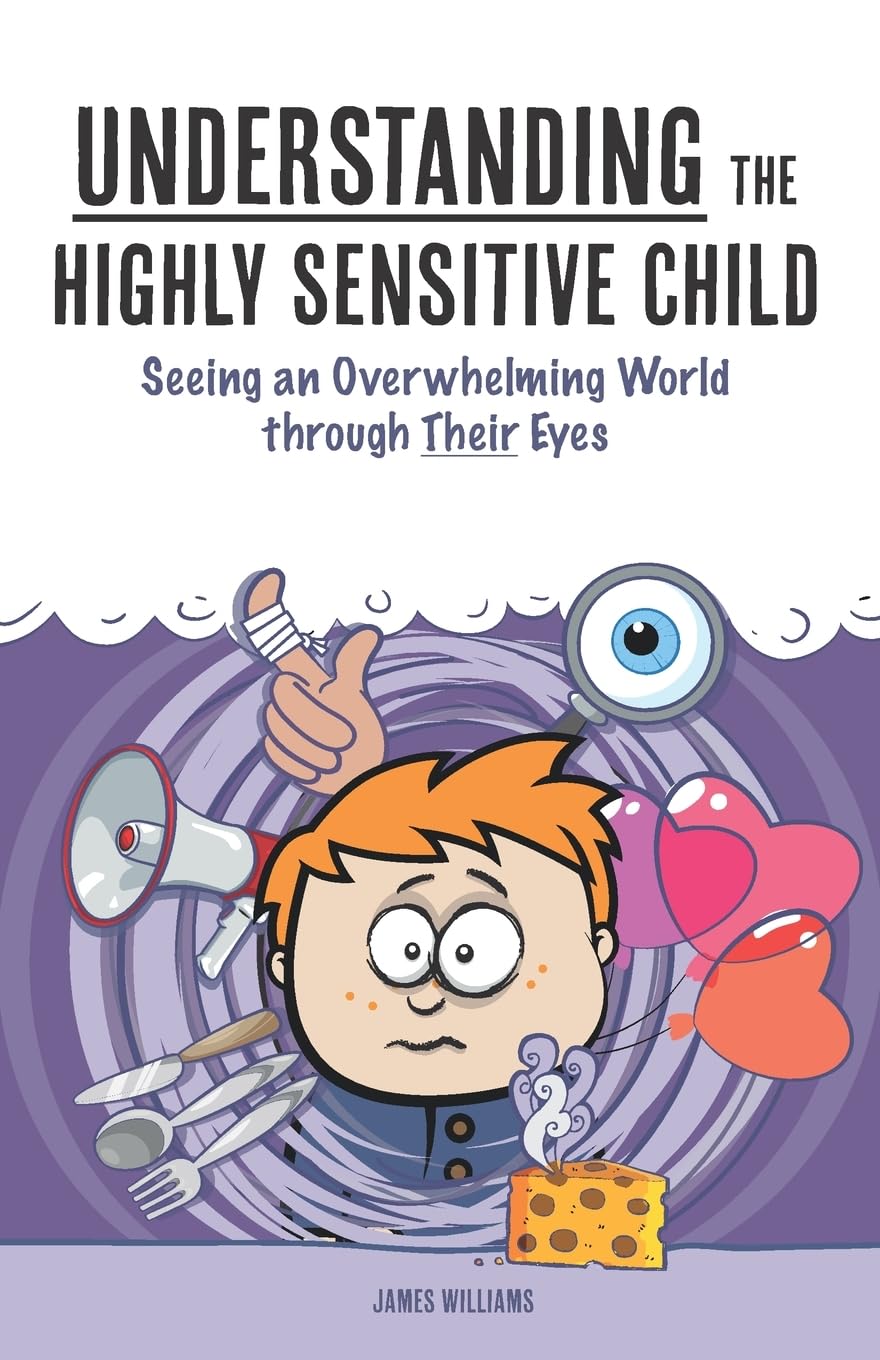
Understanding the Highly Sensitive Child: Seeing an Overwhelming World through Their Eyes (A Nutshell Guide)
- Health, Fitness & Dieting
- Psychology & Counseling
- Child Psychology
2. Recognising the Signs Across Different Ages
The signs of high sensitivity shift with development, so the same underlying trait looks quite different in a toddler versus a nine-year-old. Catching it early means you can adjust your parenting approach before the child starts interpreting their own reactions as something wrong with them.
In babies and toddlers (0–3 years)
In preschoolers (3–5 years)
Because the preschool years involve rapid brain development, big feelings in preschoolers are normal across the board, but in highly sensitive children they are more frequent, more intense, and take longer to resolve.
In school-age children (6–12 years)

The Highly Sensitive Child: Helping Our Children Thrive When The World Overwhelms Them
- Health, Fitness & Dieting
- Mental Health
- Image Unavailable Image not available forColor:
3. The Science Behind the Sensitive Brain
Understanding the biology helps parents move from frustration to genuine compassion, and it also changes how you explain your child's reactions to family members and teachers who may be sceptical.
Sensory-processing sensitivity vs sensory-processing disorder
These two terms are often confused, and the distinction matters clinically. Sensory-processing sensitivity (SPS) is a normal personality trait; sensory-processing disorder (SPD) is a clinical condition in which the brain misroutes sensory signals in a way that impairs daily functioning. A child can have both, or either one alone. If your child's sensory reactions are severe enough to prevent school attendance, eating adequately, or forming any friendships, an occupational therapy assessment for SPD is worth pursuing alongside a discussion about SPS.
The role of the autonomic nervous system
HSCs tend to have a more reactive autonomic nervous system, meaning their "fight, flight, or freeze" response activates more readily and takes longer to return to baseline. Research by Dr. Michael Pluess at Queen Mary University of London has expanded Aron's original framework into a broader concept called "vantage sensitivity," showing that highly sensitive individuals respond more strongly to both negative and positive environmental influences. This is important: it means a supportive home environment can produce measurably better outcomes for an HSC than for a low-sensitivity child in the same home.
Sensitivity is not a weakness. It is the most accurate barometer of a child's environment.
— Elaine Aron, The Highly Sensitive Child (2002)
Understanding how the preschool brain is uniquely ready to learn underscores why early, positive experiences matter especially for sensitive children; the neural pathways laid down now will shape how they handle overwhelm for years to come.
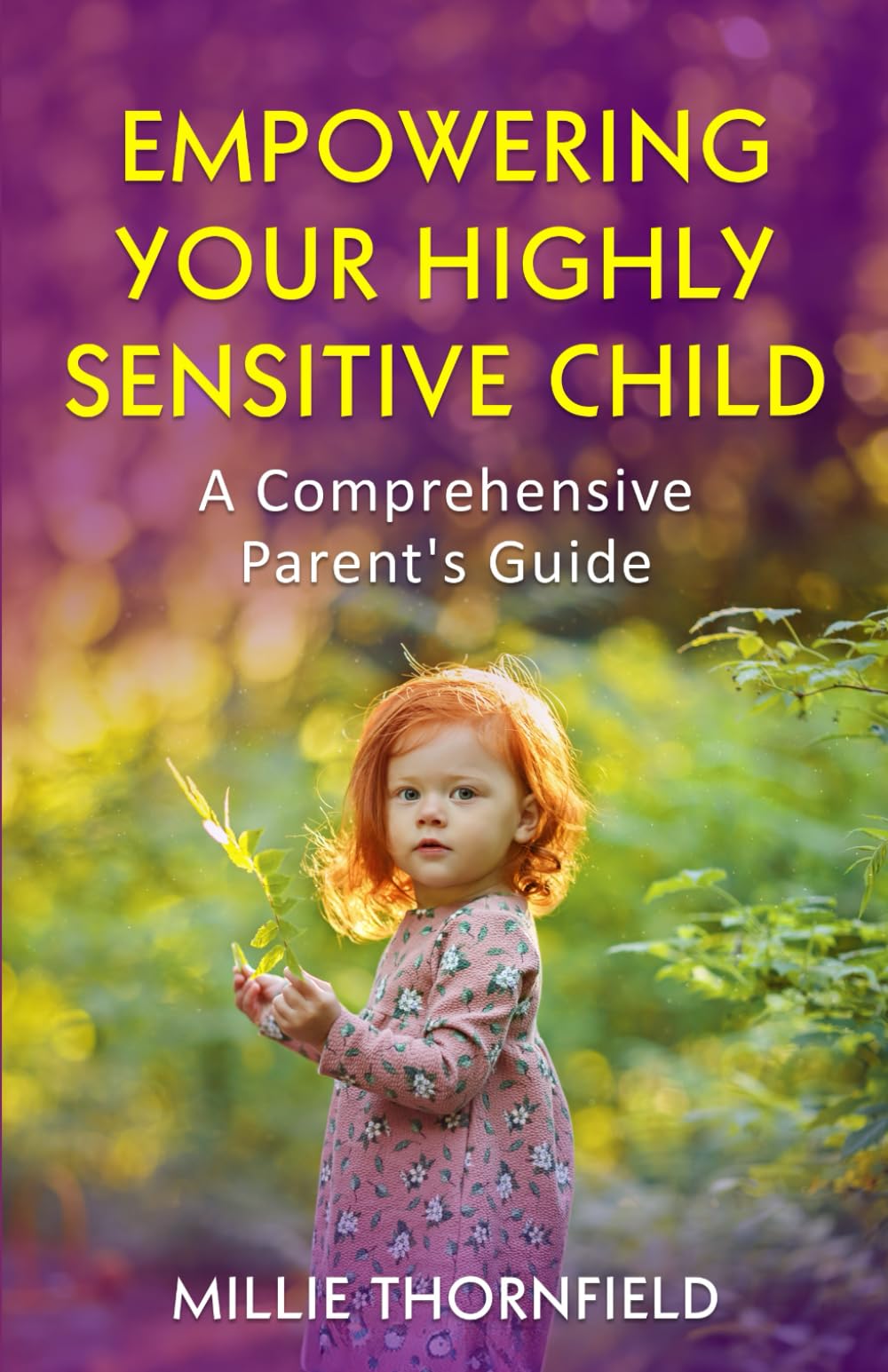
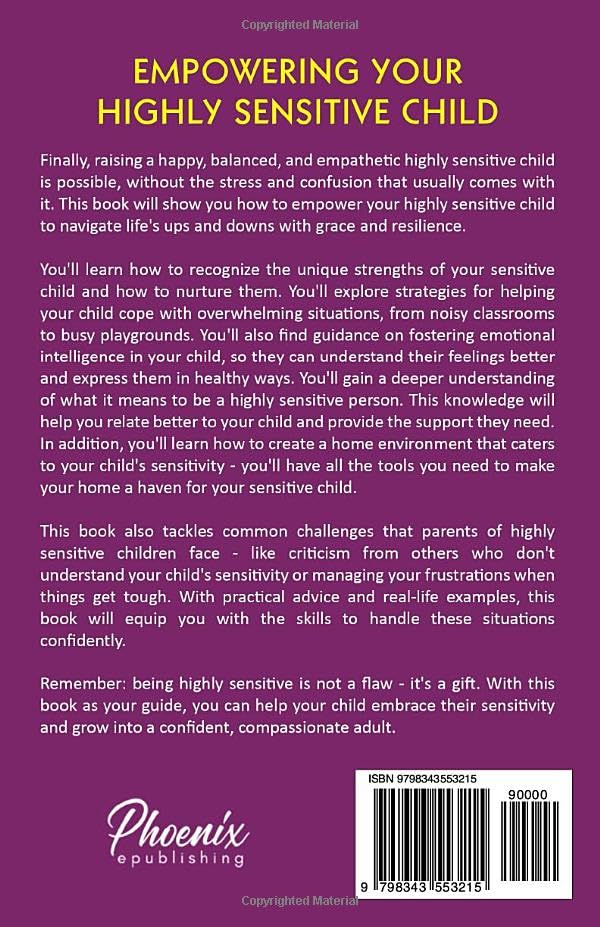
Empowering Your Highly Sensitive Child: A Comprehensive Parent's Guide (Parenting Skills)
- Education & Teaching
- Schools & Teaching
- Special Education
4. Telling High Sensitivity Apart from Anxiety and ADHD
One of the most common mistakes clinicians see is misidentifying high sensitivity as a standalone anxiety disorder or, in the other direction, dismissing a genuine anxiety disorder as "just sensitivity." There is real overlap, and it matters which one (or which combination) you are dealing with.
High sensitivity vs anxiety
Both produce avoidance, crying, and physical complaints before challenging events. The key differences are:
- Anxiety involves excessive worry about future threats that is often disconnected from actual sensory triggers; it tends to generalise across many domains. - High sensitivity is reliably linked to specific sensory or emotional inputs; in a calm, predictable environment, the HSC functions well without pervasive worry. - An HSC who grows up in an invalidating environment, where they are regularly told they are overreacting, is at higher risk of developing secondary anxiety. The sensitivity itself is not a mental health condition; the chronic stress of being misunderstood can become one.
High sensitivity vs ADHD
For parents navigating the diagnostic landscape, neurodiversity signs at ages 3–5 offers a useful framework for distinguishing developmental variation from conditions that warrant clinical assessment.
5. Building a Home Environment That Works
Your home does not need to become a padded, silent sanctuary, but it does need to be predictable, low-surprise, and emotionally safe. These are the environmental levers you control, and they make a disproportionately large difference for a sensitive child.
Predictability and transitions
Transitions are the biggest daily trigger for most HSCs. The brain of a sensitive child is doing a lot of anticipatory processing; sudden changes interrupt that work mid-stream.
Because sleep loss amplifies sensory reactivity, getting enough rest is especially critical for sensitive children. The AAP recommends 10–13 hours of sleep (including naps) for children aged 3–5, and the practical strategies in how much sleep your preschooler needs apply with even greater urgency for HSCs.
Emotional vocabulary and co-regulation
HSCs experience emotions intensely but often lack the language to describe what is happening inside them, which increases frustration and meltdown duration.
Positive Parenting Solutions to Raise Highly Sensitive Children: Understanding Your Child’s Emotions and How to Respond with Radical Compassion, Love and Confidence
- Audible Books & Originals
- Health & Wellness
- Psychology & Mental Health
6. Talking to Schools, Family, and Caregivers
Even the most sensitively designed home environment cannot protect your child from a world full of well-meaning but uninformed adults. Advocacy and communication are practical parenting skills here.
Working with teachers
Teachers see large groups of children and may interpret an HSC's withdrawal, crying, or refusal as manipulation or immaturity. A few steps help:
Navigating extended family
Grandparents, aunts, and uncles who grew up in "toughen up" parenting cultures may push back. The most effective approach is not to debate temperament theory at the dinner table but to give concrete examples: "When we warn her five minutes before we leave, the transition is fine. Without the warning, we lose the next hour. We'd love your help keeping to that."
Using positive parenting and gentle discipline principles alongside sensitivity-aware strategies creates a consistent philosophy you can communicate clearly to everyone involved in your child's care, reducing the mixed messages that confuse both children and caregivers.
Big Reactors: Practical Strategies for Parenting Highly Sensitive Children
- Parenting & Relationships
- School-Age Children
- Image Unavailable Image not available forColor:
7. When to Seek Professional Support (and What Kind)
High sensitivity is a trait, not a condition, so there is no treatment for sensitivity itself. But some HSCs develop secondary difficulties that do benefit from professional intervention.
Red flags that warrant a professional assessment
Who to see
- Paediatrician (first stop): Rules out sensory-processing disorder, hearing or vision problems that amplify sensitivity, and co-occurring ADHD or anxiety - Paediatric occupational therapist: Especially useful if sensory triggers are predominantly tactile, proprioceptive, or vestibular - Child psychologist or therapist trained in SPS or HSP: Can work with both the child and parents on emotional regulation strategies; look specifically for someone familiar with Aron's framework - CAMHS (UK) or similar community mental health services: Appropriate if secondary anxiety or depression has developed
The Highly Sensitive Parent: Be Brilliant in Your Role, Even When the World Overwhelms You
- Health, Fitness & Dieting
- Mental Health
- Select 1 audiobook a month from our entire collection of titles.
Comparing Resources and Approaches for Highly Sensitive Children
| Approach / Resource | Best For | Key Strength | Main Limitation | Recommended Product | Price Range |
|---|---|---|---|---|---|
| Foundation understanding book | Parents new to the concept | Comprehensive trait overview | Time investment to read | The Highly Sensitive Child | ~$10 |
| Practical parenting guide | Parents ready to implement strategies | Step-by-step action plans | Less background science | Empowering Your HSC | Varies |
| Audiobook (on the go) | Busy parents with limited reading time | Accessible, flexible listening | Less visual/reference use | The Highly Sensitive Parent | $0 (Audible) |
| Nutshell / short guide | Caregivers and teachers | Quick, shareable overview | Less depth for parents | Understanding the HSC | Varies |
| Positive parenting audio | Parents wanting compassion-led frameworks | Combines sensitivity and discipline | Audio-only format | Positive Parenting for HSC | $0 (Audible) |
| Practical strategies book | Parents of school-age "big reactors" | Concrete, behaviour-focused tools | Fewer early-years examples | Big Reactors | Varies |
Expert Insights
Your highly sensitive child is not broken, and neither is your parenting. They arrived wired to feel everything more fully, which means the world can be louder, brighter, and harder for them than it looks from the outside. But it also means that your warmth, your patience, and even your small, consistent adjustments register more deeply too. Every transition warning you give, every feeling you name calmly, every time you stay regulated when they cannot, is building something that will last them a lifetime.
The most shareable truth about raising a sensitive child: the goal is not to turn down their volume but to help them learn to conduct the orchestra.
If this article helped you see your child a little more clearly, save it, share it with your co-parent or your child's teacher, and come back when the hard days make you doubt yourself. They are wired for depth, and so is the love it takes to raise them.
Sources & References
- Aron, Elaine N. "The Highly Sensitive Child." Broadway Books, 2002.
- Aron, Elaine N. "Sensory-Processing Sensitivity and Its Relation to Introversion and Emotionality." Journal of Personality and Social Psychology, 1997.
- Acevedo, Bianca P., et al. "The Highly Sensitive Brain: An fMRI Study of Sensory Processing Sensitivity and Response to Others' Emotions." Brain and Behavior, 2014. https://doi.org/10.1002/brb3.242
- Pluess, Michael. "Individual Differences in Environmental Sensitivity." Child Development Perspectives, 2015. https://doi.org/10.1111/cdep.12120
- Pluess, Michael, and Jay Belsky. "Vantage Sensitivity: Individual Differences in Response to Positive Experiences." Psychological Bulletin, 2013.
- American Academy of Pediatrics. "Sleep in Infants, Toddlers, and Preschoolers." HealthyChildren.org, 2023. https://www.healthychildren.org
- Kurcinka, Mary Sheedy. "Raising Your Spirited Child." HarperCollins, 2015.
- Aron, Elaine N. "The HSP Scale." HSPerson.com, updated 2022. https://hsperson.com
- National Institute for Health and Care Excellence (NICE). "Social, Emotional and Mental Health Needs." NICE Guidelines NG58, 2016.
Frequently Asked Questions
Is my highly sensitive child more likely to develop anxiety?
Can a child be both highly sensitive and neurodivergent (ADHD, autism)?
How do I explain my child's sensitivity to sceptical family members?
At what age can I tell if my child is highly sensitive?
Will my child grow out of high sensitivity?
Should I tell my child they are highly sensitive?
Does diet or screen time affect sensitivity?
Was this helpful?
Thanks — your feedback helps us pick what to write next.