
Understanding the Tween Brain: Why Play Still Matters at 8–12
Tweens (ages 8–12) learn best through a mix of structured challenge, creative play, and social games that stretch their growing capacity for logic, strategy, and self-expression.

In this article
Picture this: your 10-year-old rolls their eyes at "educational" anything — and then spends 45 uninterrupted minutes hunched over a marble logic puzzle, completely absorbed. That's not a contradiction. That's tween neuroscience in action.
According to the American Academy of Pediatrics (AAP), middle childhood (roughly ages 6–12) is a period of rapid cognitive development, with executive-function skills — planning, flexible thinking, and impulse control — maturing significantly between ages 8 and 12. Yet surveys consistently show that free and creative play drops sharply after age 8, replaced almost entirely by screens and structured activities.
This guide bridges that gap. By the time you finish reading, you'll understand:
1. Understanding the Tween Brain: Why Play Still Matters at 8–12
The tween years are not a waiting room between childhood and adolescence — they are one of the most neurologically active periods of your child's life.
Between ages 8 and 12, the prefrontal cortex (the brain's planning and decision-making centre) undergoes significant synaptic pruning: the brain ruthlessly strengthens connections it uses and trims the ones it doesn't. This means the activities your child engages in right now are literally shaping the neural architecture they'll carry into adulthood.
What's Changing Cognitively
Research published by the CDC's "Learn the Signs. Act Early." program and developmental data from the AAP highlight several key shifts in this window:
- Abstract reasoning emerges — tweens can now grasp hypotheticals, metaphors, and multi-step logic. - Working memory expands, allowing longer chains of thought and more complex problem-solving. - Metacognition develops — children start thinking about how they think, which makes deliberate learning strategies possible. - Peer validation becomes a primary motivator, making social and competitive play especially powerful.
Why Screen-Free Play Is Worth Protecting
The AAP recommends that parents prioritise "hands-on, unplugged play" even as children move into the tween years, noting that self-directed play builds creativity, problem-solving, and emotional regulation in ways that passive screen time cannot replicate.
2. The Four Learning Styles That Show Up in Tweens (and How to Feed Each One)
Not every 10-year-old learns the same way, and the tween years are precisely when those differences become more pronounced and more important to honour.
While the classic "learning styles" model has been revised by modern cognitive science (the evidence doesn't support teaching exclusively to one style), research from the National Institute of Child Health and Human Development (NICHD) does confirm that children engage more deeply when activities match their dominant mode of processing.
The Four Dominant Modes in Tweens
1. The Logical-Sequential Thinker Loves rules, patterns, and systems. Thrives with math games, coding, and strategy puzzles. Give this child ThinkFun Gravity Maze — a marble logic puzzle with 60 escalating challenges that requires genuine spatial and sequential reasoning.
2. The Social-Verbal Learner Learns through conversation, debate, and storytelling. Thrives with word games, trivia, and group challenges. Skillmatics Rapid Rumble is ideal here — a fast-paced category shouting game that rewards verbal fluency and quick association.
3. The Visual-Spatial Learner Thinks in pictures, patterns, and colour. Thrives with geography, art, and design challenges. HUES and CUES — a colour-guessing game built around 480 colour squares — is a brilliant fit, turning visual perception into a competitive, joyful skill.
4. The Competitive-Achiever Motivated by challenge, scores, and improvement. Thrives with timed games and escalating difficulty. Proof! Math Game delivers exactly that — a fast-paced mental math game where speed and accuracy both matter.



ThinkFun Gravity Maze - Falling Marble Logic Game - Challenging STEM Toy for Kids 8-12 - Gravity Marble Maze - Brain-Building Fun - Educational Gift - Boosts Critical Thinking & Problem Solving
- Ignite Creativity & Problem-Solving: ThinkFun's Gravity Maze sparks the imagination while honing critical thin
- A Hybrid of Fun & Learning for Boys and Girls Ages 8-12: The innovative Gravity Maze merges fun and education,
- Endless Adventure in Every Build: Open a world of construction possibilities as kids solve marble puzzles that
3. Games That Build Real Academic Skills (Without Feeling Like Homework)
The most effective learning tools for tweens are the ones they don't recognise as educational. When a game is genuinely fun, the brain enters a state of relaxed alertness — what psychologist Mihaly Csikszentmihalyi called "flow" — and learning consolidates far more efficiently.
Geography and Global Awareness
By age 10, most children are developmentally ready to understand that the world is large, complex, and full of people with different lives. Geography isn't just a school subject — it's a framework for empathy and critical thinking.
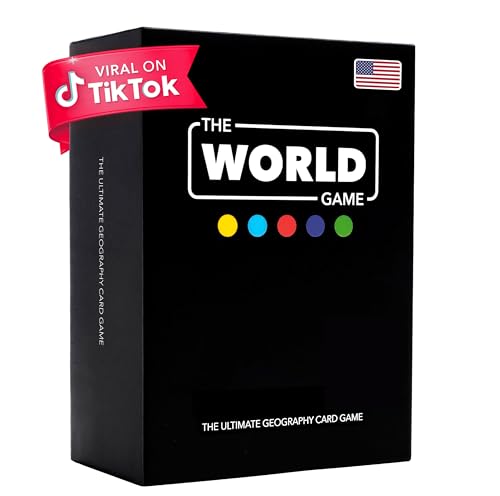
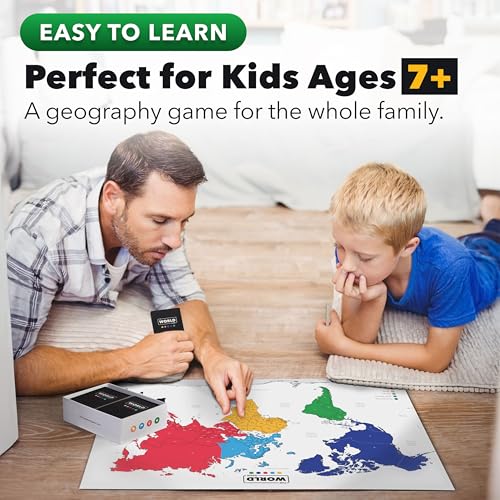
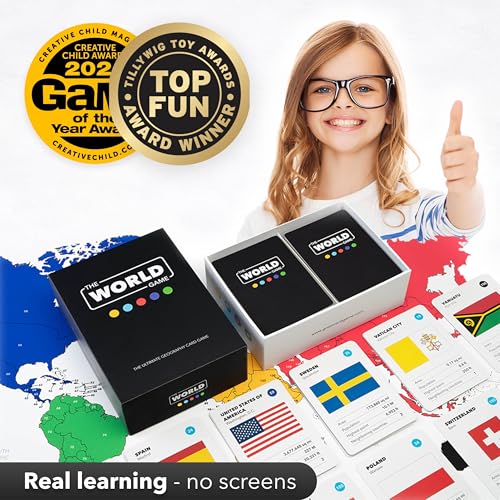
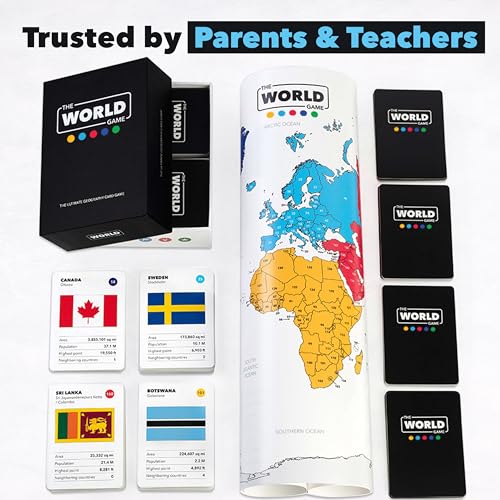
The World Game - Geography Card Game - Educational Games for Kids, Family and Adults - Cool Learning Gift Idea for Teenage Boys & Girls 8-12 with Map
- Flags, Capitals & Location - Show the country on the map, recognize the flags of the world or name the capital
- Family Board Game - Find the strongest fact about the country and win. Train your memory and brain while havin
- For Kids & Adults - For all stages of knowledge. One of the best educational board games for kids 8-12. Smart
The World Game covers all 194 countries with flags, capitals, and map recognition — and because it's structured as a competitive card game, tweens engage with it as a challenge rather than a lesson. Playing it as a family also levels the field in a way that feels good for kids this age: a well-prepared 9-year-old can genuinely beat an adult.
Mental Math and Number Fluency
The AAP and the National Council of Teachers of Mathematics both emphasise that fluency with mental arithmetic — not just calculator competence — remains a foundational skill throughout the tween years. Games like Proof! Math Game (a Teachers' Choice Gold Award winner) make multiplication, division, and square roots feel like a sport rather than a worksheet.
4. Creative and Social Play: The Skills Schools Don't Grade (But Should)
Academic skills get most of the attention in the tween years, but the competencies that predict long-term wellbeing — emotional regulation, creative thinking, social negotiation — are built almost entirely through play.
Visual Thinking and Attention to Detail
In an age of rapid scrolling, the ability to slow down and observe carefully is becoming genuinely rare — and genuinely valuable. Stare Junior is an award-winning visual recall game where players study an image for 30 seconds and then answer detailed questions about it. It trains sustained attention, visual memory, and the habit of actually looking — skills that translate directly into reading comprehension and science observation.

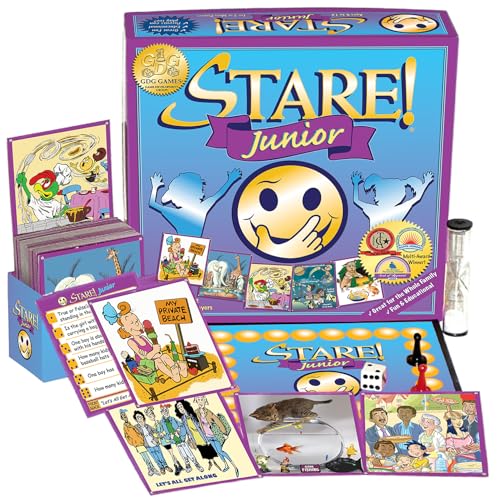

Stare Junior — The Award-Winning Game of Visual Recall, Where Fun Image Cards Challenge Kids’ Minds — Great for The Whole Family, Ages 6 & Up
- UNIQUE KIDS' GAME OF VISUAL RECALL: Award-winning Stare Junior captivates kids with visual challenges that sha
- HOW TO PLAY: Players have 30 seconds to look at an engaging image card and memorize as many details as possibl
- FUN & EYE-CATCHING IMAGE CARDS: Features a varied mix of illustrations, photos, animations, and comics that ch
Colour, Language, and Creative Association
HUES and CUES deserves special mention for its cross-domain creativity. Players must describe a specific colour using only one or two words — a task that requires visual precision, vocabulary, and the ability to think from another person's perspective. For tweens, who are developing both abstract language and theory of mind, this is a deceptively rich challenge.
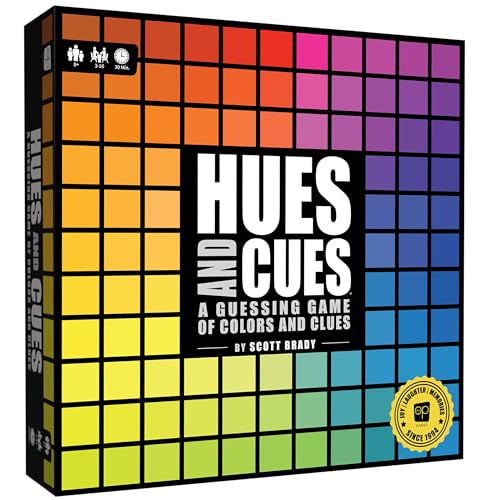
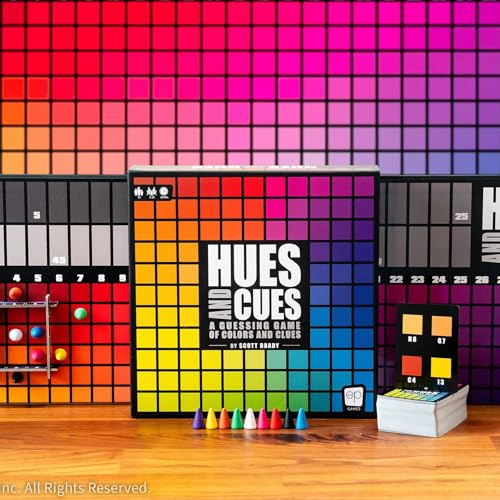
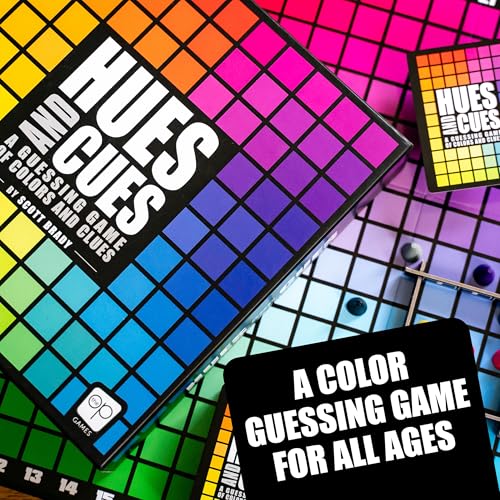
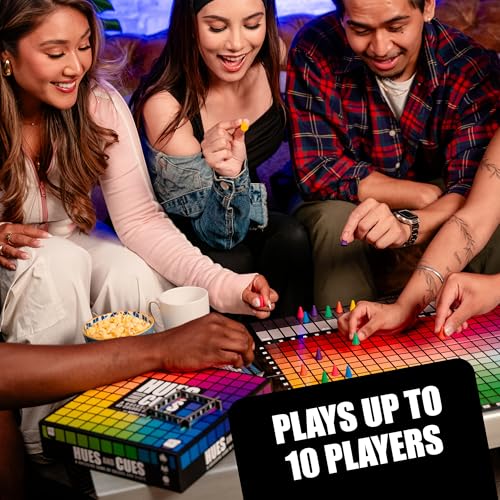
HUES and CUES - Vibrant Color Guessing Board Game for 3-10 Players Ages 8+, Connect Clues and Guess from 480 Color Squares
- VIBRANT COLOR GAME: Challenge friends and family to connect words with colors in the engaging Hues and Cues, f
- FUN FOR ALL AGES: Perfect for family game nights, parties, or casual play, this game brings players of all age
- UNIQUE EXPERIENCE: No two rounds are the same! Hues and Cues provides a new and unique experience with each pl
5. Balancing Structured Learning and Free Play: What the Research Says
One of the most common mistakes parents make in the tween years is over-scheduling. The logic is understandable — this is when academic pressure ramps up, extracurriculars multiply, and the college-prep anxiety clock starts ticking for some families. But the research points clearly in the other direction.
A landmark review by the AAP (Yogman et al., 2018, Pediatrics) concluded that free play is so essential to healthy development that paediatricians should "prescribe" it — and that over-scheduled children show measurably higher rates of anxiety and lower creativity scores.
A significant decline in children's free play over the past five decades has coincided with a significant increase in childhood anxiety, depression, and helplessness.
— Peter Gray, Research Professor, Boston College (2011)
A Practical Weekly Framework
Rather than a rigid schedule, think in proportions:
- ~50% structured learning activities (homework, lessons, educational games with clear goals) - ~30% social play (games with peers or family, team sports, group creative projects) - ~20% unstructured free time (child-directed, no agenda, no screens required)
6. Family Game Night as a Learning Strategy (Not Just Entertainment)
Family game nights are one of the most research-supported, underused learning tools available to parents of tweens — and they cost almost nothing once you have the games.
A 2019 study in the Journal of Child Psychology and Psychiatry found that regular family activities involving shared challenge and conversation were associated with improved emotional regulation and academic motivation in children aged 8–12. The mechanism appears to be twofold: the games themselves build cognitive skills, and the shared experience builds the secure attachment that makes learning feel safe.
Building Your Tween-Friendly Game Library
The best game nights for this age group mix skill levels, keep everyone competitive, and don't last more than 45–60 minutes per game. Here's what a well-rounded collection looks like:
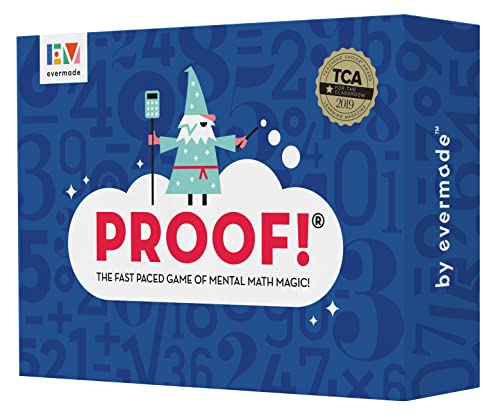

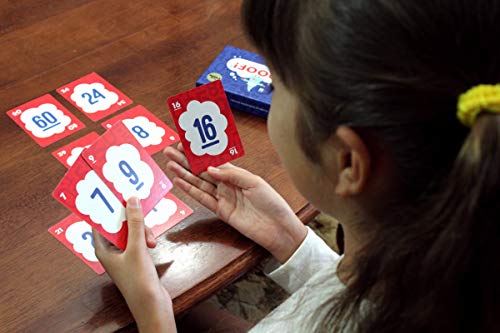
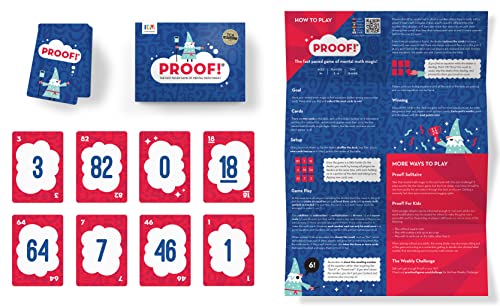
Proof! Math Game - The Fast Paced Game of Mental Math Magic - Teachers’ Choice Award Winning Educational Fun, Ages 9+
- 𝗙𝗔𝗦𝗧-𝗣𝗔𝗖𝗘𝗗, 𝗙𝗨𝗡 𝗠𝗔𝗧𝗛 𝗚𝗔𝗠𝗘: Loved by teachers, families, kids, and grown-ups alike. Enjoy at your next family g
- 𝗧𝗘𝗔𝗖𝗛𝗘𝗥'𝗦 𝗖𝗛𝗢𝗜𝗖𝗘 𝗚𝗢𝗟𝗗 𝗔𝗪𝗔𝗥𝗗 𝗪𝗜𝗡𝗡𝗘𝗥: Educational games are evaluated by a panel of teachers and selected for "e
- 𝗜𝗠𝗣𝗥𝗢𝗩𝗘 𝗠𝗘𝗡𝗧𝗔𝗟 𝗠𝗔𝗧𝗛 𝗦𝗞𝗜𝗟𝗟𝗦: Great brain game training to improve creative mental math skills. Practice multipl
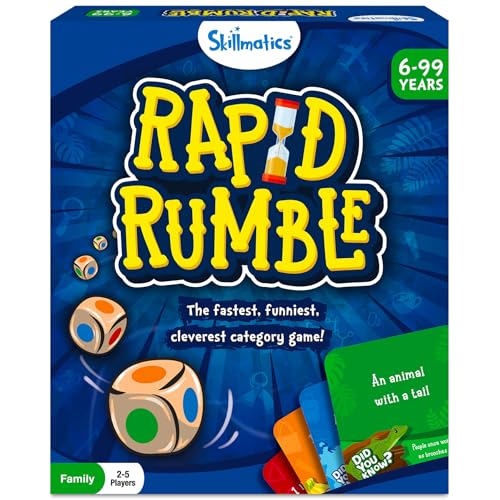
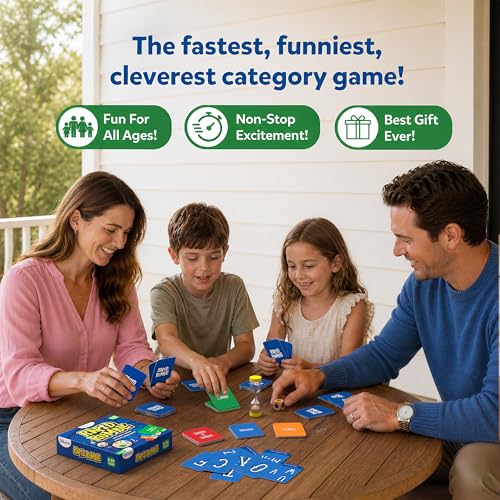
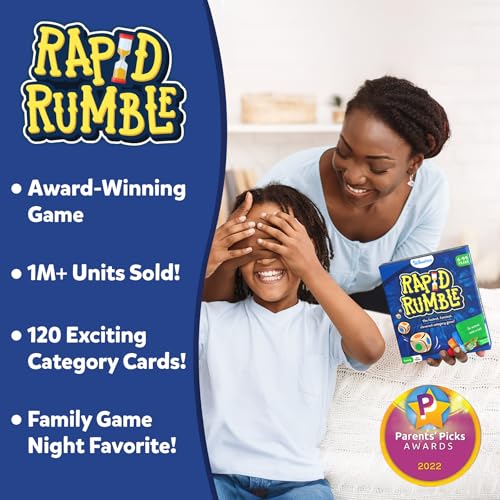
Skillmatics Rapid Rumble - Fast-Paced Board Game for Kids, Teens & Adults, Fun for Family Game Night & Educational Toy, Quick-Thinking Card Game, Gift for Ages 6, 7, 8, 9 & Up
- THRILLING CATEGORY GAME : Rapid Rumble is the fastest, funniest, and most clever category game! Roll the die,
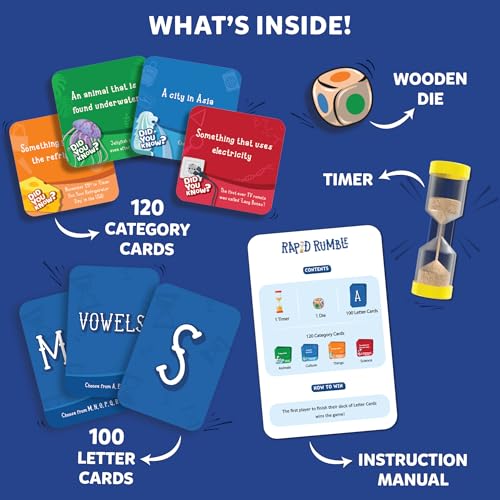
- INCLUDES: 120 Category Cards, 100 Letter Cards, 1 Wooden Die, 1 Timer and an Instruction Manual.
- HOW TO PLAY: Roll the die, pick a category card, and get ready to rumble! Think fast and shout answers that ma
7. Red Flags and Green Lights: Is Your Tween's Play Diet Healthy?
Not all play is created equal, and it's worth doing a periodic audit of how your child is actually spending their leisure time.
Green Lights ✓ (Signs of a Healthy Play Diet)
Red Flags ⚠ (Worth a Conversation With Your Paediatrician)
- Play is almost exclusively screen-based (more than 3 hours daily) - Refuses all social play or group activities - Cannot tolerate any frustration during games or learning tasks - Shows no interest in any creative or physical activity - Play has become a way to avoid all challengeComparing Learning Game Types for Tweens
| Game Type | Best For | Core Skills Built | Challenge Level | Play Time | Recommended Product | Price Range |
|---|---|---|---|---|---|---|
| Logic/STEM Puzzle | Independent, analytical thinkers | Spatial reasoning, problem-solving, persistence | Medium–High | 20–45 min | ThinkFun Gravity Maze | $22–25 |
| Mental Math Card Game | Number-confident kids, competitive learners | Arithmetic fluency, speed, focus | Medium | 15–30 min | Proof! Math Game | $17–20 |
| Geography/Trivia Card Game | Curious, knowledge-hungry tweens | Global awareness, memory, cultural literacy | Low–Medium | 30–60 min | The World Game | $24–25 |
| Fast-Paced Category Game | Social, verbal, group settings | Verbal fluency, quick thinking, teamwork | Low | 20–30 min | Skillmatics Rapid Rumble | $19–20 |
| Visual Recall Game | Observational, detail-oriented kids | Sustained attention, visual memory | Low–Medium | 20–40 min | Stare Junior | $28–30 |
| Colour/Creative Guessing Game | Creative, empathetic, artistic tweens | Vocabulary, perspective-taking, creativity | Low | 30–45 min | HUES and CUES | $24–25 |
Expert Insights
Your tween is at a genuinely remarkable moment — old enough to engage with real complexity, young enough to still find joy in a well-designed game, and right in the middle of building the cognitive and emotional tools they'll rely on for the rest of their lives. The good news is that the best thing you can do for their development right now is also one of the most enjoyable: play with them. Show up, deal the cards, lose gracefully, laugh loudly, and let the learning take care of itself.
The most powerful learning tool you own isn't an app or a curriculum — it's an hour at the kitchen table with a good game and your full attention.
Save this guide, share it with another tween parent, and bookmark it for the next time someone tells you your kid should put the game away and do something productive.
Sources & References
- American Academy of Pediatrics (AAP). "The Power of Play: A Pediatric Role in Enhancing Development in Young Children." Yogman M et al. Pediatrics, 2018. https://doi.org/10.1542/peds.2018-2058
- American Academy of Pediatrics (AAP). "Middle Childhood (8–10 years) and Preteen (11–13 years) Developmental Milestones." HealthyChildren.org. https://www.healthychildren.org
- Gray, Peter. "The Decline of Play and the Rise of Psychopathology in Children and Adolescents." American Journal of Play, 2011. Vol. 3(4), pp. 443–463.
- National Institute of Child Health and Human Development (NICHD). "Child Development and Learning Research." https://www.nichd.nih.gov
- Centers for Disease Control and Prevention (CDC). "Child Development: Middle Childhood (6–8 years) and (9–11 years)." https://www.cdc.gov/ncbddd/childdevelopment
- Shonkoff, Jack P. & Phillips, Deborah A. (Eds.). From Neurons to Neighborhoods: The Science of Early Childhood Development. National Academy Press, 2000. National Academies of Sciences.
- Sala, Giovanni & Gobet, Fernand. "Does Far Transfer Exist? Negative Evidence from Chess, Music, and Working Memory Training." Current Directions in Psychological Science, 2017. https://doi.org/10.1177/0963721417712760
- Immordino-Yang, Mary Helen. Emotions, Learning, and the Brain: Exploring the Educational Implications of Affective Neuroscience. W.W. Norton & Company, 2015.
- National Council of Teachers of Mathematics (NCTM). "Procedural Fluency in Mathematics: A Position of the National Council of Teachers of Mathematics." 2014. https://www.nctm.org
Frequently Asked Questions
At what age should I stop buying "educational" games and just let my tween play for fun?
My 11-year-old only wants to play video games. How do I introduce board games without a battle?
How much time should a tween spend on learning-focused play versus free play each week?
My tween gets frustrated and quits when they lose. Is this normal, and how do I help?
Are cooperative games better than competitive ones for tweens?
How do I know if a game is actually age-appropriate for my 8-year-old versus my 12-year-old?
Can games really help with school performance, or is that just marketing?
Was this helpful?
Thanks — your feedback helps us pick what to write next.


