How Much Sleep Does Your Tween Actually Need?
Tweens aged 8–12 need 9–11 hours of sleep per night, yet most are getting far less — and the gap between what they need and what they get has real consequences for mood, learning, and health.

In this article
Picture this: it's 10:45 pm on a school night. Your 11-year-old is still at her desk, half-finishing a worksheet, phone face-down (but buzzing), and insisting she's "not even tired." You know something is off — but you're not sure whether to push harder on bedtime or accept that she's just growing up.
You're not imagining the problem. According to the Centers for Disease Control and Prevention (CDC), more than 60% of middle-school-aged children in the United States are not getting enough sleep on school nights. That's not a minor inconvenience — chronic short sleep in the tween years is linked to increased risk of obesity, anxiety, poor academic performance, and even higher rates of accidental injury.
This guide will help you understand:
1. How Much Sleep Does Your Tween Actually Need?
Nine to eleven hours is the evidence-based target for children aged 6–12, with most 8–10 year olds needing closer to the upper end and 11–12 year olds doing well with 9–10 hours. This isn't a suggestion — it's a clinical recommendation.
Children aged 6–12 years should sleep 9–12 hours per 24 hours on a regular basis to promote optimal health.
— American Academy of Sleep Medicine (AASM) (2016)
The AASM recommendation was formally endorsed by the American Academy of Pediatrics (AAP), making it the standard of care across North America. The UK's National Health Service (NHS) echoes similar guidance, noting that children in this age group who consistently sleep less than 9 hours show measurable deficits in attention and emotional regulation within just a few days.
Why the Range Matters
Not every 10-year-old is the same. Some children are naturally "short sleepers" (a genuine genetic trait, though rare), while others feel groggy without a full 10 hours. The best way to gauge your child's individual need: observe them on a weekend when they can wake naturally, without an alarm. If they sleep 90 minutes longer than on school days, they're carrying a sleep debt.
The Sleep Debt Problem
Sleep debt accumulates across the week and cannot be fully "repaid" on weekends. Research published in the journal Sleep (2019) found that weekend catch-up sleep in children partially, but not completely, reverses the cognitive deficits built up during a short-sleep school week.
2. The Puberty Sleep Shift: Why Your Tween's Body Clock Is Fighting You
Around ages 10–12, most children experience a genuine, biology-driven shift in their circadian rhythm — the internal body clock that controls when they feel sleepy and when they feel alert. This shift, called a circadian phase delay, means melatonin (the hormone that signals "time to sleep") starts releasing later in the evening than it did when your child was younger.
The circadian phase delay that begins in early puberty is one of the most robust biological findings in adolescent sleep research.
— National Sleep Foundation, Sleep Health Journal (2015)
In practical terms: a child who used to feel naturally sleepy at 8 pm may now not feel that pull until 9:30 or 10 pm. This is not defiance or manipulation — it is physiology. The problem is that school start times don't move to accommodate it, so tweens end up sleep-deprived by structural design.
What Triggers the Shift?
The circadian delay is driven by hormonal changes associated with puberty — specifically rising levels of oestrogen and testosterone, which interact with the brain's suprachiasmatic nucleus (the body clock's control centre). The shift tends to appear earlier in girls (around age 10–11) than in boys (around age 11–12), mirroring the earlier onset of puberty in females.
What You Can Do About It
You can't stop the biology, but you can work with it:
- Morning light exposure: Bright light within 30 minutes of waking helps anchor the circadian clock earlier. Open curtains immediately, or step outside briefly. - Consistent wake times: Even on weekends, keeping wake time within 60 minutes of school-day wake time prevents the clock from drifting further. - Evening light reduction: Dim household lights after 8 pm to avoid suppressing melatonin further.
3. The Biggest Sleep Thieves in the Tween Years
Screens are the single most studied sleep disruptor in this age group, but they're not the only one. Understanding all the culprits helps you prioritise where to intervene first.
Screens and Blue Light
The blue-wavelength light emitted by phones, tablets, and laptops suppresses melatonin production by up to 50%, according to research from Harvard Medical School's Division of Sleep Medicine. For a child whose melatonin is already releasing later due to puberty, this compounds the delay significantly.
The AAP recommends no screens in the 60 minutes before bed for school-aged children. In practice, a 30-minute screen-free buffer is achievable for most families and still makes a measurable difference.
Homework and Mental Stimulation
Cognitively demanding work in the hour before bed keeps the prefrontal cortex active and delays sleep onset. Encourage your tween to front-load homework after school rather than after dinner wherever possible.
After-School Activities
Late-evening sports practices, music lessons, or club activities that run past 8 pm are a growing problem. If your child is consistently getting home at 9 pm and then needs to eat, shower, and wind down, a 10-hour sleep night is mathematically impossible.
4. Building a Wind-Down Routine That Tweens Will Actually Use
Tweens are not toddlers — you can't simply carry them through a bedtime routine. At this age, the most effective approach is collaborative: build the routine with them, give them ownership over the steps, and focus on consistency over perfection.
The 3-Step Wind-Down Framework
Step 1 — Physical transition (30 minutes before bed): Shower or bath (a warm bath lowers core body temperature as you cool afterwards, which promotes sleepiness), change into comfortable sleepwear, finish any remaining snacks.
Step 2 — Mental deceleration (20 minutes before bed): Reading a physical book, light journalling, drawing, or listening to calm music or an audiobook. This is the time where a comfortable, weighted blanket can make a real difference — the gentle pressure provides proprioceptive input that helps the nervous system shift from "alert" to "rest" mode.
For tweens who tend to feel restless or anxious at bedtime, a lighter weighted blanket sized to their body weight (approximately 10% of body weight is the standard guideline) can be a practical, non-pharmacological tool. The CuteKing 7lb Weighted Blanket is a well-reviewed option for children in the 60–80 lb range, and the yescool 7lb Cooling Weighted Blanket is a good choice for children who run warm at night.
Step 3 — Sleep onset (10 minutes before target sleep time): Lights off or very dim. Quiet breathing, a brief gratitude practice, or simply lying still. No conversation, no screens.



yescool Weighted Blanket (7 lbs, 41" x 60", Grey) Cooling Heavy Blanket for Sleeping Perfect for 60-90 lbs, Breathable Blanket with Premium Glass Bead, Machine Washable
- 【DECENT GIFT】: Receiving gifts is fun while finding gift ideas, errrr...not so much. What could beat a weighte
- 【CHOOSE RIGHT SIZE】: Weighted blanket which owns 10% of your body weight is recommended.
- 【PEACEFUL SLEEPING CONPANION】: Yescool weighted blanket is made of 100% microfiber, soft and breathable.The we
5. Creating a Sleep-Friendly Bedroom Environment
The bedroom environment is one of the most modifiable factors in tween sleep quality — and one of the most overlooked.
Temperature
The ideal sleep temperature for children is between 65–70°F (18–21°C). Most children this age sleep warmer than adults, so erring towards the cooler end of this range is usually beneficial. A breathable weighted blanket — rather than a heavy, heat-trapping one — can provide the calming pressure of deep touch without overheating.




ZZZhen Weighted Blanket - High Breathability - 48''72'' 15LB - Premium Heavy Blankets - Calm Sleeping for Adult and Kids, Durable Quilts Grey, 48''72'' - 15LB
- TARGET CUSTOMERS: perfect for those who are under deep pressure that need a relaxing and good sleep
- Customer-friendly design: The ZZZhen's box stitching reduce the shifting of fillings and helps ensure an even
- Breathability: 0.9cm thick blanket for the best breathability with a noticeable air permeability, perfectly ad
The ZZZhen 15lb Weighted Blanket has a 0.9cm breathable construction specifically designed for year-round use and is a strong option for tweens on the heavier end of this age range (roughly 130–150 lb, where a 15lb blanket hits the 10% guideline).
Darkness
Melatonin production is highly sensitive to light. Even low-level ambient light from a hallway, streetlight, or standby indicator can suppress melatonin in children. Blackout curtains or a sleep mask are simple, inexpensive fixes.
Noise
Tweens who share rooms with siblings, or who live in noisy households, benefit from consistent background sound — a white noise machine or a fan set to low. The key word is consistent: the brain habituates to steady sound and uses it as a sleep cue.
6. Red Flags: When Poor Sleep Needs Medical Attention
Most tween sleep problems are behavioural and environmental — but some are clinical, and it's important to know the difference.
Signs to Discuss With Your Paediatrician
What a Sleep Assessment Looks Like
Your paediatrician will typically start with a sleep diary (two weeks of recorded bedtimes, wake times, and overnight observations) before ordering any tests. A referral to a paediatric sleep specialist may follow if a disorder is suspected. Polysomnography (an overnight sleep study) is the gold standard for diagnosing sleep apnoea and movement disorders.
7. Weighted Blankets for Tweens: Do They Actually Help?
Weighted blankets work through a mechanism called deep pressure stimulation (DPS) — the same principle behind a firm hug. DPS activates the parasympathetic nervous system, reduces cortisol, and increases serotonin and dopamine, all of which support relaxation and sleep onset.
Deep pressure stimulation has been shown to reduce sympathetic arousal and increase parasympathetic activity, consistent with a calming effect.
— Hvolby & Bilenberg, Nordic Journal of Psychiatry (2011)
The research base for weighted blankets in typically developing children is still growing, but the evidence is stronger in children with ADHD, anxiety, and autism spectrum disorder — all conditions that are more prevalent in this age group and all associated with sleep difficulties.
Choosing the Right Weighted Blanket for Your Tween
The standard guideline is 10% of body weight. For most 8–12 year olds (typically 55–100 lbs), a 7–10 lb blanket is the appropriate range.


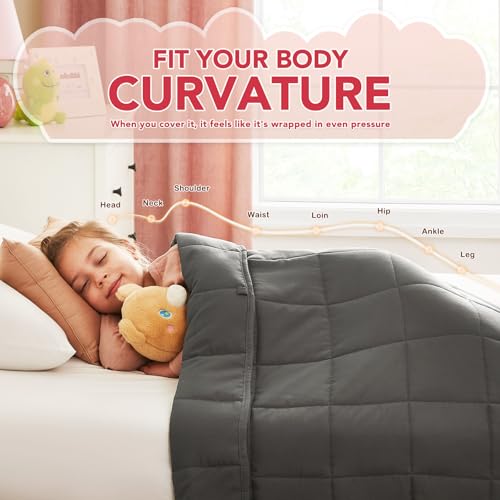
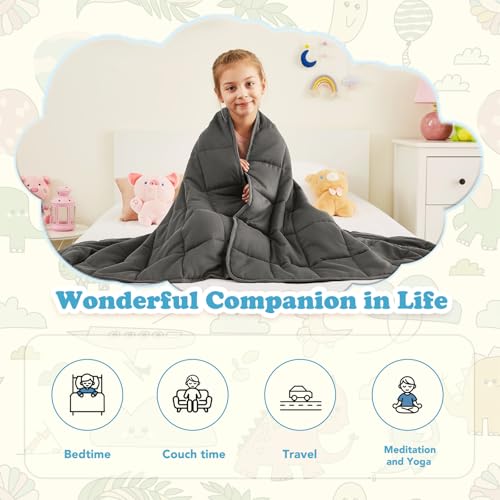
CuteKing Weighted Blanket (7lbs, 40"x 60", Grey) Heavy Blanket for 60-80lbs, Weighted Blanket for Cooling & Heating with Premium Glass Beads, Thick Blanket All-Season
- Recommended Weight Size: We recommend you choose a weighted blanket that weighs 10% of your body weight. If yo
- Recommended Weight Siz: For example, 60x80 inches weighted blanket 25 lbs is suitable for adults, This weighte
- Premium Material: It adopted a unique 12-layer design with precision stitching which prevents the leaking of b
For a child who runs cool or wants something cozier, the Eazfy Pro 15lb Sherpa Weighted Blanket and the Eazfy Pro Arched Jacquard Weighted Blanket are both OEKO-TEX certified options with dual-sided fleece — though at 15 lbs, they're better suited to older tweens or heavier children. The Alomidds 15lb Queen Size Weighted Blanket is another well-rated choice for families who want a larger blanket that can grow with the child into the teen years.
Weighted Blanket Comparison for Tweens (8–12)
| Blanket Option | Weight | Best For | Key Feature | Main Drawback | Recommended Product | Price |
|---|---|---|---|---|---|---|
| Lightweight cooling option | 7 lbs | Children 60–90 lbs who sleep warm | Breathable microfiber, machine washable | Smaller size, not for heavier tweens | yescool 7lb Cooling Blanket | $22.79 |
| Budget lightweight option | 7 lbs | Children 60–80 lbs, first-time weighted blanket users | 12-layer precision stitching, even bead distribution | Smaller coverage area | CuteKing 7lb Weighted Blanket | $19.19 |
| Mid-weight breathable | 15 lbs | Older/heavier tweens, year-round use | 0.9cm breathable construction, box stitching | 15 lbs may be too heavy for lighter children | ZZZhen 15lb Weighted Blanket | $23.99 |
| Cozy sherpa dual-sided | 15 lbs | Children who want warmth + weight | Dual-sided fleece, OEKO-TEX certified | Warmer — not ideal for hot sleepers | Eazfy Pro Sherpa 15lb | $47.99 |
| Luxury sherpa with texture | 15 lbs | Tweens who want a stylish, premium feel | Arched jacquard design, ceramic beads | Higher price point | Eazfy Pro Arched Jacquard 15lb | $49.99 |
| Queen-size grow-with-them | 15 lbs | Families wanting a blanket that lasts into teen years | Large 60x80" size, soft flannel + sherpa | Overkill for smaller tweens | Alomidds 15lb Queen Weighted Blanket | $36.99 |
Expert Insights
The Bottom Line
Sleep in the tween years sits at a crossroads: the relaxed bedtimes of early childhood are behind you, but the full storm of adolescence hasn't arrived yet. This window — ages 8 to 12 — is genuinely your best opportunity to establish the habits, routines, and bedroom environment that will carry your child through the harder years ahead.
Your tween is not broken for wanting to stay up late. Their brain is changing. But with the right structure, the right environment, and a little consistency, you can help them get the sleep they need to be the person they're becoming.
Good sleep isn't a luxury for tweens — it's the foundation everything else is built on.
If this guide helped you, save it, share it with another tween parent, or subscribe to tinymindsworld.com for evidence-based guidance at every stage.
Sources & References
- American Academy of Sleep Medicine (AASM). "Recommended Amount of Sleep for Pediatric Populations." Journal of Clinical Sleep Medicine, 2016. https://aasm.org/resources/pdf/pediatricsleepdurationconsensus.pdf
- American Academy of Pediatrics (AAP). "AAP Endorses New Recommendations on Sleep Times." 2016. https://www.aap.org/en/news-room/news-releases/aap/2016/aap-endorses-new-recommendations-on-sleep-times/
- Centers for Disease Control and Prevention (CDC). "Sleep in Middle and High School Students." 2020. https://www.cdc.gov/healthyschools/features/students-sleep.htm
- Carskadon, Mary A. "Sleep in Adolescents: The Perfect Storm." Pediatric Clinics of North America, 2011. doi:10.1016/j.pcl.2011.09.003
- Hvolby, A., & Bilenberg, N. "Use of Ball Blanket in Attention-Deficit/Hyperactivity Disorder Sleeping Problems." Nordic Journal of Psychiatry, 2011. doi:10.3109/08039488.2010.501868
- Harvard Medical School Division of Sleep Medicine. "Blue Light Has a Dark Side." 2020. https://www.health.harvard.edu/staying-healthy/blue-light-has-a-dark-side
- National Sleep Foundation. "Sleep Health Index." Sleep Health: Journal of the National Sleep Foundation, 2015.
- Cheng, W. et al. "Weekend Catch-Up Sleep and Weekday Sleep Duration in Relation to Daytime Sleepiness in School-Age Children." Sleep, 2019. doi:10.1093/sleep/zsz079
- Twenge, J.M. et al. "Associations between Screen Time and Sleep Duration Are Primarily Driven by Portable Electronic Devices." JAMA Pediatrics, 2021. doi:10.1001/jamapediatrics.2020.5357
- NHS (UK). "How Much Sleep Do Children Need?" https://www.nhs.uk/live-well/sleep-and-tiredness/how-much-sleep-do-children-need/
Frequently Asked Questions
How much sleep does a 10-year-old need?
My tween says they're not tired at 9 pm — is that normal?
Do weighted blankets help kids sleep better?
Should my tween have a phone in their bedroom at night?
My child wakes up fine but seems exhausted all day — what's going on?
Is melatonin safe for tweens?
What time should an 8-year-old go to bed?
Was this helpful?
Thanks — your feedback helps us pick what to write next.