
What Is Toddler Sleep Regression — and Is This Really It?
Toddler sleep regression is a normal, temporary disruption in sleep patterns driven by rapid brain development — and with the right strategies, most families see improvement within two to six weeks.

In this article
It's 2 a.m. and your toddler — who slept beautifully for months — is standing in the crib, screaming like the house is on fire. You're not imagining the backslide. According to the American Academy of Pediatrics (AAP), up to 30% of toddlers experience significant sleep disturbances at some point between ages one and three, making this one of the most common concerns raised at well-child visits. The good news: understanding why it happens puts you firmly back in the driver's seat.
In this guide you'll understand:
1. What Is Toddler Sleep Regression — and Is This Really It?
Sleep regression is a sudden return to fragmented, difficult sleep in a child who previously slept well. It is not a disorder, not a parenting failure, and — crucially — not permanent. The term "regression" is a little misleading; your toddler's brain is actually advancing, and that surge of new wiring is temporarily overriding their ability to settle.
The most recognised toddler regression windows are:
- 18 months — linked to a vocabulary explosion and a spike in separation anxiety - 2 years — coincides with a leap in imaginative thinking and the arrival of big emotions - 2.5–3 years — often triggered by a routine change (new sibling, starting nursery, potty training)
What it looks like in practice




Healthy Sleep Habits, Happy Child, 5th Edition: A New Step-by-Step Guide for a Good Night's Sleep
- Health, Fitness & Dieting
- Diseases & Physical Ailments
- Sleep Disorders
2. The Developmental Science Behind the 18-Month Regression
The 18-month regression is arguably the most intense, and it has a clear biological explanation. Around this age, toddlers experience a rapid expansion in language processing — the AAP notes that vocabulary can jump from roughly 10 words to 50+ words in just a few months. That cognitive load doesn't switch off at bedtime.
Simultaneously, the amygdala (the brain's emotional alarm system) becomes more reactive while the prefrontal cortex — responsible for self-regulation — is still years from maturity. The result: your toddler feels big feelings, can't yet manage them, and needs you as the external regulator, especially in the dark.
Separation anxiety: the night-time amplifier
Separation anxiety peaks between 18 and 24 months. Research published in the journal Child Development (2015) found that toddlers in this window showed measurably higher cortisol (stress hormone) levels at bedtime compared with younger infants, suggesting that the emotional demand of separating for sleep is genuinely harder at this age — not manipulative.
For a deep dive into the science of toddler sleep cycles, The Happy Sleeper by Heather Turgeon and Julie Wright is one of the most rigorously sourced parent guides available.
3. The 5 Most Common Triggers You Can Actually Control
Not every regression is purely developmental. Several environmental and routine factors reliably make regressions worse — and fixing them is within your reach this week.
Trigger 1: Inconsistent sleep schedule
Toddler circadian rhythms are exquisitely sensitive to timing. The AAP recommends toddlers aged 1–2 get 11–14 hours of total sleep per 24 hours, and ages 3–5 get 10–13 hours. Shifting bedtime by more than 30 minutes night to night disrupts the melatonin signal that makes falling asleep feel easy.Trigger 2: Overtiredness at bedtime
Counterintuitively, an overtired toddler is harder to settle. Cortisol spikes when they miss their sleep window, producing what looks like a "second wind" — the hyper, wired toddler at 8 p.m. who then can't stop crying. Most toddlers aged 1–2 do best with a bedtime between 6:30 and 7:30 p.m.Trigger 3: Screen exposure close to bedtime
Blue-light exposure from tablets and phones suppresses melatonin production. The AAP recommends no screens for at least one hour before bed for children under five.Trigger 4: Inconsistent response to night waking
If your response to 2 a.m. calling varies — sometimes you go in immediately, sometimes you leave it — your toddler cannot predict what happens next, which increases anxiety rather than reducing it.Trigger 5: Major routine upheaval
Starting nursery, a new sibling, travel, or even rearranging the bedroom can reset a toddler's sleep security. Expect a regression window of one to three weeks after any significant change.
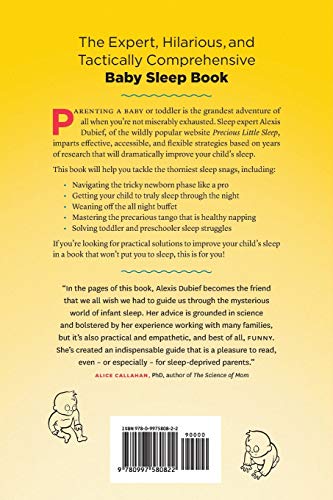


Precious Little Sleep: The Complete Baby Sleep Guide for Modern Parents
- Health, Fitness & Dieting
- Diseases & Physical Ailments
- Sleep Disorders
4. Building a Bedtime Routine That Actually Holds
A consistent pre-sleep routine is the most evidence-backed, zero-cost intervention for toddler sleep. A 2009 randomised controlled trial published in SLEEP (Mindell et al.) found that a three-step bedtime routine introduced over three weeks led to significant reductions in night wakings and sleep-onset time in toddlers and infants — benefits that persisted at follow-up.
The 20-minute framework
A routine doesn't need to be elaborate. It needs to be the same, every night:
1. Bath or warm flannel wash (5 min) — warmth signals the body to drop core temperature, a biological sleep cue 2. Pyjamas + teeth (3 min) — familiar physical cues 3. One or two books (7 min) — language-rich, calm, predictable 4. Song or quiet chat (3 min) — emotional connection that fills the "attachment tank" 5. Lights out, goodbye ritual (2 min) — consistent words, consistent hug, leave
For structured, step-by-step guidance, It's Never Too Late to Sleep Train by Craig Canapari MD is an excellent, low-stress resource that works specifically for toddlers who've developed sleep associations that are hard to break.
5. Sleep Training During a Regression: What Works and What Doesn't
Sleep training — teaching your toddler to fall asleep independently — is a legitimate, evidence-supported approach, but timing and method matter enormously during a regression.
Methods compared — a quick overview
- Graduated extinction ("Ferber method"): Check-ins at increasing intervals. Strong evidence base; works well for toddlers who have clear sleep associations with parental presence. - Chair method (sleep fading): Parent sits nearby and gradually moves further away over days. Lower immediate distress; takes longer. - Bedtime-pass method: Child receives one physical "pass" to call for a parent per night. A 2006 study in Archives of Pediatrics & Adolescent Medicine (Freeman et al.) found it reduced curtain calls significantly while maintaining parental connection — particularly useful for the 2–3 year age group. - Consistent early bedtime alone: For overtired toddlers, simply moving bedtime 30–45 minutes earlier resolves the regression in a subset of families without any formal training.





Solve Your Child's Sleep Problems: New, Revised, and Expanded Edition
- Health, Fitness & Dieting
- Diseases & Physical Ailments
- Sleep Disorders
For families who want a comprehensive, research-grounded framework, Healthy Sleep Habits, Happy Child by Dr Marc Weissbluth remains one of the most thorough references available, covering the toddler years in detail.
6. When to Call Your Paediatrician
Most sleep regressions are self-limiting, but some sleep disruptions in toddlers signal something that needs clinical attention.
Red flags to act on promptly




Twelve Hours' Sleep by Twelve Weeks Old: A Step-by-Step Plan for Baby Sleep Success
- Health, Fitness & Dieting
- Diseases & Physical Ailments
- Sleep Disorders
Twelve Hours' Sleep by Twelve Weeks Old is primarily a newborn resource, but its sleep-log methodology translates directly to toddler tracking and is worth borrowing for exactly this purpose.
7. Protecting Your Own Sleep (Because Yours Matters Too)
Toddler sleep regression doesn't just affect your toddler. Parental sleep deprivation impairs decision-making, emotional regulation, and — critically — the warm, consistent responsiveness your child needs most during a regression. The CDC classifies adults sleeping fewer than seven hours a night as sleep-deprived, with associated health risks.
Practical strategies for caregivers
- Split the night: If you have a co-parent, alternate who responds to night wakings. Each of you gets one longer sleep block. - Protect the first sleep cycle: Research consistently shows the first three to four hours of sleep are the most restorative. If your toddler typically wakes at midnight, go to bed at 9 p.m. during the regression, not 11 p.m. - Resist the urge to "fix" everything at 3 a.m.: Decisions made in the middle of the night are rarely consistent. Agree on your response plan during daylight hours and stick to it. - Accept imperfection: A regression is a phase, not a verdict on your parenting.

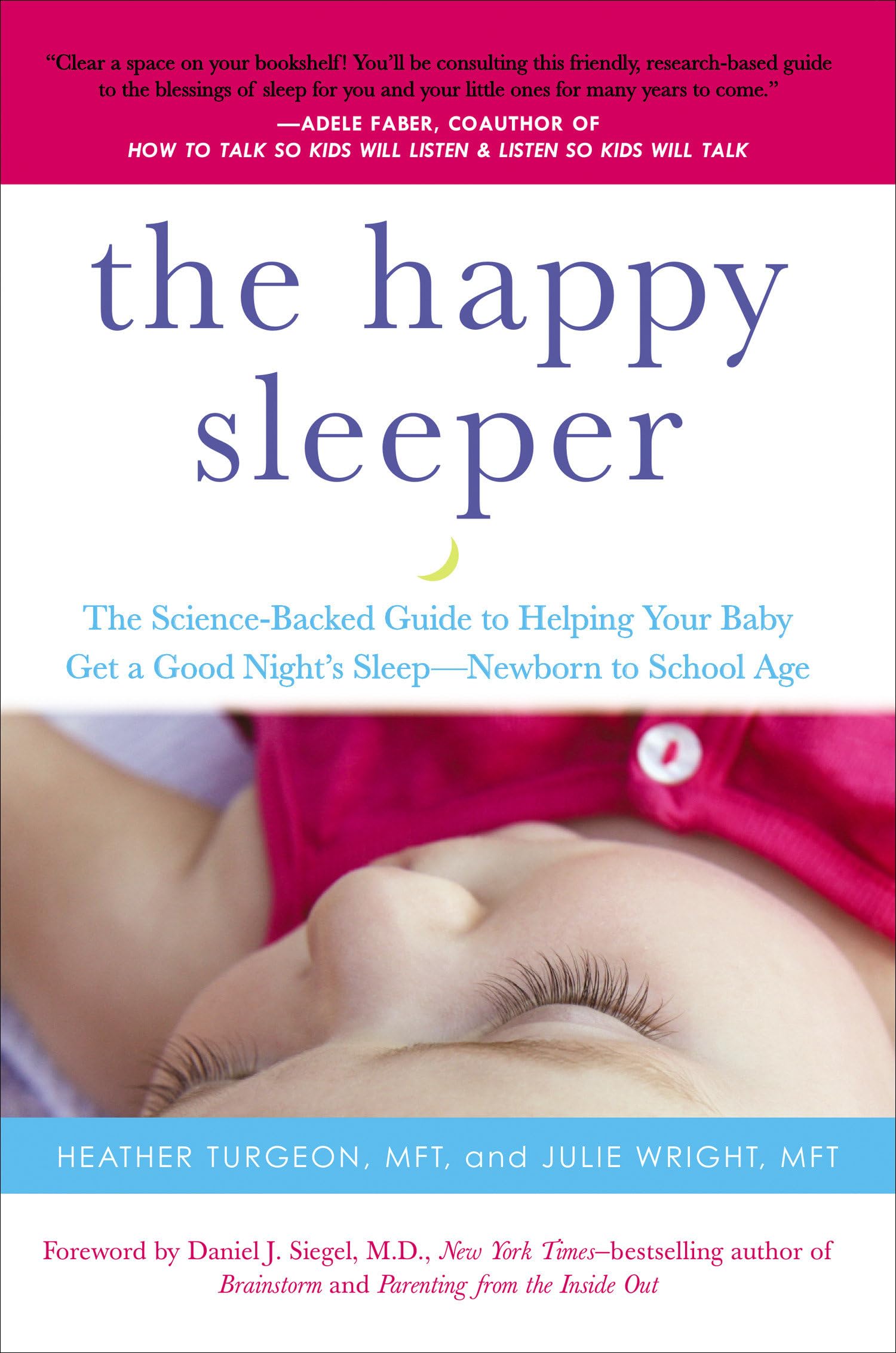

The Happy Sleeper: The Science-Backed Guide to Helping Your Baby Get a Good Night's Sleep-Newborn to School Age
- Health, Fitness & Dieting
- Diseases & Physical Ailments
- Sleep Disorders
The Happy Sleeper includes a dedicated section on caregiver wellbeing during sleep disruptions — one of the few toddler sleep books to treat parental exhaustion as a clinical variable, not an afterthought.
Sleep Method Comparison Table
| Sleep Method | Best Age in Toddler Window | Key Benefit | Main Challenge | Recommended Resource | Approx. Timeframe |
|---|---|---|---|---|---|
| Graduated Extinction (Ferber) | 12–24 months | Strong evidence base; relatively fast | Initial distress can be hard for parents | Solve Your Child's Sleep Problems | 3–7 nights |
| Chair Method (Sleep Fading) | 18 months–3 yr | Lower immediate distress | Slower; requires consistency over weeks | Healthy Sleep Habits, Happy Child | 2–4 weeks |
| Bedtime-Pass Method | 2–3 yr | Maintains connection; toddler feels control | Requires a physical prop and firm limits | It's Never Too Late to Sleep Train | 1–2 weeks |
| Consistent Early Bedtime | 12 months–3 yr | Zero distress; addresses overtiredness | Doesn't teach independent settling | Precious Little Sleep | 3–5 nights |
| Visual Routine + Goodbye Ritual | 18 months–3 yr | Builds security; toddler-led | Works best as a complement, not standalone | The Happy Sleeper | 1–2 weeks |
| No-Cry Sleep Solution approach | 12 months–3 yr | Gentle; minimal tears | Slowest method; requires high parental consistency | Twelve Hours' Sleep by Twelve Weeks Old | 4–8 weeks |
Expert Insights
You've Got This
Sleep regressions are one of those parenting experiences that feel endless at 3 a.m. and almost forgettable six months later. Your toddler isn't broken, and neither are you. What they need most right now is the steady, predictable presence that only you can provide — and that's something you're already doing just by looking for answers.
The one thing worth holding onto: consistency is the cure. Not perfection, not a particular method, not a specific book — just showing up the same way, night after night, until their developing brain catches up with their body's need for rest.
If this guide helped, save it for the next rough night, share it with a fellow parent in the trenches, or subscribe to tinymindsworld.com for more evidence-based guidance through every stage of your child's development.
Sources & References
- American Academy of Pediatrics. "Sleep Duration Recommendations for Children." HealthyChildren.org. 2016. https://www.healthychildren.org/English/healthy-living/sleep/Pages/healthy-sleep-habits-how-many-hours-does-your-child-need.aspx
- Mindell JA, Kuhn B, Lewin DS, Meltzer LJ, Sadeh A. "Behavioral treatment of bedtime problems and night wakings in infants and young children." SLEEP. 2006;29(10):1263–1276.
- Mindell JA, Telofski LS, Wiegand B, Kurtz ES. "A nightly bedtime routine: impact on sleep in young children and maternal sleep and mood." SLEEP. 2009;32(5):599–606.
- Freeman KA. "Treating bedtime resistance with the bedtime pass: a systematic replication and component analysis with 3-year-olds." Journal of Applied Behavior Analysis. 2006;39(4):423–428.
- Centers for Disease Control and Prevention. "Are you getting enough sleep?" CDC.gov. 2022. https://www.cdc.gov/sleep/data_statistics.html
- American Academy of Pediatrics. "Media and Young Minds." Pediatrics. 2016;138(5). https://doi.org/10.1542/peds.2016-2591
- Canapari C. "It's Never Too Late to Sleep Train." Rodale Books. 2019.
- Mindell JA, Williamson AA. "Benefits of a bedtime routine in young children: Sleep, development, and beyond." Sleep Medicine Reviews. 2018;40:93–108. https://doi.org/10.1016/j.smrv.2017.10.007
Frequently Asked Questions
How long does toddler sleep regression last?
Is it okay to sleep train during a regression?
Should I let my toddler cry it out during a regression?
Why does my 2-year-old suddenly refuse to nap?
Can teething cause sleep regression in toddlers?
My toddler keeps getting out of bed — what do I do?
When should I worry about my toddler's sleep?
Was this helpful?
Thanks — your feedback helps us pick what to write next.