
Understanding the Tween Brain: Why Family Life Feels Turbulent
The tween years (8–12) reshape family life in ways most parents don't anticipate — but with the right strategies, this stage can actually deepen your connection rather than fracture it.

In this article
Picture this: your nine-year-old, who used to beg to sit next to you at dinner, now rolls their eyes when you ask about their day. Yet twenty minutes later they're leaning on your shoulder watching a film like nothing changed. Welcome to the tween years — the most misunderstood stretch of childhood.
According to the American Academy of Pediatrics (AAP), the period between ages 8 and 12 is marked by rapid neurological, hormonal, and social development that rivals the first three years of life in intensity. Most parenting culture skips straight from "little kid" advice to "teen survival guides," leaving families in this middle zone without a map.
This guide gives you that map. By the end, you'll understand:
1. Understanding the Tween Brain: Why Family Life Feels Turbulent
Your tween isn't being difficult — their brain is literally under construction.
The prefrontal cortex, which governs impulse control, long-term thinking, and empathy, undergoes a second major growth spurt during the tween years. At the same time, the limbic system (the emotional, reward-seeking part of the brain) is running hot. The result: big feelings, inconsistent behaviour, and a child who can seem like three different people in one afternoon.
What This Means for Day-to-Day Family Life
- Your tween may seem to "forget" rules they've known for years — this is partially neurological, not purely defiance - Emotional dysregulation peaks around ages 10–12 for many children - Peer opinion starts to outweigh parental opinion in real time — this is developmentally expected, not a failure of parenting
2. Building Family Rituals That Tweens Will Actually Protect
Rituals are the single most evidence-backed tool for keeping families connected through the tween and teen years.
A landmark study by the Search Institute found that children with strong family rituals — shared meals, weekly activities, even consistent bedtime routines — reported significantly higher levels of belonging and were less likely to engage in high-risk behaviour by age 15. The ritual itself matters less than its consistency and the fact that your child can predict it.
Family rituals create a sense of 'we' — a shared identity that children carry with them even when they're actively pushing boundaries.
— Search Institute, Developmental Assets Framework (2018)
Rituals That Survive the Tween Stage
Not all childhood rituals make it to 10. Here's what tends to stick:
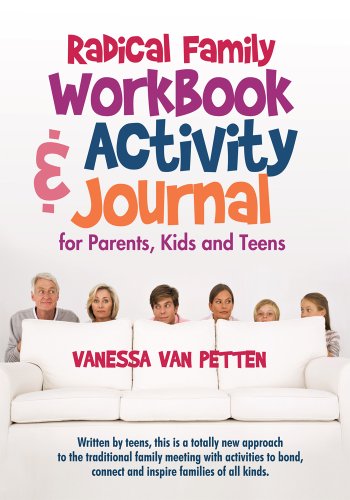
For families looking for a structured way to build connection, Radical Family Workbook offers activities written partly by teens themselves — making it feel less like a parent-imposed exercise and more like a genuine collaboration.


3. Conflict Resolution at Home: Teaching Skills, Not Just Rules
The way conflict is handled in your home right now is the curriculum your tween is absorbing for every future relationship they'll have.
Tweens who grow up in homes where adults model repair — acknowledging mistakes, naming feelings, and finding solutions together — develop measurably stronger social-emotional skills by mid-adolescence, according to research published by the Collaborative for Academic, Social, and Emotional Learning (CASEL).
The Four-Step Family Conflict Framework
1. Name it — "I can see we're both frustrated right now." 2. Pause it — agree on a short break (10–20 minutes) before continuing 3. Hear it — each person gets uninterrupted time to say their view 4. Fix it — generate at least two possible solutions together
Teaching your tween the vocabulary of conflict is just as important as the framework. Books like Social Skills for Tweens break down communication and conflict resolution into age-appropriate language that children can actually use in the heat of the moment.

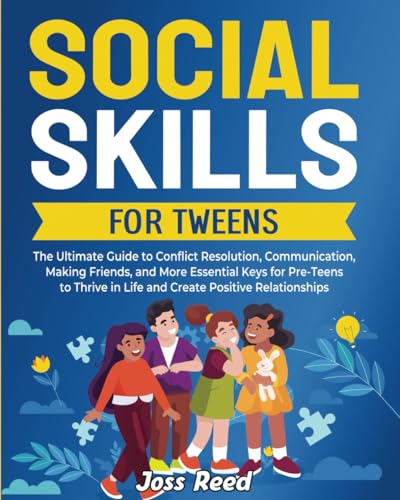


Social Skills for Tweens: The Ultimate Guide to Conflict Resolution, Communication, Making Friends, and More Essential Keys for Pre-Teens to Thrive in ... Relationships (The Emotion Detectives)
- Children's Books
- Growing Up & Facts of Life
- Friendship, Social Skills & School Life
4. Screens, Boundaries, and the Family Media Plan
Screen time doesn't ruin tweens — unmanaged screen time with no family framework around it does.
The AAP recommends that families of children aged 6 and older create a consistent Family Media Plan rather than relying on hour-counting alone. The plan should address what, when, where, and with whom screens are used — and tweens should be part of writing it.
A Practical Family Media Plan for Tweens


Would You Rather? Summer Edition: Laugh-Out-Loud Game for Camping, Road Trips, and Vacation Travel
- Children's Books
- Activities, Crafts & Games
- Questions & Answers
5. Shifting Roles and Responsibilities: Raising a Capable Tween
By age 8, most children are developmentally ready for genuine household responsibility — not token chores, but real contributions that the family depends on.
Research from the University of Minnesota (Marty Rossmann, 2002) found that children who had chores starting in early childhood were more self-reliant, academically successful, and had better relationships with family and friends in their twenties compared to those who had no chores or who began chores in their teens. The tween years are your window to solidify this.
Age-Appropriate Responsibilities for 8–12 Year Olds
- 8–9 years: loading dishwasher, folding laundry, feeding pets, packing their own bag - 10–11 years: basic cooking (supervised), grocery list contributions, managing their own schedule with a shared calendar - 12 years: preparing simple meals independently, managing a small budget, contributing to family planning decisions
A practical resource like Life Skills for Tweens covers everything from cooking basics to self-confidence — giving your child a sense that growing up is exciting, not just more rules.


Life Skills for Tweens: How to Cook, Make Friends, Be Self Confident and Healthy. Everything a Pre Teen Should Know to Be a Brilliant Teenager (Life Skills for Tweens & Teens)
- Children's Books
- Growing Up & Facts of Life
- Family Life
6. Parent–Child Connection: Keeping the Relationship Strong
The parent–tween relationship is the single most protective factor against depression, anxiety, and risky behaviour in adolescence — more than any programme, school, or intervention.
The Harvard Study of Adult Development (the longest-running study on human happiness, now in its 85th year) consistently finds that the quality of close relationships in childhood predicts wellbeing decades later. Your relationship with your tween is not a soft skill. It is the infrastructure.
Staying Connected When They Pull Away
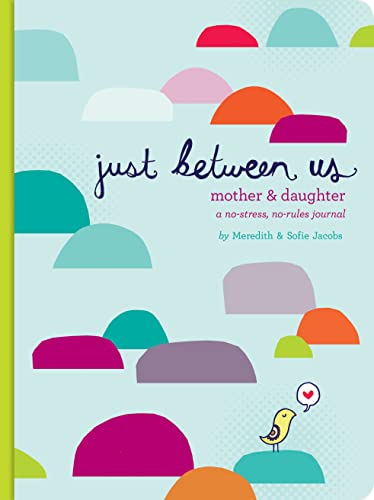


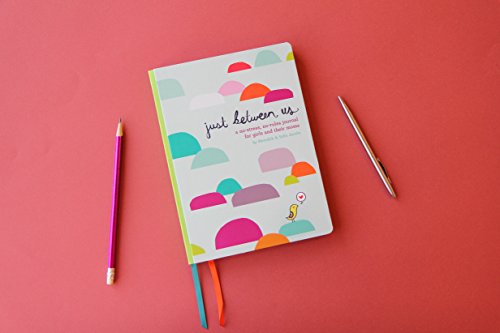
Just Between Us: Mother & Daughter: A No-Stress, No-Rules Journal (Activity Journal for Teen Girls and Moms, Diary for Tween Girls)
- Children's Books
- Growing Up & Facts of Life
- Family Life
7. Social Skills and Friendships: How Family Life Shapes Peer Relationships
Your family is your tween's first social laboratory — and the skills they practice at home are exactly the ones they'll deploy (or struggle without) at school.
The CDC's data on social-emotional development confirms that children who experience consistent warmth, clear communication, and modelled empathy at home demonstrate stronger peer relationships and lower rates of social anxiety throughout adolescence.
What Families Can Practise Together
For families who want structured activities to build these skills together, 101 Social Skills Activities for Kids offers simple, research-informed exercises that don't feel like therapy — they feel like games.

101 Social Skills Activities for Kids: Fun and Simple Ways to Help Children Build Confidence, Make Friends, and Communicate Clearly (101 Families)
- Parenting & Relationships
- School-Age Children
- Image Unavailable Image not available forColor:
Comparison Table: Family Connection Strategies for Tweens
| Strategy | Best For | Connection Depth | Time Investment | Works For Ages | Recommended Resource |
|---|---|---|---|---|---|
| Shared journal / written dialogue | Tweens who clam up verbally | Deep, asynchronous | Low (10 min/week) | 9–12 | Just Between Us Journal |
| Family workbook activities | Whole-family engagement | Moderate–deep, structured | Medium (30 min/session) | 8–12 | Radical Family Workbook |
| Car/travel conversation games | Low-pressure bonding on the go | Light–moderate | Very low (zero prep) | 8–12 | Would You Rather? Summer Edition |
| Life skills practice together | Building competence + connection | Moderate, practical | Medium (cooking, errands) | 10–12 | Life Skills for Tweens |
| Social skills activities at home | Tweens with peer struggles | Moderate, skill-building | Low–medium | 8–11 | 101 Social Skills Activities |
| Conflict resolution tools | Families with frequent friction | Deep, transformative | Medium (learning curve) | 9–12 | Social Skills for Tweens |
Expert Insights
Conclusion
The tween years can feel like a slow handover — your child is reaching for independence with one hand while gripping yours with the other. That's not confusion. That's exactly how it's supposed to work. Your job isn't to hold on tighter or let go faster; it's to stay steady while they figure out how far they can go and still find you there when they look back.
The families who come out of this stage closer than they went in aren't the ones who had no conflict or perfect communication. They're the ones who kept showing up — at the dinner table, in the car, at the door of a sullen bedroom — even when it wasn't immediately rewarded.
Connection doesn't require a perfect moment. It just requires a consistent presence.
If this guide helped you see your tween a little more clearly, save it, share it with another parent in the thick of it, or bookmark it for the harder days ahead.
Sources & References
- American Academy of Pediatrics. "Middle Childhood." HealthyChildren.org. 2023. https://www.healthychildren.org
- Search Institute. "Developmental Assets Framework." 2018. https://www.search-institute.org/developmental-assets/
- Collaborative for Academic, Social, and Emotional Learning (CASEL). "What Is SEL?" 2023. https://casel.org/fundamentals-of-sel/
- Rossmann, Marty. University of Minnesota. "Involving Children in Household Tasks: Is It Worth the Effort?" 2002. University of Minnesota College of Education and Human Development.
- Deci, E.L. & Ryan, R.M. "Self-Determination Theory." University of Rochester. https://selfdeterminationtheory.org
- Waldinger, Robert. Harvard Study of Adult Development. Harvard Medical School. Ongoing since 1938. https://www.adultdevelopmentstudy.org
- Centers for Disease Control and Prevention (CDC). "Child Development: Middle Childhood (9–11 years)." 2023. https://www.cdc.gov/ncbddd/childdevelopment
- Fishel, Anne K. "The Family Dinner Project." Harvard Medical School. https://thefamilydinnerproject.org
- Radesky, Jenny. "Media and Young Minds." American Academy of Pediatrics, Pediatrics Journal. 2016. https://publications.aap.org
- Ginsburg, Kenneth R. "Building Resilience in Children and Teens." American Academy of Pediatrics. 3rd Edition, 2015.
Frequently Asked Questions
Why does my tween suddenly seem embarrassed by me in public?
How much privacy should I give my tween?
My tween refuses to participate in family activities. What do I do?
How do I handle sibling conflict between my tween and a younger child?
Is it normal for family closeness to decrease during the tween years?
How do I talk to my tween about big family changes (divorce, moving, illness)?
Should tweens have a say in family rules?
Was this helpful?
Thanks — your feedback helps us pick what to write next.