
Sharenting: What Every Parent Needs to Know About Privacy Risks
Sharenting (sharing content about your children on social media) creates a permanent digital footprint before your child can consent, and the risks range from identity theft to long-term psychological harm.

In this article
More than 80 percent of children in Western countries have a social media presence before they turn two years old, according to research cited by the UK Children's Commissioner. By the time your five-year-old straps on their first school backpack, hundreds of photos, videos, and captions have already told the internet who they are, where they live, and what they look like. Most of those posts were made with love and zero harmful intent. That is precisely what makes sharenting so complicated.
This article will help you understand:
1. What Sharenting Really Means in 2026
Sharenting is not simply posting a cute photo once in a while. The term, a blend of "sharing" and "parenting," describes the habitual, ongoing publication of children's images, locations, routines, and personal milestones on social media platforms by their caregivers. What began as digital scrapbooking on early Facebook has evolved into a multi-platform practice spanning Instagram Reels, TikTok, YouTube family channels, and WhatsApp group chats that are far less private than parents assume.
From family album to public record
A key distinction worth making early: a photo sent to six grandparents in a group chat is sharenting in a technical sense, but its risk profile looks very different from a public TikTok tagging your daughter's school. The risks scale with audience size, platform settings, content specificity, and frequency of posting.
For children aged 5–8, the stakes shift in a specific way. These children are in school, which means their faces, first names, and often their school names appear regularly in photos. They are also old enough to feel embarrassed, proud, or violated by what you post. Understanding why this age group struggles with emotions helps explain why seeing themselves mocked in a comment section can hit differently than you might expect.
2. The Digital Footprint: Real Numbers, Real Consequences
Your child's digital footprint is already substantial, and it is growing without their knowledge or consent. The UK Children's Commissioner's 2018 report "Who Knows What About Me?" estimated that by age 13, the average child has approximately 1,300 photos and videos posted online by parents and family members. That number has almost certainly increased since then, given the growth of short-form video.
Identity theft starts younger than you think
The US Federal Trade Commission's Children's Online Privacy Protection Rule (COPPA) exists precisely because children's data is valuable and vulnerable. COPPA Regulation Guide covers what data platforms are legally prevented from collecting from under-13s, but it does not prevent parents from voluntarily broadcasting that same information themselves.
Personal details shared casually across posts, including full names, birth dates, schools, neighbourhoods, and even pet names (a common password recovery question), can be aggregated by bad actors. A 2018 report by Barclays Bank (UK) projected that by 2030, sharenting-related data would be implicated in two-thirds of identity fraud cases targeting young people.
Location data is hiding in plain sight
Even without explicitly tagging a location, school uniforms, playground equipment, street signs visible in the background, and even distinctive indoor furniture can narrow a child's location to a small geographic radius. Tools like How to Be Invisible walk through exactly how much information a determined person can extract from seemingly innocent photos.
3. Psychological Effects on 5–8 Year Olds
Children in the 5–8 range are concrete thinkers who are beginning to form a stable sense of identity, social comparison, and peer reputation. This developmental window makes them uniquely sensitive to how they are presented to the world.
The consent conversation they're ready to have
Most children this age can understand, in simple terms, that a photo posted online can be seen by people they do not know and cannot be easily taken back. Research in child development consistently shows that autonomy over personal image is linked to self-esteem and trust in caregivers. When parents override a child's "please don't post that," the message received is that the parent's social audience matters more than the child's comfort.
Self-consciousness and the camera effect
Children who grow up knowing they are frequently photographed for public audiences can begin to perform for the camera rather than simply live their experience. Psychologists call this the "observer effect," and it is relevant for a child who has learned that a meltdown, a funny face, or a private moment might end up online. The result, in some children, is heightened self-consciousness, or conversely, a normalised expectation that all experience is content.
4. Why Parents Share, and Why It's Hard to Stop
Understanding the motivation behind sharenting is not about judgment; it is about designing better habits. Parents post for reasons that are almost entirely legitimate on their face.
Connection, validation, and the loneliness of early parenting
Social media genuinely reduces isolation for parents, especially those who are new to a city, staying home with young children, or parenting without an extended family nearby. Posting milestones creates community, invites warm responses, and documents memories in a shareable form. None of that is trivial. Modern parenthood's performance pressures add another layer: the curated family feed has become a way of signalling that you are doing it right.
Monetisation and "kidfluencer" culture
A smaller but growing subset of parents have turned their children's online presence into a revenue stream. Family channels, sponsored posts, and affiliate partnerships with children as the primary subject raise serious ethical questions. Several European countries, including France, have begun legislating protections for minor content creators, recognising that a child cannot meaningfully consent to being the product.
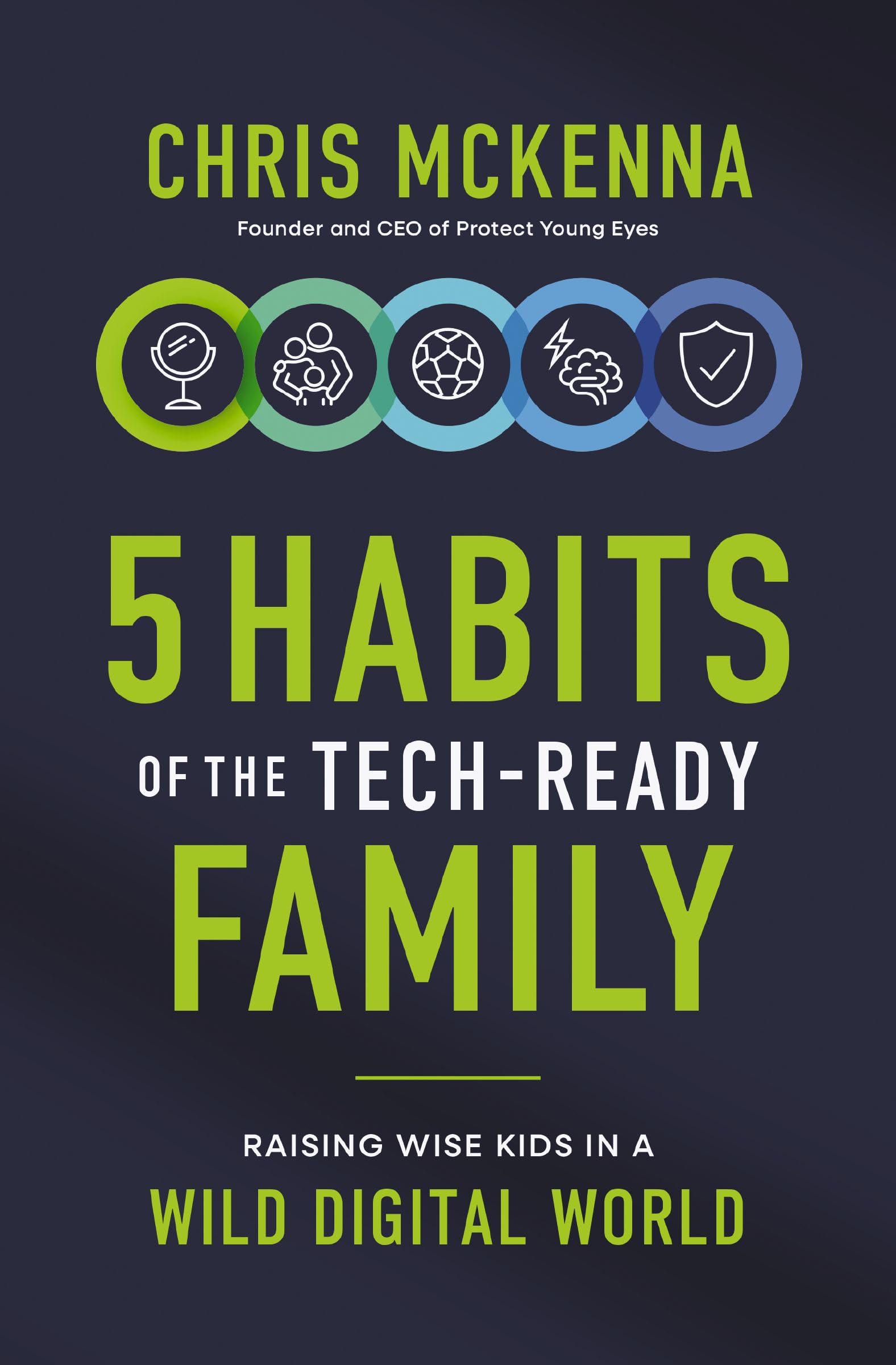

5 Habits of the Tech-Ready Family: Raising Wise Kids in a Wild Digital World
- Religion & Spirituality
- Christian Books & Bibles
- Christian Living
5. The Legal Landscape: What Protections Actually Exist
Parents are often surprised to discover how limited legal protections are once content is voluntarily shared. GDPR (General Data Protection Regulation) in the EU and COPPA in the US both protect children's data from commercial collection by third parties, but neither law prevents a parent from posting.
The "right to be forgotten" is real but hard to use
Under GDPR, individuals have the right to request deletion of their personal data. But data shared publicly spreads quickly. A photo posted to Instagram can be screenshotted, re-shared, indexed by Google, archived by third-party services, and appear in AI training datasets, all before a deletion request is even filed. For a child who reaches adulthood wanting to scrub their online history, the reality is that "right to be forgotten" requests are slow, partial, and often unsuccessful.
Online Privacy and Data Protection of Children in the European Union and the United States (Ius Gentium: Comparative Perspectives on Law and Justice, 141)
- Legal Theory & Systems
- Comparative
- Image Unavailable Image not available forColor:
The Child Protection and Privacy Guide provides a detailed breakdown of how parental sharing intersects with data protection law across different jurisdictions, useful reading for any parent building a family media policy.
6. A Practical Framework for Safer Sharing
The goal here is not to ban all photos of your child from the internet. It is to share with intention, proportionality, and your child's future interests in mind.
The PAUSE checklist before you post
Before sharing any content involving your 5–8 year old, run through these five questions:
Adjusting settings and habits
Private accounts are a baseline, not a complete solution. Regularly audit your followers or friends list. Turn off geotagging in your camera settings. Avoid photos that show school uniforms with visible logos. Create a family rule that applies to grandparents, aunts, and uncles too, as family members are responsible for a significant proportion of sharenting content.
NO! I'M TELLING! - Body Safety, Consent & Boundaries Fun Activities for Kids: Personal Space, Secrets, Unsafe Touch, Social-Emotional Learning & Child Protection (NO! I'M TELLING! Series®)
- Children's Books
- Growing Up & Facts of Life
- Image Unavailable Image not available forColor:
For age-appropriate conversations with your child about what their body, image, and personal information belong to them, NO! I'M TELLING! Body Safety Activities offers structured activities that make the concept of personal boundaries concrete and accessible for 5–8 year olds.
If you are reviewing your family's broader digital habits, the article on why screen time limits fail explores how the physical and social infrastructure of a home either supports or undermines the media rules you set.
| Sharing Scenario | Risk Level | Key Concern | Safer Alternative | Recommended Product |
|---|---|---|---|---|
| Public post with school uniform and name | Very High | Location + identity exposed | Private post, no uniform visible | How to Be Invisible |
| Private account photo, no location data | Low | Audience can still screenshot | Audit followers regularly | COPPA Regulation Guide |
| Family WhatsApp group milestone photo | Low-Medium | Group may include unknown contacts | Keep groups small; use disappearing messages | 5 Habits of the Tech-Ready Family |
| Child's funny moment posted to TikTok | High | Public reach, embarrassment, data harvesting | Ask child first; restrict to close friends list | NO! I'M TELLING! Body Safety Activities |
| Monetised family YouTube channel | Very High | Ongoing consent, financial exploitation, data | Seek legal advice; consult child regularly | Online Privacy and Data Protection |
| Annual milestone photo, private account | Low | Digital footprint accumulation over time | Archive locally; post selectively | Child Protection and Privacy Guide |
Sharenting is not a villain's behaviour. It is a loving impulse that exists in a world that was not designed with children's long-term interests at the centre. Every parent reading this has posted something they probably would not post again knowing what they now know, and that is fine. The point is not guilt; it is calibration.
Your child's digital story is still being written. The version they deserve is one they had at least some hand in shaping. One conversation, one family policy, one changed camera setting at a time, you can give them that.
If this raised questions for you, save this article, share it with a co-parent or grandparent, and start with just one change this week: ask your child before the next post.
Sources & References
- UK Children's Commissioner. "Who Knows What About Me? A Children's Commissioner's Report into the Collection and Use of Children's Data." 2018. https://www.childrenscommissioner.gov.uk
- US Federal Trade Commission. "Children's Online Privacy Protection Rule (COPPA)." 1998, amended 2013. https://www.ftc.gov/legal-library/browse/rules/childrens-online-privacy-protection-rule-coppa
- Barclays Bank UK. "Sharenting: Can Over-Sharing Lead to Identity Fraud?" 2018. https://home.barclays
- European Parliament. "General Data Protection Regulation (GDPR), Article 17: Right to Erasure." 2018. https://gdpr-info.eu/art-17-gdpr
- Livingstone, Sonia, and Blum-Ross, Alicia. "Parenting for a Digital Future." Columbia University Press, 2020.
- Steinberg, Stacey B. "Sharenting: Children's Privacy in the Age of Social Media." Emory Law Journal, Vol. 66, 2017.
- UNICEF. "Children's Rights and Digital Technology." 2017. https://www.unicef.org
Frequently Asked Questions
What age should I ask my child before posting photos?
Does making my account private fully protect my child?
What should I do if a family member posts photos of my child without permission?
Can my child's photos be used in AI training datasets?
Is sharenting ever okay?
What is a "digital footprint" and why does it matter for a 5-year-old?
Do platforms delete children's data if I ask?
Was this helpful?
Thanks — your feedback helps us pick what to write next.


