
What Is "Sharenting" — and Why Do We Do It?
Sharing your child's photos, location, and personal details online without careful boundaries creates real, lasting risks — from privacy violations and identity theft to emotional harm and a permanent digital footprint your child never consented to.
In this article
Picture this: you post a sweet back-to-school photo of your seven-year-old — full name in the caption, school uniform visible, a familiar park in the background. Within seconds, a stranger could piece together your child's name, school, and daily route. It sounds alarmist, but a 2023 report from the Internet Watch Foundation found that a significant proportion of child sexual abuse material circulating online originated from images parents had shared innocently on social media. Meanwhile, research from Nominet UK estimates that by the time a child turns five, their parents have posted an average of 1,500 photos of them online.
This guide will help you understand:
1. What Is "Sharenting" — and Why Do We Do It?
Sharenting is the habitual sharing of a child's images, milestones, and personal details on social media by their parents or caregivers. It isn't inherently harmful — the problem lies in the volume, detail, and audience of what's shared.
Parents share for understandable reasons: connection with distant family, community with other parents, pride in their child's growth, or simply because it has become a reflex in a notification-driven world. A 2020 study published in the Journal of Children and Media found that parental social media use is strongly shaped by social norms — if your peer group posts constantly about their kids, you're more likely to do the same, without pausing to weigh the risks.
The Consent Gap
Here is the core tension: a newborn cannot consent to a public digital identity. A toddler cannot understand what "the internet" means. Even a ten-year-old may not grasp that a photo posted today could be seen by a future employer, a romantic partner, or a bad actor in fifteen years.
2. The Digital Footprint: What You're Building Without Realising It
Every tagged photo, every captioned milestone, every check-in at your child's school adds a data point to a profile that can persist for decades. This is your child's digital footprint — and unlike yours, theirs started before they could walk.
What Gets Captured and Stored
When you post a photo to Instagram or Facebook, you're sharing more than the image. Metadata embedded in smartphone photos can include GPS coordinates, device type, and timestamp. Platforms harvest this data for advertising. Third parties — including data brokers — can aggregate it.
The UK's Information Commissioner's Office (ICO) has specifically warned parents that images shared on social media can be scraped by third parties, used to train AI image-recognition systems, or repurposed in ways the original poster never intended.
Future-Proofing Your Child's Identity
A 2018 Barclays Bank report projected that by 2030, sharenting could account for two-thirds of identity fraud cases targeting young adults — as accumulated childhood data provides enough detail to answer security questions, forge documents, or open fraudulent accounts.

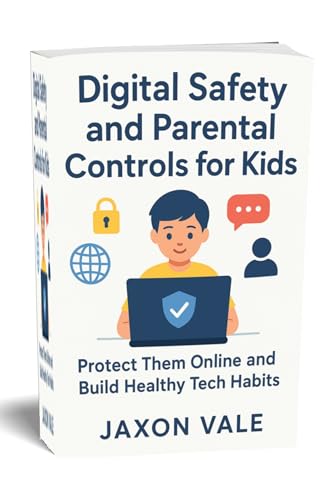

Digital Safety and Parental Controls for Kids: Protect Them Online and Build Healthy Tech Habits (Tech and Innovations Book 17)
- Kindle Store
- Kindle eBooks
- Computers & Technology
3. Age-by-Age Risk Guide: Newborn to Teen
The risks of oversharing shift as your child grows. Here's what to watch for at each stage.
Newborns and Babies (0–12 months)
Babies are the most overshared age group and the least able to object. The risks at this stage are primarily about data accumulation and stranger access. Avoid posting images that show your home's interior layout, identifiable street views, or your baby's full legal name.
Toddlers and Preschoolers (1–5 years)
Children at this age are developing their sense of self. Sharing potty-training struggles, tantrum videos, or images of children undressed — even innocently — can feel deeply humiliating to that same child at age twelve. The ICO's Children's Code (Age Appropriate Design Code) specifically calls out the need to protect younger children's data with higher standards.
School-Age Children (6–12 years)
By this stage, your child's peers are online. A photo you post can be seen, screenshotted, and shared by classmates — creating the conditions for cyberbullying. Children this age are also beginning to form their own views on privacy. Research published in Cyberpsychology, Behavior, and Social Networking (2016) found that children as young as nine report feeling embarrassed or angry when parents share content about them without asking.
Tweens and Teens (13–17 years)
Teens are acutely aware of their online image. Parental posts about their academic struggles, mental health, friendship drama, or physical appearance can cause genuine psychological harm. The American Psychological Association's 2023 health advisory on social media and adolescent mental health underscores that online exposure of sensitive personal information is a meaningful stressor for young people.
4. The Emotional and Psychological Cost to Children
The harm from oversharing isn't only about data — it's about dignity.
When a parent shares a child's emotional struggles, medical diagnoses, or embarrassing moments publicly, that child loses control over their own narrative. They didn't choose to be vulnerable in front of an audience. They didn't decide their anxiety, their learning difficulty, or their worst day at school would be visible to hundreds of followers — including people they know.
When Sharing Becomes Exploitation
There is a growing category of content — sometimes called "family vlogging" or "kidfluencing" — where children's lives are documented and monetised without their meaningful consent. Several countries, including France, have begun legislating protections for child social media subjects. In 2023, France passed a law giving children the right to demand parents remove content posted about them.
5. Practical Safety: Protecting Your Child's Online World at Home
Protecting your child online isn't only about what you post — it's also about what enters your home digitally.
Securing Your Home Network
Your home Wi-Fi is the gateway through which your child accesses the internet. A router with built-in parental controls lets you set content filters, schedule screen time, and monitor which apps are being used — without constant manual intervention.




Gryphon Guardian Mesh WiFi Router and Parental Control System with Content Filters and Advanced Cyber Security
- AFFORDABLE CONNECTIVITY & SECURITY – Beef up your mesh network’s coverage, add extra security to your system,
- COMPREHENSIVE PARENTAL CONTROLS – Schedule screen time, monitor online searches and create a safe Internet exp
- WIFI WHERE YOU NEED IT – Enjoy reliable connectivity throughout your whole apartment or improve WiFi speeds in
The Gryphon Guardian Mesh WiFi Router offers comprehensive parental controls, content filtering, and cybersecurity features in one device — a practical first layer of protection for families with children of any age.
For device-level management — including gaming consoles, tablets, and smart TVs — Bark Home provides customisable screen time schedules and app controls across every Wi-Fi-connected device in your home.
6. Building a Family Digital Charter: Rules That Actually Stick
The most effective protection isn't a single app or a single conversation — it's an ongoing, evolving family agreement about how you all use technology.
What a Family Digital Charter Covers
A simple, age-appropriate family agreement might include:
- ✓ We ask before posting photos of each other online - ✓ We keep our home address, school name, and daily schedule private - ✓ We tell a trusted adult if something online makes us uncomfortable - ✓ Screens are off during meals and one hour before bed - ✓ We review privacy settings on apps together every six months
Monitoring Without Spying
There's an important distinction between transparent monitoring (your child knows you can see their activity and understands why) and covert surveillance (secret tracking). The American Academy of Pediatrics (AAP) recommends that parental monitoring tools be used openly and as part of an ongoing conversation about online safety — not as a substitute for that conversation.


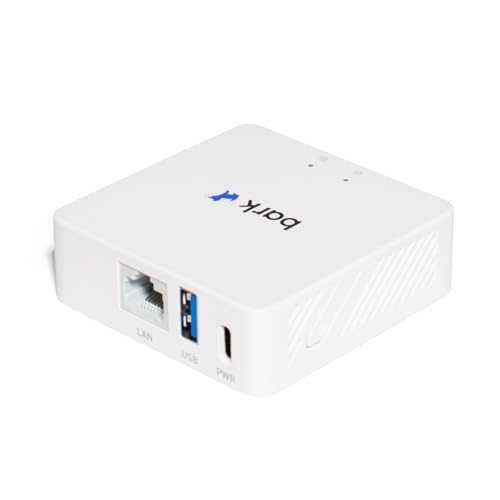
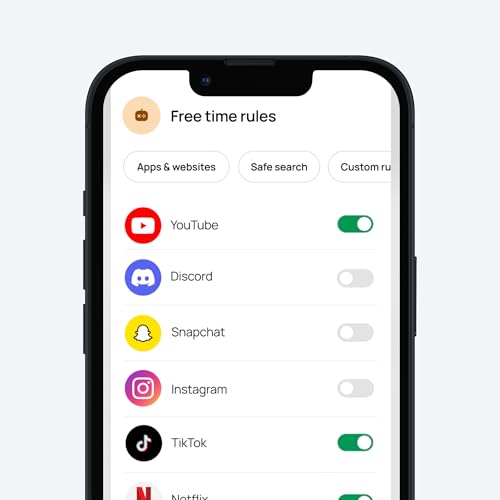
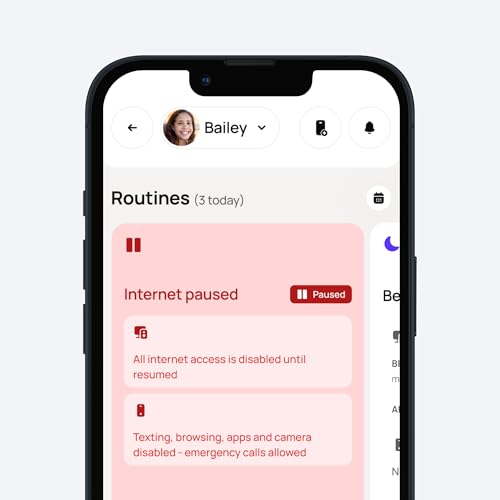
Bark Home — Parental Controls for Wi-Fi - Manage Screen Time, Block Apps, and Filter Websites for Kids - Phones, Tablets, Gaming Consoles, and More
- BARK HOME includes in-home protection for free with purchase of the hardware — no paid subscription needed.
- MANAGE the Wi-Fi-connected devices in your house, including TVs, gaming consoles, tablets, computers, and smar
- CREATE custom daily screen time schedules to help set healthy boundaries around device use.
For families wanting a deeper dive into building these habits, Digital Safety and Parental Controls for Kids is a practical, readable guide covering everything from screen time management to protecting children from online predators.
7. Comparison: Oversharing Risk Levels by Platform and Habit
| Sharing Behaviour | Privacy Risk | Audience Reach | Reversibility | Recommended Tool |
|---|---|---|---|---|
| Public Instagram post with child's name + school | Very High | Unlimited | Low — screenshots persist | Digital Safety Guide |
| Private Facebook album (friends only) | Medium | Known contacts, but platform harvests data | Medium | Gryphon Guardian Router |
| WhatsApp group with family | Lower | Controlled, but group members can screenshot | Medium | Gryphon Guardian Router |
| Password-protected family blog | Low | Invitation only | High — you control deletion | Digital Safety Guide |
| Home monitor with secure local network | Very Low | Household only | High | Aurumbach Indoor Security Camera |
| No posting — verbal updates only | Minimal | Zero digital footprint | N/A — no data created | Bark Home |
Expert Insights
The Bottom Line
Your instinct to share your child's life comes from love — there's nothing wrong with that. The shift required isn't from sharing to silence; it's from reflexive posting to intentional sharing. Every time you pause and ask "Would my child be okay with this at sixteen?" you're doing something quietly powerful: you're treating your child as a person with a future, not just a subject in your feed.
The most quotable truth in all of this is simple: your child's story belongs to them. You're the first chapter's author, but they deserve to hold the pen.
If this guide was useful, save it and share it with another parent who's navigating the same questions — because the more families think carefully about this, the safer all our children become.
Sources & References
- Internet Watch Foundation. "Annual Report 2023." 2023. https://www.iwf.org.uk/annual-report-2023/
- Nominet UK. "Sharenting: How Much Are Parents Sharing Online?" 2016. https://www.nominet.uk/sharenting-how-much-are-parents-sharing-online/
- Blum-Ross, A. & Livingstone, S. "Sharenting, parent blogging, and the boundaries of the digital self." Journal of Children and Media, 2017. https://doi.org/10.1080/17482798.2016.1243347
- Barclays Bank. "Sharenting Puts Half a Million Children at Risk of Online Fraud." 2018. https://home.barclays/news/2018/5/sharenting-puts-half-a-million-children-at-risk-of-online-fraud/
- Information Commissioner's Office (ICO). "Children's Code (Age Appropriate Design Code)." 2021. https://ico.org.uk/for-organisations/childrens-code-hub/
- American Psychological Association. "Health Advisory on Social Media Use in Adolescence." 2023. https://www.apa.org/topics/social-media-internet/health-advisory-adolescent-social-media-use
- American Academy of Pediatrics. "Media and Young Minds." Pediatrics, 2016. https://doi.org/10.1542/peds.2016-2591
- Steinberg, S. "Sharenting: Children's Privacy in the Age of Social Media." Emory Law Journal, 2017. https://scholarlycommons.law.emory.edu/elj/vol66/iss4/2
- Kumar, P. "Watching Children Watch: How Parents Monitor Kids' Digital Media Use." Penn State College of Information Sciences and Technology, 2019.
- Lipu, M. & Siibak, A. "Take it down please! Estonian parents' and pre-teens' opinions and experiences with sharenting." Media International Australia, 2019. https://doi.org/10.1177/1329878X19842220
Frequently Asked Questions
What is sharenting and why is it a problem?
At what age should I stop posting about my child without asking them?
Can old posts about my child be deleted?
Are parental monitoring apps safe to use?
What should I never post about my child online?
How do I talk to my child about their digital footprint?
What's the safest way to share photos with family members?
Was this helpful?
Thanks — your feedback helps us pick what to write next.