Preschool Family Life: Your Complete 3–5 Year Guide
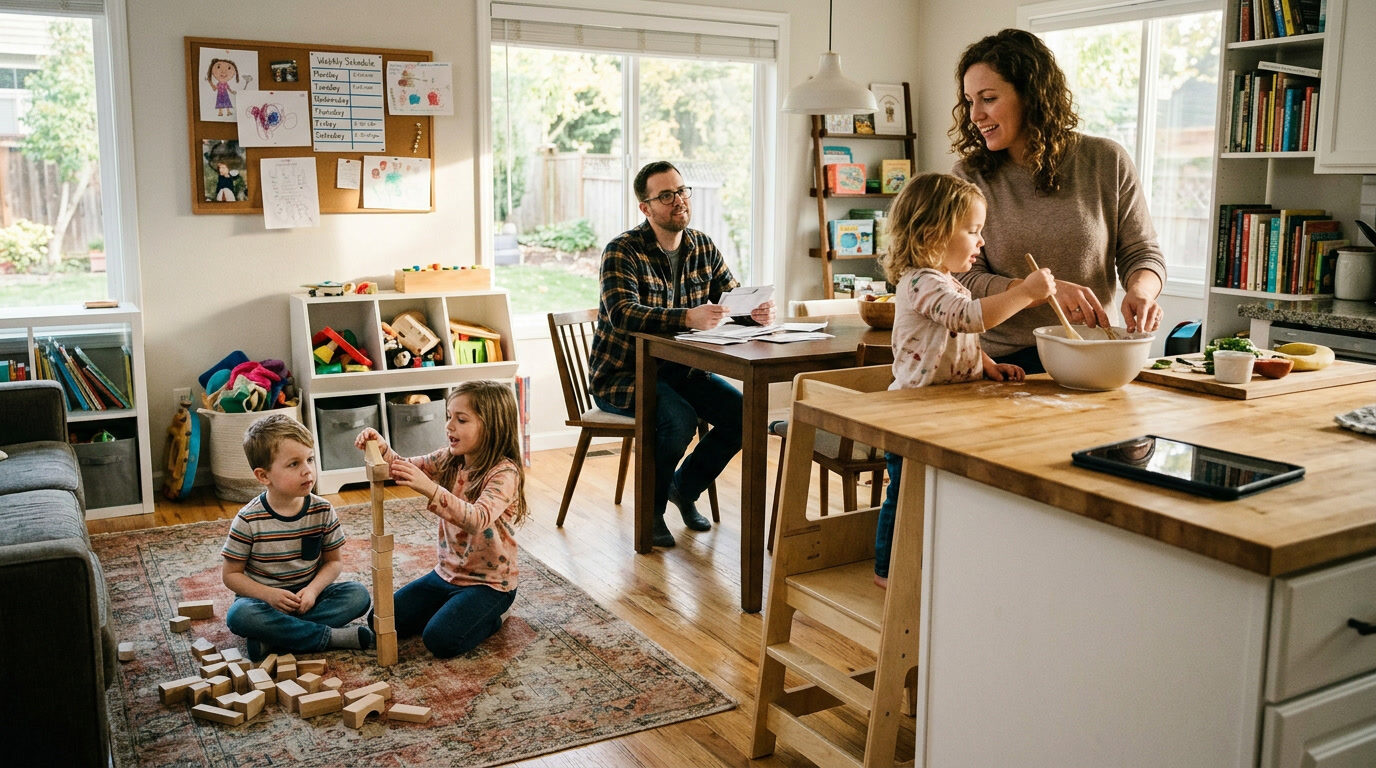
The preschool years (ages 3–5) are a pivotal window for family life, when daily routines, sibling dynamics, screen habits, and emotional rituals shape your child's sense of security and belonging for years to come.
In this article
Introduction
Here is a number that stops most parents mid-scroll: according to the Harvard Center on the Developing Child, 90% of a child's brain architecture is built before age 5. The quality of family life during the preschool years, including how you talk at dinner, how siblings argue, how bedtime feels, and how much unstructured play happens on a Tuesday afternoon, is literally constructing that architecture in real time.
This guide is for you if your child is somewhere between "just turned 3" and "about to start kindergarten." You will come away understanding:
Let's get into it.
1. Why Routines Are the Backbone of Preschool Family Life
Consistent daily routines are one of the most evidence-backed tools a parent of a preschooler has, not because they make life tidier (they do), but because predictability literally calms the developing brain.
The American Academy of Pediatrics (AAP) states that routines help young children develop self-regulation, improve sleep quality, and reduce behavioural problems. When a 4-year-old knows that breakfast comes before getting dressed, which comes before a story, which comes before preschool, their nervous system does not have to spend energy anticipating what happens next. That freed-up energy goes toward learning.
Morning Routines
Keep morning routines short and visual. A laminated picture chart with three to five steps works far better than verbal reminders, because preschoolers are concrete thinkers. Let your child tick each item off themselves; this builds both autonomy and a sense of accomplishment before 8 a.m.
Evening Routines
The wind-down matters as much as the wake-up. Understanding how much sleep your preschooler really needs is the starting point; building a routine that reliably gets them there is the work.
2. Emotional Climate: How Your Home Feels Every Day
The emotional climate of your home, meaning the day-to-day tone of conversations, conflict, and connection, is your child's primary classroom for social and emotional learning.
Preschoolers between 3 and 5 are in the thick of what psychologists call the "emotional identification" phase. They are learning to name feelings, read facial expressions, and understand that other people have internal states different from their own. Understanding why preschool brains are wired for big feelings helps you respond with empathy rather than exasperation when a meltdown erupts over the wrong colour cup.
Naming and Validating Emotions
You do not need to fix every emotion. You need to name it and sit with it.
Conflict at Home
How you argue, and how you repair, is what your child absorbs.
3. Sibling Dynamics and the Only-Child Experience
Whether your preschooler has siblings or is the only child in the house, the family constellation they inhabit is shaping their social development every day.
Families With Multiple Children
Sibling conflict is normal; in fact, it is useful. Siblings provide a rehearsal space for negotiation, sharing, empathy, and managing disappointment. Studies published in the journal Child Development show that children with siblings develop theory of mind (the ability to understand others' perspectives) slightly earlier than only children.
That said, sibling relationships need active tending.
Only Children
Only children develop strong adult-relationship skills and often display advanced vocabulary and self-direction. The social practice they miss from siblings can be richly replaced through playdates, preschool friendships, and community activities.
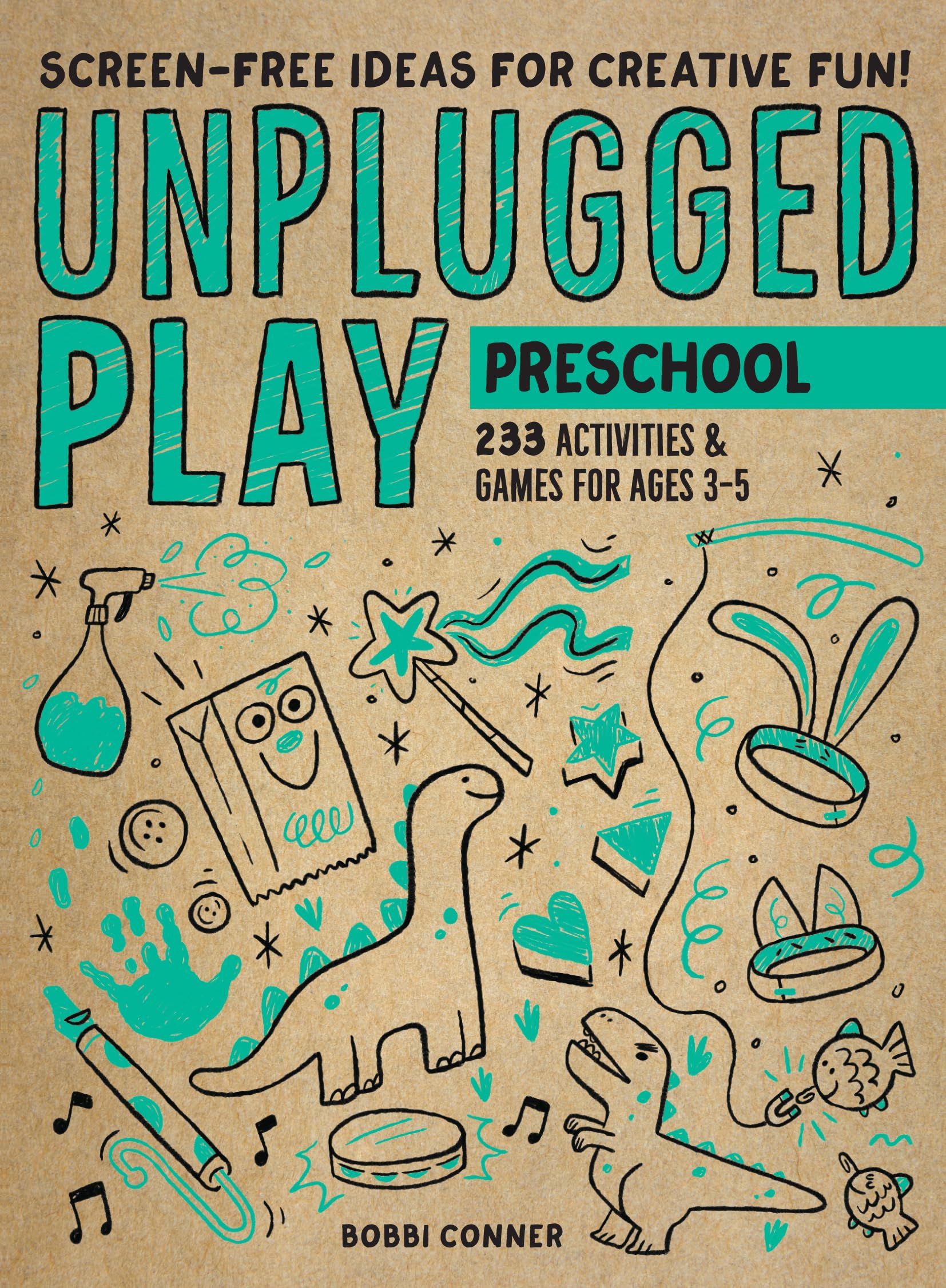
Unplugged Play: Preschool: 233 Activities & Games for Ages 3-5
- Parenting & Relationships
- Early Childhood
- Image Unavailable Image not available forColor:
4. Screen Time: Setting Family Rules That Actually Hold
Screen time is not the enemy, but boundaries matter significantly more during the preschool years than at any other time.
The WHO recommends no more than one hour of sedentary screen time per day for children aged 3–4, and emphasises that what children watch and who watches with them matters as much as how long.
Co-Viewing and Co-Playing
Passive solo screen use produces the least benefit. When you watch alongside your child and talk about what you see ("Why do you think that character is sad?"), you turn screen time into a language and comprehension exercise.
Creating a Family Media Agreement
A family media agreement does not need to be formal. It just needs to be consistent and explained.
5. Family Rituals, Chores, and a Sense of Belonging
Rituals, meaning repeated, meaningful shared activities, are distinct from routines. Where routines organise the day, rituals create identity and belonging.
Research from Brigham Young University found that families with consistent rituals (regular mealtimes together, bedtime stories, holiday traditions) reported stronger family cohesion and children showed fewer behavioural difficulties.
Simple Rituals Worth Building Now
Age-Appropriate Chores
Preschoolers between 3 and 5 are developmentally ready for simple chores, and contributing to the household builds self-efficacy and a sense of mattering.


The Montessori Book for Kindergarten and Preschool: 150 creative activities for ages 3 to 6 - a practical guide for parents to raise independent and confident children (Montessori at home)
- Education & Teaching
- Schools & Teaching
- Special Education
6. Play as a Family: Your Most Powerful Parenting Tool
Play is not filler between the "important" parts of the day. For preschoolers, it is the important part of the day.
The science behind how creative play physically builds the toddler brain confirms that play-based activities literally strengthen neural pathways for attention, language, problem-solving, and emotional regulation. Family-led play, where parents are genuinely present participants rather than supervisors, amplifies these benefits significantly.
Unstructured vs. Structured Play
Both have a place in family life. The balance matters.
Getting Outside
Outdoor play deserves its own priority in your weekly schedule. Fresh air, physical challenge, and unscripted nature exploration all support physical and cognitive development in ways indoor play cannot fully replicate.


The Outdoor Toddler Activity Book: 100+ Fun Early Learning Activities for Outside Play
- Children's Books
- Activities, Crafts & Games
- Activity Books


Carson Dellosa Big Skills for Little Hands Trace Shapes Preschool Workbook, Tracing Books for Kids Ages 3-5 With Color Recognition Toddler Learning Activities
- Children's Books
- Early Learning
- Basic Concepts
7. Learning Readiness: Preparing for Kindergarten Without the Pressure
Kindergarten readiness is not about whether your child can write their name or count to 20. According to the AAP, the most predictive skills for school success are social and emotional: can your child follow a two-step instruction, manage frustration without a total meltdown, and engage cooperatively with a peer?
Family life is where all of those skills are practised, imperfectly, every single day.
What Families Can Do


25 Read and Write Mini-Books That Teach Word Families
- Education & Teaching
- Schools & Teaching
- Instruction Methods


Summer Bridge Activities Preschool to Kindergarten Workbook, Activity Book Ages 4-6 With Math, Phonics, Handwriting Practice, Fitness, Flash Cards, Stickers, and More (Volume 1)
- Children's Books
- Education & Reference
- Reading & Writing
Comparing Family Activity Approaches for Preschoolers (Ages 3–5)
| Activity Type | Best For | Key Benefits | Watch Out For | Recommended Resource | Price Range |
|---|---|---|---|---|---|
| Unstructured outdoor play | All ages 3–5 | Motor skills, creativity, emotional regulation | Needs safe space, weather dependent | Outdoor Toddler Activity Book | $9–10 |
| Structured tabletop games | Ages 4–5 | Turn-taking, rule-following, frustration tolerance | Can frustrate younger 3s | Unplugged Play: Preschool | $7–8 |
| Montessori-style home tasks | Ages 3–6 | Independence, fine motor, sense of contribution | Requires patience and setup time | Montessori Book for Preschool | ~$15 |
| Workbook and tracing activities | Ages 3–5 | Pre-writing, shape recognition, focus | Should supplement play, not replace it | Trace Shapes Workbook | ~$7 |
| Seasonal bridge activities | Ages 4–6 | Multi-skill review, smooth transitions | Best in short daily bursts | Summer Bridge Activities | $11–12 |
| Word family read-and-write mini-books | Ages 4–5 | Early literacy, phonics, print awareness | Not for children not yet interested in letters | Read and Write Mini-Books | ~$7 |
Expert Insights
Conclusion
The preschool years feel simultaneously endless and impossibly fast. The tantrums at 4 p.m., the magical questions at bathtime, the mispronounced words you quietly never correct because they are too perfect — this is the texture of a life being built. What the research keeps telling us, through all its complexity, is beautifully simple: your consistent presence, warmth, and structure are the ingredients your child needs most. You do not have to do this perfectly. You just have to keep showing up. The most powerful thing you can give a preschooler is a family life that feels safe, predictable, and full of you. Save this guide, share it with your co-parent, and trust that the work you're doing right now is exactly the right work.
Sources & References
- Harvard Center on the Developing Child. "Brain Architecture." 2023. https://developingchild.harvard.edu/science/key-concepts/brain-architecture/
- American Academy of Pediatrics. "The Importance of Family Routines." HealthyChildren.org. 2022. https://www.healthychildren.org
- World Health Organization. "Guidelines on Physical Activity, Sedentary Behaviour and Sleep for Children Under 5 Years of Age." 2019. https://www.who.int/publications/i/item/9789241550536
- Brigham Young University. Fiese, B.H. et al. "A Review of 50 Years of Research on Naturally Occurring Family Routines and Rituals." Journal of Family Psychology. 2002.
- Shonkoff, J.P. and Phillips, D.A. (Eds.). "From Neurons to Neighborhoods: The Science of Early Childhood Development." National Academies Press. 2000.
- Berk, L.E. "Make-Believe Play: Wellspring for Development of Self-Regulation." In Play = Learning, Oxford University Press. 2006.
- Royal College of Paediatrics and Child Health. "The Health of Children and Young People." 2020. https://www.rcpch.ac.uk
- American Academy of Pediatrics. "Family Media Plan." HealthyChildren.org. 2023. https://www.healthychildren.org/English/media/Pages/default.aspx
- Perner, J., Ruffman, T., and Leekam, S.R. "Theory of Mind Is Contagious: You Catch It from Your Sibs." Child Development. 1994.
Frequently Asked Questions
What is the most important thing I can do for my preschooler's development at home?
How do I handle constant sibling fighting between a preschooler and an older child?
My 4-year-old refuses to do any chores. Is that normal?
How much screen time is too much for a 3 to 5-year-old?
When should I start worrying about my preschooler's social development?
Is it okay for preschoolers to be bored?
How do I prepare my preschooler for kindergarten without stressing them (or me) out?
Was this helpful?
Thanks — your feedback helps us pick what to write next.