
Why Volunteering Matters for Child Development (The Research Case)
Children of every age — from toddlers to teens — can volunteer in meaningful, developmentally appropriate ways that build empathy, responsibility, and lifelong civic habits.
In this article
Think your four-year-old is too young to give back? Research says otherwise. A landmark study published by the Journal of Youth and Adolescence found that children who begin community service before age 10 are significantly more likely to volunteer regularly as adults — and to report higher levels of empathy and civic identity throughout their lives. Yet most parents wait until their child is a teenager before even raising the idea.
This guide changes that. Whether your child is still in nappies or about to sit their first exam, there is a volunteering activity that fits their developmental stage, their attention span, and your family's schedule.
By the end of this guide, you'll understand:
1. Why Volunteering Matters for Child Development (The Research Case)
Community service is not just a "nice thing to do" — it is a proven developmental tool. Children who volunteer regularly show measurable gains in social-emotional learning (SEL), academic motivation, and mental health resilience.
The American Psychological Association (APA) notes that prosocial behaviour — helping, sharing, and cooperating — is one of the strongest predictors of positive peer relationships and lower rates of anxiety in school-age children. When a child helps pack food bank boxes or reads to a shelter resident, they are practising exactly those skills in a real-world context that no classroom exercise can fully replicate.
For parents, the practical upside is equally compelling:
2. Ages 3–5: Planting the First Seeds of Kindness
Toddlers and preschoolers are developmentally primed for empathy — they just need concrete, sensory activities with immediate feedback. Abstract concepts like "poverty" or "conservation" mean nothing yet; picking up litter in a park they can see and touch means everything.
Activity 1: Neighbourhood Litter Pick
Equip your child with small gardening gloves and a bright-coloured bag, and turn a 20-minute park walk into a scavenger hunt. Count items collected, celebrate the clean patch of grass at the end. The cause is visible, the result is instant, and the movement keeps short attention spans engaged.Activity 2: Cards and Crafts for Care Homes
Children this age love making things. Channel that into simple cards or drawings for residents at a local nursing home or patients in a children's hospital ward. Many facilities actively welcome artwork donations — call ahead to confirm. This activity builds empathy by connecting your child's creative act to a real person's day.Activity 3: Animal Shelter Visits
Many shelters welcome supervised young visitors to socialise animals awaiting adoption. Petting and playing with cats or dogs teaches gentle handling, emotional attunement, and responsibility — all in one visit.
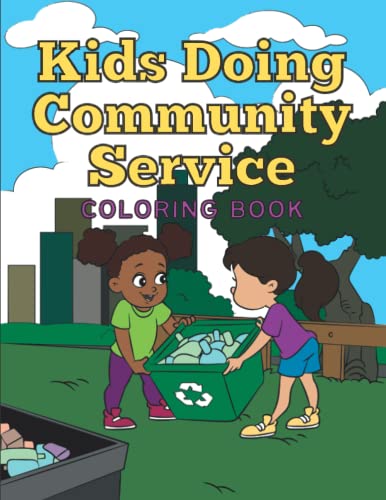
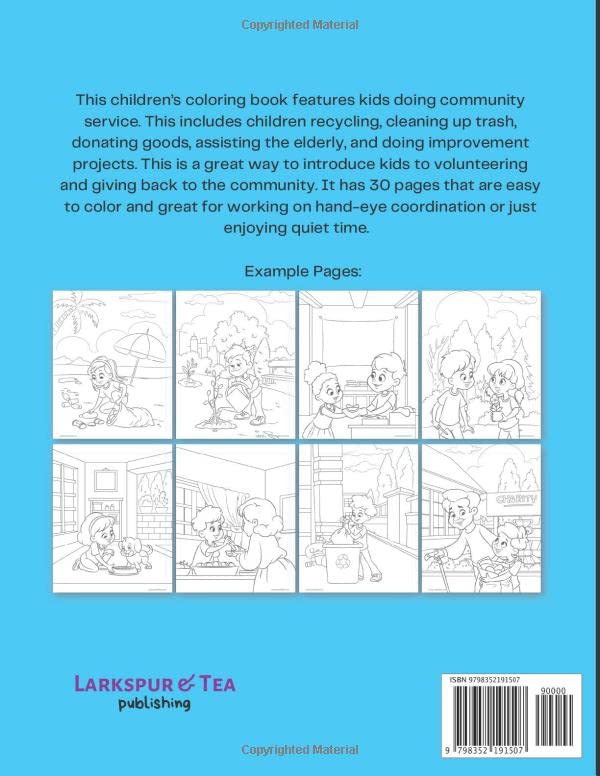
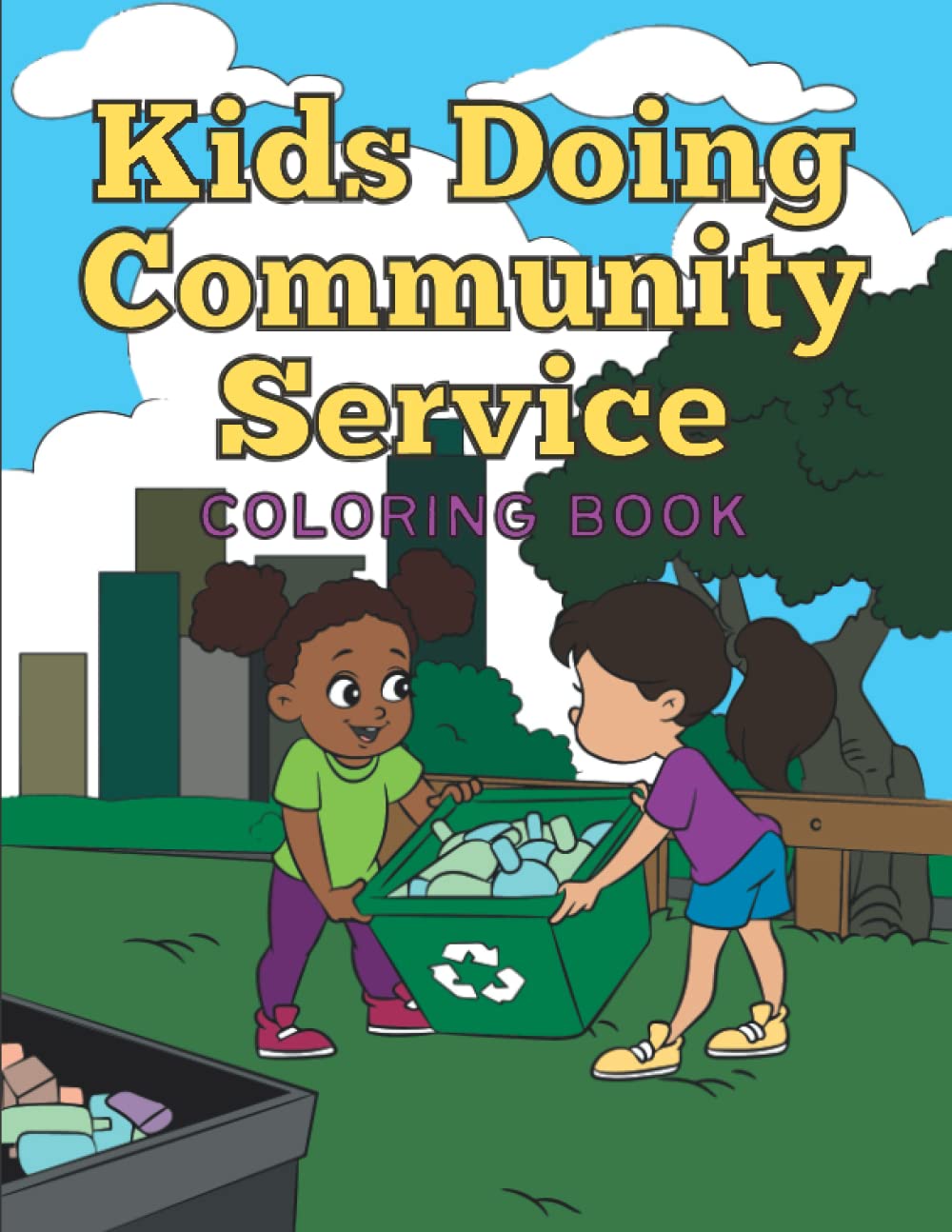

Kids Doing Community Service Coloring Book: A Children's Colouring Book Depicting Kids Volunteering, Donating, Recycling, and Spending Time with the Elderly
- Business & Money
- Job Hunting & Careers
- Volunteer Work
3. Ages 6–8: Building Community Awareness
Early school-age children can grasp cause and effect. They understand that a family might not have enough food, that a library needs books, or that a garden feeds people. This is the ideal window to introduce structured, project-based volunteering.
Activity 4: Food Bank Donation Drives
Involve your child in walking your street to collect non-perishable items, then help sort and pack donations at the food bank. The sorting step is crucial — it gives children a concrete role and lets them see the scale of need firsthand. According to Feeding America, 1 in 5 children in the United States experiences food insecurity, a statistic worth sharing in age-appropriate language.Activity 5: Book Drives for Schools or Shelters
Ask your child to choose books from their own shelf they've outgrown, then invite friends to do the same. Donate to a local school, library, or family shelter. The act of choosing to give away something of their own is a powerful lesson in generosity that a purchased donation cannot replicate.Activity 6: Community Garden Projects
Many towns have community gardens that welcome young helpers for planting, watering, and harvesting. Children learn where food comes from, why fresh produce matters, and how collective effort produces something tangible — all while getting their hands in the soil.4. Ages 9–11: Developing Leadership and Initiative
Upper-primary children are ready to take ownership. They can plan, organise, and lead peers — skills that volunteering can sharpen far more effectively than most extracurricular activities.
Activity 7: Peer Tutoring
Children who excel in a subject can volunteer to support younger or struggling classmates. This is a double win: the younger child gets help, and the tutor consolidates their own understanding (a well-documented phenomenon educators call the "protégé effect"). Many schools have formal peer-tutoring programmes; if yours doesn't, speak to the SENCO or class teacher about starting one.Activity 8: Charity Runs and Walks
Participating in a sponsored 5K or walkathon as a family teaches fundraising, goal-setting, and physical perseverance simultaneously. Let your child choose the cause — cancer research, animal welfare, environmental conservation — so the motivation is intrinsic.Activity 9: School or Neighbourhood Recycling Programme
Children this age can research, design, and pitch a recycling initiative to their school or local council. They learn advocacy, public speaking, and systems thinking. Even a simple classroom paper-recycling box, championed by a nine-year-old, sends a message to peers that a child found impossible to ignore.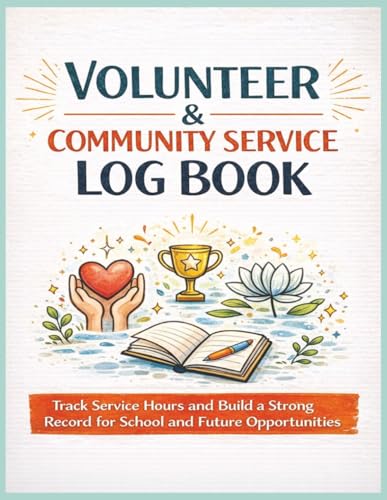


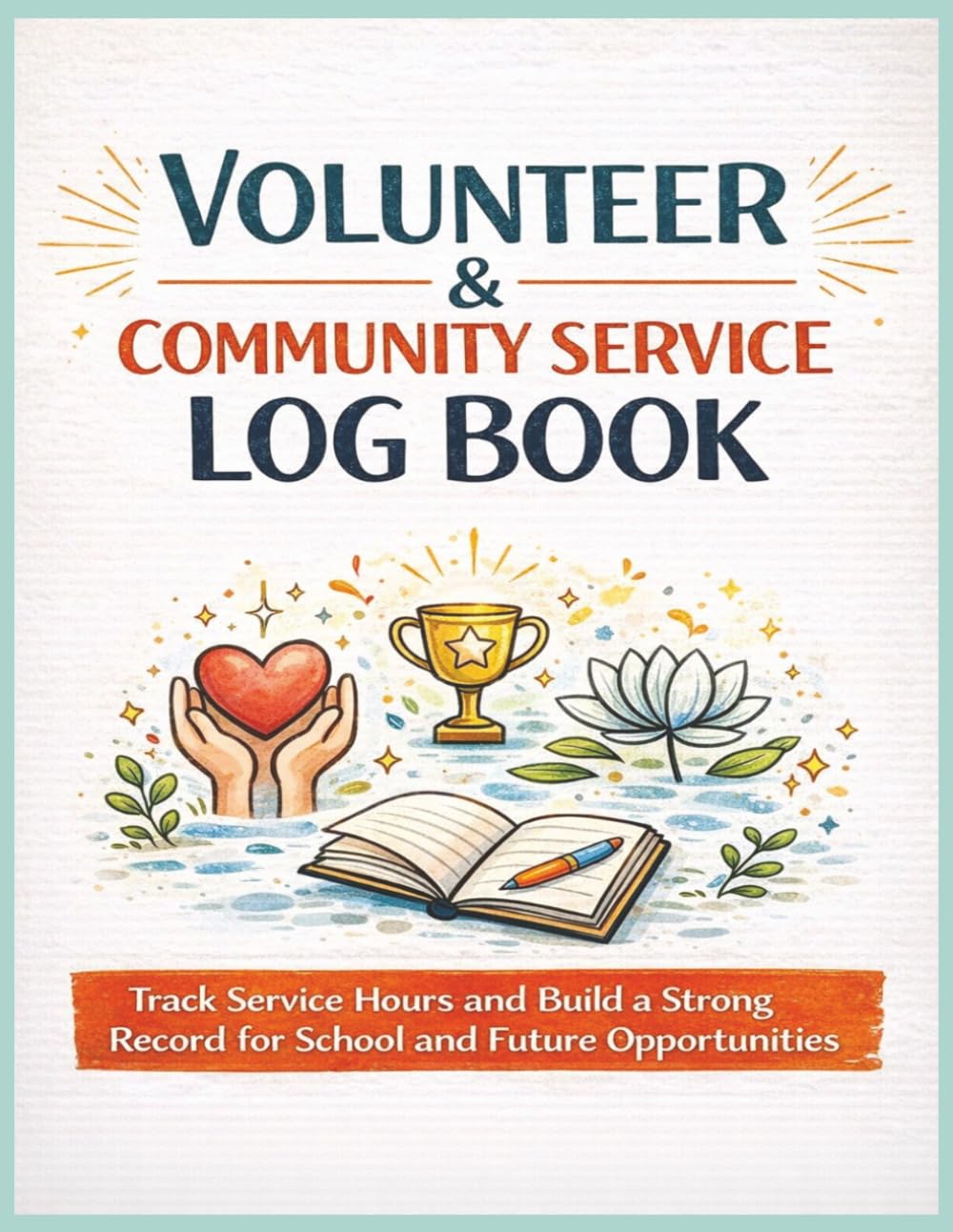
Volunteer & Community Service Log Book: Track and Record Volunteer Hours with Goal Planning, Activity Logs, and Verified Service Records for Students | 8.5 x 11 | 120 Pages
- Education & Teaching
- Schools & Teaching
- Student Life
5. Ages 12–14: Hands-On Service with Real Stakes
Pre-teens are ready for volunteering that puts them face-to-face with genuine need. These experiences build resilience, perspective, and the kind of moral reasoning that abstract classroom discussions rarely achieve.
Activity 10: Soup Kitchen and Meal Service
Many community kitchens welcome volunteers from age 12 (some from 14 with a parent present — always check policies). Serving meals alongside adults teaches pre-teens that homelessness and food poverty are structural issues affecting real neighbours, not distant statistics.Activity 11: Environmental Clean-Up Events
Beach, river, or woodland clean-up days run by organisations like The Conservation Volunteers (UK) or local councils give pre-teens a visible, measurable impact. They can photograph before-and-after results, share them with their school, and build a portfolio of environmental advocacy.Activity 12: Organising Fundraising Events
Encourage your child to plan a bake sale, car wash, or quiz night for a cause they care about. This is entrepreneurship in disguise: budgeting, marketing, logistics, and customer service all wrapped in a meaningful project. If they're raising money, the Channie's Easy Peasy Dry Erase Money Book can be a surprisingly useful tool for younger siblings helping count coins at the till — and a gentle reminder that financial literacy starts early.


Volunteer Hours Log Book: Community Service Logbook (Size 8 x 10 Inches, 110 Pages) - Record Hours of Volunteering Services
- Business & Money
- Job Hunting & Careers
- Volunteer Work
6. Ages 15–17: Preparing for Civic Adulthood
Teenagers are capable of sustained, skilled, and independently managed volunteer commitments. The best placements at this stage mirror real professional environments — and look impressive on UCAS or Common App forms.
Activity 13: Mentorship and Youth Leadership Programmes
Organisations like Big Brothers Big Sisters (US) or similar UK mentoring charities match older teens with younger children who need a consistent positive role model. The commitment is typically one to two hours a week over several months — exactly the kind of sustained engagement that college admissions officers and employers look for.Activity 14: Tech Support for Older Adults
Digital exclusion is a growing public health issue. Age UK reports that millions of older adults in the UK lack basic digital skills, limiting their access to healthcare, benefits, and social connection. A tech-savvy teenager spending an hour a week teaching a neighbour to video-call their grandchildren is providing a genuinely life-changing service.Activity 15: Community Theatre and the Arts
Local theatres, arts centres, and community groups regularly need volunteer help with set design, costumes, front-of-house, or technical production. For teens who are less drawn to direct social service, arts volunteering offers an equally valid path to community contribution.7. Family Volunteering: Activities That Work Across All Ages
Some of the most powerful volunteering happens when the whole family shows up together. Cross-age family service normalises giving back as a household value rather than a school assignment.
Activity 16: Adopt-a-Highway or Adopt-a-Park
Many councils and highway authorities run formal adoption programmes where a family commits to cleaning a stretch of road or a park section several times a year. The recurring commitment teaches responsibility; the visible result — a clean space your family maintains — builds lasting pride.Activity 17: Holiday Volunteering
Serving meals at a shelter on a bank holiday, wrapping gifts for a toy drive in December, or delivering harvest festival donations in autumn — holiday volunteering is memorable precisely because it contrasts with the family's own celebrations. Children who volunteer on holidays consistently report greater gratitude for their own circumstances.Activity 18: Intergenerational Reading Programmes
Many libraries run schemes where families read aloud to older residents in care homes, or where children are paired with elderly reading companions. This builds literacy, confidence, and cross-generational empathy simultaneously.Activity 19: Habitat for Humanity Family Builds (Ages 14+)
Habitat for Humanity welcomes family teams on build days. Older teens can participate fully; younger children (with parental supervision) can handle age-appropriate tasks. The tangible outcome — a house being built — is profoundly motivating.Activity 20: Virtual Volunteering for Distributed Families
Since the pandemic, many charities have developed robust remote volunteering options: writing letters to isolated seniors (Letters Against Isolation), transcribing historical documents (Zooniverse), or creating care packages. These work brilliantly for families spread across time zones or for children whose health limits in-person participation.
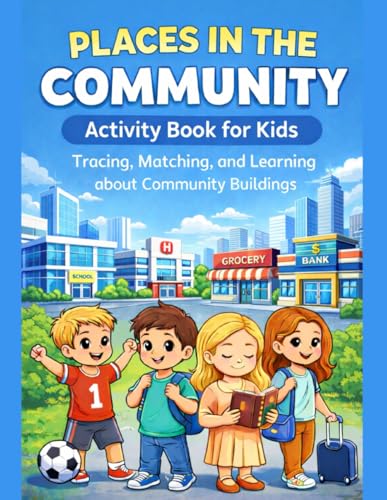

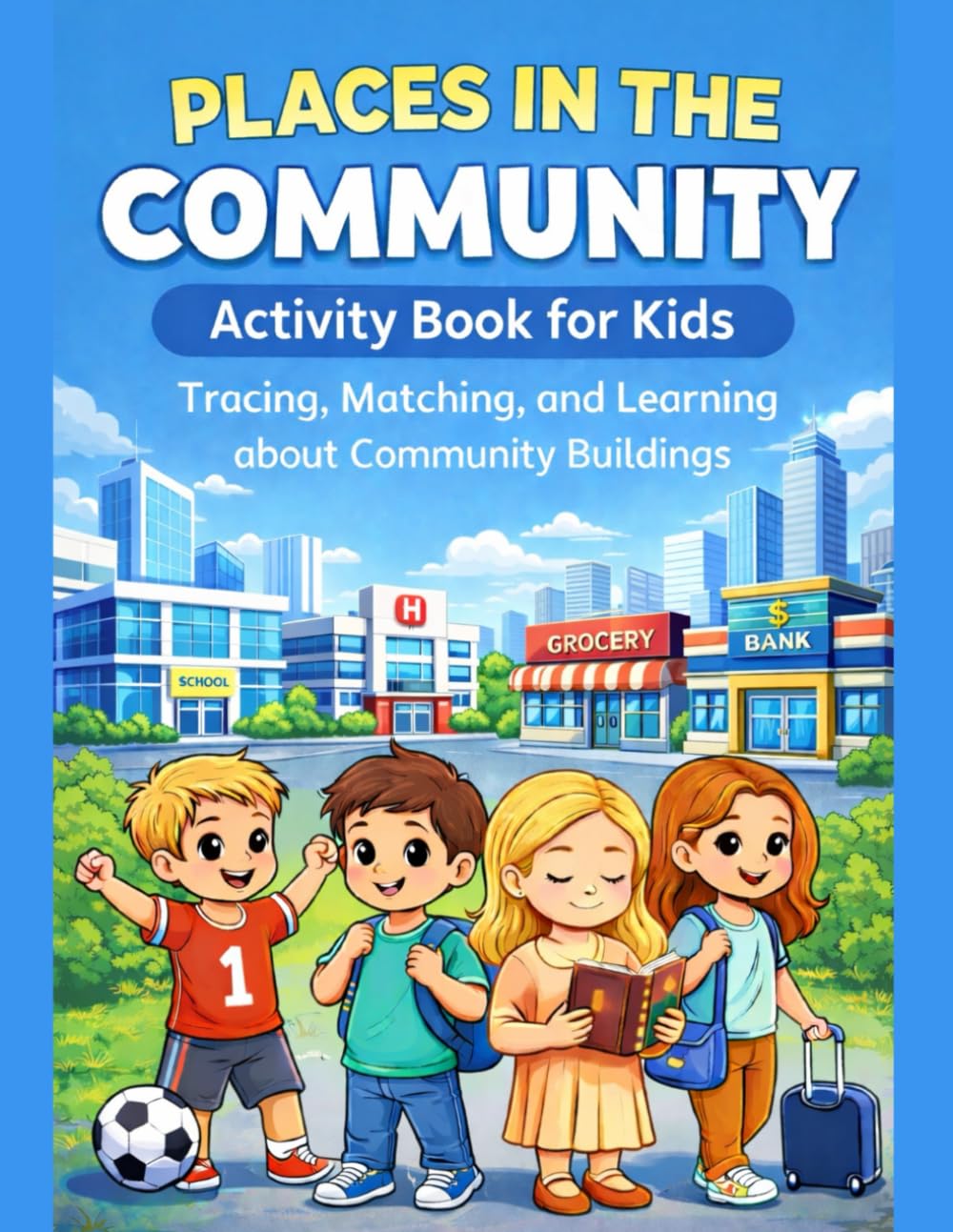

PLACES IN THE COMMUNITY ACTIVITY BOOK FOR KIDS: Tracing,Matching and Learning About Community Buildings
- Children's Books
- Image Unavailable Image not available forColor:
- Children who are beginning to read
8. Comparison: Volunteering Activities by Age Stage at a Glance
| Age Stage | Best Activity Type | Key Developmental Benefit | Time Commitment | Supervision Needed | Recommended Resource |
|---|---|---|---|---|---|
| Ages 3–5 | Crafts, litter picks, animal visits | Empathy, sensory engagement | 20–30 min | Full adult supervision | Kids Community Service Coloring Book |
| Ages 6–8 | Food drives, book drives, gardening | Cause-and-effect thinking, generosity | 1–2 hours | Parent present | Places in the Community Activity Book |
| Ages 9–11 | Peer tutoring, charity runs, recycling | Leadership, initiative, advocacy | 1–3 hours/week | Light supervision | Volunteer Log: Community Service Log Book |
| Ages 12–14 | Soup kitchens, clean-ups, fundraising | Moral reasoning, resilience, financial literacy | 2–4 hours/week | Minimal (check venue policy) | Channie's Money Book |
| Ages 15–17 | Mentoring, tech support, arts | Civic identity, professional skills | 2–5 hours/week | Independent | Volunteer & Community Service Log Book |
| All Ages | Family adopt-a-park, holiday service | Shared values, intergenerational bonds | Monthly+ | Together as a family | Volunteer Hours Log Book |
Expert Insights on Children and Community Service
Every family has a different bandwidth — different schedules, different children, different neighbourhoods. But somewhere in this list of 20 activities, there is a starting point that fits yours. It might be a 20-minute litter pick this Saturday, or it might be signing your teenager up for a mentoring programme next month. The size of the first step doesn't matter nearly as much as taking it.
The families I've seen raise the most empathetic, grounded, socially confident children are not the ones with the most resources or the most time. They are the ones who made giving back a normal, unremarkable part of family life — as routine as Sunday dinner. Start small, start now, and let your child surprise you.
If this guide was useful, save it, share it with another parent, or bookmark it for when your child moves into the next age stage — the activities will be waiting.
Sources & References
- Youniss, J. & Yates, M. "Community Service and Social Responsibility in Youth." University of Chicago Press, 1997.
- Weissbourd, R. et al. "The Children We Mean to Raise: The Real Messages Adults Are Sending About Values." Making Caring Common Project, Harvard Graduate School of Education, 2014. https://mcc.gse.harvard.edu
- American Psychological Association. "Prosocial Behavior." APA Dictionary of Psychology. https://dictionary.apa.org/prosocial-behavior
- Moll, J. et al. "Human fronto-mesolimbic networks guide decisions about charitable donation." Proceedings of the National Academy of Sciences (PNAS), 2006. https://doi.org/10.1073/pnas.0604475103
- Feeding America. "Child Food Insecurity." 2023. https://www.feedingamerica.org/research/map-the-meal-gap
- World Health Organization. "Adolescent Health." WHO Fact Sheet, 2023. https://www.who.int/news-room/fact-sheets/detail/adolescents-health-risks-and-solutions
- Age UK. "Digital Inclusion and Older People." 2023. https://www.ageuk.org.uk/our-impact/policy-research/digital-inclusion
- Do-it.org. UK Volunteering Database. https://do-it.org
- VolunteerMatch. US Volunteering Database. https://www.volunteermatch.org
- Journal of Youth and Adolescence. Relevant issues on prosocial development and volunteering behaviour. Springer. https://www.springer.com/journal/10964
Frequently Asked Questions
What is the youngest age a child can start volunteering?
How many hours of volunteering should my child do per week?
How do I motivate a reluctant teenager to volunteer?
Do volunteer hours need to be officially verified for school or university applications?
Can volunteering count as part of my child's school curriculum?
Is virtual volunteering as valuable as in-person service?
How do I find reputable volunteering opportunities for my child?
Was this helpful?
Thanks — your feedback helps us pick what to write next.