What Working Memory Is — and Why It's Your Child's Math Engine
Strengthening working memory and logical reasoning between ages 5–8 gives children the cognitive scaffolding they need to tackle math confidently — and you can build both skills through targeted games and everyday habits.
In this article
Your 6-year-old stares at a simple addition problem and freezes — not because she doesn't understand numbers, but because she can't hold the first part of the problem in her head long enough to work out the second. Sound familiar? You're not imagining it. According to the American Psychological Association, working memory capacity is one of the strongest predictors of academic math achievement in the early school years — stronger, in some studies, than general intelligence. The good news: unlike IQ, working memory and reasoning skills respond meaningfully to practice.
This guide will help you understand:
1. What Working Memory Is — and Why It's Your Child's Math Engine
Working memory is the brain's ability to hold a small amount of information in an active, usable state for a short period. Think of it as a mental whiteboard: your child writes a number on it, does something with it, and erases it when they're done. In math, that whiteboard gets used constantly — carrying a digit, remembering a rule mid-problem, tracking which step comes next.
Working memory is not just about remembering things; it's about using information actively while doing something else — and that dual demand is exactly what mathematics requires.
— Baddeley & Hitch, Cognitive Psychology (1974)
Researchers Alan Baddeley and Graham Hitch at the University of York developed the most widely cited model of working memory, identifying separate systems for verbal information (like number words) and visual-spatial information (like mental number lines). Both are recruited during early math learning.
Why Ages 5–8 Are the Sweet Spot
The prefrontal cortex — the brain region most responsible for working memory — undergoes rapid development between ages 5 and 8. This window is when deliberate practice has the highest return. Children who build working memory capacity now tend to handle multi-digit arithmetic, word problems, and eventually algebra with significantly less cognitive strain.
2. How Reasoning Skills Turn Number Knowledge Into Problem-Solving Power
Knowing math facts is not the same as being able to use them. Reasoning — the ability to identify patterns, apply rules consistently, and work through logical steps — is what bridges memorised facts and actual problem-solving.
The National Council of Teachers of Mathematics (NCTM) identifies reasoning and proof as one of five core mathematical process standards, arguing that children who reason mathematically develop deeper, more flexible number sense than those who rely on rote memorisation alone.
The Four Reasoning Skills That Matter Most for This Age Group
1. Pattern recognition — spotting what comes next in a number or shape sequence 2. Deductive reasoning — if A is true and B follows from A, then B must be true 3. Analogical thinking — "3 + 4 = 7, so 30 + 40 = ?" 4. Systematic trial-and-error — trying options in an organised way rather than randomly guessing
Self-correcting puzzle games are especially effective here because they provide immediate, non-judgmental feedback. The Edulok Math Games for Kids use interlocking puzzle pieces that physically won't fit together unless the arithmetic is correct — a beautifully concrete way to build both reasoning confidence and basic fact fluency simultaneously.
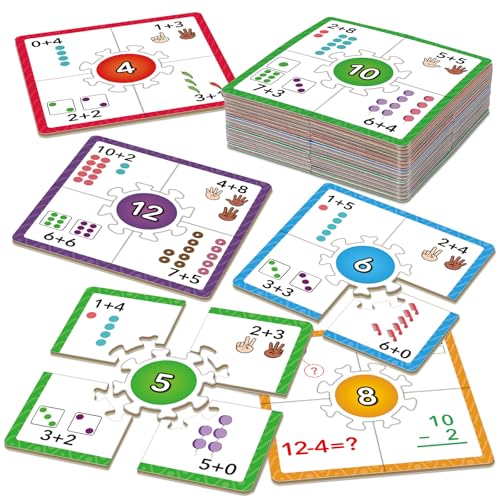
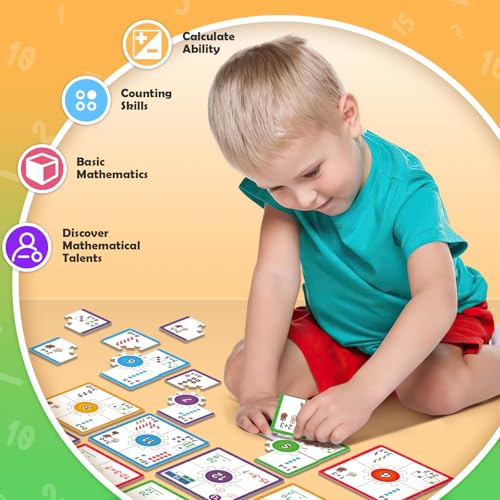
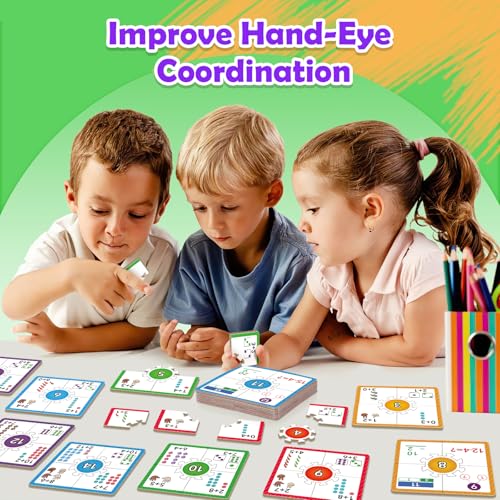
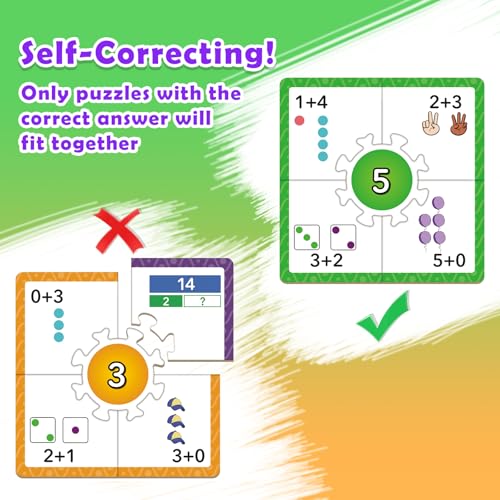
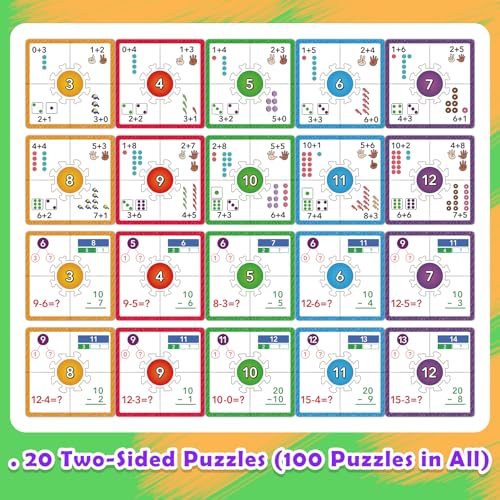
Edulok Math Games for Kids 5-7, Addition and Subtraction Educational Games, Kindergarten Learning Activities, Classroom Must Haves
- Self-correcting Design: Each puzzle has unique interlocking joints that fit only if they match, which is great
- Let Children Make Progress: The addition and subtraction puzzle is designed to improve kindergarten readiness
- Learn basic math knowledge: Combining vivid illustrations and engaging ways, the puzzle helps children natural
3. Memory Games That Double as Math Practice
Memory games are not just entertaining fillers — they are structured working memory workouts. When a child flips a card, holds its position in mind, scans other options, and makes a decision, they are exercising exactly the same cognitive processes they need for mental arithmetic.
Three Game Formats Worth Trying This Week
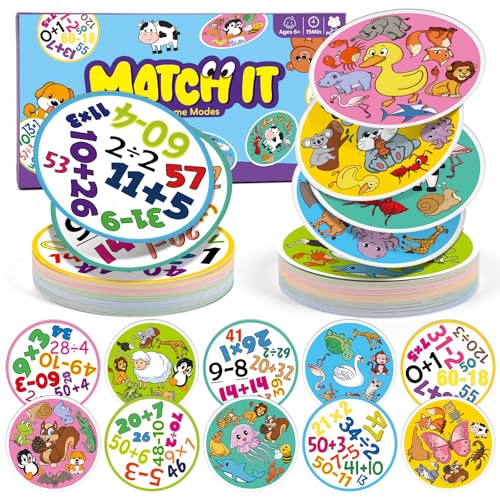
Classic matching games: The Edulok Match Game Quick Memory Card Game features 57 double-sided cards — animal images on one side, math problems on the other — so you can start with pure memory matching and flip to arithmetic challenges as confidence grows. It supports 2–8 players, making it equally useful for a sibling pair or a small classroom group.
Sequence recall: "Simon Says" variants where children must remember and repeat a growing sequence of actions directly train verbal and motor working memory.
Mental number chains: As described in the Pro Tip above — no equipment needed, works anywhere.

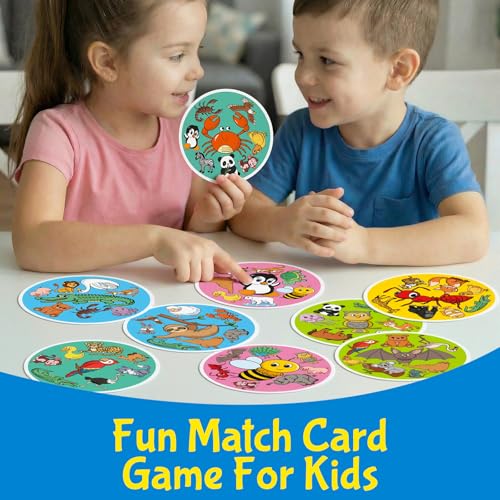
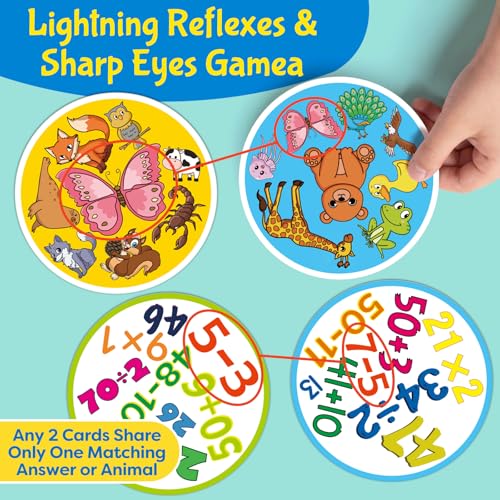
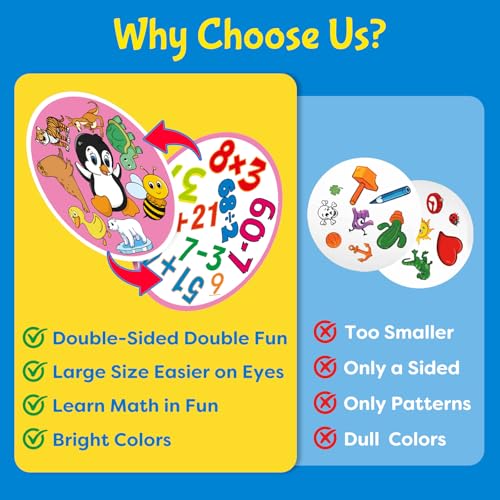
Edulok Match Game Quick Memory Card Game,Fun Math Learning Card Math Game,Quick Reflexes Cards Animal Table Piles Games,Visual Perception Family Games,Preschool Classroom Homeschool Supplies
- 【Match Game Memory Card Game】The 57 double-sided cards match game aim to help kids develop memory observationa
- 【Make Learning Math Interesting】This match cards game features a math problem theme on one side,kids can play
- 【5 IN 1 Versatile Gameplay Game】Designed to engage 2 to 8 players,with animal card mode and math number mode,t
4. Puzzles and Logic Games That Build Reasoning Muscles
Puzzles engage reasoning in a way that worksheets rarely do, because the child must generate the solution pathway, not just execute one they've been shown. For ages 5–8, the best logic games involve clear rules, visual feedback, and just enough challenge to feel rewarding rather than frustrating.
The CDC's developmental milestones for this age group note that children between 6 and 8 are developing the ability to think logically about concrete objects and events — making this the ideal window to introduce structured strategy games before abstract reasoning fully matures.
Dice Games: Underrated and Highly Effective
Dice games are particularly powerful because they combine number recognition, mental arithmetic, and strategic decision-making in a fast-paced format that kids don't experience as "work." The Semper Smart Games PlaySmart Dice Deluxe Math Game includes 11 different game formats spanning simple addition through more complex number challenges — one set of dice, multiple levels of difficulty, and genuinely replayable.
For children who are ready to stretch into multiplication and competitive play, Semper Smart Games Math-Tac-Toe adds a Tic-Tac-Toe strategy layer on top of mental math, which means children are exercising forward planning and logical reasoning at the same time as arithmetic.




Semper Smart Games PlaySmart Dice Deluxe Math Game – Educational Arithmetic Dice Activity for Kids 6+, Fun Family Learning Game with 11 Math Games for Mental Calculation, Classroom, Home & Travel
- FUN & ENGAGING MATH LEARNING GAME Ditch flash cards and master math the fun way with this award-winning math d
- 11 MATH GAMES FOR ALL SKILL LEVELS Includes 11 different math games for learners ages 6 and up, with gameplay
- BUILD MENTAL MATH & NUMBER SKILLS Helps improve speed, accuracy, and confidence by targeting harder-to-learn n
5. Real-Life and Active Learning: Math Beyond the Table
The most durable math skills are built when children see numbers as tools for navigating real life, not just symbols on a page. Active, contextual learning engages working memory and reasoning simultaneously because the child must translate a real situation into a mathematical operation — a genuinely complex cognitive task.
Everyday Contexts That Work Brilliantly for Ages 5–8
- Cooking and baking: "We need 2 cups of flour but I only have a half-cup measure — how many times do we fill it?" This is fractions and multiplication before your child even knows those words. - Shopping: Give your child a small budget and let them work out whether they can afford two items. Real stakes improve engagement dramatically. - Time: "It's 3:15 and your football practice starts at 4:00 — how many minutes do we have?" Elapsed time is a notoriously tricky concept that clicks much faster in real contexts. - Building and measuring: Lego, woodworking kits, and craft projects all embed spatial reasoning and measurement naturally.
For independent practice that mimics contextual variety, the alilo Math Games for Kids offers 19 interactive game modes including number memory, size comparison, and pattern recognition alongside the four operations — a portable device that keeps variety high during car journeys or waiting-room moments.
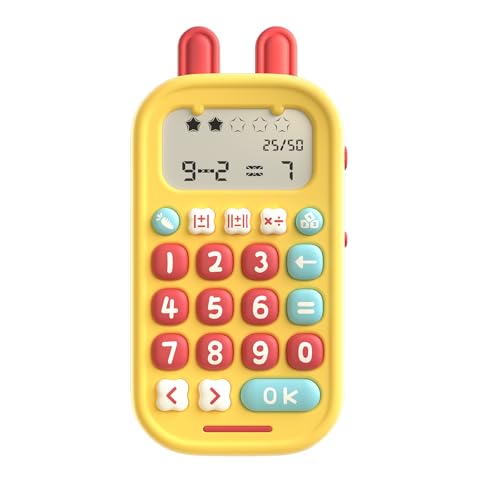
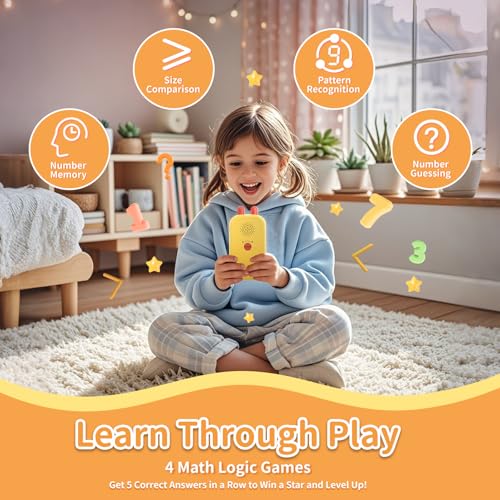
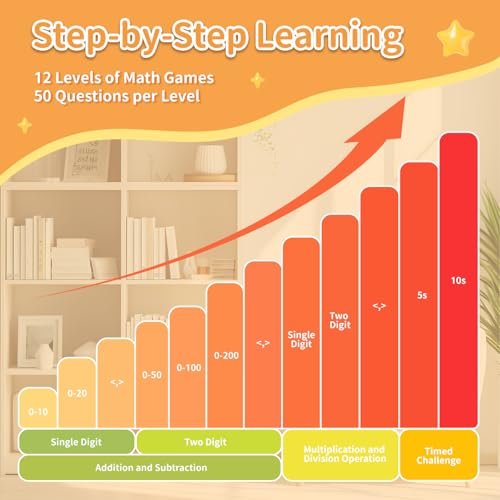
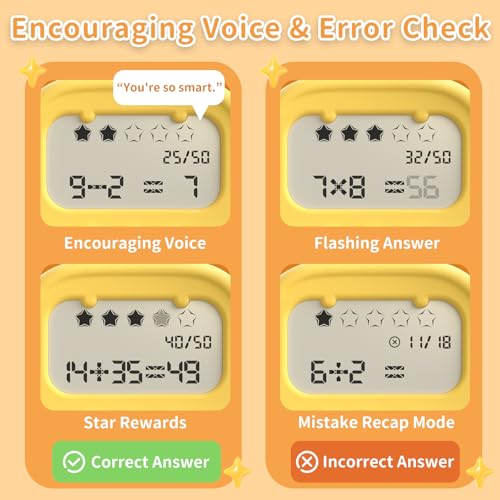
alilo Math Games for Kids Ages 5-12, Portable Math Toys for Practicing Addition, Subtraction, Multiplication and Division, Fun Educational Toy with 5 Modes, 19 Math Games, and 50K Math Questions
- 【19 Math Game for Kids】The alilo math toy features 19 interactive games to build kids' logic and math skills.
- 【Learn with Rewards & Encouragement】Kids receive instant voice encouragement after answer, helping them unders
- 【Error Check & Correction】The alilo kids math games automatically checks for mistakes and provides correct ans
6. Digital and Handheld Tools: Choosing Screen Time That Actually Builds Skills
Not all screen-based math practice is equal. The distinguishing features of tools that genuinely strengthen working memory and reasoning — rather than just rewarding button-pressing — are: adaptive difficulty, immediate corrective feedback, and multiple problem formats that prevent rote pattern-matching.
The American Academy of Pediatrics (AAP) recommends that screen time for children aged 6 and older be consistent, limited, and focused on high-quality content. For math tools, "high-quality" means the child is actively generating answers, not passively watching.
What to Look for in a Math Learning Tool
The Educational Insights Math Whiz handheld device hits most of these criteria well for the 6–8 age range: three distinct game modes (Drill, Challenge, and Calculator), multiple skill levels, and a compact form factor that makes it genuinely portable. It covers addition, subtraction, multiplication, and division — useful as children move through Years 1–3.

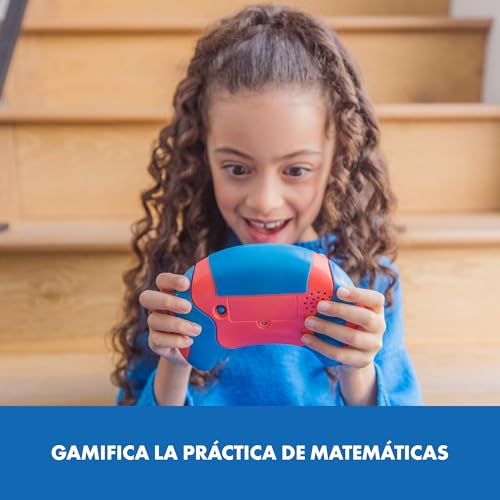
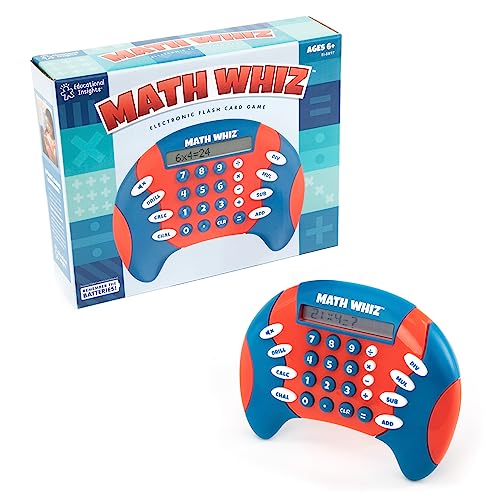

Educational Insights Math Whiz - Electronic Math Games for Kids Ages 6-8, Handheld Math Game, Addition and Subtraction Toys, Multiplication and Division Games for First Graders, Kids Learning Game
- MATH FACT FLUENCY GAME: Math Whiz is a handheld math game for kids that practices addition, subtraction, multi
- THREE DIFFERENT LEARNING GAMES: Solve a progressively more difficult sequence of problems with Drill Mode, pla
- PORTABLE MATH LEARNING: Take math practice on the go with this compact, all-in-one game; play anywhere, from t
7. Matching the Right Activity to Your Child's Current Level
Not every tool suits every child at every moment. Using a game that's too easy produces boredom; too hard produces shutdown. Psychologist Lev Vygotsky's concept of the Zone of Proximal Development — the sweet spot just beyond current ability but reachable with support — is the target you're aiming for in every session.
| Skill Level | Best Activity Type | Working Memory Focus | Reasoning Focus | Recommended Product | Price Range |
|---|---|---|---|---|---|
| Early (addition/subtraction basics) | Self-correcting puzzles | Holding single-digit sums | Matching rules, cause-effect | Edulok Math Puzzles | $15–16 |
| Early-mid (fact fluency building) | Memory card games | Card position + math facts | Pattern matching, quick comparison | Edulok Match Card Game | $11–12 |
| Mid (mixed operations, speed) | Dice games (11 modes) | Rapid mental calculation | Number strategy, decision-making | PlaySmart Dice Deluxe | $12–13 |
| Mid-advanced (multiplication intro) | Competitive board games | Multi-step calculation | Forward planning, logical deduction | Math-Tac-Toe | $29–30 |
| Mixed/adaptive (all operations) | Handheld electronic game | Adaptive recall under time pressure | Progressive challenge modes | Math Whiz Handheld | $25–26 |
| Independent/portable practice | Multi-mode math device | Number memory + pattern recall | 19 game modes, error correction | alilo Math Toy | $22–23 |
Expert Insights
Conclusion
The children who grow up comfortable with math aren't necessarily the ones who were drilled hardest — they're the ones who were given space to think, reason, and play with numbers in ways that felt meaningful. Between ages 5 and 8, your child's brain is genuinely primed for this kind of growth. You don't need to be a mathematician to support it. You need a card game at the kitchen table, a few minutes of number chat in the car, and the willingness to say "I wonder how we'd figure that out?" rather than just giving the answer.
The best math skill you can give your child right now isn't a times table — it's the confidence that they can figure things out. Start with one game this week, keep it light, and watch what happens.
Found this useful? Save it for later or share it with another parent navigating the early school years — you might be exactly the resource they needed today.
Sources & References
- Baddeley, A. D., & Hitch, G. (1974). "Working memory." In G. H. Bower (Ed.), The Psychology of Learning and Motivation, Vol. 8, pp. 47–89. Academic Press.
- Gathercole, S. E., & Alloway, T. P. (2008). Working Memory and Learning: A Practical Guide for Teachers. SAGE Publications. University of Cambridge / MRC Cognition and Brain Sciences Unit.
- Alloway, T. P. (2010). "Working memory and executive function profiles of individuals with borderline intellectual functioning." Journal of Intellectual Disability Research, 54(5), 448–456. University of North Florida.
- Levine, S. C., Suriyakham, L. W., Rowe, M. L., Huttenlocher, J., & Gunderson, E. A. (2010). "What counts in the development of young children's number knowledge?" Developmental Psychology, 46(5), 1309–1319. University of Chicago.
- National Council of Teachers of Mathematics (NCTM). (2000). Principles and Standards for School Mathematics. NCTM. https://www.nctm.org/standards/
- American Academy of Pediatrics (AAP). (2016). "Media and Young Minds." Pediatrics, 138(5). https://publications.aap.org/pediatrics/article/138/5/e20162591/60503
- Boaler, J. (2015). Mathematical Mindsets: Unleashing Students' Potential through Creative Math, Inspiring Messages and Innovative Teaching. Jossey-Bass. Stanford Graduate School of Education.
- Ansari, D. (2008). "Effects of development and enculturation on number representation in the brain." Nature Reviews Neuroscience, 9, 278–291. Western University.
- Clements, D. H., & Sarama, J. (2014). Learning and Teaching Early Math: The Learning Trajectories Approach (2nd ed.). Routledge. University of Denver.
- Centers for Disease Control and Prevention (CDC). (2023). "Developmental Milestones: Middle Childhood (6–8 years)." https://www.cdc.gov/ncbddd/childdevelopment/positiveparenting/middle.html
- American Psychological Association (APA). (2012). "Working memory and academic achievement." APA Monitor on Psychology. https://www.apa.org
Frequently Asked Questions
How long should working memory practice sessions be for a 5–8 year old?
My child is 5 and already finds basic addition hard. Should I be worried?
Are educational apps as effective as physical games for building working memory?
My 8-year-old knows their times tables but struggles with word problems. What's going on?
Can working memory be permanently improved, or does it just help in the short term?
How do I keep my child motivated when math practice gets frustrating?
At what age should I introduce multiplication and division practice?
Was this helpful?
Thanks — your feedback helps us pick what to write next.