Why Your Cup Choice Matters More Than You Think
Straw cups are the best all-round transition cup for toddlers aged 12 months and older because they support healthy oral motor development and carry the lowest dental risk — but the right cup for your child depends on their age, developmental stage, and your family's day-to-day r

In this article
You're standing in the baby aisle, staring at a wall of cups that could rival a small hardware store, and your 14-month-old is at home still attached to a bottle. Sound familiar? According to the American Academy of Pediatrics (AAP), prolonged bottle use beyond 15 months is associated with a 30% higher risk of childhood obesity and measurable harm to emerging teeth — yet the transition away from bottles is one of the most common struggles parents bring to their paediatrician's office.
The good news: the science on which cup to choose is clearer than the aisle makes it look. This guide cuts through the marketing noise so you can make a confident, developmentally informed decision.
What you'll understand after reading this:
1. Why Your Cup Choice Matters More Than You Think
The cup your toddler uses every day is doing far more than delivering water or milk — it's actively shaping the muscles, tongue position, and swallowing patterns that influence speech and dental alignment for years to come.
Between 6 and 24 months, your child's oral cavity is in rapid flux. Teeth are erupting, the palate is narrowing into its adult shape, and the tongue is learning the precise movements needed for both chewing solid food and producing consonant sounds. A cup that keeps your toddler in a bottle-like sucking pattern during this window can delay those milestones.
What the research actually says
The American Dental Association (ADA) has consistently flagged prolonged use of any spout that requires suction — including traditional sippy cups — as a risk factor for anterior open bite (a gap between upper and lower front teeth) and delayed swallowing maturation. The AAP's 2022 guidance on nutrition in the first two years of life explicitly recommends transitioning to an open or straw cup by 12 months.
The bottom line for parents
You don't need the most expensive cup on the shelf. You need the right type of cup at the right developmental moment — and the confidence to move on when your child is ready for the next step.
2. Traditional Sippy Cups: A Useful Bridge, Not a Long-Term Home
Sippy cups — the classic hard-spout design with a lid and handles — are the right tool for a specific, short window: roughly 6 to 12 months, when your baby is just learning that cups exist and that liquid comes out when you tip them.
For that purpose, they work beautifully. The spout limits flow, the handles give tiny hands something to grip, and the spill-proof lid means you're not mopping the high chair after every sip. The Zak Designs Kelso Toddler Cups are a great example of a well-built, leak-proof option that travels well and comes in a two-pack — practical for families who lose cups between the car seat and the kitchen.
The dental concern you need to know
The problem arises when sippy cups become the default cup past 12–15 months. The hard spout pushes against the upper palate and front teeth with every sip, and because toddlers tend to walk around sipping rather than drinking in one sitting, that pressure is constant. The ADA notes this pattern is associated with the same enamel erosion and tooth-spacing issues seen with prolonged bottle use.

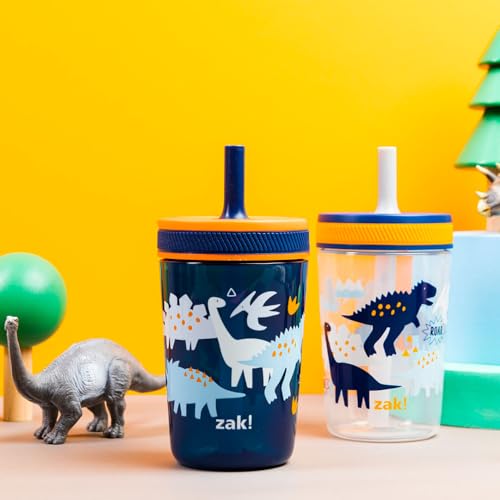
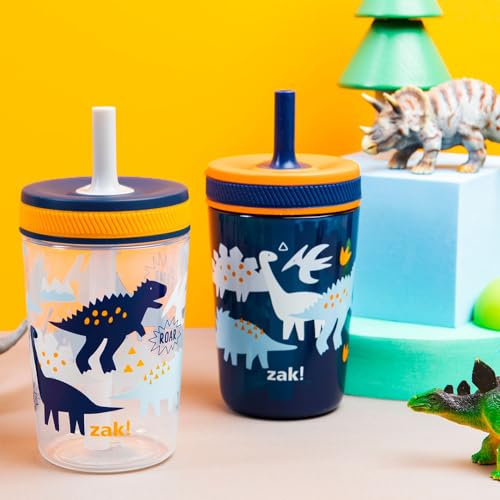


Zak Designs Kelso Toddler Cups For Travel or At Home, 15oz 2-Pack Durable Plastic Sippy Cups With Leak-Proof Design is Perfect For Kids (DinoRoar, Zaksaurus)
- SIZE: The set contains two Zak tumblers that are 3.16 inches in diameter and 6.67 inches tall. They have a cap
- MATERIAL: The durable tumblers are made of plastic with silicone straws. They're dishwasher safe, can be disas
- LEAK-PROOF DESIGN: The silicone straw has a built-in valve that allows liquid to flow when drinking and preven
3. Straw Cups: The Dentist-Recommended Champion
Straw cups are the clear frontrunner when it comes to long-term developmental benefit, and they're the cup type most consistently recommended by paediatric dentists and speech-language pathologists for toddlers 9 months and older.
Here's why: drinking through a straw requires the tongue to retract and lift — a movement pattern that is fundamentally different from bottle or sippy-cup sucking, and one that more closely resembles the mature swallowing pattern humans use for life. That tongue movement also overlaps with the articulation needed for sounds like /t/, /d/, /n/, and /l/ — sounds that typically emerge in the second year of life.
What to look for in a straw cup
Not all straw cups are equal. The best ones for toddlers share a few key features:
For families on the go, the Owala Kids Insulated Tumbler keeps drinks cold for hours and has a removable straw that's genuinely easy to clean — a rare combination. For a budget-friendly everyday option, the Nuby No-Spill Flex Straw Cup (3-pack for under $8) is hard to beat for daycare bags.



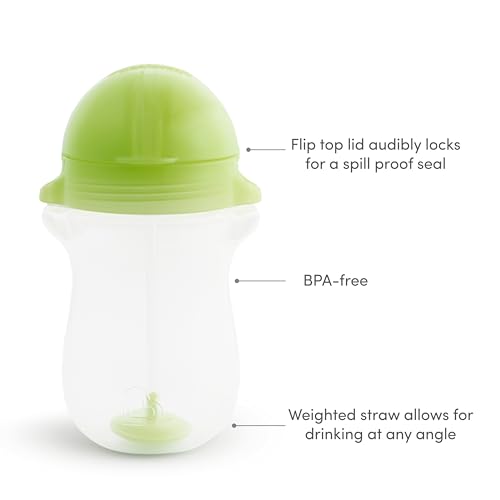
Munchkin Any Angle Weighted Toddler Straw Cups with Click Lock Lid, 10 Ounce, 2 Pack, Blue/Green
- Any Angle Drinking: The weighted straw base allows toddlers to sip from any angle, making it easy to drink eve
- Supports Sippy-to-Straw Milestone: Helps Transition from Sippy to Straw Cups
- Spill Proof Seal with Patented Click Lock Technology: Twist the lid until you hear a click, which signals that
4. 360-Degree Cups: Innovation Meets Convenience
The 360-degree (or "miracle") cup looks like a regular lidded cup, but the rim is designed so your toddler can drink from any point around the edge — just like an open cup — while a silicone membrane prevents spills when the cup is tipped or dropped.
The developmental appeal is real: your child's lips seal against the rim, their tongue stays flat, and the swallowing motion closely mimics what they'd do with a proper open cup. There's no spout to push against the palate, which makes 360 cups a genuinely better option than traditional sippy cups from a dental standpoint.
The nuance parents often miss
360 cups still require some suction to break the silicone seal and get liquid flowing. For most toddlers this is minimal, but it does mean they're not a perfect substitute for open-cup practice. Think of them as a stepping stone between straw cups and a fully open cup — excellent for 12–24 months, and particularly useful for families who need truly spill-proof performance at the table.
5. Age-by-Age Guide: Matching the Cup to the Stage
Getting the cup type right matters, but so does the timing. Here's a simple developmental roadmap:
6–9 months: First introductions
Your baby is just discovering that cups hold liquid. A soft-spout sippy or a small open cup held by you is ideal. Keep portions tiny (a few sips of water with meals) and focus on exploration over volume. The Dr. Brown's Milestones Insulated Straw Cup with its removable handles is a smart pick here — you can introduce it early and simply remove the handles as grip improves.9–12 months: Straw introduction
This is the ideal window to introduce a straw cup. Most babies can learn straw drinking by 9 months with a little coaching. Pair it with the suction trick from the Pro Tip above. The The First Years Bluey Take & Toss Straw Cups are a parent favourite at this stage — low-cost enough that you won't panic when one goes missing at nursery, and the familiar character print motivates reluctant drinkers.12–24 months: Transition away from bottles
By 12 months, the AAP recommends beginning the bottle farewell. Straw cups and 360 cups should be your primary vessels. Introduce a small open cup at mealtimes with an inch of water — yes, there will be spills, but the motor practice is worth it.24–36 months: Open cup graduation
By age two, most toddlers can manage an open cup at the table with supervision. Keep a straw cup for car trips and outings. The goal by age three is that the straw cup is a convenience item, not a developmental crutch.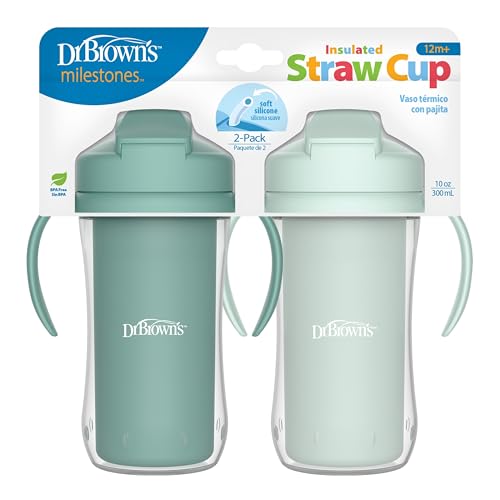
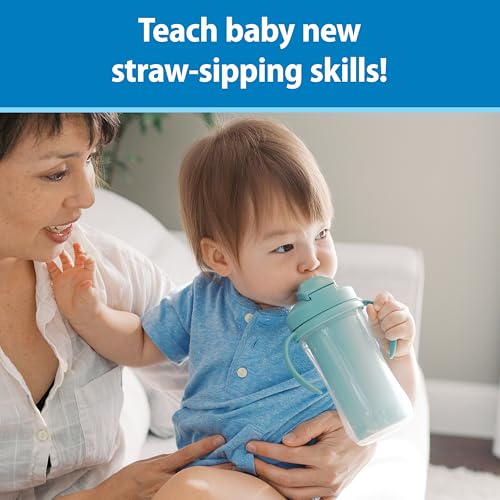

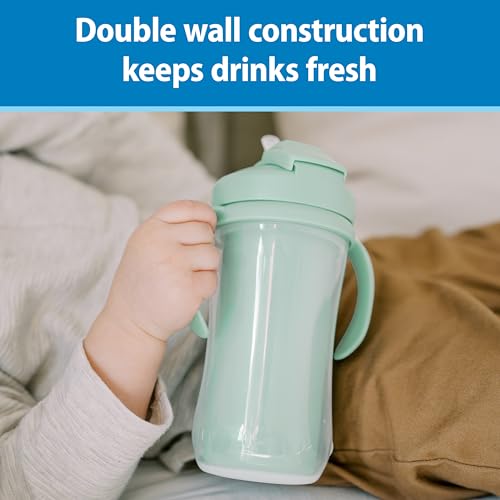
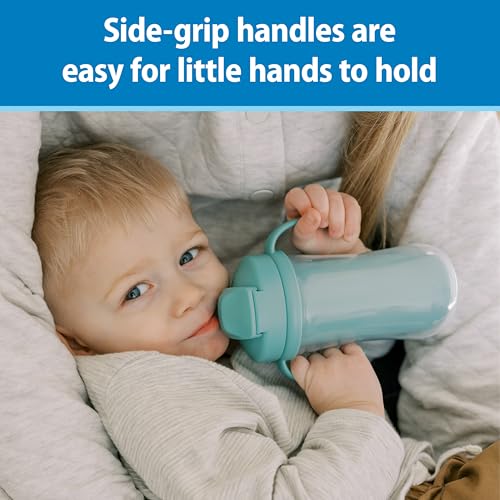
Dr. Brown's Milestones Insulated Sippy Cup with Straw and Handles, Spill-Proof Tumbler with Lid, 2-Pack, Green, 10 oz/300 mL, BPA Free, 12m+
- INSULATED SIPPY. Dr. Brown's Milestones Insulated Straw Cup with sliding lid helps little ones learn straw-sip
- SPILL-PROOF STRAW CUP. A travel-friendly sliding lid keeps the soft silicone straw clean and liquid in the cup
- EASY TO GRIP. Built for little hands, the Insulated Straw Cup is lightweight with handles that lock in place f
6. Special Considerations: When Standard Advice Needs Adjusting
Most toddlers follow the developmental arc above without a hitch. But some children need a modified approach — and knowing when to ask for help is just as important as knowing which cup to buy.
Children with low oral muscle tone
Toddlers with hypotonia (low muscle tone), Down syndrome, or certain neurodevelopmental conditions may find straw drinking effortful and 360 cups frustrating. In these cases, a speech-language pathologist can recommend a specific straw diameter and flow rate. Thicker straws require less suction effort; some children do better starting with a cut-down straw to reduce the column of liquid they need to move.Children in speech therapy
If your toddler is already working with an SLP, always run your cup choice by them. Some therapy programmes use specific cup types as part of oral motor exercises, and switching cups mid-programme can interfere with progress.Persistent bottle refusal of cups
If your toddler flatly refuses every cup style by 15 months, mention it at your next well-child visit. Occasionally, sensory sensitivities around texture (silicone vs. plastic straws, hard vs. soft rims) are the barrier — and a brief occupational therapy consult can make a dramatic difference.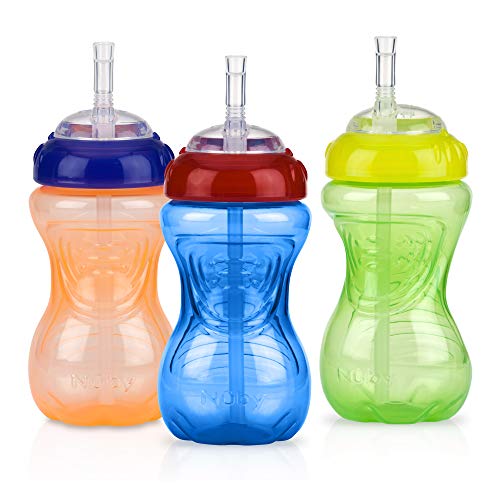
Nuby No-Spill Sippy Cup with Flex Straw - (3-Pack) 10-Ounce Bottles - Sippy Cups for Toddlers 12+ Months - Neutral Color Training Cups for Toddlers
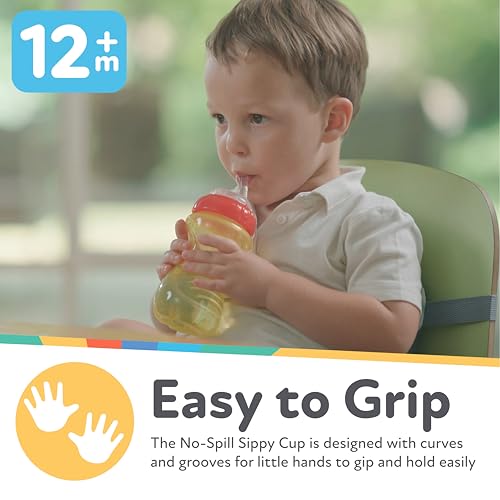
- SIPPY CUPS FOR 12+ MONTHS: The Nuby No-Spill Easy Grip Cup for Toddlers 12+ Months holds 10 ounces (300 mL) of
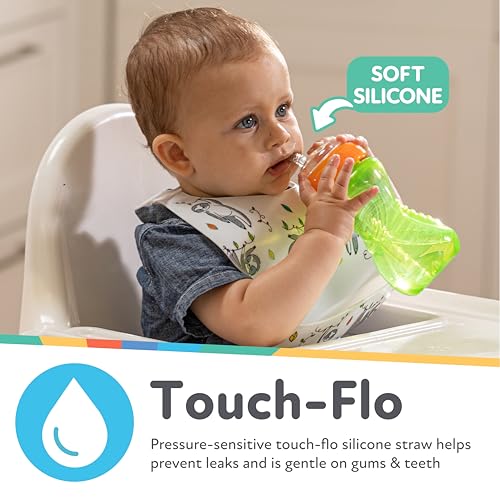
- NO-SPILL STRAW CUP: Our Soft Flex straw has a built-in TOUCH-FLO valve that only opens when your toddler sips
- DESIGNED FOR TODDLERS: The soft silicone straw is gentle on your child's teeth and gums; The curved and groove
7. Comparison Table: Cup Types at a Glance
| Cup Type | Best Age Range | Primary Benefits | Main Drawbacks | Recommended Product | Price Range |
|---|---|---|---|---|---|
| Traditional Sippy (hard spout) | 6–12 months | Easy grip, familiar flow, spill-proof | Dental risk if used long-term; reinforces bottle-like sucking | Zak Designs Kelso Sippy Cup | $20–22 (2-pack) |
| Straw Cup (soft silicone straw) | 9 months–3 years | Best oral motor development; dentist-recommended; versatile | Valves can harbour mould; needs straw coaching initially | Munchkin Any Angle Weighted Straw Cup | $9–13 |
| Straw Cup (budget/disposable) | 9 months–2 years | Low cost; great for daycare/travel; character designs motivate kids | Less durable; not insulated | The First Years Bluey Take & Toss Cups | $12–13 (10-pack) |
| Insulated Straw Cup | 12 months–3 years | Keeps drinks cold; spill-resistant; easy to clean | Slightly higher cost | Owala Kids Insulated Tumbler | $13–15 |
| Straw Cup with Handles | 6–18 months | Handles aid grip for younger toddlers; insulated; sliding lid | Handles must be removed as child grows | Dr. Brown's Milestones Straw Cup | $10–12 (2-pack) |
| No-Spill Straw Cup (value 3-pack) | 12 months–3 years | Budget-friendly; soft flex straw; easy grip design | Basic insulation only | Nuby No-Spill Flex Straw Cup | $8–10 (3-pack) |
8. Expert Insights on Cup Choice and Oral Development
Conclusion
Choosing a toddler cup might feel like a small decision in the grand scheme of parenting, but it's one of those quiet, daily choices that compounds over thousands of sips into real developmental outcomes. The research is reassuringly clear: steer toward straw cups as your toddler's primary vessel from around 9–12 months, use sippy cups as a short-term stepping stone rather than a destination, and introduce open-cup practice early and often.
The best cup is the one your child will actually use — and the one that moves them gently toward independent, mature drinking. As I often tell parents in clinic: the goal isn't a perfect cup; it's a confident little drinker who doesn't need one at all. Save this guide, share it with your partner or carer, and revisit it each time your toddler hits a new developmental stage.
Sources & References
- American Academy of Pediatrics. "Healthy Beverage Consumption in Early Childhood: Recommendations from Key National Health and Nutrition Organizations." Pediatrics. 2019. https://publications.aap.org/pediatrics/article/144/2/e20190765/38422
- American Academy of Pediatrics Committee on Nutrition. "Feeding Healthy Infants, Children, and Adolescents." AAP Policy Statement. 2022. https://www.aap.org
- American Dental Association. "Fluoride Use, Sippy Cups, and Infant Oral Health." ADA Clinical Resources. 2021. https://www.ada.org
- American Academy of Pediatric Dentistry. "Policy on Early Childhood Caries (ECC): Classifications, Consequences, and Preventive Strategies." AAPD Reference Manual. 2022. https://www.aapd.org
- Bahr, Diane. Nobody Ever Told Me (or My Mother) That! Everything from Bottles and Breathing to Healthy Speech Development. Sensory World, 2010.
- World Health Organization. "Infant and Young Child Feeding: Model Chapter for Textbooks." WHO Press, 2009. https://www.who.int/publications/i/item/9789241597494
- Carruth, B.R., & Skinner, J.D. "Feeding Behaviours and Other Motor Development in Healthy Children." Journal of the American College of Nutrition. 2002;21(2):88–96.
- Mize, Laura. Teach Me To Talk: The Therapy Manual. Apraxia Kids / Independent Publication, 2007.
Frequently Asked Questions
At what age should my toddler stop using a sippy cup?
Can straw cups cause dental problems?
My toddler won't use a straw — what do I do?
Is a 360 cup better than a straw cup?
When can my toddler use a regular open cup?
Are insulated straw cups worth the extra cost?
How often should I replace my toddler's straw cup?
Was this helpful?
Thanks — your feedback helps us pick what to write next.