Why Your Body Type Changes Everything About Carrier Comfort
The best baby carrier for your body type is the one that fits your torso length, shoulder width, and hip structure — not just your baby's weight.
In this article
You picked a carrier, strapped it on, and within 20 minutes your shoulders were screaming. Sound familiar? You're not alone — and it's almost certainly not user error. According to the International Hip Dysplasia Institute, improper carrier fit is one of the leading reasons parents stop babywearing in the first trimester of use, with discomfort to the wearer (not the baby) cited as the primary culprit. The carrier wasn't wrong; it just wasn't matched to your body.
This guide cuts through the "fits all parents" marketing to show you exactly which carrier features matter for petite, average, tall, and plus-size frames — backed by clinical guidance and tested by real caregivers across a range of body types.
What you'll understand after reading:
1. Why Your Body Type Changes Everything About Carrier Comfort
The single most important thing to understand is this: a baby carrier is a load-bearing garment, and like any load-bearing structure, its performance depends entirely on how it interfaces with the frame carrying the weight — yours.
Your torso length (shoulder to hip), shoulder width, and hip circumference create a three-dimensional shape that either aligns with a carrier's architecture or fights against it. When they align, weight is shared across your hips, lumbar spine, and shoulders in roughly the right proportions. When they don't, one area absorbs far more than it should.
The Three Measurements That Actually Matter
- Torso length: Measure from the top of your shoulder to the top of your hip bone. Under 16 inches is short-torso; 16–19 inches is average; 19+ inches is long-torso. - Hip circumference: This determines whether a waist belt will close properly and sit securely. - Shoulder width: Narrow shoulders need inward-angled strap attachments; broad shoulders need wide-set, padded straps that don't slide toward the neck.
2. Petite and Short-Torso Parents: Features That Actually Help
If you're under 5'4" or have a torso length under 16 inches, most "standard" carriers are engineered for someone taller, which means the waist belt rides up onto your abdomen and the shoulder straps angle awkwardly. The fix isn't to tighten everything — it's to choose a carrier with a shorter panel height and a waist belt designed to sit lower.
What to Look For
The Momcozy Purehug Carrier is a strong option here. Its three adjustable sizing positions let you shorten the panel height to match a shorter torso, and the padded EVA waist belt sits naturally at hip-bone level for most petite frames. At 4.5 stars across over 5,000 reviews, it has a large enough user base to trust the consensus.


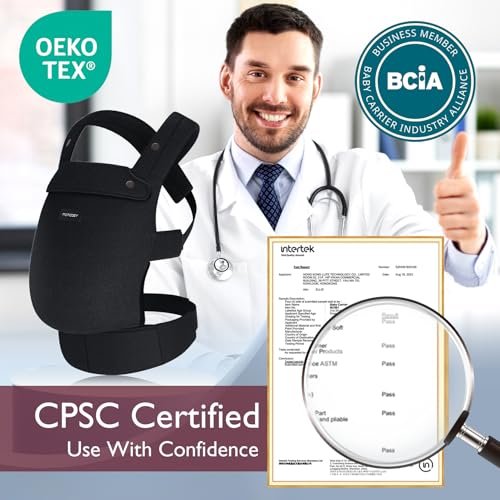

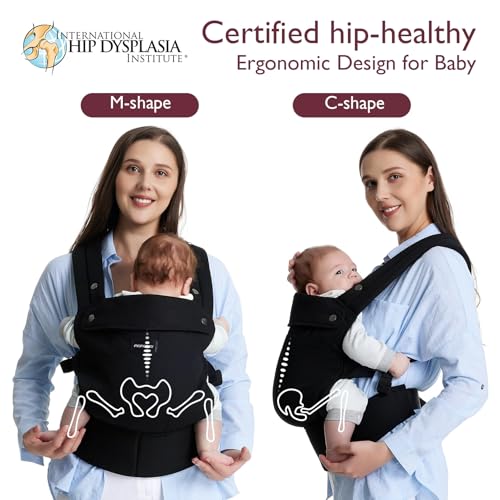
Momcozy Baby Carrier - Ergonomic, Cozy and Lightweight Carrier for 7-45lbs, Effortless to Put On, Ideal for Hands-Free Parenting, Enhanced Lumbar Support, Purehug for Infant to Toddler, Black
- Hands Free Comfort: This ergonomic Baby Carrier perfect for experiencing hands-free convenience in everyday us
- Tailored to Grow Together: Our carrier features three adjustable sizing positions, catering to your child's gr
- Ergonomic Waist EVA Support: Experience unmatched comfort during extended wear. The built-in EVA waist support
For parents who want a colour option, the Momcozy Purehug in Khaki offers identical ergonomic specs with a 100% cotton construction that many petite parents find softer against skin during longer wears.
3. Plus-Size and Wide-Build Parents: Beyond "Extended Waist Belts"
Plus-size parents are underserved by mainstream carrier marketing, which typically mentions extended waist belts as a checkbox feature without addressing the full picture. A belt that closes at 54 inches is useless if the shoulder straps are set too close together for broader shoulders, or if the back panel doesn't have enough structure to stay upright on a wider torso.
The X-Back Advantage
The DINICTIS TACTICAL Lumbar Support Carrier in Black uses an X-shaped back design rather than the traditional H-shaped layout. In an X-back, the straps cross between the shoulder blades before attaching to the waist belt, which distributes load diagonally across the back rather than straight down two parallel lines. For broader builds, this crossing point acts as a natural anchor that keeps straps from sliding off rounded shoulders.
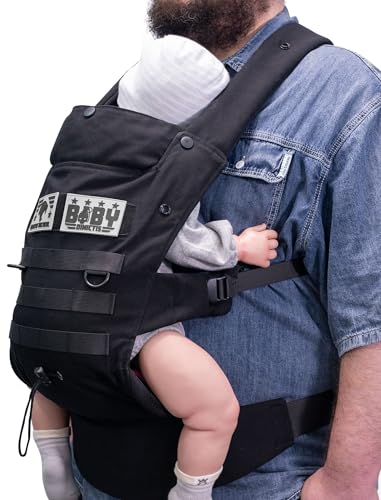
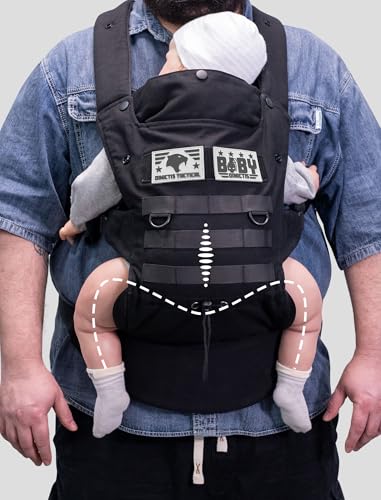
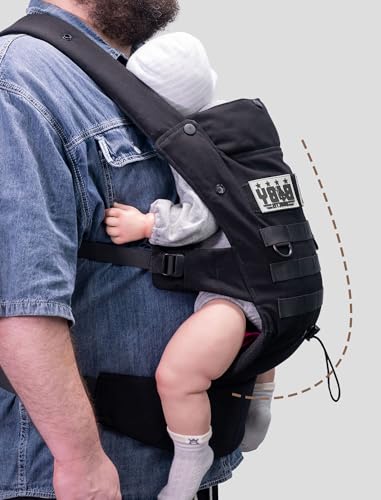
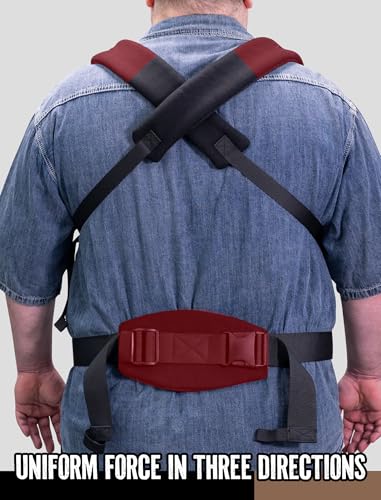
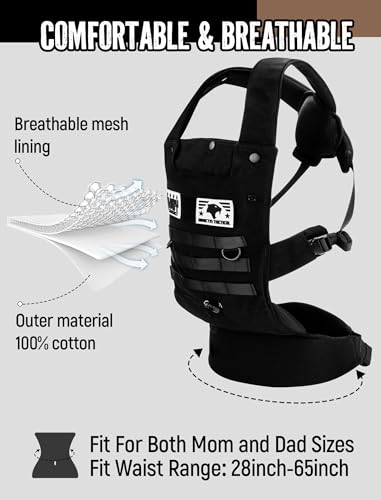
Ergonomic Lumbar Support Baby Carrier for Infants to Toddlers (8-33 lbs), Cozy and Lightweight Military Baby Carrier for Plus Size Parents- Black
- Hands Free: The baby carrier is mainly made of cotton and 3D breathable mesh, comfortable skin-friendly, breat
- X-Shaped Back Design: unlike traditional H-shaped carriers, Dinictis features an X-shaped back design that dis
- Ergonomic Lumbar EVA support: Provides vital lumbar support and, in combination with the padded shoulder strap
The DINICTIS TACTICAL Carrier in Dark Grey is the same ergonomic design in an alternative colourway at $119.99, for those who prefer a neutral tone.
For plus-size parents who also want a hip seat option, the MOMTORY 6-in-1 Hip Seat Carrier supports up to 50 lbs and includes a widened seat cushion specifically engineered for even weight distribution. Its detachable design also means you can use the hip seat alone for quick carries — useful when you need to put baby down frequently.


Baby Carrier, MOMTORY Safety-Certified 6-in-1 Baby Carrier with Hip Seat, Plus Size Friendly, Detachable Baby Holder Carrier Newborn to Toddler, Soft Ergonomic Toddler Support Carrier for 7-50lbs
- 𝐃𝐢𝐬𝐜𝐨𝐯𝐞𝐫 𝐭𝐡𝐞 𝐔𝐥𝐭𝐢𝐦𝐚𝐭𝐞 𝟔-𝐈𝐧-𝟏 𝐈𝐧𝐟𝐚𝐧𝐭 𝐂𝐚𝐫𝐫𝐢𝐞𝐫: Say goodbye to the hassle of choosing between a hip seat carrier
- 𝐑𝐞𝐯𝐨𝐥𝐮𝐭𝐢𝐨𝐧𝐚𝐫𝐲 𝐁𝐚𝐛𝐲 𝐇𝐢𝐩 𝐒𝐞𝐚𝐭: Experience unmatched comfort with our specially crafted baby hip seat. Unlike oth
- 𝐇𝐚𝐩𝐩𝐲 𝐌𝐨𝐦, 𝐇𝐚𝐩𝐩𝐲 𝐁𝐚𝐛𝐲: Introducing our game-changing baby carrier. Designed with a soft tummy protective core,
4. Tall and Long-Torso Parents: When Standard Carriers Run Short
If your torso measures over 19 inches, standard carriers frequently position the waist belt too high (because the panel height is too short to reach your hips), which means the carrier sits like a vest rather than a hip-load transfer system. The result: your shoulders carry almost everything.
What Tall Parents Should Prioritise
The Momcozy Purehug works reasonably well for average-to-slightly-long torsos because the three sizing positions shift the entire panel geometry, not just the waist belt circumference. Taller parents report the widest position gives enough panel length for a secure hip-level fit.
For taller parents who also carry larger infants (up to 45 lbs), the Momcozy Purehug in Khaki offers the same adjustability in a cotton construction that breathes better during longer outdoor wears.
5. Partner Sharing and Multi-User Households: Adjustability Is the Real Test
In households where two caregivers with different body types share one carrier, adjustability isn't a nice-to-have — it's the entire purchase decision. A carrier that fits a 5'10" parent with broad shoulders and a 5'3" parent with a petite frame needs to reset quickly, completely, and without tools.
Features That Make Sharing Work
The MOMTORY 6-in-1 Carrier earns high marks here because its detachable components mean each caregiver can effectively set their own configuration and reattach quickly. Reviewers specifically mention the ease of handoff between partners.
For households on a tighter budget, the JOYNCLEON Plus Size Baby Sling offers ASTM-certified safety and adjustable straps at $27.99 — a practical option for a secondary carrier or travel backup when the primary carrier stays home.
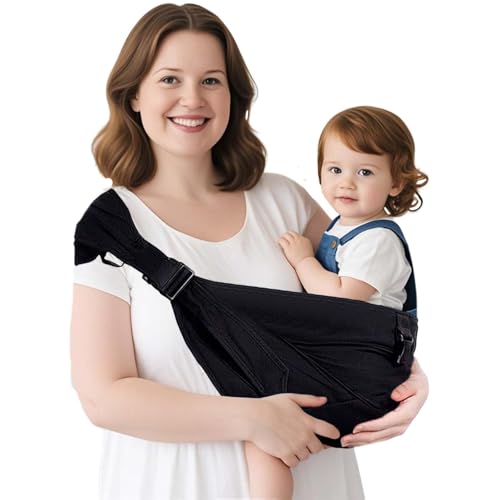
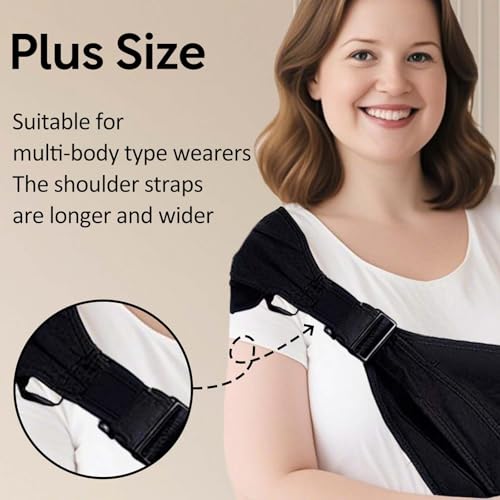
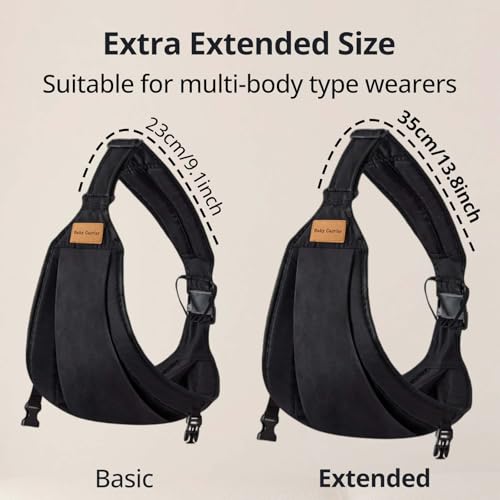
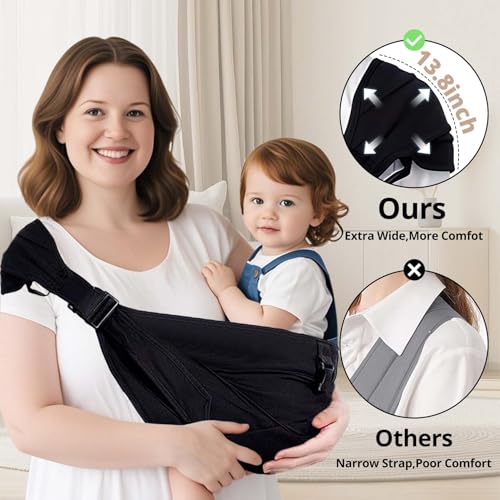
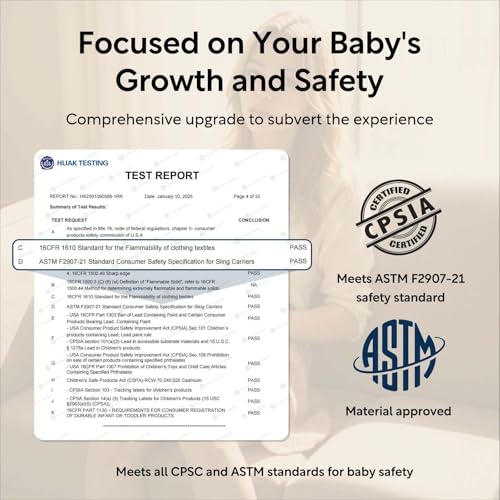
Plus Size Baby Sling Carrier - Baby Carrier Extended Adjustable Design for Larger Kids, Breathable Anti-Slip Support up to 45 lbs, ASTM Certified (Plus-Black)
- 100% Polyester
- One-Year Warranty Assurance: We offer a comprehensive one-year warranty on our products. Should you encounter
- Safety with Flexibility: Our baby carrier features secure buckles and adjustable straps for enhanced safety, d
6. Weight Distribution Technology: What the Research Actually Says
Not all carriers distribute load the same way, and the difference matters more the longer you wear. Three main architectures exist in the 2026 market, and each has a distinct body-type profile.
X-Back vs. H-Back vs. Hip Seat
X-back design: Straps cross between shoulder blades. Best for broader builds and longer wear sessions. The DINICTIS TACTICAL Lumbar Support Carrier uses this system with an added EVA lumbar insert — the combination is particularly effective for parents with lower back sensitivity.
H-back (standard structured): Two parallel straps run straight up from the waist belt. Works well for average and petite frames where the straps naturally sit within shoulder width. The Momcozy Purehug uses this design with thick EVA padding in both the shoulder straps and waist belt.
Hip seat: A rigid shelf at waist level that the baby sits on, with optional upper-body carrier attachment. Takes the most weight off the wearer's shoulders. The MOMTORY 6-in-1 Carrier combines both, letting you use the hip seat alone for short trips or add the full carrier panel for longer outings.
| Body Type | Key Fit Needs | Architecture | Recommended Product | Price Range |
|---|---|---|---|---|
| Petite / Short-Torso | Short panel height, narrow straps, low waist belt | H-back with EVA waist | Momcozy Purehug (Black) | $59–$65 |
| Average Build | Standard panel, moderate padding, wide waist range | H-back or X-back | Momcozy Purehug (Khaki) | $59–$65 |
| Plus-Size / Wide Build | Extended waist belt, X-back, wide padded straps | X-back with EVA lumbar | DINICTIS TACTICAL (Black) | $109–$120 |
| Plus-Size (budget option) | Extended adjustable straps, ASTM certified | Sling with adjustable buckles | JOYNCLEON Plus Size Sling | $27–$28 |
| Tall / Long-Torso | Longer panel, wide vertical adjustment, stiff waist | H-back with multi-position | Momcozy Purehug (Khaki) | $59–$65 |
| Multi-User Household | Fast reset, wide circumference range, detachable parts | Hip seat + carrier combo | MOMTORY 6-in-1 Hip Seat Carrier | $41–$42 |
7. Expert Insights on Carrier Fit and Infant Development
Carrier fit isn't only about caregiver comfort — it directly affects the ergonomic position your baby is held in, which has developmental implications for hip and spine health.
The practical upshot: when you find a carrier that fits you correctly, your baby automatically benefits — because you'll wear it longer, more consistently, and with better posture.
Finding the right carrier isn't about finding the most popular one — it's about finding the one that fits the body doing the carrying. When that match happens, babywearing stops being something you push through and starts being something you actually look forward to. Your baby gets the closeness, the warmth, and the developmental benefits of being held; you get your hands free and your back intact. That's the whole deal.
The best carrier is the one you'll still be reaching for at month ten, not the one that's gathering dust by month two. Take your measurements, check the specs, and trust the fit over the marketing.
If this guide helped you narrow things down, save it and share it with a fellow parent still wrestling with straps — they'll thank you for it.
Sources & References
- International Hip Dysplasia Institute. "Baby Carrier Guidelines and Hip Healthy Products." 2024. https://hipdysplasia.org/developmental-dysplasia-of-the-hip/hip-healthy-products/baby-carriers/
- International Hip Dysplasia Institute. "What is Hip Dysplasia?" 2024. https://hipdysplasia.org/developmental-dysplasia-of-the-hip/
- Kirkilionis, Evelin. "A Baby Wants to Be Carried." 2002. Pinter & Martin Publishers. (Research on physiological carrying positions and infant development.)
- Knowles, Rosie. "Why Babywearing Matters." Sheffield Sling Surgery. 2019. https://www.sheffieldslingslibrary.org.uk/
- American Academy of Pediatrics (AAP). "Safe Sleep and Skin-to-Skin Care in the Neonatal Period for Healthy Term Newborns." Pediatrics, 2016. https://publications.aap.org/pediatrics/article/138/3/e20161889/52522
- ASTM International. "ASTM F2236: Standard Consumer Safety Specification for Soft Infant and Toddler Carriers." https://www.astm.org/f2236-21.html
Frequently Asked Questions
What is the safest baby carrier position for a 3–6 month old?
Can I use a baby carrier after a C-section?
How do I know if a carrier waist belt is too small for me?
Are ring slings safe for everyday use with infants 3–12 months?
How often should I re-adjust my carrier as my baby grows?
Is a more expensive carrier always better for body fit?
What does "ergonomic" actually mean on a carrier label?
Was this helpful?
Thanks — your feedback helps us pick what to write next.