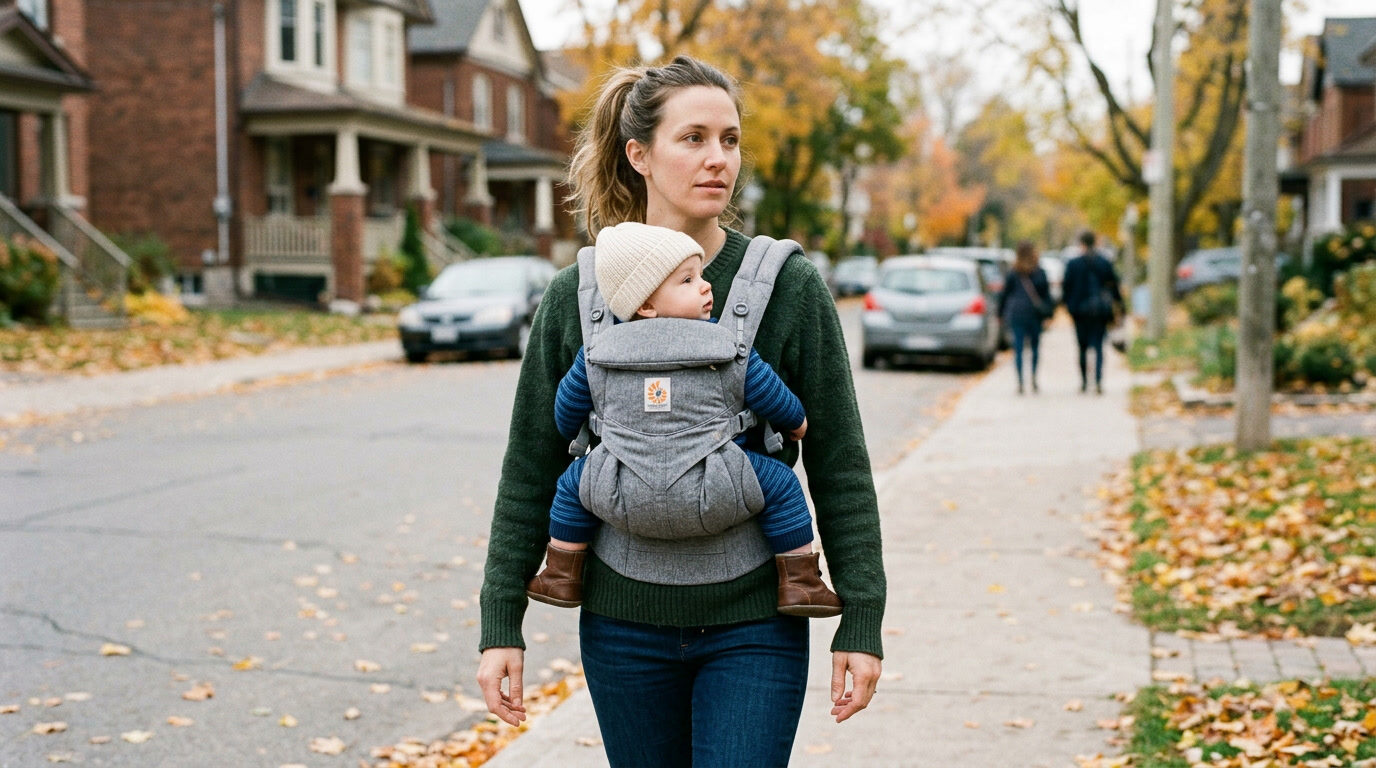
Why Babywearing in the 3–12 Month Window Is Different
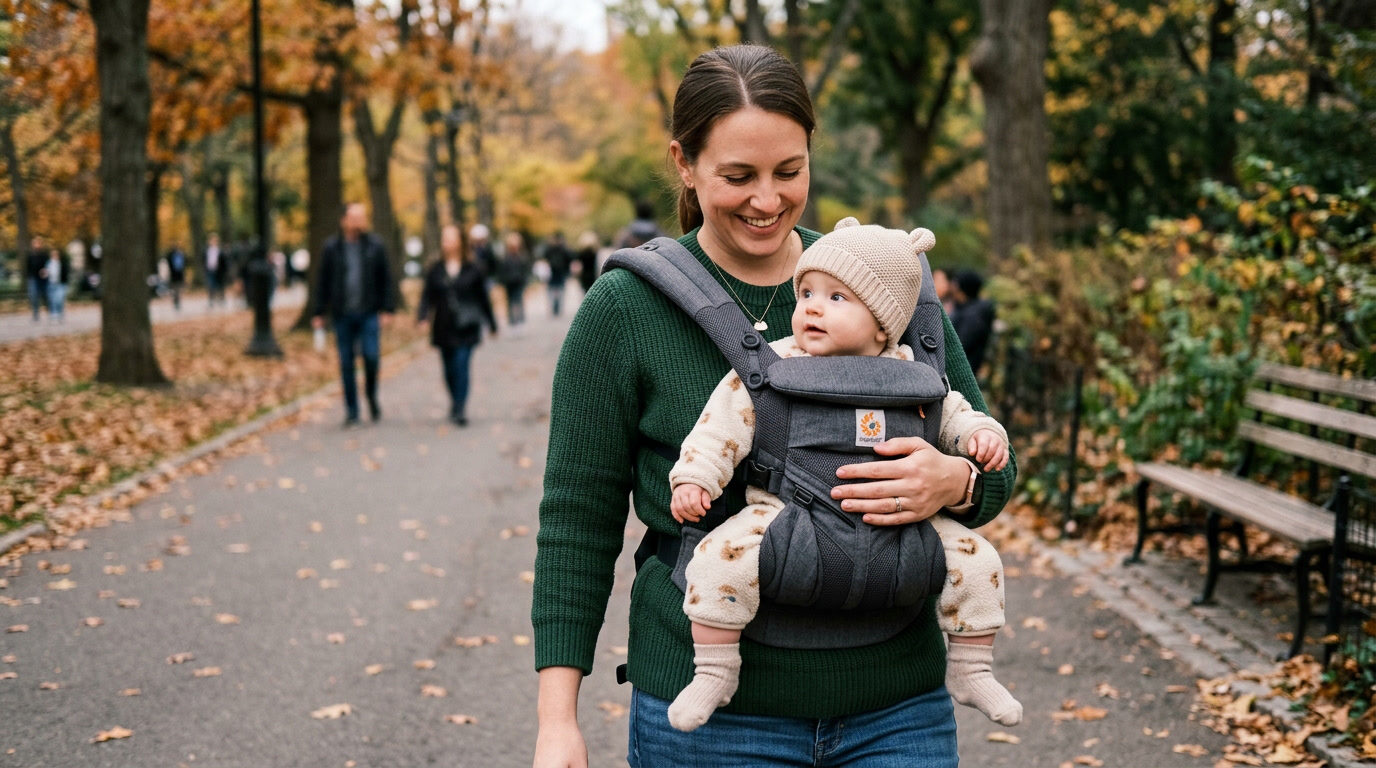
The best baby carriers for infants aged 3–12 months are ergonomic, hip-healthy designs that keep your baby in the natural "M" position — supporting their spine and hips while keeping your hands free.
In this article
There's a reason nearly 80% of parents in traditional babywearing cultures report calmer, more settled infants — and modern research is starting to catch up. A landmark study published in Pediatrics found that increased carrying reduced infant crying by up to 43% during the first 12 weeks of life. But here's the thing most gear guides won't tell you: not all carriers are created equal, especially for the critical 3–12 month window when your baby's hips and spine are still developing fast.
This guide cuts through the noise. Whether you're a first-time parent staring at a wall of options or a second-timer who regrets last time's choice, here's exactly what you'll understand by the end:
1. Why Babywearing in the 3–12 Month Window Is Different
The 3–12 month stage is a physiological sweet spot that changes everything about how you should choose a carrier. Your baby has moved past the floppy newborn phase but isn't walking yet — and their hips are still maturing rapidly.
The International Hip Dysplasia Institute (IHDI) identifies this period as particularly sensitive. Infant hip joints are largely cartilage at birth and gradually ossify through the first year. How your baby sits in a carrier during this time can either support healthy acetabular development or place unnecessary stress on the joint.
What "Ergonomic" Actually Means
The word "ergonomic" is used freely in product marketing, but it has a specific clinical meaning in babywearing:
2. The Four Main Carrier Types — and Which Suits Your Life
Choosing the right type of carrier before you choose a brand will save you money, frustration, and a drawer full of regrets.
Structured Buckle Carriers
These are the workhorses of the babywearing world. Pre-formed waistbands, padded shoulder straps, and quick-release buckles make them the easiest to put on solo. They're ideal for parents who wear daily, carry for longer stretches, or share the carrier between two caregivers of different sizes.
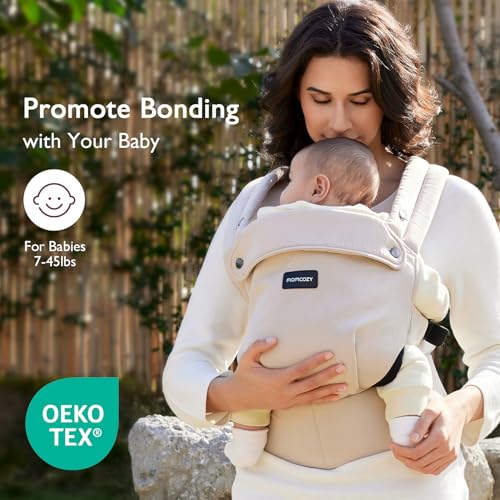
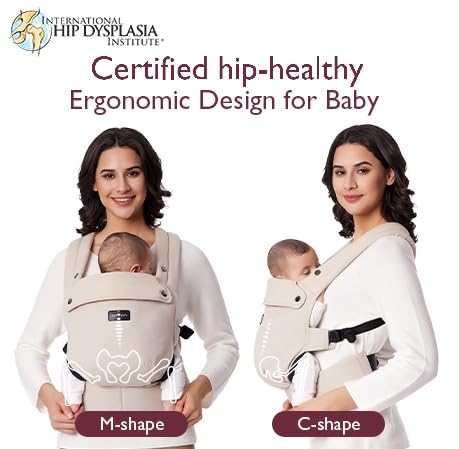
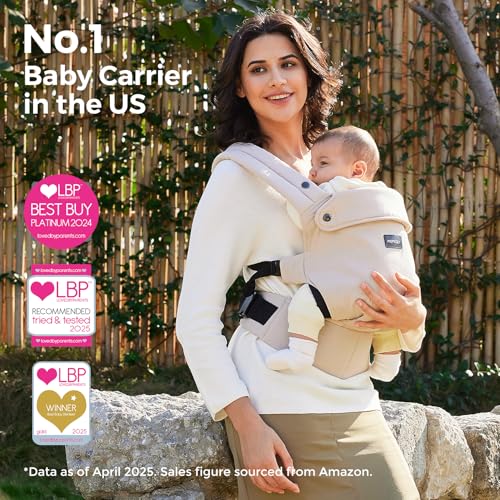
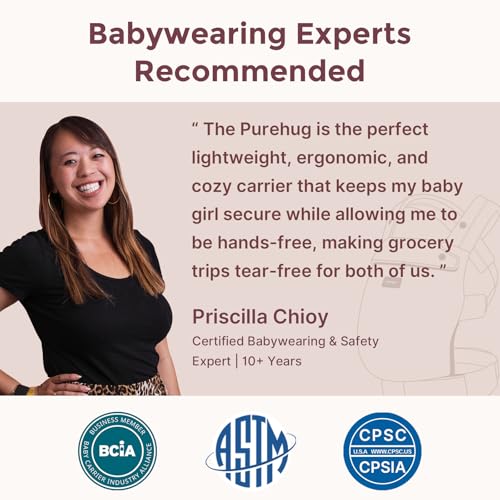
Momcozy Baby Carrier - Ergonomic, Cozy and Lightweight Carrier for 7-45lbs, Effortless to Put On, Ideal for Hands-Free Parenting, Enhanced Lumbar Support, Purehug for Infant to Toddler, Khaki
- Lining: 100% Cotton, Shell: 100% Cotton, Filling (Waist Belt & Shoulder Straps): 47% Foam, 40% Polyester Fiber
- Hands Free Comfort: This ergonomic Baby Carrier perfect for experiencing hands-free convenience in everyday us
- Tailored to Grow Together: Our carrier features three adjustable sizing positions, catering to your child's gr
The Momcozy Purehug Carrier is a strong example here — 100% cotton construction, three adjustable sizing positions, and enhanced lumbar support make it genuinely comfortable for the long haul (7–45 lbs range means it'll grow with your child well past 12 months).
Stretchy and Hybrid Wraps
Wraps offer the closest skin-to-skin feel and excellent weight distribution, but they come with a learning curve. For the 3–6 month stage in particular, a good stretchy wrap keeps a smaller baby snuggled in while your hands stay free.Hip Seat Carriers
These add a rigid or semi-rigid platform at the waist for your baby to sit on, reducing arm fatigue during frequent on-and-off carrying (think grocery runs or toddler pickup at daycare). They're not ideal for extended hikes, but brilliant for urban parents.


Baby Carrier, MOMTORY Safety-Certified 6-in-1 Baby Carrier with Hip Seat, Plus Size Friendly, Detachable Baby Holder Carrier Newborn to Toddler, Soft Ergonomic Toddler Support Carrier for 7-50lbs
- 𝐃𝐢𝐬𝐜𝐨𝐯𝐞𝐫 𝐭𝐡𝐞 𝐔𝐥𝐭𝐢𝐦𝐚𝐭𝐞 𝟔-𝐈𝐧-𝟏 𝐈𝐧𝐟𝐚𝐧𝐭 𝐂𝐚𝐫𝐫𝐢𝐞𝐫: Say goodbye to the hassle of choosing between a hip seat carrier
- 𝐑𝐞𝐯𝐨𝐥𝐮𝐭𝐢𝐨𝐧𝐚𝐫𝐲 𝐁𝐚𝐛𝐲 𝐇𝐢𝐩 𝐒𝐞𝐚𝐭: Experience unmatched comfort with our specially crafted baby hip seat. Unlike oth
- 𝐇𝐚𝐩𝐩𝐲 𝐌𝐨𝐦, 𝐇𝐚𝐩𝐩𝐲 𝐁𝐚𝐛𝐲: Introducing our game-changing baby carrier. Designed with a soft tummy protective core,
The MOMTORY 6-in-1 Hip Seat Carrier combines both worlds — detach the hip seat and use the full carrier structure, or use the seat alone for quick carries. It's also specifically designed to avoid abdominal pressure, making it a thoughtful pick for parents recovering from a C-section.
Soft-Structured Slings
Adjustable ring slings and simple sling carriers work beautifully for quick carries and nursing, but require more practice to achieve a safe, ergonomic fit.3. Safety Fundamentals Every Parent Must Know
Babywearing is overwhelmingly safe when done correctly — but the T.I.C.K.S. rule exists because carrier misuse has caused preventable tragedies.
The UK's Royal College of Midwives and the Consortium of UK Sling Manufacturers and Retailers jointly promote the T.I.C.K.S. rule as the gold standard for safe babywearing:
Red Flags to Reject Any Carrier
✗ Baby's chin is touching their chest ✗ Baby's face is pressed against your body or fabric ✗ Carrier suspends baby from the crotch with unsupported thighs ✗ No visible adjustment for different body sizes ✗ Baby's legs hang straight down ("dangling" position)
4. Budget-Friendly Options That Don't Compromise Safety
You don't need to spend $150 to get a safe, ergonomic carrier. Two products in this guide prove that convincingly.


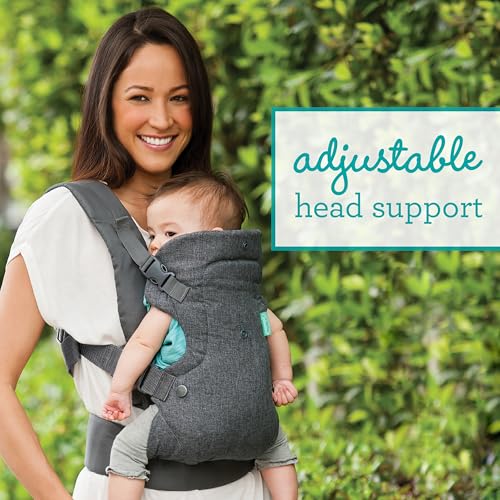

Infantino Flip 4-in-1 Convertible Baby Carrier, Adjustable, Ergonomic Babywearing, Registry Essential, Baby Carrier for Newborn to Toddler, Gray
- 4-IN-1 CARRYING POSITIONS FOR EVERY STAGE: Convertible baby carrier with facing-in (narrow/wide), facing-out,
- COMFORTABLE FOR PARENT & BABY: Designed with padded shoulder straps and a wide waist belt that helps evenly di
- ADJUSTABLE FOR ALL CAREGIVERS: Custom-fit straps, buckles, and seat settings make this carrier ideal for diffe
The Infantino Flip 4-in-1 Carrier has over 81,000 reviews on Amazon for good reason. At just over $32, it covers four carrying positions (facing-in narrow, facing-in wide, facing-out, and back carry), fits babies from 8–32 lbs, and features padded shoulder straps with a wide waist belt for weight distribution. The wide seat position supports the M-position for babies 3 months and older. For families on a budget or grandparents wanting their own carrier, this is the recommendation without hesitation.


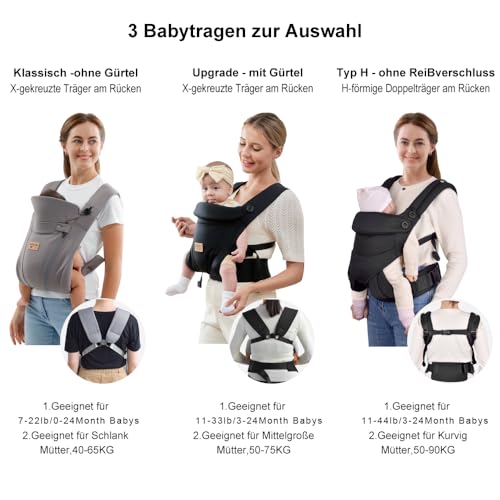
New Upgrade Ergonomic Baby Carrier Newborn Toddler Wrap Carrier,Hands Free Baby Sitting Support Sling,Breathable,Perfect for Infants/Chest Sling for Babies Shower Gift (Black)
- Adjustable Sling Carrier: Adjustable baby carrier with secure buckle design fits most caregivers and offers 3
- vrbabies Baby Sling Load Fabric Upgrade:vrbabies carrier slings allows babies to sit astride, ergonomically, a
- Easy to Wear and Breastfeed:vrbabies baby carrier easy to wear and very close-fitting, simple and elegant styl
The vrbabies Adjustable Sling Carrier at $32.99 offers a different approach — a close-fitting sling style with breathable fabric and a secure buckle design. It supports three positions and is specifically designed to allow babies to sit astride ergonomically. The breathable back panel helps distribute weight and reduce upper back and shoulder strain. It's an excellent choice for parents who want a simpler, lighter option for shorter outings.
5. Premium Picks for All-Day Wear and Growing Families
If you're planning to babywear daily, through multiple children, or for extended periods — investing in a higher-specification carrier pays off quickly.

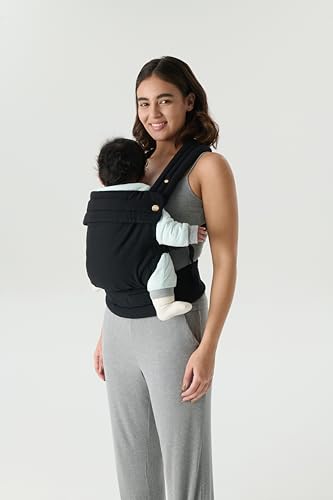

Ergonomic Baby Carrier Newborn to Toddler, Lightweight & Breathable Cotton Infant Carrier for Hands Free Comfort (Black)
- This versatile 4-in-1 baby carrier is designed for busy parents who need both convenience and style. Whether a
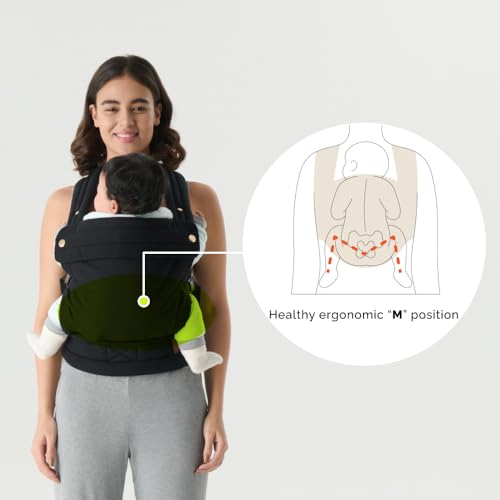
- Designed to promote healthy hip and spine development, this carrier supports the natural 'M' position. Suitabl
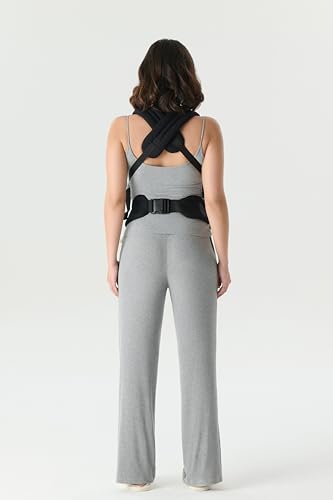
- The unique X-shaped back design evenly distributes weight, reducing back strain. Padded shoulder straps ensure
The NEST BLANCHE Ergonomic 4-in-1 Carrier at $80.99 is built for parents who want longevity and comfort without compromise. Its X-shaped back design is the standout feature — it distributes your baby's weight across your entire back rather than concentrating it at the shoulders, which is a genuine differentiator for parents with existing back or shoulder issues. Padded leg openings protect circulation in your baby's legs, and the carrier covers 7–35 lbs across four carrying positions. The 4.7-star rating from over 500 reviewers reflects consistent real-world satisfaction.
What to Look for in a Premium Carrier
6. Matching Your Carrier to Your Real Life
The best carrier is the one you'll actually reach for — and that depends entirely on your daily context.
| Carrier Type | Best For | Weight Range | Key Benefit | Main Drawback | Recommended Product | Price Range |
|---|---|---|---|---|---|---|
| Structured buckle (standard) | Daily errands, shared use, longer wear | 7–45 lbs | Lumbar support, easy on/off | Bulkier to pack | Momcozy Purehug | $65 |
| Structured buckle (4-in-1) | Budget families, grandparents, travel | 8–32 lbs | 4 positions, affordable | Narrower weight range | Infantino Flip 4-in-1 | $32 |
| Hip seat + carrier combo | Urban parents, frequent on/off | 7–50 lbs | Reduces arm fatigue, C-section friendly | Bulkier hip seat | MOMTORY 6-in-1 Hip Seat | $42 |
| Soft sling / adjustable | Quick carries, nursing, lighter loads | 8–35 lbs | Close fit, lightweight | Less lumbar support | vrbabies Sling Carrier | $33 |
| Premium structured buckle | Frequent wearers, back issues, multiples | 7–35 lbs | X-back weight distribution | Higher price | NEST BLANCHE 4-in-1 | $81 |
7. The Science of Babywearing: What the Research Actually Shows
Beyond comfort and convenience, there's a meaningful body of evidence supporting babywearing as a developmental and relational practice.
A frequently cited 1986 randomised controlled trial by Dr. Urs Hunziker and Dr. Ronald Barr, published in Pediatrics, found that increased carrying — including in carriers — reduced infant crying and fussing by 43% at six weeks of age. The effect held across the day, not just during the carry itself.
From an attachment perspective, babywearing aligns directly with the principles of responsive caregiving. The American Academy of Pediatrics (AAP) emphasises that consistent, warm responsiveness to infant cues — exactly what babywearing facilitates — is foundational to secure attachment and healthy brain development.
Benefits Supported by Research
Expert Insights
Every time you clip that carrier buckle and feel your baby settle into your chest, something real is happening — not just convenience, but connection. Their heartbeat syncs closer to yours. Their cortisol drops. Your hands are free, but you've never been more present. That's not sentimentality; that's physiology.
The right carrier doesn't just carry your baby — it carries your relationship through one of the most demanding and beautiful years of your life. Choose one that respects their developing body, supports yours, and fits the life you're actually living.
Found this guide useful? Save it, share it with your parenting group, or pass it to a grandparent who wants their own carrier for visits. The more informed the village, the better every baby sleeps.
Sources & References
- Hunziker, U.A. & Barr, R.G. "Increased carrying reduces infant crying: A randomized controlled trial." Pediatrics, 1986. Vol. 77(5), pp. 641–648.
- International Hip Dysplasia Institute. "Hip-Healthy Products and Baby Carriers." hipdysplasia.org. Accessed 2025.
- UK Consortium of Sling Manufacturers and Retailers / Royal College of Midwives. "The T.I.C.K.S. Rule for Safe Babywearing." betterbabywearing.com. 2012.
- American Academy of Pediatrics. "Responsive Parenting and Secure Attachment." healthychildren.org. Updated 2024.
- World Health Organization. "Kangaroo Mother Care: A Practical Guide." WHO Press, Geneva. 2003.
- Bergman, N.J. "Neonatal stomach volume and physiology suggest feeding at 1-h intervals." Acta Paediatrica, 2003. Vol. 92(9), pp. 1–5.
- Karp, H. "The Happiest Baby on the Block." Bantam Books, 2002. 2nd ed. 2015.
Frequently Asked Questions
Is babywearing safe for newborns and young infants?
How long can I wear my baby each day?
Can babywearing cause hip dysplasia?
What's the best carrier for a parent with back pain?
Can dads and co-parents use the same carrier?
When should I stop using a carrier?
Is babywearing safe in hot weather?
Was this helpful?
Thanks — your feedback helps us pick what to write next.