What's Happening in the 5–8 Brain (And Why It Changes Everything)
Children aged 5–8 learn best through structured play, hands-on exploration, and social games — not passive screen time or rote drilling.

In this article
Your 6-year-old comes home from school, drops her bag, and immediately asks if she can "do an experiment." That instinct — to poke, test, and discover — is not a distraction from her education. It is her education. Research from the Joan Ganz Cooney Center at Sesame Workshop found that children learn new vocabulary up to 30% more effectively through play-based contexts than through direct instruction alone.
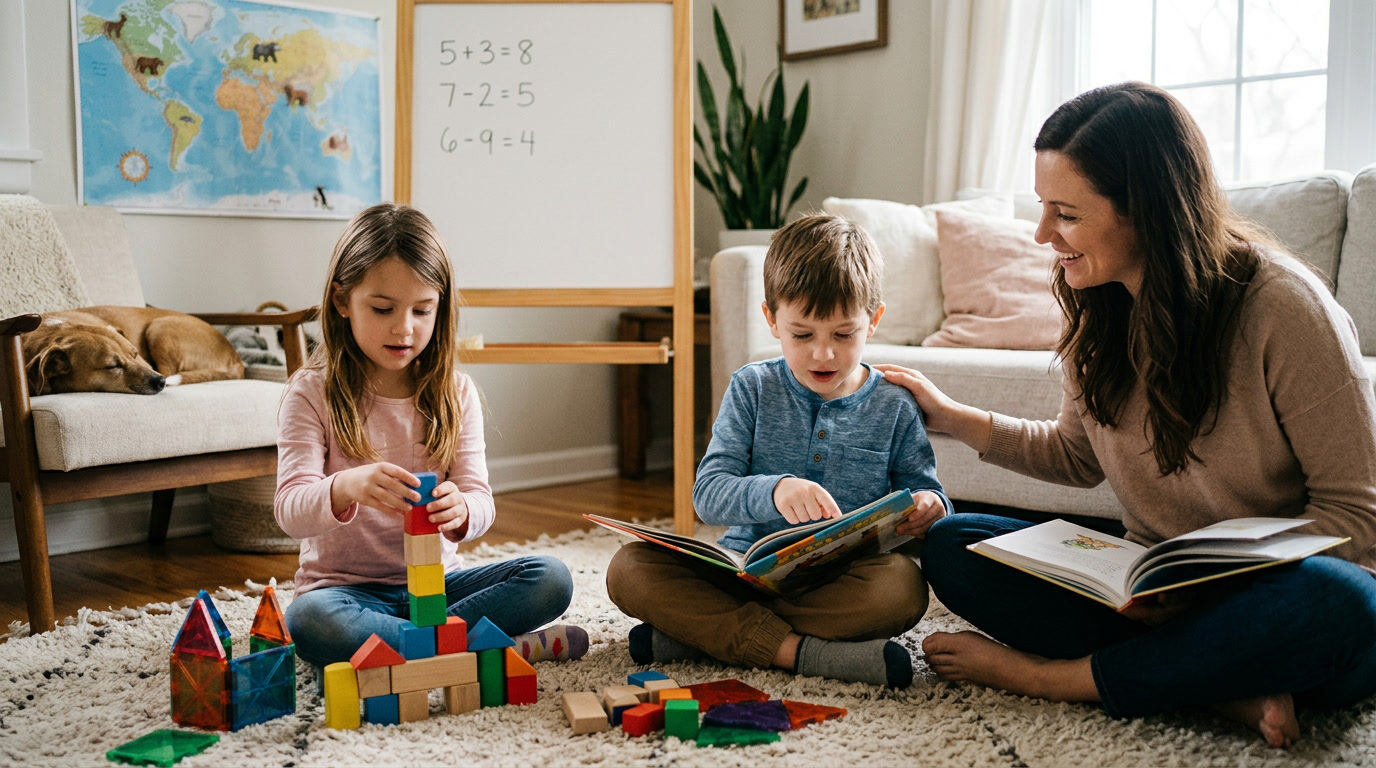
Between ages 5 and 8, the brain is in a sensitive period for language, logical reasoning, and social cognition. The connections your child builds now — through reading together, building puzzles, playing maths games, or growing a plant — will underpin everything from algebra to empathy in the years ahead.
In this guide you'll understand:
1. What's Happening in the 5–8 Brain (And Why It Changes Everything)
Children aged 5–8 are in the thick of what developmental psychologists call the concrete operational stage — a term coined by Jean Piaget to describe the phase when children begin thinking logically about real, tangible objects and events. Abstract reasoning is still a few years away, which is exactly why hands-on, playful learning works so powerfully right now.
From Magical Thinking to Logical Rules
At 5, your child still believes the world operates a little by magic. By 8, she's building mental models: she understands that a tall, thin glass and a short, wide glass can hold the same amount of water. This shift — called conservation in developmental psychology — signals that her brain is ready for structured maths, cause-and-effect science, and rule-based games.
The prefrontal cortex (the brain's planning and impulse-control centre) is also maturing rapidly. This is why 7-year-olds can follow multi-step instructions that a 5-year-old simply cannot hold in mind.
What This Means Practically
2. Reading & Language: Building the Foundation That Lasts
Reading fluency is the single strongest academic predictor of later school success, and the 5–8 window is when it clicks — or when gaps begin to widen.
The Science of Reading — a body of evidence now endorsed by the American Academy of Pediatrics (AAP) and adopted in curriculum guidance across the US, UK, and Australia — shows that explicit phonics instruction combined with rich vocabulary exposure is the most effective approach. Phonics alone isn't enough; children also need to hear and use sophisticated words in real conversation.
Reading aloud to children is the single most important activity for building the knowledge required for eventual success in reading.
— Becoming a Nation of Readers, National Institute of Education (1985)
Practical Language-Building at Home
You don't need to replicate school. What you do need:

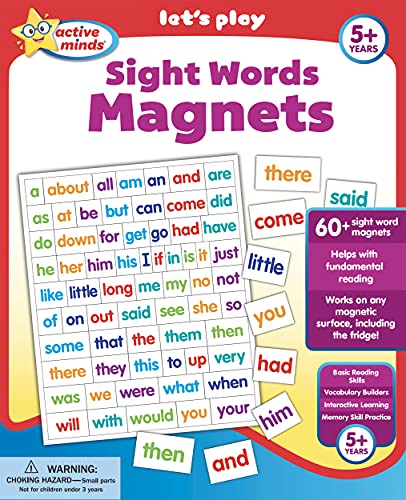
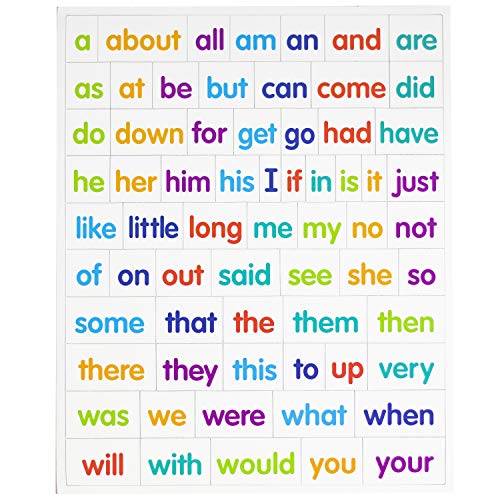
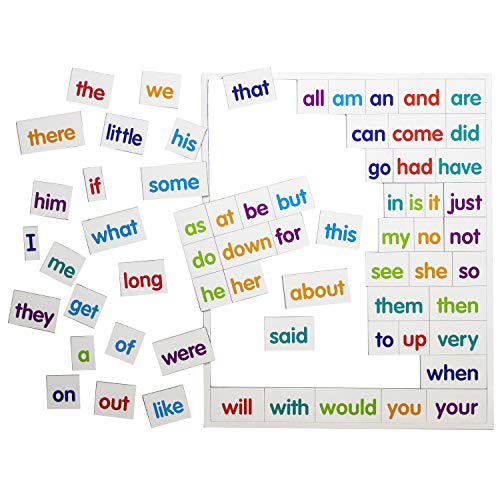
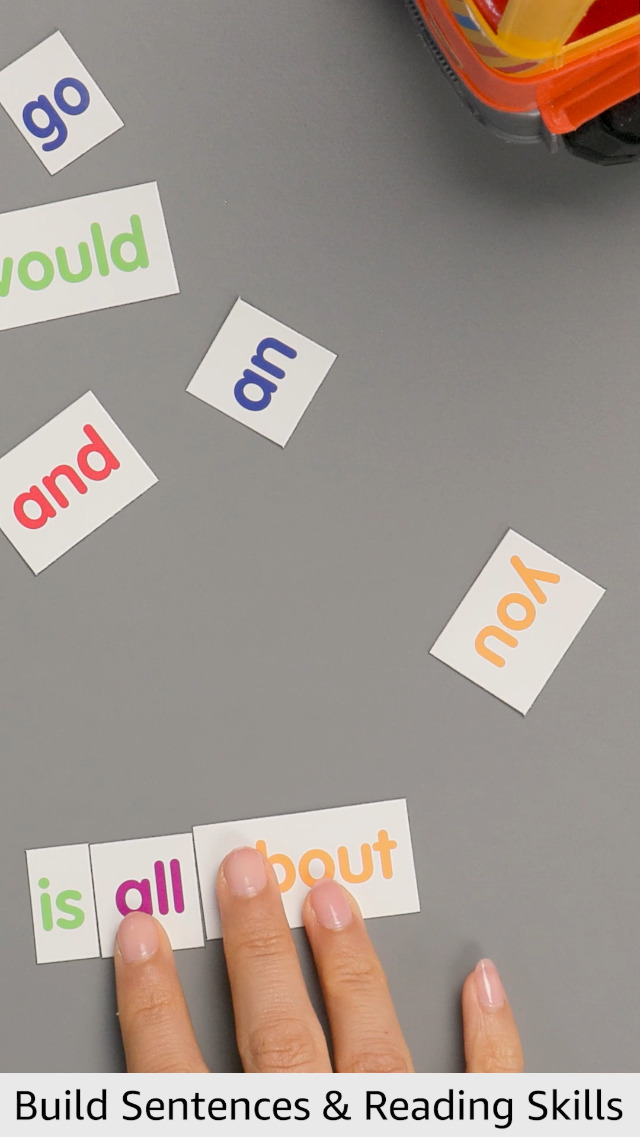
Active Minds Sight Words Magnets - Learn and Practice Language Building Skills needed for Reading (Ages 5 and Up)
- Children's Books
- Education & Reference
- Reading & Writing
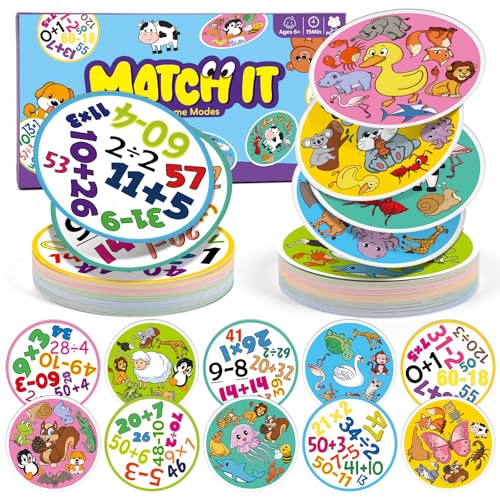
For children who need extra letter-recognition practice, a matching game that pairs letters with images builds phonological awareness in a low-pressure, social format — the LIWIN matching letter game is a solid pick that works as a family game night staple too.
3. Early Maths: Why Games Beat Worksheets
Children aged 5–8 are building number sense — an intuitive feel for quantity, pattern, and relationship that underpins all later maths. The National Council of Teachers of Mathematics (NCTM) emphasises that number sense develops through exploration and estimation, not just memorisation of facts.
Worksheets have their place, but research published in the journal Early Childhood Education Journal found that maths board games produce significantly greater gains in number knowledge than equivalent time spent on worksheets — likely because games combine counting, strategy, and emotional engagement.
What Good Maths Play Looks Like
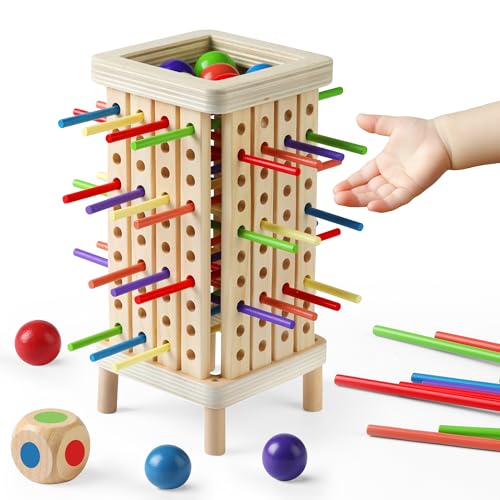
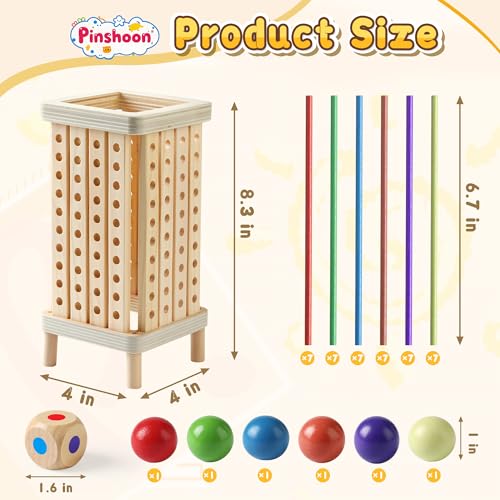
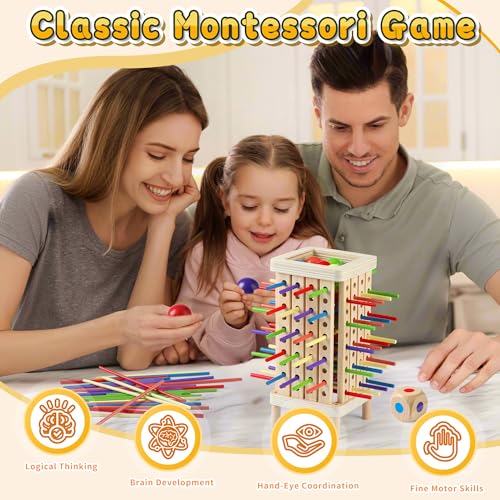
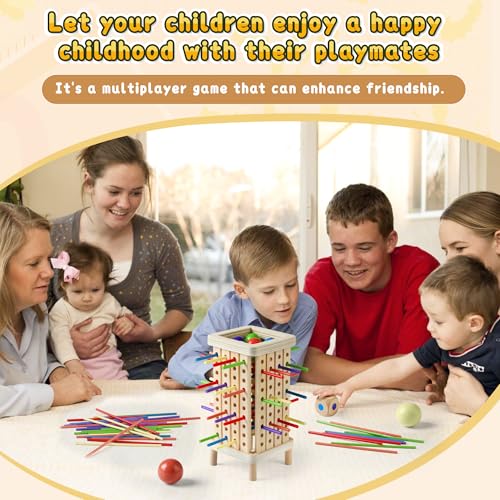
Montessori Game Wooden Board Game, Multiplayer for Kids 4-8, Math Educational, Fine Motor Skill Toy for Girls Boys, Classic Fun Games for Age 3 4 5 6 7 8 Girls Boys Gifts (Regular)
- MONTESSORI EDUCATION CONCEPTS: Our wooden board game incorporates Montessori elements. During the game, by sta
- HIGH QUALITY MATERIAL: The 42 wooden sticks of the toy are carefully crafted from natural wood, with a smooth
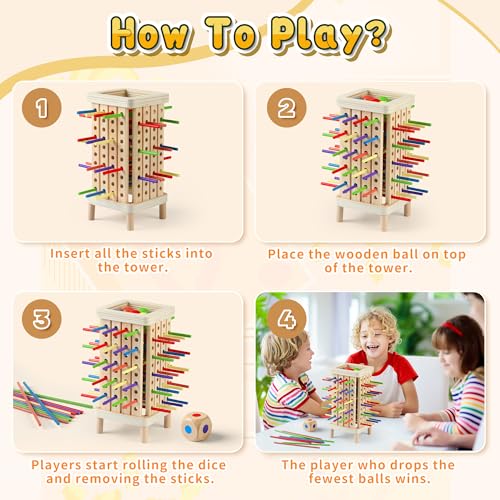
- GAME NIGHT: Players take turns rolling dice and gently pulling out sticks, but make sure not to let the ball r
The Pinshoon wooden board game embeds number sense and fine motor practice simultaneously — players roll dice, count, and carefully extract sticks without toppling the structure. That physical tension makes the number work memorable.
For spatial reasoning specifically — a strong predictor of STEM success — wooden shape puzzles that challenge children to replicate and invent patterns are excellent. LiKee's open-ended shape puzzle set includes 60 pattern cards that scale in complexity, so it grows with your child across the full 5–8 range.
4. Science & Curiosity: Feeding the "Why" Stage
Between 5 and 8, children ask an average of 73 questions per day (according to research cited by the UK's Primary Science Teaching Trust). That's not exhausting — that's an asset. The goal of science play at this age isn't to produce correct answers; it's to build the habit of asking good questions and testing ideas.
The Next Generation Science Standards (NGSS) in the US and the UK National Curriculum both identify observation, prediction, and fair testing as the core scientific practices for early primary years. You can do all three at the kitchen table.
Science is not a collection of facts. It is a way of thinking.
— Carl Sagan, astronomer and science communicator
Setting Up a Home Science Culture

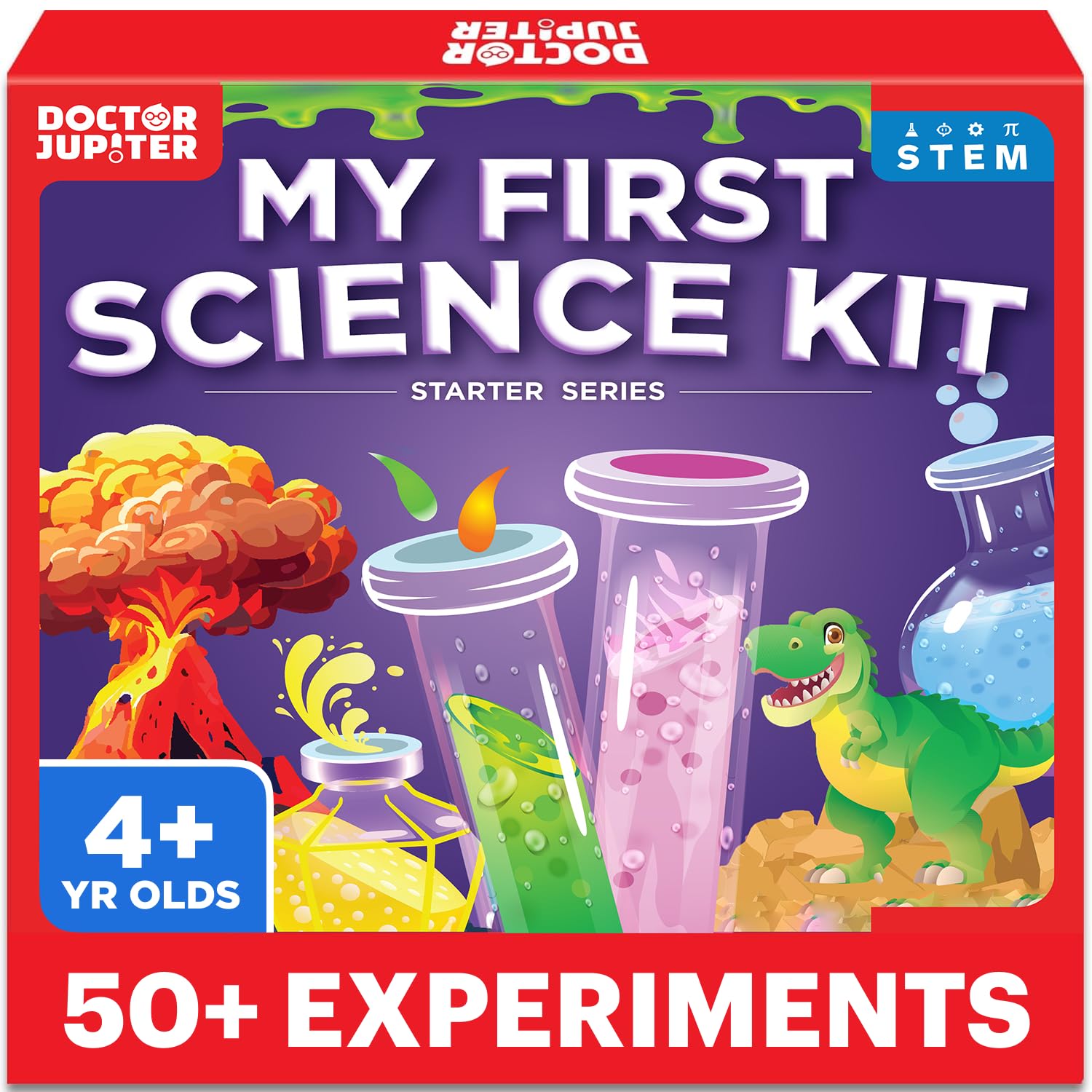
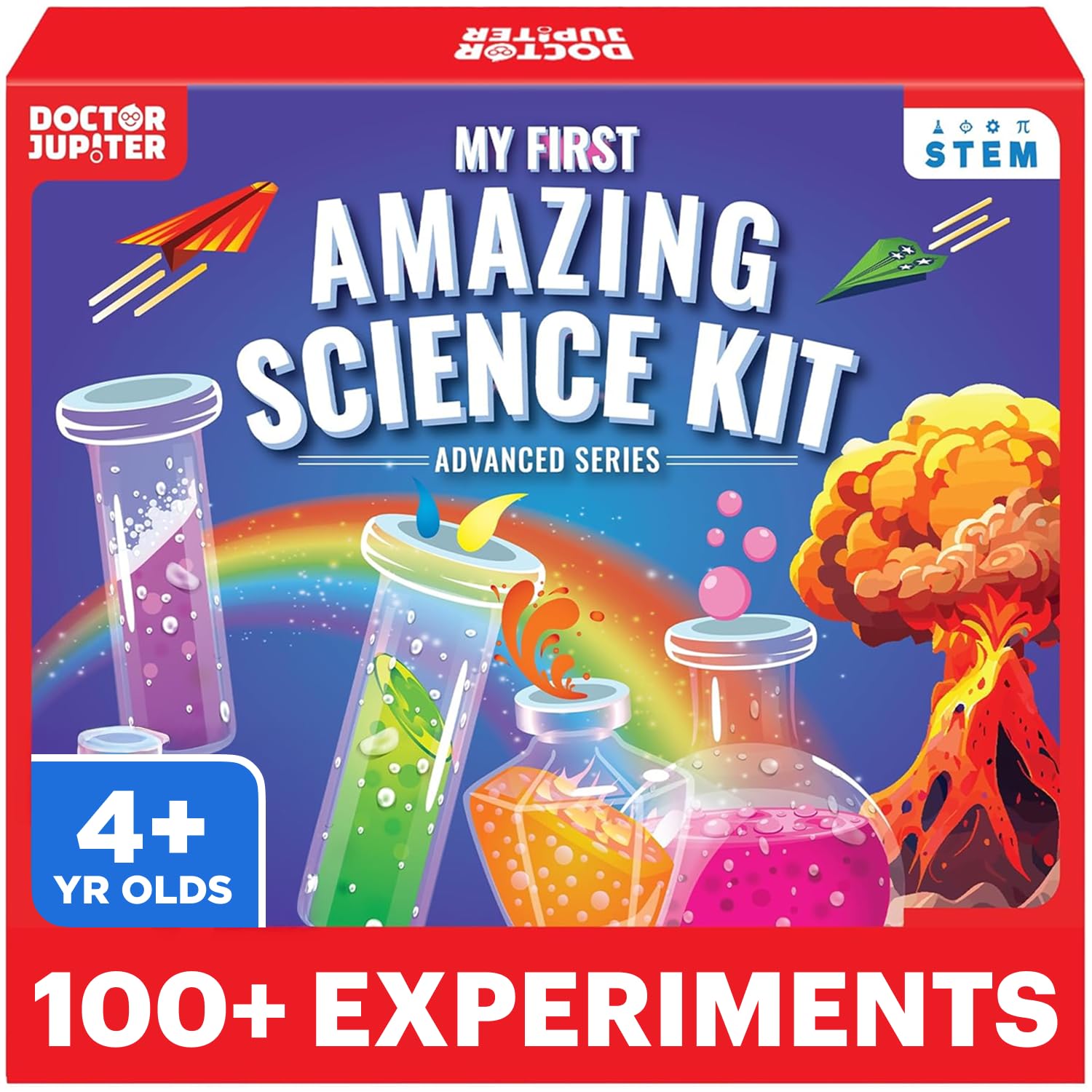
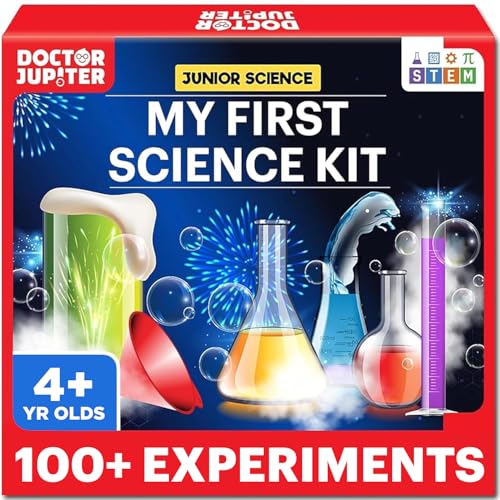
Doctor Jupiter My First Science Kit for Kids Ages 4-5-6-7-8 | Birthday Gift Ideas for 4+ Year Old Boys & Girls | Toy Stem Kit with 100+ Experiments | Learning & Educational Projects
- ✅ A SCIENCE KIT THEY’LL LOVE: Help your kids foster an early love for science with our innovative kit with 100
- ✅ STEM LEARNING MADE FUN FOR KIDS: Allow your kids to actively explore and apply STEM concepts designed to pro
- ✅ THE PERFECT GIFT: Gift your child 100+ days of screen-free fun with this fantastic science kit specially cur
The Doctor Jupiter science kit is one of the most complete entry-level kits available for this age range — 100+ experiments spanning chemistry, physics, and biology, all using safe household-compatible materials. It's structured enough for a child to work semi-independently, but open-ended enough to spark genuine curiosity rather than just following a recipe.
Pair it with the Dan&Darci Root Viewer Kit for a slower-burn, observation-based science experience: children plant seeds in a transparent viewer and watch root development over days and weeks. It teaches patience, recording, and the concept of variables (light, water, soil depth) in a completely hands-on way.
5. The Power of Unstructured Play (Yes, Even Now)
Here's something parents often get wrong: as children start school, unstructured play feels less justified. Schedules fill with tutoring, sports clubs, and enrichment classes. But the evidence runs in the opposite direction.
The AAP's 2018 clinical report, The Power of Play, states explicitly that free play is essential for healthy brain development and that reductions in play time are associated with increased rates of anxiety and reduced executive function in school-age children.
Unstructured play — building a fort, inventing a game with rules, making up stories — develops:
How to Protect Unstructured Time
6. Screen Time, Educational Apps, and the Co-Viewing Principle
The AAP recommends that children aged 6 and older have consistent limits on screen time with emphasis on quality over quantity, and that parents prioritise content that is interactive, educational, and co-viewed where possible.
The key distinction is passive vs. active screen use. A child watching an unrelated YouTube compilation is in a very different cognitive state than a child using an app that requires them to make decisions, build something, or respond to prompts.
What the Evidence Actually Says
The best hedge against over-reliance on screens is having genuinely compelling alternatives available. Physical games like LiKee wooden shape puzzles or the Pinshoon maths board game are engaging enough to compete with a tablet when they're accessible and familiar.
7. Choosing Toys That Actually Develop Skills (Not Just Label Claims)
Walk into any toy aisle and you'll see "educational" on half the boxes. The word is essentially unregulated. Here's how to cut through the noise.
The Four Questions to Ask
1. Does it require the child to make decisions? Passive toys (press button → reward) build less than toys that require strategy or construction. 2. Does it scale in difficulty? The best toys for 5–8 year olds grow with the child — adding complexity as skills develop. 3. Does it invite social play? Games played with others develop language, theory of mind, and emotional regulation simultaneously. 4. Does it connect to the real world? Toys that mirror real processes (gardening, building, cooking) transfer learning more effectively than purely abstract games.
| Activity Type | Best Age in Range | Primary Skills Developed | Main Limitation | Recommended Product | Price |
|---|---|---|---|---|---|
| Science experiments | 5–8 | Scientific inquiry, critical thinking, curiosity | Needs adult supervision | Doctor Jupiter Science Kit | $26.99 |
| Sight word games | 5–7 | Reading fluency, phonics, vocabulary | Less useful once reading fluency established | Active Minds Sight Words Magnets | — |
| Letter matching games | 5–7 | Spelling, word recognition, memory | Best as supplement to phonics instruction | LIWIN Matching Letter Game | $16.99 |
| Plant growing kits | 5–8 | Observation, patience, biology basics | Slow payoff (days to weeks) | Dan&Darci Root Viewer Kit | $17.99 |
| Shape & pattern puzzles | 5–8 | Spatial reasoning, problem-solving, creativity | Less social without adult involvement | LiKee Wooden Shape Puzzles | $12.99 |
| Wooden maths board games | 4–8 | Number sense, fine motor, strategic thinking | Best with 2+ players | Pinshoon Wooden Board Game | $16.79 |
Expert Insights
The Bigger Picture
Here's what I want you to carry with you: the 5–8 years are not a race to academic milestones. They're a window — genuinely remarkable in its brevity — when your child's brain is wired for curiosity, connection, and joy-driven learning. The parent who reads aloud every night, who plays one board game a week, who lets their child grow a plant or mix a fizzing experiment, is doing something profoundly important. Not because it will show up on a test next month, but because it's building the identity of a person who believes learning is worth doing.
The best thing you can give a 5–8 year old isn't a curriculum — it's an adult who finds the world interesting alongside them.
If this guide helped you, save it for when you're planning your next toy purchase or school-holiday week — and share it with a parent who's wondering whether "just playing" is really enough. (It is.)
Sources & References
- American Academy of Pediatrics. "The Power of Play: A Pediatric Role in Enhancing Development in Young Children." Pediatrics, 2018. https://doi.org/10.1542/peds.2018-2058
- American Academy of Pediatrics. "Media and Young Minds." Pediatrics, 2016. https://doi.org/10.1542/peds.2016-2591
- National Institute of Education. Becoming a Nation of Readers: The Report of the Commission on Reading. 1985. Washington, DC.
- National Council of Teachers of Mathematics (NCTM). Principles and Standards for School Mathematics. 2000. Reston, VA.
- Piaget, J. The Psychology of the Child. Basic Books, 1969.
- Cooper, H., Robinson, J.C., & Patall, E.A. "Does Homework Improve Academic Achievement? A Synthesis of Research." Review of Educational Research, 2006. https://doi.org/10.3102/00346543076001001
- Hirsh-Pasek, K., Golinkoff, R.M., et al. "Putting Education in 'Educational' Apps: Lessons From the Science of Learning." Psychological Science in the Public Interest, 2015. https://doi.org/10.1177/1529100615569721
- Primary Science Teaching Trust (PSTT). "Curious Minds: A Report on Girls and Boys and Science, Technology, Engineering and Maths Education." 2008. UK.
- Next Generation Science Standards (NGSS). "A Framework for K-12 Science Education." National Academies Press, 2012. https://www.nextgenscience.org
- Berk, L.E. Child Development, 9th ed. Pearson, 2013.
Frequently Asked Questions
At what age should my child be reading independently?
How much homework is appropriate for 5–8 year olds?
My 6-year-old won't sit still for any learning activity. Is that a problem?
Are Montessori-style toys worth the investment?
How do I know if my child is struggling with learning rather than just being a "slow starter"?
Should I be teaching my 5-year-old coding or a second language?
How much screen time is okay for a 6-year-old?
Was this helpful?
Thanks — your feedback helps us pick what to write next.