What Mindful Parenting Really Means (And Why Most Parents Get It Wrong)
Mindful parenting — responding to your child with intention rather than reaction — is one of the most evidence-backed ways to raise emotionally resilient, kind, and confident kids in today's fast-paced world.
In this article
It's 7:14 a.m. on a Tuesday. Your five-year-old has just tipped a full bowl of cereal onto the freshly mopped floor, your toddler is screaming from the high chair, and you're already late for work. In that moment, how you respond — not just what you say, but the energy behind it — will leave a trace in your child's developing brain.
That's not meant to alarm you. It's meant to empower you.
According to the American Psychological Association (APA), 69 % of parents report that parenting is a significant source of stress in their lives. Yet research consistently shows that the quality of parent–child interactions matters far more than any single parenting technique. Mindful parenting is the framework that ties all of those interactions together.
In this article you'll understand:
Let's get into it.
1. What Mindful Parenting Really Means (And Why Most Parents Get It Wrong)
Mindful parenting is not about being calm 100 % of the time, never raising your voice, or turning every bath time into a zen retreat. At its core, it means bringing deliberate, non-judgmental awareness to the parent–child relationship — noticing what's happening inside you before you respond to your child.
The concept was formalised in clinical research by Dr. Jon Kabat-Zinn, the founder of Mindfulness-Based Stress Reduction (MBSR) at the University of Massachusetts Medical School, and his wife Myla Kabat-Zinn. In their foundational work, they described mindful parenting as "paying attention to your child and to your parenting in a particular way: on purpose, in the present moment, and non-judgmentally."
The most important thing in communication is to hear what isn't being said.
— Jon Kabat-Zinn, Mindfulness-Based Stress Reduction founder, widely cited in parenting literature
What It Is vs. What It Isn't
- ✓ It IS pausing for three seconds before responding to a tantrum - ✓ It IS noticing when your stress is driving your reaction, not your child's behaviour - ✓ It IS repairing the relationship after you've lost your cool - ✗ It is NOT permissive parenting or letting children do whatever they want - ✗ It is NOT about achieving a perfect, conflict-free household - ✗ It is NOT another thing to feel guilty about
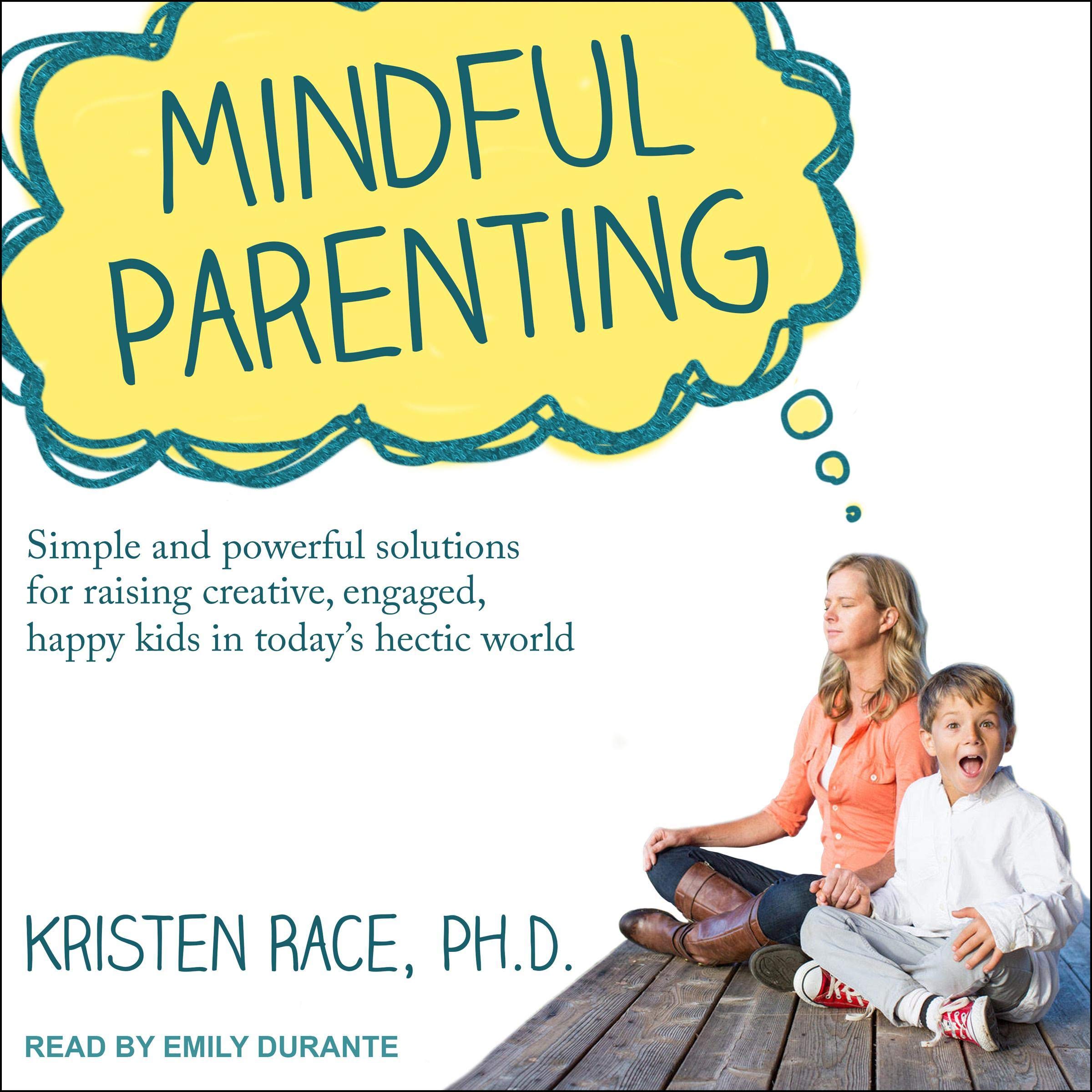
A wonderful starting point for parents new to this framework is Mindful Parenting by Kristen Race, which offers straightforward, science-grounded strategies that fit into real family life without adding stress.
Your action today: The next time your child does something that frustrates you, place one hand on your chest before you speak. That single second of physical grounding is your first mindful parenting rep.



Mindful Parenting: Simple and Powerful Solutions for Raising Creative, Engaged, Happy Kids in Today’s Hectic World
- Health, Fitness & Dieting
- Alternative Medicine
- Meditation
2. The Neuroscience Secret: Why Your Brain Is the Real Parenting Tool
Here is the most important biological fact in this entire article: your child's brain is not fully developed until their mid-twenties, and the prefrontal cortex — the seat of impulse control, empathy, and rational decision-making — is the last region to mature.
That means when your eight-year-old screams "I hate you!" after you've said no to screen time, they are not being manipulative. Their brain literally cannot access the rational, empathetic circuitry it needs in that moment of emotional flooding.
The same is true for you when you're sleep-deprived and stressed. Chronic parental stress suppresses prefrontal cortex function and activates the amygdala — your brain's alarm system — making reactive, regret-inducing responses far more likely.
The "Flip Your Lid" Concept
Dr. Daniel Siegel and Dr. Tina Payne Bryson, authors of The Whole-Brain Child, describe emotional dysregulation as "flipping your lid" — the rational prefrontal cortex goes offline and the reactive limbic brain takes over. Understanding this model helps parents recognise dysregulation in both themselves and their children without shame.
For a deep dive into the neuroscience your whole family can benefit from, The Whole-Brain Child by Siegel & Bryson is the single most recommended book I give to parents in my clinic.



The Whole-Brain Child: 12 Revolutionary Strategies to Nurture Your Child's Developing Mind
- Health, Fitness & Dieting
- Psychology & Counseling
- Child Psychology
3. Breaking the Cycle: How Your Childhood Shapes Your Parenting (And How to Change It)
One of the most powerful — and least talked-about — secrets of mindful parenting is this: the way you were parented is running in the background of every interaction you have with your child, like an invisible operating system.
Psychologists call this "intergenerational transmission of parenting patterns." Research published in Developmental Psychology has shown that parents who have processed and made sense of their own childhood experiences — even difficult ones — are significantly more likely to raise securely attached children.
The "Earned Security" Concept
You don't need a perfect childhood to be a great parent. What matters is reflective functioning — your capacity to think about your own mental states and those of your child. This is exactly what Parenting from the Inside Out by Siegel & Hartzell is built around, and it's the book I most often recommend to parents who find themselves repeating patterns they swore they'd never repeat.
Your action today: Write down one parenting moment from your own childhood — positive or negative — that you can clearly see echoed in how you parent now. Awareness is the first step to change.



Parenting from the Inside Out: How a Deeper Self-Understanding Can Help You Raise Children Who Thrive: 10th Anniversary Edition
- Politics & Social Sciences
- Image Unavailable Image not available forColor:
- Publisher : Tarcher
4. The Emotion-Coaching Secret That Raises Emotionally Intelligent Children
Emotion coaching is one of the most robustly researched parenting strategies in child psychology. Dr. John Gottman, Professor Emeritus of Psychology at the University of Washington, spent over 35 years studying family dynamics and identified "emotion coaching" as the parenting style most strongly linked to children's emotional intelligence, academic success, and physical health.
Emotion-coached children show:
The Five Steps of Emotion Coaching (Gottman)
1. Be aware of your child's emotions as they arise 2. Recognise the emotion as an opportunity for connection, not a problem to fix 3. Listen empathetically and validate their feelings 4. Help them label the emotion in words 5. Set limits while exploring solutions together
Emotion coaching is not about making children feel good all the time. It's about being a compassionate guide through the full range of human experience.
— Dr. John Gottman, University of Washington, from *Raising an Emotionally Intelligent Child* (1997)
For a practical, age-specific guide to navigating tantrums and emotional outbursts from infancy through age eight, Tiny Humans, Big Emotions is an invaluable companion. It translates the research into scripts you can actually use at 7 a.m. on a Tuesday.

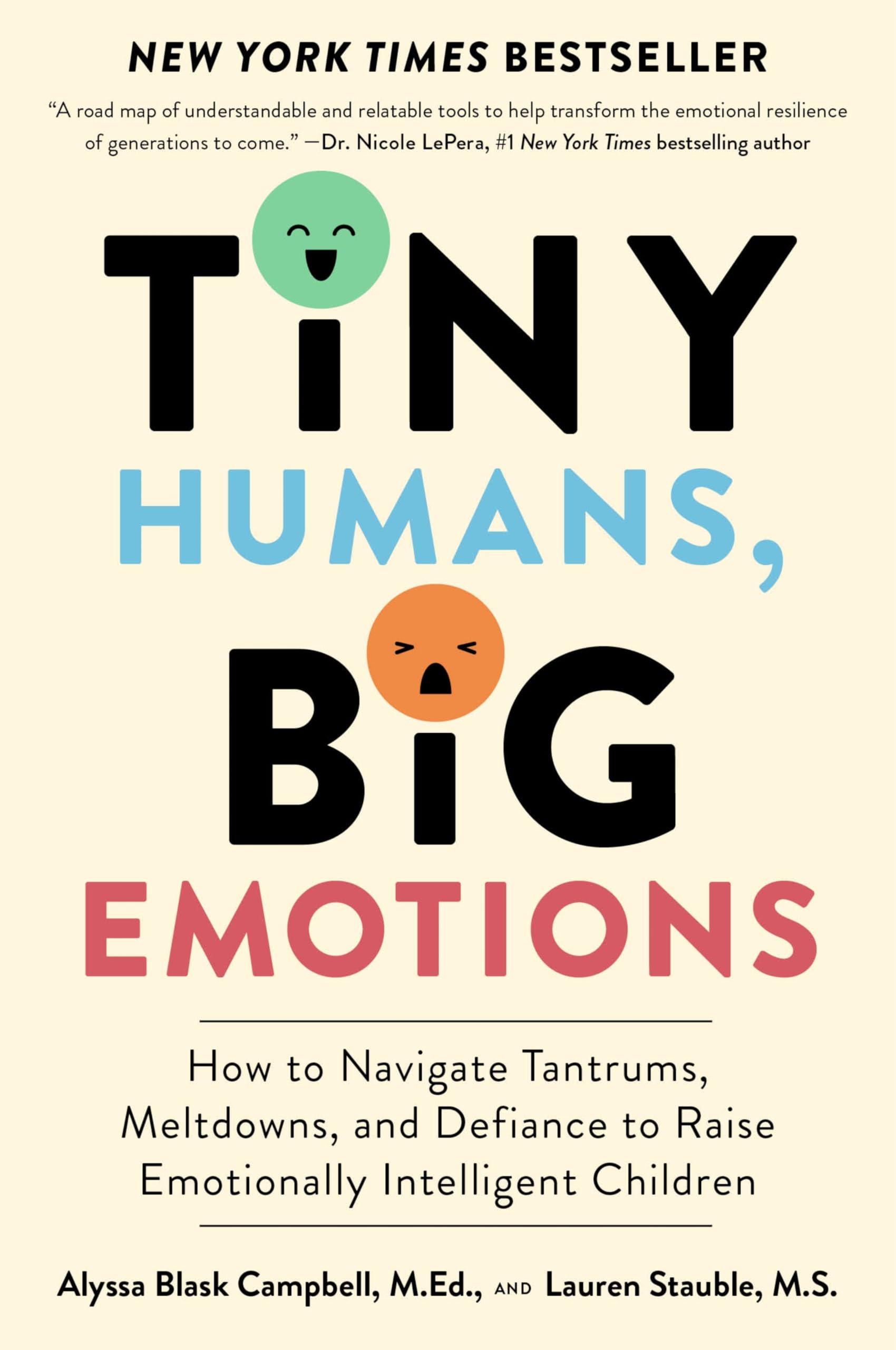
Tiny Humans, Big Emotions: How to Navigate Tantrums, Meltdowns, and Defiance to Raise Emotionally Intelligent Children―An Essential Guide for Caregivers of Children from Infancy to Age Eight
- Relationships
- Conflict Management
- Image Unavailable Image not available forColor:
5. Raising Kind, Confident Kids by Breaking Reactive Parenting Patterns
Reactive parenting — yelling, threatening, shaming — is not a character flaw. It is a nervous system response to perceived threat, amplified by exhaustion, overwhelm, and often the unprocessed emotional residue of your own upbringing. The good news: reactive patterns can be interrupted and replaced with intentional ones.
Hunter Clarke-Fields, a mindfulness teacher and author, has developed a widely-used framework for breaking the reactive parenting cycle. Her work focuses on identifying personal triggers, building a mindfulness practice, and developing repair skills for after ruptures occur.
Identifying Your Triggers
Common parental triggers include:
- ✓ Whining or repeated requests - ✓ Sibling conflict - ✓ Defiance or "back-talk" - ✓ Mess and disorder - ✓ Public misbehaviour - ✓ Bedtime resistance
The STOP Technique
A simple, evidence-informed micro-practice for reactive moments:
1. S — Stop what you're doing 2. T — Take a breath 3. O — Observe what's happening inside you (body sensations, thoughts, emotions) 4. P — Proceed with awareness
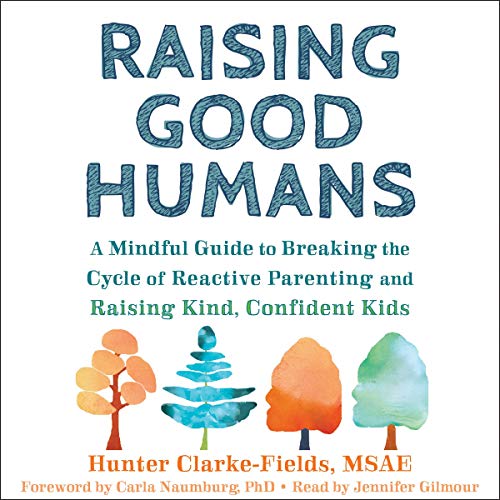
Raising Good Humans by Hunter Clarke-Fields is one of the most practically useful books I've come across for parents who recognise their reactive patterns and genuinely want to change them. It pairs beautifully with The Awakened Family by Dr. Shefali Tsabary for parents who want both the tactical and the philosophical dimensions of this work.
Your action today: Identify your top two personal triggers. Write them on a sticky note inside a kitchen cupboard. When you open that cupboard tomorrow morning, you'll be reminded to prepare — not just react.

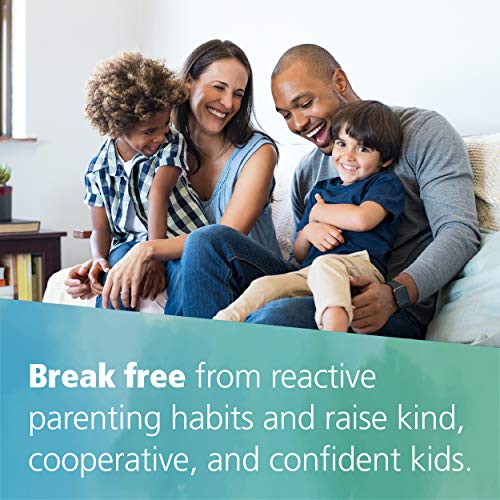
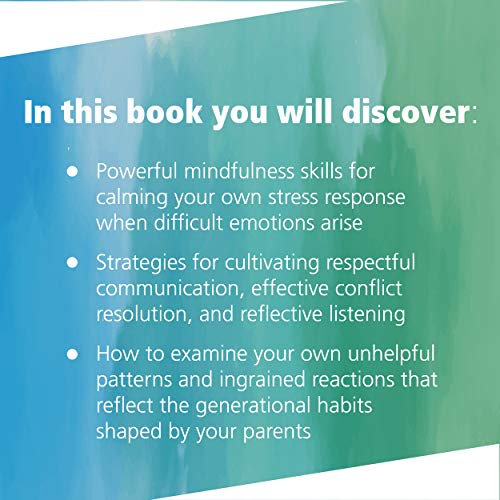
Raising Good Humans: A Mindful Guide to Breaking the Cycle of Reactive Parenting and Raising Kind, Confident Kids
- Relationships
- Conflict Management
- Image Unavailable Image not available forColor:
6. Conscious Parenting: Raising Empowered, Resilient Children in a Hectic World
The final secret brings everything together: conscious parenting means shifting the focus from controlling your child's behaviour to understanding the need beneath it. Dr. Shefali Tsabary, a clinical psychologist trained at Columbia University, calls this "the most radical shift a parent can make."
When a child acts out, the behaviour is never the whole story. Underneath defiance is often fear. Underneath clinginess is often insecurity. Underneath aggression is often an unmet need for connection or autonomy. Conscious parenting asks you to become a detective of your child's inner world rather than a manager of their outer behaviour.
Practical Pillars of Conscious Parenting
The Awakened Family by Dr. Shefali Tsabary is the book I recommend to parents who are ready to do the deeper work — not just changing their child's behaviour, but transforming the entire family dynamic.
Your action today: Tonight at dinner, ask your child one question that has no right or wrong answer: "What was the best part of your day, and what was the hardest part?" Then just listen.

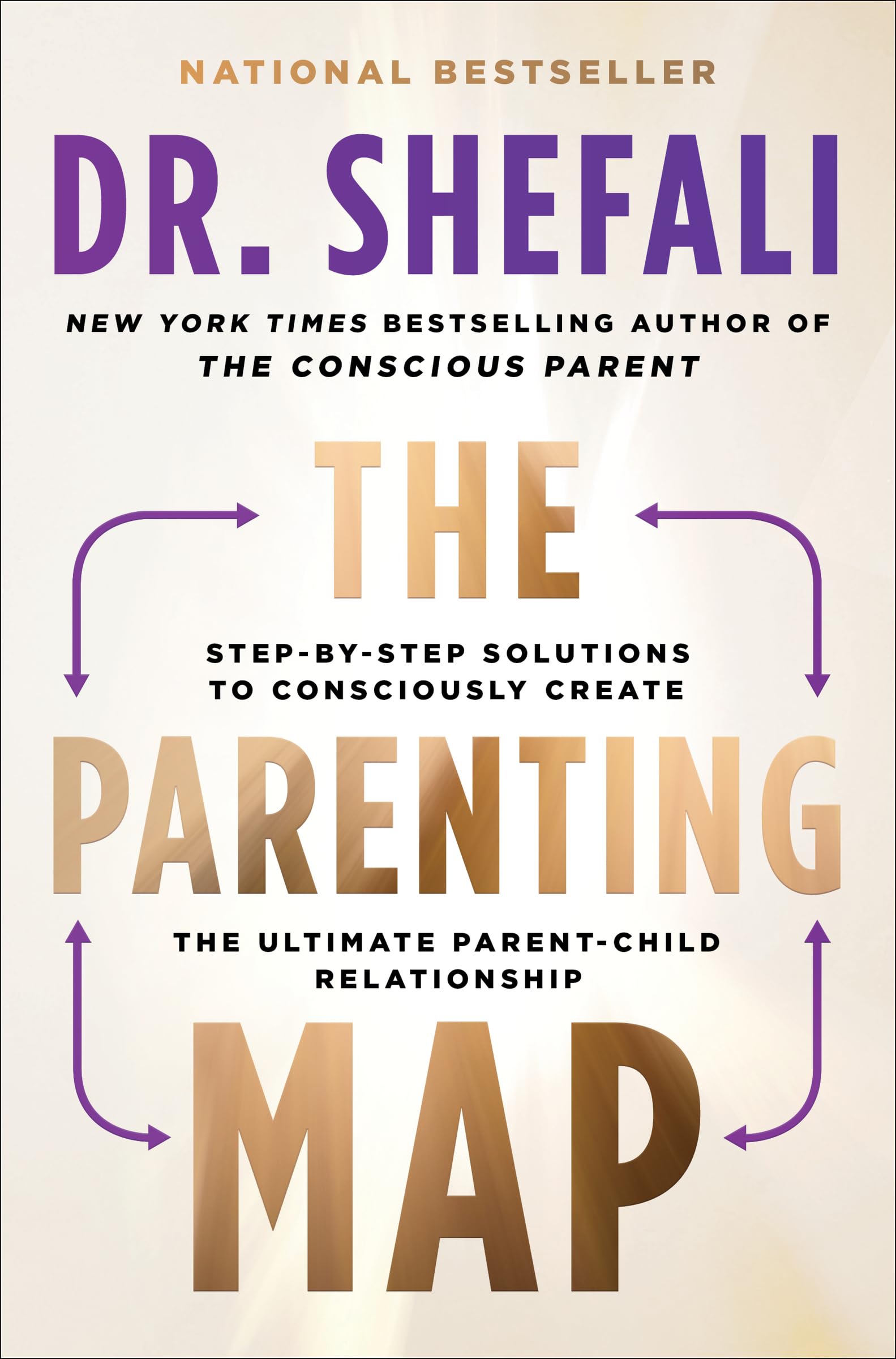

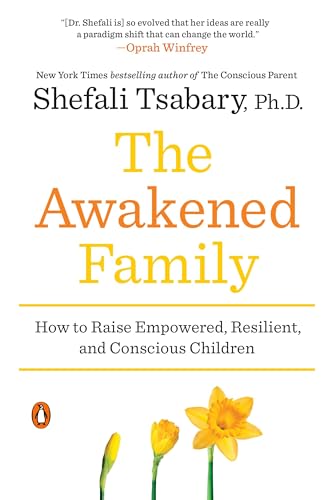
The Awakened Family: How to Raise Empowered, Resilient, and Conscious Children
- Health, Fitness & Dieting
- Psychology & Counseling
- Child Psychology
Mindful Parenting Approaches at a Glance
| Approach | Best For | Core Strength | Main Challenge | Recommended Resource | Price Range |
|---|---|---|---|---|---|
| Emotion Coaching (Gottman) | Ages 2–12 | Builds emotional intelligence, evidence-based | Requires patience mid-meltdown | Tiny Humans, Big Emotions | Free–$15 |
| Whole-Brain Parenting (Siegel & Bryson) | Ages 0–12 | Neuroscience-backed, practical strategies | Learning curve on brain concepts | The Whole-Brain Child | $10–$12 |
| Breaking Reactive Cycles (Clarke-Fields) | Parents with strong triggers | Directly addresses parental stress & patterns | Requires self-reflection commitment | Raising Good Humans | $10–$12 |
| Inside-Out Parenting (Siegel & Hartzell) | Parents with difficult childhoods | Heals intergenerational patterns | Can feel emotionally intense | Parenting from the Inside Out | $9–$11 |
| Conscious Parenting (Dr. Shefali) | Parents seeking deeper transformation | Shifts focus from control to connection | Philosophical — less step-by-step | The Awakened Family | $9–$11 |
| Mindfulness-Based Parenting (Kabat-Zinn) | All ages, all stages | Flexible, integrates with any approach | Less structured for beginners | Mindful Parenting | Free |
Expert Insights
Frequently Asked Questions
The Most Important Thing You Can Do Today
Parenting in today's world is genuinely hard. The pace, the pressure, the noise — it all conspires against the slow, attuned presence that children need most. But here's what 15 years of clinical practice and a mountain of research have taught me: your children don't need you to be perfect. They need you to be real, to be present, and to be willing to try again after every stumble.
The mindful parenting secrets in this article aren't hacks or shortcuts. They're invitations to a different kind of relationship — one where your child feels truly seen, and where you feel genuinely connected rather than perpetually reactive.
The most important parenting tool you own is your own awareness. Sharpen it a little every day, and watch what happens to your family.
If this article resonated with you, save it, share it with a parent friend who needs it, and subscribe to tinymindsworld.com for more research-backed, real-world parenting guidance delivered with warmth and without judgment.
Sources & References
- American Psychological Association. "Stress in America: Paying With Our Health." 2015. https://www.apa.org/news/press/releases/stress/2014/stress-report.pdf
- Kabat-Zinn, J. & Kabat-Zinn, M. "Everyday Blessings: The Inner Work of Mindful Parenting." Hyperion, 1997.
- Siegel, D.J. & Bryson, T.P. "The Whole-Brain Child: 12 Revolutionary Strategies to Nurture Your Child's Developing Mind." Delacorte Press, 2011.
- Siegel, D.J. & Hartzell, M. "Parenting from the Inside Out." Tarcher/Penguin, 2003.
- Gottman, J. & DeClaire, J. "Raising an Emotionally Intelligent Child." Simon & Schuster, 1997.
- Tsabary, S. "The Awakened Family." Viking, 2016.
- Clarke-Fields, H. "Raising Good Humans." New Harbinger Publications, 2019.
- Harvard Center on the Developing Child. "The Science of Resilience." InBrief Series. 2015. https://developingchild.harvard.edu/resources/inbrief-the-science-of-resilience/
- Shonkoff, J.P. et al. "The Lifelong Effects of Early Childhood Adversity and Toxic Stress." Pediatrics, Vol. 129, No. 1. American Academy of Pediatrics, 2012.
- Duncan, L.G., Coatsworth, J.D., & Greenberg, M.T. "A Model of Mindful Parenting: Implications for Parent–Child Relationships and Prevention Research." Clinical Child and Family Psychology Review, 12(3), 255–270. 2009.
- Bögels, S.M. & Restifo, K. "Mindful Parenting: A Guide for Mental Health Practitioners." Springer, 2014.
- Kabat-Zinn, J. "Full Catastrophe Living: Using the Wisdom of Your Body and Mind to Face Stress, Pain and Illness." Delacorte, 1990.
Frequently Asked Questions
What is mindful parenting in simple terms?
At what age should I start mindful parenting?
Can mindful parenting help with tantrums and meltdowns?
How do I practise mindful parenting when I'm exhausted and overwhelmed?
Is mindful parenting the same as permissive parenting?
What's the best book to start with for mindful parenting?
How long does it take to see results from mindful parenting?
Was this helpful?
Thanks — your feedback helps us pick what to write next.