
Introduction
Platonic co-parenting — raising a child with a committed partner you're not romantically involved with — is a legitimate, increasingly common family structure that can work well when built on clear legal agreements, consistent communication, and a shared vision for your child's w
In this article
Introduction
Imagine deciding to have a child with your closest friend — someone who shares your values, your sense of humour, and your vision for family life, but who you've never dated. That scenario is no longer unusual. According to the Pew Research Center, the share of U.S. children living with two married parents has dropped from 87% in 1960 to around 62% today, while a growing slice of children are being intentionally raised by two committed adults who simply aren't a couple. Matching platforms such as Modamily and Coparents.com now list tens of thousands of profiles from people actively seeking a platonic parenting partner.
This guide will help you understand:
1. What Platonic Co-Parenting Really Means in 2026
Platonic co-parenting is a planned arrangement: two or more adults who have no romantic relationship deliberately choose to conceive or adopt a child together and share parenting responsibilities. This makes it fundamentally different from the co-parenting that follows a break-up, where two people are managing the aftermath of a relationship. Here, the partnership is the starting point, not the ending one.
Who chooses this path?
- Single people in their 30s and 40s who want children but haven't found (or aren't seeking) a romantic partner - LGBTQ+ individuals or couples who want a known co-parent of a different biological sex - Close friends who share values and want to parent together intentionally - People with fertility timelines who don't want to wait for a romantic relationship
How it differs from solo parenting and divorce co-parenting
| Arrangement | Starting Point | Legal Default | Conflict Risk | Communication Baseline | Recommended Product |
|---|---|---|---|---|---|
| Platonic co-parenting (planned) | Chosen partnership, no romance | No automatic legal ties — agreement essential | Lower (no romantic history) | Built from scratch, intentionally | Co-Parenting Log: Court-Ready Documentation |
| Post-divorce co-parenting | Ended romantic relationship | Court order often in place | Higher (emotional history) | Often strained initially | Complete Child Custody Journal |
| Solo parenting | One adult, no co-parent | N/A | N/A | N/A | Child Custody Journal |
| Blended family co-parenting | New partners added to existing children | Varies by prior divorce decree | Moderate–high | Multiple adults, complex | Calm and Clear Co-Parenting Communication Journal |
| Chosen-family co-parenting (3+ adults) | Extended friendship or community network | Highly variable, often unprotected | Variable | Requires explicit structure | Co-Parenting Communication Log Book |
| LGBTQ+ platonic co-parenting | Intentional, often with donor/surrogacy | Varies by jurisdiction | Low–moderate | Usually planned carefully | Child Custody Log Book |
2. What the Research Says About Children in Non-Traditional Families
Children raised in platonic co-parenting households can thrive — the evidence is clear that family structure matters far less than family function. The American Academy of Pediatrics (AAP) states in its policy on diverse family structures that children's healthy development relies on stable, nurturing relationships with caregivers, access to economic resources, and low levels of household conflict — none of which require a romantic couple at the centre.
A landmark 2010 study by sociologist Judith Stacey and Timothy Biblarz, published in the American Sociological Review, found that children raised by two committed, cooperative parents — regardless of the nature of their adult relationship — showed comparable social and emotional development to those in traditional two-parent married households.
What actually predicts good outcomes?
3. Building Your Legal and Financial Foundation
The most protective step platonic co-parents can take is drafting a comprehensive co-parenting agreement before the child is born or adopted. Without it, you're relying on goodwill alone — and goodwill, however genuine, isn't enforceable.
What a co-parenting agreement should cover
Keeping meticulous records from day one is equally important. If a dispute ever reaches court, documentation of your involvement — visits, expenses, communications, medical appointments — speaks louder than memory.





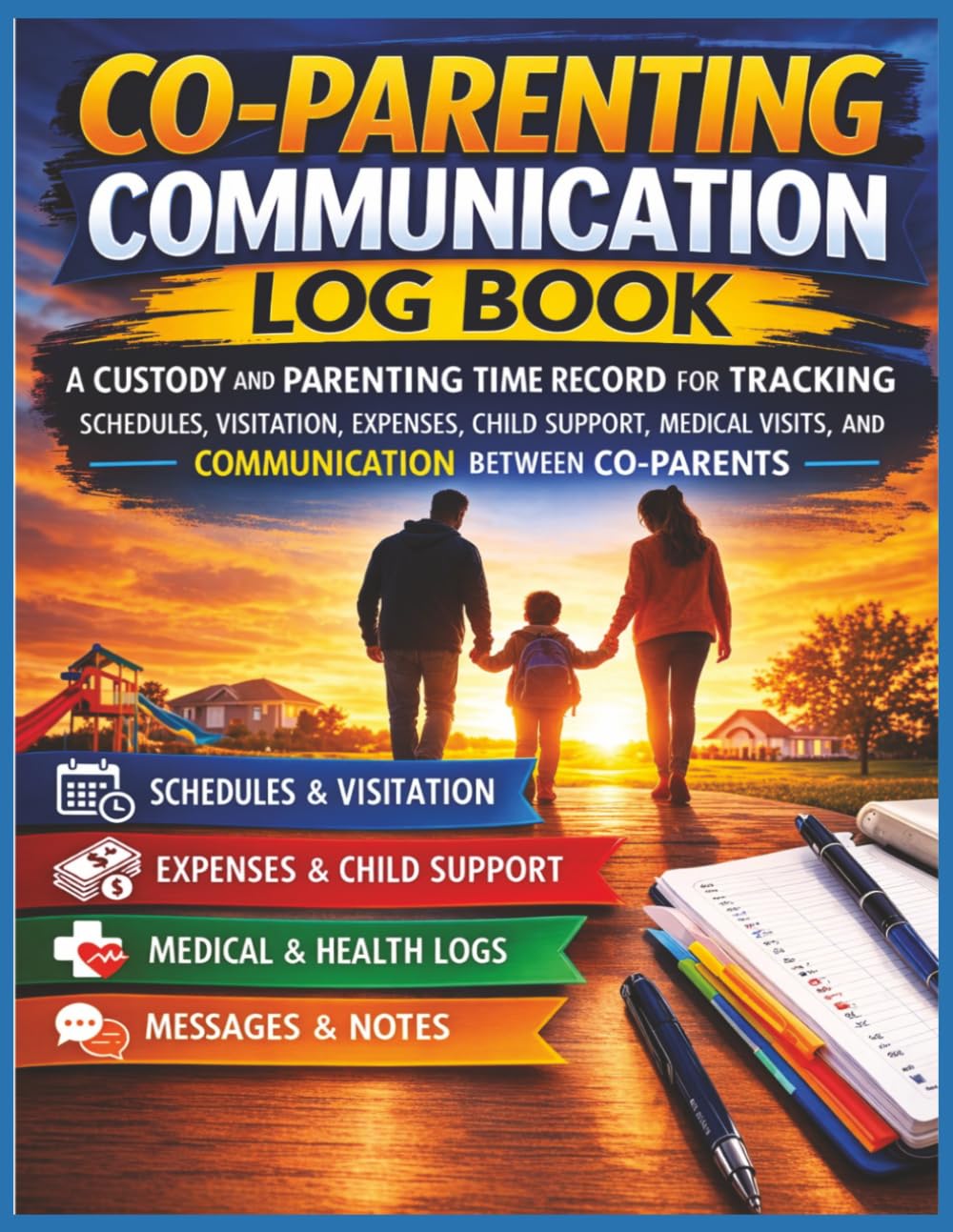
Co-Parenting Log: Court-Ready Documentation & Planner Track Visitation, Communication, Expenses, Medical Visits & Important Records
- Parenting & Relationships
- Family Relationships
- Image Unavailable Image not available forColor:
4. Communication: The Engine of Every Successful Co-Parenting Arrangement
Every co-parenting expert says the same thing: communication is the work. Not the occasional big conversation, but the steady, low-drama exchange of information that keeps two households aligned around one child.
Practical communication structures that work
Weekly check-ins: A 20-minute standing call or video chat to align on the coming week — school events, health updates, schedule changes.
A shared digital calendar: Google Calendar or a co-parenting app (OurFamilyWizard, Cozi) gives both parents visibility without constant messaging.
A written log: A physical or digital record of key events — especially anything medical, behavioural, or financial — protects both parents and keeps the child's history in one place.


Calm and Clear: The Co-Parenting Communication Journal: Less Drama, More Clarity
- Relationships
- Conflict Management
- Image Unavailable Image not available forColor:
Tone agreements: Decide early how you'll handle disagreements. "We text logistics; we call for decisions; we meet in person for anything that's taken more than two texts to resolve" is a simple rule that prevents a lot of escalation.
5. Age-Banded Guide: Platonic Co-Parenting From Newborn to Teen
The practical demands of co-parenting shift dramatically as your child grows. Here's what to prioritise at each stage.
Newborns and infants (0–12 months)
Infants need consistency above all else. Feeding schedules, sleep routines, and primary attachment figures need to be as predictable as possible across both households. This is the hardest time to split care because frequent transitions disrupt sleep and feeding rhythms.
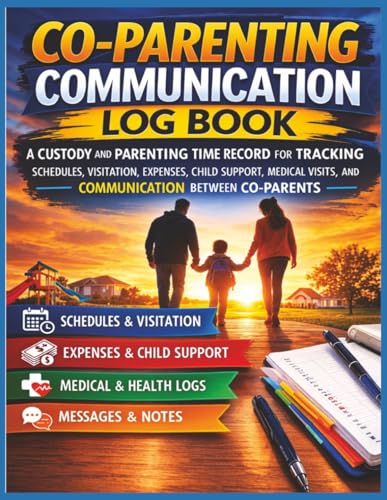

Co-Parenting Communication Log Book: A Custody and Parenting Time Record for Tracking Schedules, Visitation, Expenses, Child Support, Medical Visits, ... Between Co-Parents | 8.5 x 11 | 130 Pages
- Parenting & Relationships
- Family Relationships
- Image Unavailable Image not available forColor:
Toddlers and pre-schoolers (1–5 years)
Toddlers thrive on routine and are acutely aware of emotional atmosphere. At this age, consistency in rules and language across households matters enormously.
School-age children (6–12 years)
School-age children are forming their identity and will have questions about their family structure. Answer them honestly and age-appropriately.
Teenagers (13–17 years)
Teens need autonomy, and they will test both households for consistency. A united front matters more here, not less.
6. Navigating Social, Emotional, and Practical Challenges
Platonic co-parenting is not without friction. Being clear-eyed about the challenges before they arrive is the best preparation.
The relationship changes — and that's normal
Co-parents who start as friends sometimes find the pressure of shared parenting strains the friendship. New romantic partners on either side can introduce jealousy, boundary confusion, or logistical complications. Build explicit agreements about how new partners are introduced to your child (timing, process, veto rights in the early stages).
Social stigma
Despite growing visibility, platonic co-parenting is still misunderstood. You'll field questions at school gates, from extended family, and from healthcare providers. A simple, confident script — "We're co-parents; we both have parental responsibility for our child" — tends to close most conversations efficiently.
When it breaks down
Sometimes co-parenting relationships fracture. Having a mediation clause in your agreement means you have a structured path before litigation. Keep records — a Child Custody Log Book or Co-Parenting Communication Log Book gives you contemporaneous documentation if a dispute reaches court.
7. Expert Insights on Platonic Co-Parenting
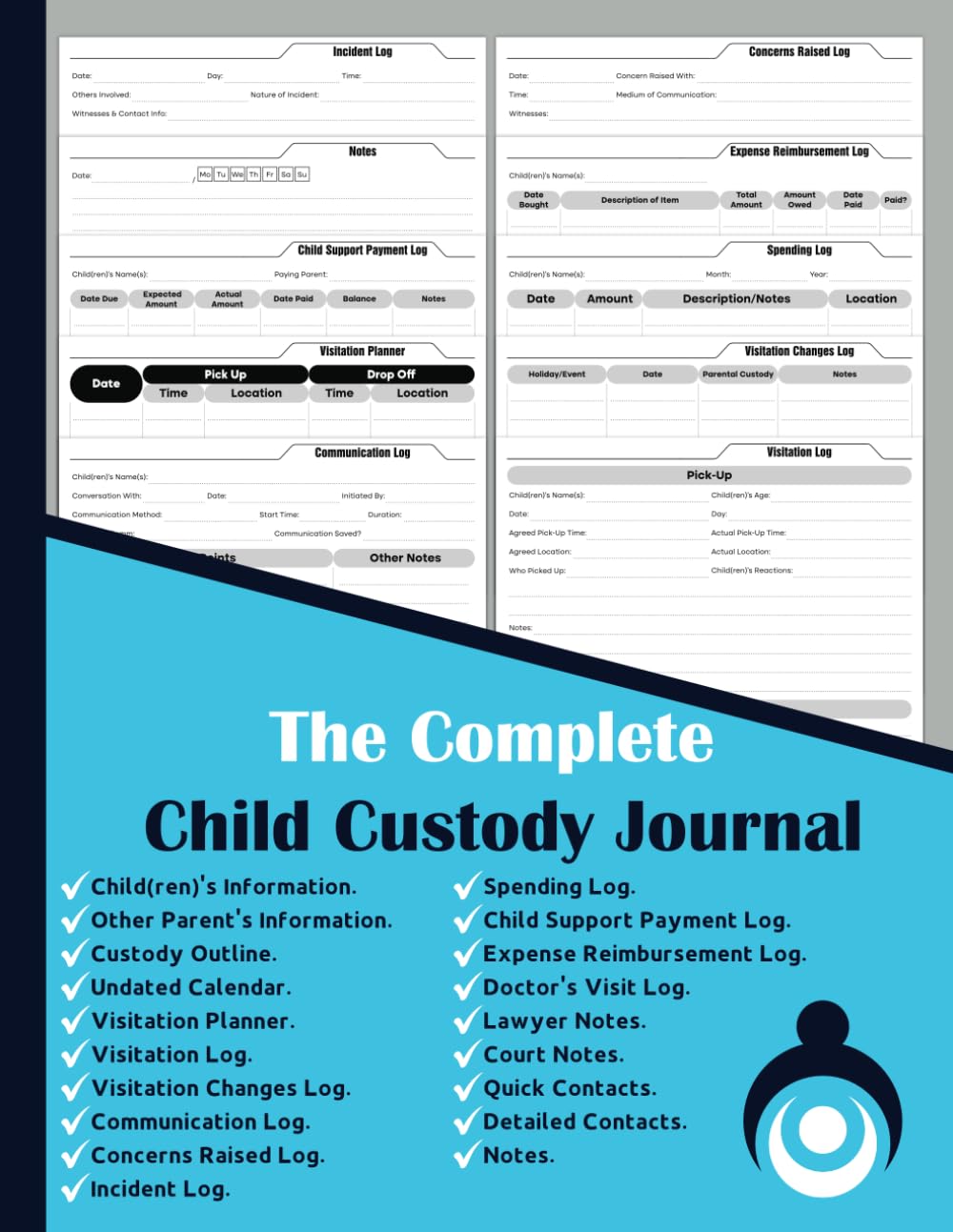




Child Custody Journal: Track Visitation, Evidence, Communication, Expenses, Court Details, Important Contacts. Plus 12 Month Undated Calendar. Co-Parenting and Child Support Log Book. Child Custody Organizer Planner
- Parenting & Relationships
- Family Relationships
- Image Unavailable Image not available forColor:
Conclusion
Platonic co-parenting asks something genuinely difficult of the adults involved: to sustain a committed, respectful partnership without the emotional glue of romantic love. But it also offers something remarkable — the chance to build a family on a foundation of deliberate choice, shared values, and mutual respect. Children raised in that environment don't need their parents to be in love. They need their parents to be present, consistent, and kind to each other. If you and your co-parent can hold to those three things, the rest is logistics.
The best gift you can give your child isn't a particular family structure — it's two adults who choose, every day, to put their child's needs first.
If this guide was helpful, save it to return to as your child grows, and share it with anyone considering this path.
Sources & References
- Pew Research Center. "Parenting in America: The American Family Today." 2015 (updated trend data). pewresearch.org
- American Academy of Pediatrics. "Promoting the Well-Being of Children Whose Parents Are Gay or Lesbian." Pediatrics, 2013 (reaffirmed 2015). aap.org
- Stacey, J. & Biblarz, T.J. "(How) Does the Sexual Orientation of Parents Matter?" American Sociological Review, 2010. doi:10.2307/2657413
- Golombok, S. "We Are Family: What Really Matters for Parents and Children." Scribe Publications, 2020.
- Kelly, J.B. "Children's Adjustment in Conflicted Marriage and Divorce: A Decade Review of Research." Journal of the American Academy of Child & Adolescent Psychiatry, 2000.
- Kruk, E. "The Equal Parent Presumption: Social Justice in the Legal Determination of Parenting After Divorce." McGill-Queen's University Press, 2013.
- Association of Family and Conciliation Courts (AFCC). "Guidelines for Parenting Coordination." 2019. afccnet.org
- Modamily. "About Platonic Co-Parenting." modamily.com (accessed 2025).
Frequently Asked Questions
What is platonic co-parenting?
Is platonic co-parenting legal?
How do I find a platonic co-parent?
How do children feel about having platonic co-parents?
What happens if one co-parent wants to move away?
Do I need a lawyer to set up a platonic co-parenting arrangement?
How do I handle it when one co-parent gets a new romantic partner?
Was this helpful?
Thanks — your feedback helps us pick what to write next.