The Four Parenting Styles: What They Look Like at 7:30 p.m.
Differing parenting styles are one of the most common — and most underestimated — sources of marital conflict, but couples who align on core values (not every decision) consistently report stronger relationships and better outcomes for their children.
In this article
Picture this: it's 7:30 p.m. on a Tuesday. Your four-year-old is mid-meltdown because dinner wasn't the right colour. You say "no screen time until she calms down." Your partner quietly hands her the tablet. No words are exchanged, but the temperature in the room drops ten degrees — and it has nothing to do with your toddler.
Sound familiar? You're not alone. According to the American Psychological Association, parenting disagreements are among the top five sources of couple conflict, and research published in the Journal of Family Psychology found that relationship satisfaction drops more steeply in the first three years after a child arrives than at any other life transition. Yet most couples spend more time researching pushchairs than discussing how they'll actually parent together.
In this guide, you'll understand:
1. The Four Parenting Styles: What They Look Like at 7:30 p.m.
Parenting style isn't a personality flaw — it's a deeply personal framework shaped by your own childhood, culture, and instincts. Diana Baumrind, a developmental psychologist at UC Berkeley, first described three core styles in the 1960s; Eleanor Maccoby and John Martin later added a fourth. Understanding these styles is the first step to understanding why you and your partner sometimes feel like you're reading from completely different rulebooks.
The Four Styles at a Glance
Authoritative parents set clear expectations and stay emotionally warm. They explain the "why" behind rules, invite dialogue, and adjust as children grow. Research consistently links this style to the best outcomes for children's self-regulation, academic performance, and mental health.
Authoritarian parents prioritise obedience and structure, often with less warmth and explanation. "Because I said so" is a signature phrase. This style can produce well-behaved children in the short term, but research links it to higher anxiety and lower self-esteem over time.
Permissive parents are nurturing and responsive but light on boundaries. They tend to avoid conflict with their children, which can leave kids without the scaffolding they need to manage frustration.
Uninvolved parenting — low responsiveness, low demands — is associated with the most negative child outcomes and is often a sign of parental overwhelm, mental health challenges, or adverse circumstances rather than indifference.
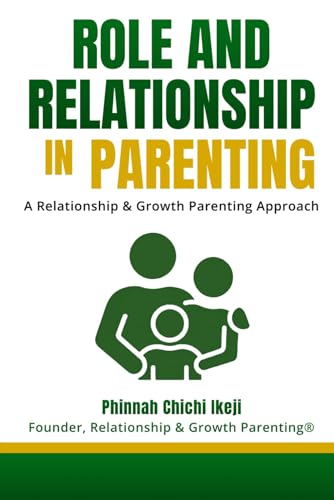
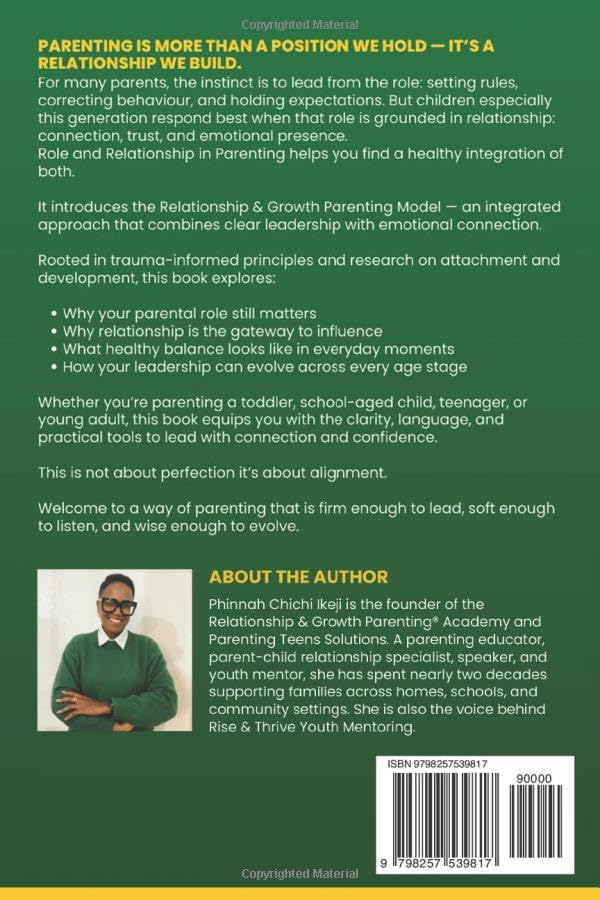
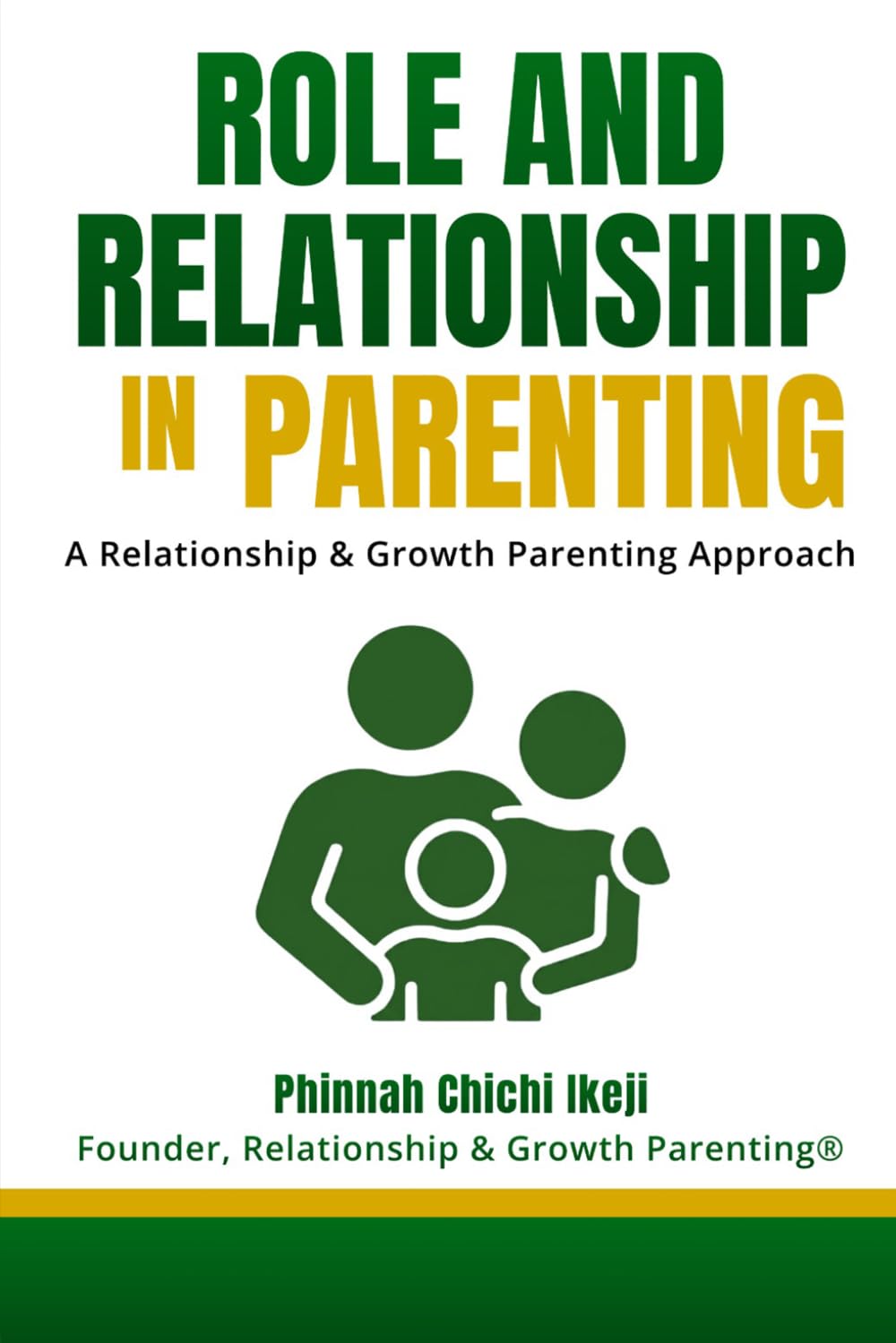

Role and Relationship in Parenting: A Relationship & Growth Parenting Approach
- Parenting & Relationships
- Image Unavailable Image not available forColor:
- ASIN : B0GYRTJ8NX
2. How Parenting Disagreements Quietly Damage Your Marriage
The damage rarely arrives dramatically. It accumulates in eye-rolls, in one partner stepping back because "it's not worth the argument," in a growing sense that you're co-managers of a household rather than partners in a life.
Couples who report high conflict over parenting also report lower marital satisfaction, less emotional intimacy, and higher rates of psychological distress.
— Journal of Family Psychology (2019)
Three Specific Ways the Friction Builds
Undermining in the moment. When one parent overrides the other's decision in front of the child — even with the best intentions — it sends two damaging messages simultaneously: to the child that rules are negotiable, and to the partner that their authority doesn't count. Over time, the undermined parent either disengages or escalates.
Emotional burnout. Parenting is already one of the most cognitively and emotionally demanding jobs on earth. Add a layer of chronic low-grade conflict with your co-parent and there is simply nothing left for the relationship. Physical and emotional intimacy are the first casualties.
Negative communication loops. Once couples start associating parenting conversations with conflict, they stop having them — or have them only when things have already gone wrong. Defensiveness replaces curiosity, and the gap widens.





The Seven Principles for Making Marriage Work: A Practical Guide from the Country's Foremost Relationship Expert
- Relationships
- Conflict Management
- Image Unavailable Image not available forColor:
3. Age-by-Age Friction Points: Where Conflict Peaks
Parenting disagreements don't feel the same at every stage. Here's where couples most commonly hit turbulence — and what helps.
Newborn to 12 Months: The Sleep Wars
Sleep deprivation is a clinical stressor. Decisions about co-sleeping, cry-it-out versus responsive settling, and feeding schedules feel enormous at 3 a.m. — and they are, because exhausted people make poor communicators. The American Academy of Pediatrics (AAP) has clear safe-sleep guidelines (firm, flat surface, room-sharing without bed-sharing for the first six months), which gives couples a useful, evidence-based anchor when emotions run high.
Toddler to Preschool (1–5): The Discipline Divide
This is the peak zone for style clashes. Tantrums, boundaries, and the word "no" are daily events. One parent wants to hold firm; the other can't bear the distress. The Book You Wish Your Parents Had Read by Philippa Perry is an excellent resource here — it reframes discipline as relationship repair rather than rule enforcement, which tends to bring both stricter and more permissive parents toward the middle.
School Age (6–12): The Achievement Pressure Zone
As children enter school, parenting disagreements often shift toward achievement, screen time, and social life. One parent pushes for structured activities; the other values free play. Research from the AAP's Council on Communications and Media supports limiting recreational screen time to two hours per day for this age group — again, a shared evidence base that takes the argument out of the personal.

Raising Securely Attached Kids: Using Connection-Focused Parenting to Create Confidence, Empathy, and Resilience (Parenting Book Series)
- Parenting & Relationships
- Family Relationships
- Motherhood
4. The Intensive Parenting Trap — and What It Costs Your Relationship
"Intensive parenting" — the cultural expectation that good parents are constantly present, optimising, and self-sacrificing — has intensified significantly since the 1990s. Sociologist Sharon Hays coined the term "intensive mothering ideology" to describe a set of norms that demand parents (disproportionately mothers) invest extraordinary time, energy, and money in every aspect of a child's development.
The cost to couple relationships is measurable. A 2019 study in the Journal of Child and Family Studies found that mothers who endorsed intensive parenting beliefs reported significantly lower relationship satisfaction and higher levels of depression — regardless of their child's actual wellbeing.
The pressure to be a 'perfect' parent has never been higher, and social media amplifies it relentlessly. But children don't need perfect parents. They need present, regulated ones.
— American Psychological Association (2022)

The Relationship Cure: A 5 Step Guide to Strengthening Your Marriage, Family, and Friendships
- Relationships
- Interpersonal Relations
- Image Unavailable Image not available forColor:
5. Building a Shared Parenting Philosophy Without Losing Yourself
The goal isn't to clone each other's parenting style. It's to find enough common ground that your child experiences consistency — and your partner experiences respect.
Start With Values, Not Rules
Rules ("no screens before homework") are brittle — they break under pressure and invite negotiation. Values ("we want our children to learn self-regulation") are durable. When you agree on the value, you can both reach for different tactics and still be pulling in the same direction.
Create a Simple Co-Parenting Agreement
This doesn't need to be formal. A one-page document (or even a shared note on your phone) covering your top five parenting values, your agreed approach to discipline, and your "united front" policy (no overriding in front of the child) gives you something to return to when things get heated.
The Seven Principles for Making Marriage Work by Dr. John Gottman is the gold-standard resource for couples navigating exactly this kind of values alignment — it's practical, research-backed, and written for real families under real pressure.




The Whole-Brain Child: 12 Revolutionary Strategies to Nurture Your Child's Developing Mind
- Health, Fitness & Dieting
- Psychology & Counseling
- Child Psychology
6. When to Seek Professional Support — and What That Looks Like
Seeking help isn't a sign that your marriage is failing. It's a sign that you take it seriously enough to invest in it.
Signs It's Time to Talk to Someone
What Professional Support Actually Offers
Couples therapy with a therapist trained in the Gottman Method or Emotionally Focused Therapy (EFT) gives you structured tools for the specific conflict patterns that parenting disagreements create. The average course of EFT is 8–20 sessions, with strong evidence for lasting improvement in relationship satisfaction (International Centre for Excellence in EFT, 2023).
Co-parenting coaching is a shorter, more focused intervention — typically 4–6 sessions — specifically targeting parenting alignment rather than the broader relationship. It's a good option when the marriage is fundamentally strong but parenting friction is the primary stressor.



The Book You Wish Your Parents Had Read: (And Your Children Will Be Glad That You Did)
- Health, Fitness & Dieting
- Psychology & Counseling
- Child Psychology
7. Parenting Style Comparison: Finding Your Fit as a Couple
| Parenting Style | Best Fit For | Strengths | Friction Points | Recommended Resource | Typical Outcome |
|---|---|---|---|---|---|
| Authoritative | Most families; especially effective 3–12 | Balances warmth + structure; best child outcomes in research | Can feel effortful; requires consistent communication | Role and Relationship in Parenting | High self-esteem, good self-regulation |
| Authoritarian | High-structure households; some cultural contexts | Clear expectations; predictability | Partner may feel approach is too rigid; child may lack voice | The Seven Principles for Making Marriage Work | Rule-following but higher anxiety risk |
| Permissive | Families recovering from over-control; creative households | Strong child-parent bond; child feels heard | Partner may feel boundaries are absent; children may struggle with frustration | The Book You Wish Your Parents Had Read | Warm relationship; lower self-regulation |
| Uninvolved | Not a recommended style — often a sign of parental burnout | — | High conflict risk; children lack scaffolding | The Relationship Cure | Negative outcomes without intervention |
| Mixed (Hybrid) | Most real-world couples | Flexible; draws on strengths of multiple styles | Requires explicit communication to avoid inconsistency | Raising Securely Attached Kids | Positive when aligned on core values |
| Attachment-Led | Infants and toddlers; sensitive children | Strong secure attachment; responsive | Can be misread as permissive; partner buy-in essential | The Whole-Brain Child | High emotional intelligence; needs structure as child grows |
Expert Insights
Here's the truth that no parenting book puts on its cover: the most powerful thing you can do for your child's emotional development is to take care of your relationship with your co-parent. Not perfectly. Not without disagreement. But with enough respect and intention that your child grows up knowing that love — even complicated, tired, Tuesday-night love — holds.
The couples who get this right aren't the ones who always agree. They're the ones who keep choosing to figure it out together. Save this guide, share it with your partner, and start with just one conversation — the one about your three non-negotiable values. That's enough for today.
Sources & References
- American Psychological Association. "Parenting and relationship conflict." APA.org, 2022. https://www.apa.org
- Doss, B.D., et al. "The effect of the transition to parenthood on relationship quality." Journal of Personality and Social Psychology, 2009. https://doi.org/10.1037/a0013969
- Baumrind, D. "Child care practices anteceding three patterns of preschool behavior." Genetic Psychology Monographs, 1967.
- Maccoby, E.E., & Martin, J.A. "Socialization in the context of the family." Handbook of Child Psychology, 1983.
- Hays, S. "The Cultural Contradictions of Motherhood." Yale University Press, 1996.
- Rizzo, K.M., et al. "Insight into the parenthood paradox: Mental health outcomes of intensive mothering." Journal of Child and Family Studies, 2013. https://doi.org/10.1007/s10826-012-9615-z
- American Academy of Pediatrics. "Safe Sleep Recommendations." HealthyChildren.org, 2022. https://www.healthychildren.org
- American Academy of Pediatrics, Council on Communications and Media. "Media and Young Minds." Pediatrics, 2016. https://doi.org/10.1542/peds.2016-2591
- Gottman, J.M., & Silver, N. "The Seven Principles for Making Marriage Work." Harmony Books, 2015.
- International Centre for Excellence in Emotionally Focused Therapy (ICEEFT). "EFT Research Summary." ICEEFT.com, 2023. https://iceeft.com
- Siegel, D.J., & Bryson, T.P. "The Whole-Brain Child." Delacorte Press, 2011.
Frequently Asked Questions
What is the most common parenting style conflict in marriages?
Can different parenting styles actually harm my child?
How do I talk to my partner about our parenting differences without it turning into a fight?
Is it normal for relationship satisfaction to drop after having children?
At what age do parenting disagreements peak?
Should we always present a united front to our children?
When should we consider couples therapy for parenting-related conflict?
Was this helpful?
Thanks — your feedback helps us pick what to write next.