
Physical Development: From First Steps to Full Sprints
Between their first and second birthdays, toddlers undergo some of the fastest brain and body development of their entire lives — and knowing what to expect helps you support (not stress about) every milestone.

In this article
Your one-year-old has just taken their first wobbly steps, and before you've finished celebrating, they're scaling the sofa and demanding crackers by name. That's not an accident — it's neuroscience. According to the Centers for Disease Control and Prevention (CDC), the brain doubles in volume during the first year of life and continues growing at a rate that will never be matched again, reaching roughly 80% of adult size by age two. The second year is when all that neural architecture gets used: for walking, talking, thinking, and feeling.
This guide will walk you through exactly what's happening — and what to do about it — across five domains of development.
After reading, you'll understand:
1. Physical Development: From First Steps to Full Sprints
Between 12 and 24 months, your toddler will transform from a cautious new walker into a confident runner, climber, and thrower — usually in that order.
Gross Motor Milestones
Most children take their first independent steps somewhere between 9 and 12 months, but the CDC's "Learn the Signs. Act Early." programme notes that walking independently by 12 months is a typical benchmark, with the full range extending to 15 months for many healthy children. By 18 months, the majority of toddlers can walk well, squat to pick up a toy, and begin to run (albeit with a wide-legged, arms-out gait that is completely adorable). By 24 months, expect stair-climbing with support, kicking a ball, and brief balancing on one foot.
Fine Motor Milestones
Alongside those big movements, small-muscle control is quietly advancing: - 12–15 months: Pincer grasp refined; stacks 2–3 blocks; uses a spoon with lots of spillage - 15–18 months: Stacks 4+ blocks; scribbles spontaneously; turns board-book pages - 18–24 months: Stacks 6+ blocks; begins to use a fork; attempts to dress/undress
The 
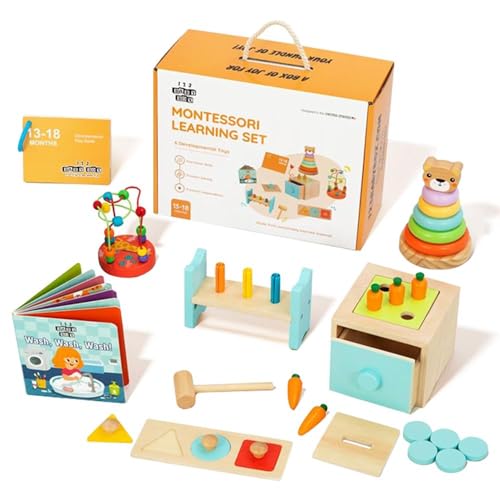
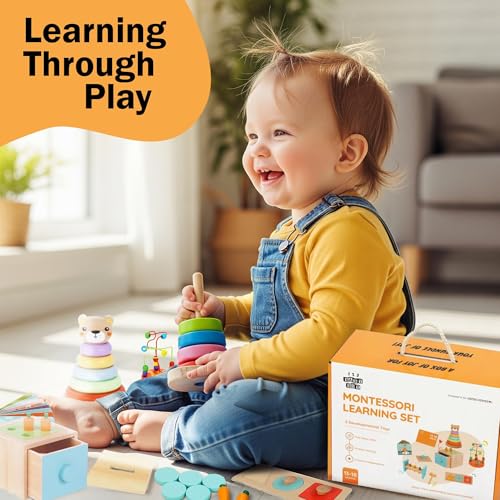
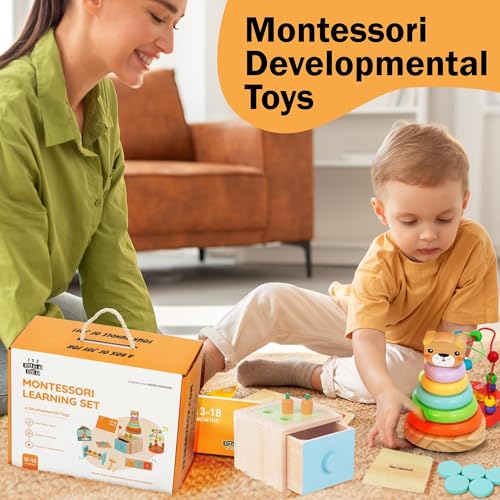
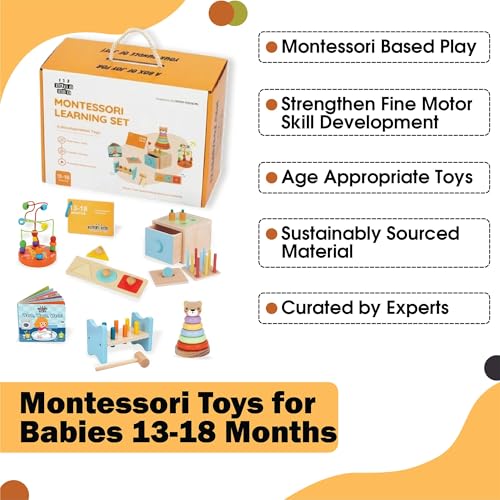
6-in-1 Montessori Learning Toys for 13-18 Months - Toddler Developmental Activity Set with Bear Tower, Pound Bench, Beads Coaster & More Educational Wooden Toys
When to Talk to Your Paediatrician
2. Cognitive Development: The Thinking, Problem-Solving Brain
Your toddler's brain isn't just growing — it's reorganising. The prefrontal cortex (responsible for planning and impulse control) is still years from maturity, but the circuits for memory, imitation, and early reasoning are firing rapidly.
Object Permanence to Pretend Play
By 12 months, most toddlers have mastered object permanence — they know you still exist when you leave the room, which is partly why separation anxiety peaks here. Over the next 12 months, watch for: - Cause-and-effect play: Dropping food off the high chair tray (repeatedly) is an experiment, not defiance - Shape and colour sorting: By 18 months, many toddlers can match basic shapes to holes - Imitation: Pretending to talk on the phone, "feed" a stuffed animal, or sweep the floor — all signs of healthy symbolic thinking - Simple problem-solving: Pulling a blanket to retrieve a toy sitting on top of it
Shape-sorting toys are a clinician's favourite for this stage. The Melissa & Doug Shape Sorting Cube pairs colour recognition with spatial reasoning in a single, satisfying activity. For a broader toolkit, the Curious Toddler Activity Cards — designed with input from paediatricians and early childhood educators — organise developmentally appropriate activities across every three-month window from 12 to 24 months.
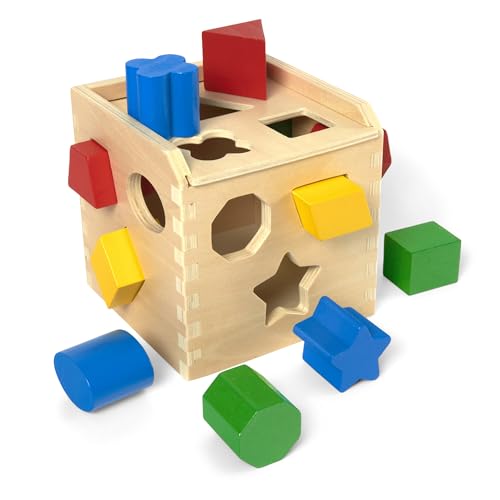


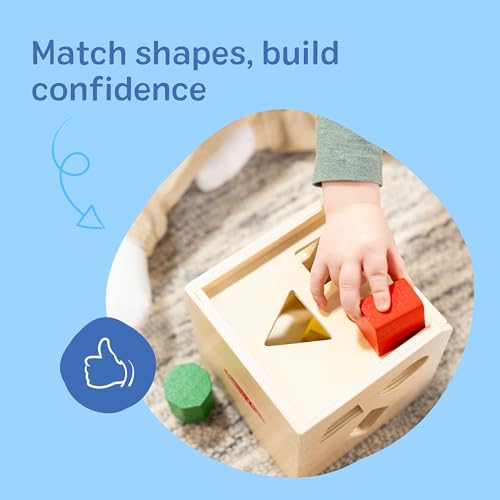
Melissa & Doug Shape Sorting Cube - Classic Wooden Toy With 12 Shapes
- CREATIVE SORTING GAME FOR KIDS: The Melissa & Doug Shape-Sorting Cube Classic Wooden Toy is a beautifully cons
- CLASSIC LEARNING ACTIVITY: This ever-popular shape and color activity is sure to engage children. Each shape i
- STURDY WOODEN CONSTRUCTION: Melissa & Doug early development toys are made to last. This colorful toy for todd
When to Talk to Your Paediatrician
3. Speech and Language Development: The Word Explosion
Language development between 12 and 24 months is one of the most dramatic biological events you'll ever witness up close.
The Vocabulary Trajectory
The American Academy of Pediatrics (AAP) sets these benchmarks: - 12 months: 1–3 words beyond "mama" and "dada"; understands simple commands ("come here") - 15 months: ~10 words; points to communicate wants - 18 months: ~50 words; follows two-step instructions ("get your shoes and bring them here") - 24 months: ~200–300 words; combines two words ("more milk," "daddy go," "big dog")
That jump from 10 words to 200+ in six months is called the vocabulary burst or word spurt, and it's driven by a cognitive leap in which toddlers grasp that everything has a name.
Practical Language-Building Strategies
- Narrate your day: "I'm cutting the apple. Now I'm putting it on your plate." This isn't silly — it's vocabulary instruction. - Read aloud daily: Even 10–15 minutes of shared picture-book reading significantly expands vocabulary (evidence reviewed by the AAP's Literacy Promotion policy, 2022). - Expand, don't correct: If your toddler says "dog run," you say "Yes! The dog is running fast!" You've modelled the correct form without shame.
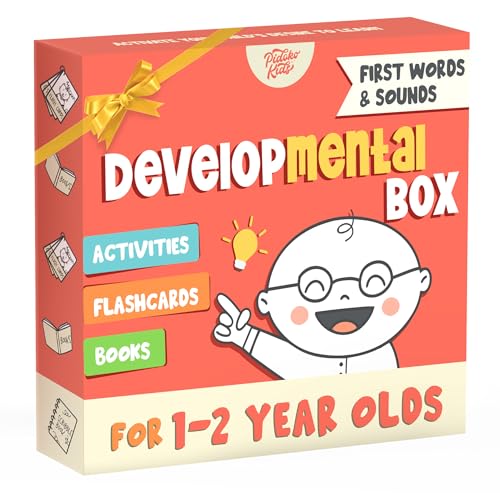
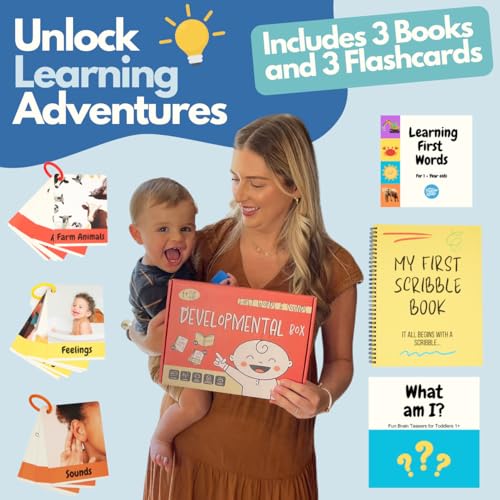
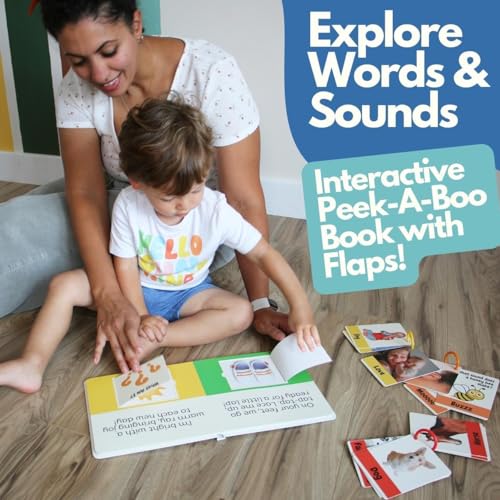
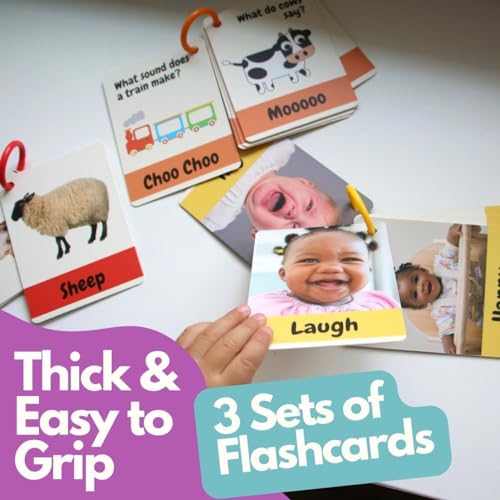
Learning Toys for 1-2 Year Old, Montessori Toys & Preschool Learning Activities with Speech Therapy Materials & Phonic Baby Flash Cards for 12 to 18 Months, First Words and Board Books by Pidoko Kids
- ✔ Early Learning for Ages 1–2: Introduce first words, sounds, feelings, animals, and everyday objects with a c
- ✔ 3 Board Books + 3 Flashcard Sets Included: Includes a First Words book, interactive Who Am I? peek-a-boo boa
- ✔ Supports Speech, Sensory & Emotional Development: Hands-on activities, flaps, and guessing games help toddle
When to Talk to Your Paediatrician
4. Emotional and Social Development: Big Feelings, Small Body
Here is the thing parents rarely hear said plainly: a toddler's emotional meltdown is not a behaviour problem. It is a neurological limitation. The amygdala (the brain's alarm system) is fully online at 12 months; the prefrontal cortex that would regulate it won't be mature until the mid-twenties. Your toddler is genuinely overwhelmed.
What to Expect, Month by Month
- 12–15 months: Strong attachment to primary caregivers; separation anxiety peaks; parallel play (playing near other children, not with them) is normal - 15–18 months: "No" becomes a favourite word — this is healthy autonomy, not defiance - 18–24 months: Temper tantrums increase as toddlers have desires they cannot yet articulate; empathy begins to emerge (offering a toy to a crying peer) - 24 months: Cooperative play starts to appear; beginning to understand "mine" vs. "yours"
Co-Regulation: Your Most Important Tool
You cannot teach a toddler to self-regulate — their brain isn't built for it yet. What you can do is co-regulate: stay calm, get to their level, name the feeling ("You're so frustrated because we had to stop playing"), and offer comfort. Over hundreds of these interactions, they gradually internalise the skill.
The Melissa & Doug My First Activity Book includes simple puppet play that naturally introduces emotion-labelling — a low-key way to build emotional vocabulary during quiet time.
When to Talk to Your Paediatrician
5. Screen Time, Play, and the Learning Environment
The World Health Organization (WHO) recommends zero screen time for children under 24 months (except video calls with family), and no more than one hour of high-quality, co-viewed content between ages 2 and 5. This isn't arbitrary — it's based on evidence that passive screen exposure displaces the serve-and-return interactions that build language and social cognition.
What Actually Builds Brains at This Age
The science is consistent: unstructured play and responsive caregiving are the two highest-leverage inputs for development in year two.
- Sensory play: Water, sand, playdough — activates tactile pathways and builds concentration - Open-ended toys: Blocks, shape sorters, simple puzzles — promote problem-solving without a "right answer" - Outdoor time: The AAP recommends at least 30 minutes of structured outdoor play and several hours of unstructured active play daily for toddlers - Shared book reading: Even one picture book per day makes a measurable difference in vocabulary at age 5
The Fat Brain Toys PlayTab Sensory Activity Board is a clinician-friendly pick here: magnetic, rearrangeable tiles mean the "toy" genuinely changes every session, sustaining attention longer than fixed-function toys. And the Curious Toddler Activity Cards give you a paediatrician-reviewed activity for every developmental window, so you're never guessing what's age-appropriate.
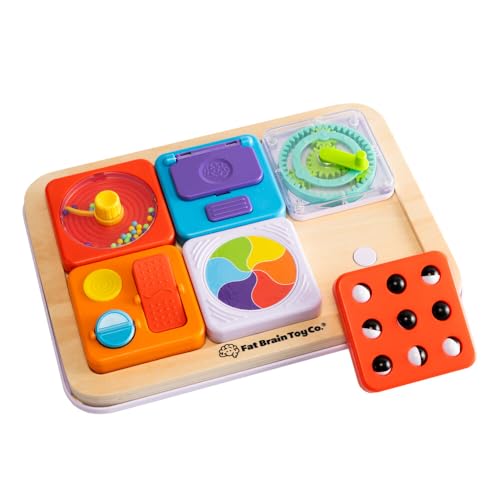
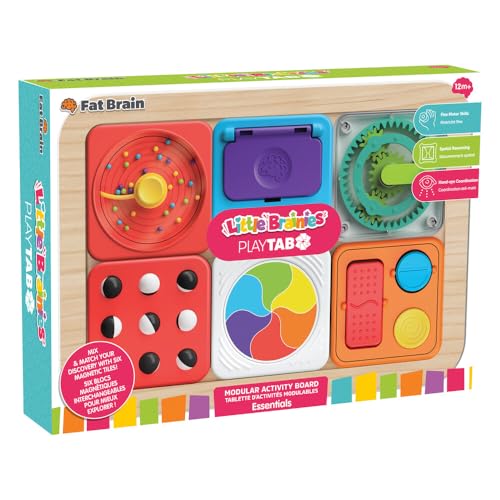
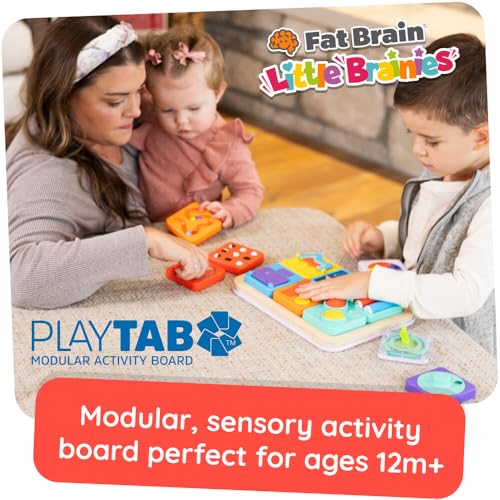
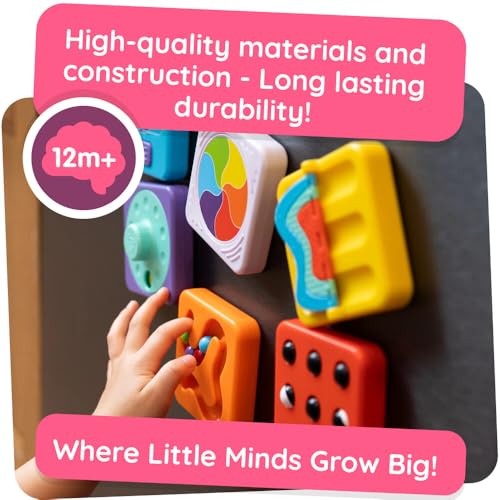
Fat Brain Toys PlayTab Essentials, Modular Sensory Activity Board, Busy Board for Toddlers and Babies Ages 12 Months+
- MIX AND MATCH YOUR DISCOVERY: The six magnetic tiles on the wooden tablet board can be rearranged into differe
- ENCOURAGES FINE MOTOR SKILLS: Babies and toddlers will enjoy playing with each tile on the board by pushing sw
- BOOSTS TACTILE EXPLORATION: This baby learning toy with six unique tiles featuring fun colors and activities d
6. Nutrition and Sleep: The Foundations Everything Else Rests On
No milestone guide is complete without acknowledging that development happens during sleep and runs on nutrition. These aren't lifestyle extras — they're biological requirements.
Sleep
The AAP recommends 11–14 hours of total sleep per 24 hours for toddlers aged 1–2, including one daytime nap. During deep sleep, the brain consolidates the memories and motor patterns your toddler practised all day. Chronic short sleep is directly linked to slower language acquisition and more difficult emotional regulation.
Nutrition
The WHO recommends continued breastfeeding alongside complementary foods through age 2 and beyond for those who choose it. For all toddlers, the dietary priorities are: - Iron: Critical for brain myelination; found in red meat, fortified cereals, lentils, and dark leafy greens - Omega-3 fatty acids (DHA): Support ongoing neural development; found in oily fish, walnuts, and flaxseed - Calcium and Vitamin D: For bone mineralisation; whole-milk dairy or fortified alternatives - Variety over volume: Toddler appetite is erratic by design — their growth rate has slowed compared to infancy, so caloric needs are lower than parents expect
The 123 Baby Box 6-in-1 Montessori Activity Set includes a baby board book on routines, which is a gentle way to introduce the concept of mealtimes and sleep as predictable, comforting parts of the day.
Milestone Comparison: What to Expect at Each Stage
| Age Window | Physical | Language | Cognitive | Emotional/Social | Recommended Support Tool | Price Range |
|---|---|---|---|---|---|---|
| 12–15 months | Walking independently; stacks 2–3 blocks | 1–10 words; points to communicate | Object permanence solid; cause-and-effect play | Separation anxiety peaks; parallel play | 123 Baby Box Montessori Set | $49.99 |
| 15–18 months | Running begins; climbs furniture | ~10–50 words; follows simple commands | Shape sorting; early imitation play | "No" phase; strong autonomy drive | Melissa & Doug Shape Sorting Cube | $20.99 |
| 18–21 months | Kicks a ball; stacks 6 blocks | 50+ words; two-word phrases emerging | Pretend play begins; simple puzzles | Tantrums peak; empathy emerges | Pidoko Kids Flash Cards & Books | $17.99 |
| 21–24 months | Runs confidently; walks up stairs with support | 200–300 words; two-word sentences consistent | Symbolic play well established; colour matching | Cooperative play starts; "mine" concept | Curious Toddler Activity Cards | $34.99 |
Expert Insights
Conclusion
The year between your child's first and second birthday is genuinely extraordinary — not in a greeting-card way, but in a hard, biological, measurable sense. You are watching a human brain wire itself for language, relationships, and thought in real time. Some days that looks like a first sentence. Some days it looks like a 20-minute meltdown over the wrong colour cup. Both are the same process.
You don't need to optimise every moment. You need to be present, responsive, and consistent — and to know when something feels off so you can get support early. The most developmental thing you can do for a one-year-old is simply to show up, pay attention, and enjoy the chaos.
If this guide helped you feel more confident, save it for the months ahead — you'll want to revisit the milestone tables as your toddler grows. And if you're ever unsure, your paediatrician is always your best first call.
Sources & References
- Centers for Disease Control and Prevention (CDC). "Learn the Signs. Act Early: Developmental Milestones." 2023. https://www.cdc.gov/ncbddd/actearly/milestones/index.html
- American Academy of Pediatrics (AAP). "Developmental Milestones: 12 Months." HealthyChildren.org. 2023. https://www.healthychildren.org/English/ages-stages/baby/Pages/Developmental-Milestones-12-Months.aspx
- American Academy of Pediatrics (AAP). "Literacy Promotion: An Essential Component of Primary Care Pediatric Practice." Pediatrics. 2022. https://doi.org/10.1542/peds.2022-057612
- American Academy of Pediatrics (AAP). "Media and Young Minds." Pediatrics. 2016 (reaffirmed 2022). https://doi.org/10.1542/peds.2016-2591
- World Health Organization (WHO). "Guidelines on Physical Activity, Sedentary Behaviour and Sleep for Children Under 5 Years of Age." 2019. https://www.who.int/publications/i/item/9789241550536
- World Health Organization (WHO). "Breastfeeding." 2023. https://www.who.int/health-topics/breastfeeding
- Siegel, Daniel J. & Bryson, Tina Payne. "The Whole-Brain Child." Delacorte Press, 2011.
- Shulman, Lisa. "Before Words: The Infant Mind and the Origins of Language." Columbia University Press, 2021.
- Dana Foundation. "From Birth to Two: The Neuroscience of Infant Development." 2019. https://dana.org
- Feeding Matters. "Pediatric Feeding Disorder: Clinical Practice Guidelines." 2023. https://www.feedingmatters.org
Frequently Asked Questions
Is it normal for my 18-month-old to only have 10–15 words?
My toddler walked at 10 months. Should I expect other milestones early too?
How do I know if my toddler's tantrum is normal or a sign of something else?
When should I be worried about my toddler's social development?
What's the best toy for a 12-to-18-month-old's development?
How much screen time is safe for a 1-to-2-year-old?
My toddler seems to have lost a skill they had before — should I be worried?
Was this helpful?
Thanks — your feedback helps us pick what to write next.