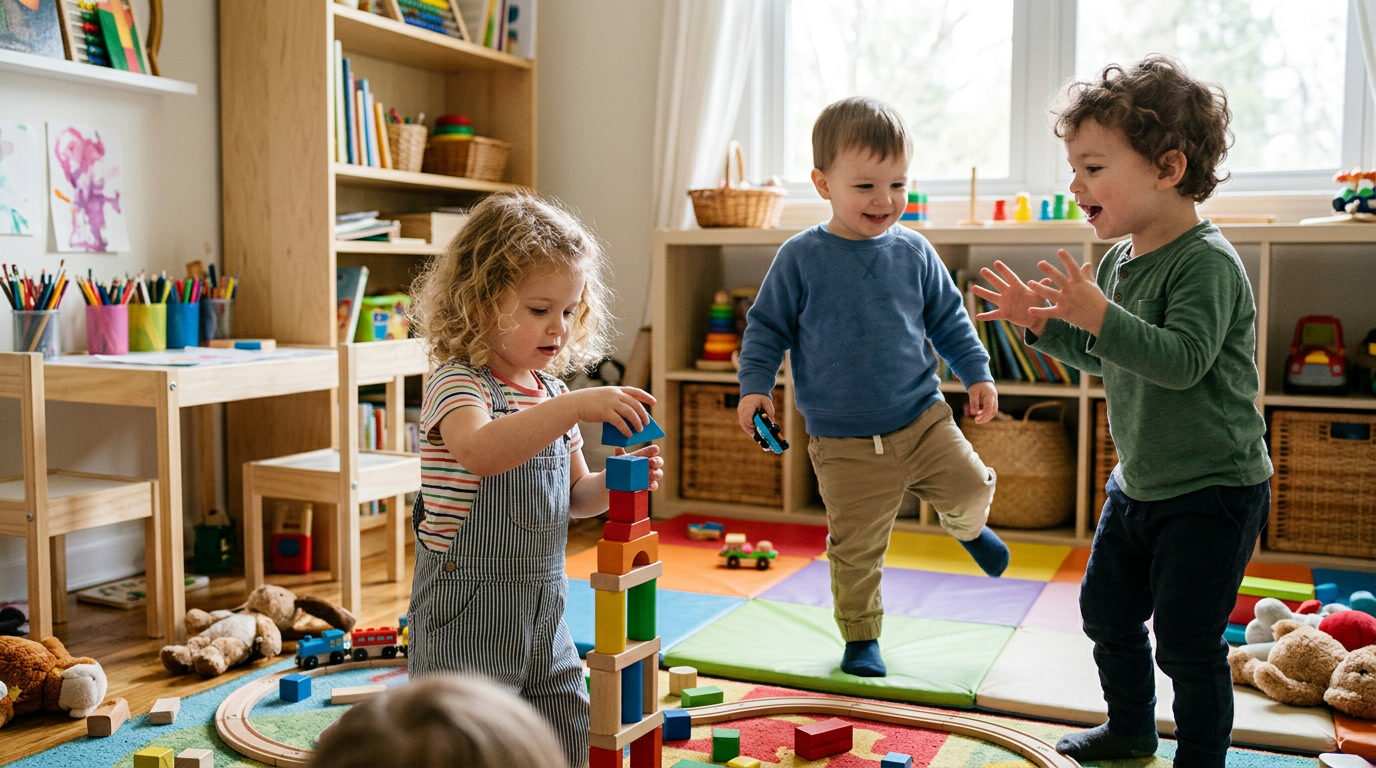
How Toddler Brains Learn (It's Not What You Think)
The toddler years (ages 1–3) are a critical window for early learning — and the best "schooling" at this stage happens through play, language-rich routines, and responsive caregiving, not formal instruction.
In this article
Picture this: your 22-month-old is "reading" a board book upside-down, narrating a story that has absolutely nothing to do with the pictures — and doing it with complete confidence. That's not silliness. That's early literacy in action.
According to the Centers for Disease Control and Prevention (CDC), the period from birth to age 3 represents the most rapid phase of brain development in the entire human lifespan. Neural connections form at a rate of more than one million per second in the first few years of life — a pace that will never be repeated. What happens (and what doesn't happen) in these years shapes language, memory, attention, and emotional regulation for decades.
This guide will help you understand:
1. How Toddler Brains Learn (It's Not What You Think)
Toddlers learn through doing, not sitting. The single most important thing to understand about early education is that the toddler brain is not a miniature school-age brain. It is wired for exploration, imitation, and social connection — not instruction.
The American Academy of Pediatrics (AAP) has been unequivocal on this point: play is the primary vehicle through which young children develop cognitively, socially, and emotionally. Their 2018 clinical report, The Power of Play, concluded that child-directed, unstructured play — especially when a caring adult is nearby and responsive — produces stronger developmental outcomes than structured academic drills at this age.
What "Learning" Looks Like at 1–3 Years
At 12–18 months, your toddler is learning cause and effect (drop the spoon, it falls — every single time, apparently). By 24 months, they're beginning symbolic thinking — a block becomes a phone, a banana becomes a gun. By 36 months, they can hold a simple rule in mind ("we don't throw inside"), follow two-step instructions, and engage in cooperative pretend play.
These are not trivial achievements. They are the cognitive foundations of literacy, numeracy, and executive function.
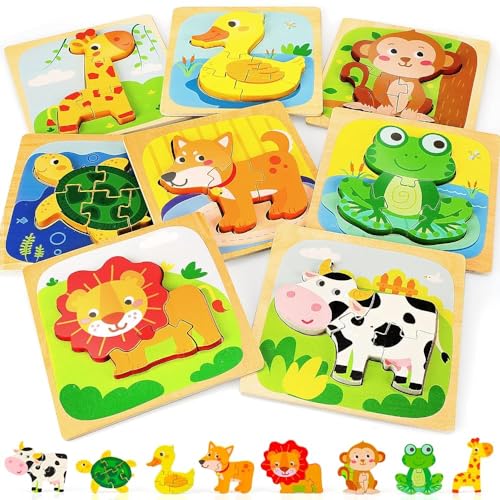
Wooden puzzles are an ideal first "curriculum." The TOY Life Wooden Animal Puzzles give toddlers as young as 6 months a hands-on way to explore shape, colour, and cause-and-effect — exactly the kind of self-directed learning the AAP endorses.

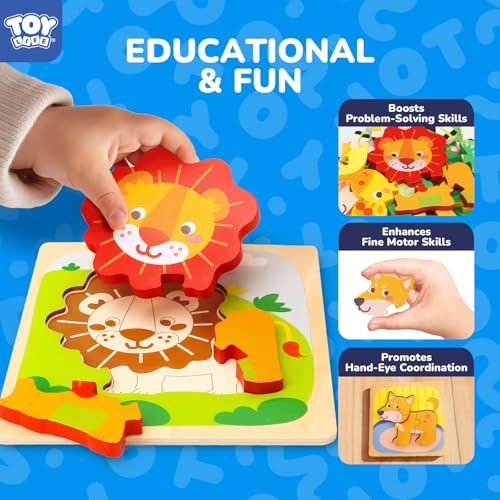
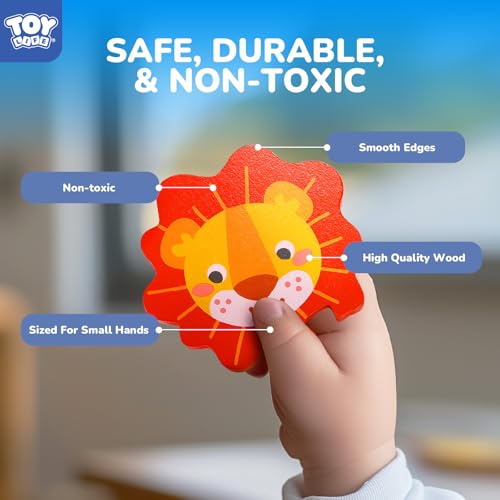
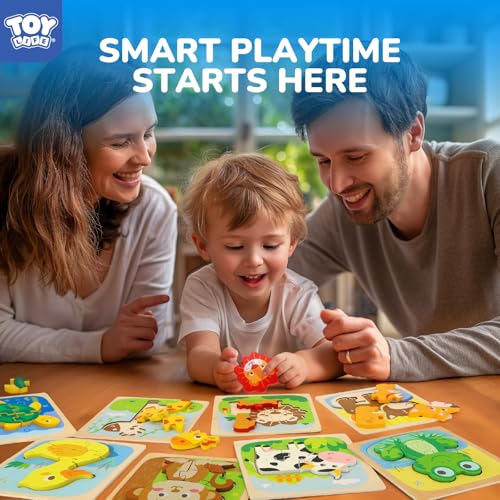
TOY Life Wooden Puzzles for Toddlers 2-4, Montessori Toys for 1 2 3 Year Old Boys Girls, Animals Puzzles Educational Learning Toys 2 Year Old, Toddler Birthday Gifts Toy for Baby Girl Boy 6M+
- SAFE LEARNING TOYS WOODEN PUZZLE FOR TODDLER: Designed with the toddler in mind, this wooden puzzle toy is mad
- 8 DIFFERENT SHAPE WITH BRIGHT COLORS: This wooden puzzle comes with 8 different Shape with bright colors, incl
- DURABLE AND LARGE PART: Made of environmentally friendly solid wood, this wooden puzzle is so durable that you
2. Early Education Options: What's Actually Available for Under-3s
You have more choices than you might realise — and fewer of them are strictly necessary than the parenting internet would have you believe. Here's an honest breakdown of the main pathways.
Home-Based Learning
For children under 2, home is almost always the richest learning environment when a responsive caregiver is present. Language input, physical exploration, and secure attachment are the three pillars — and none of them require a programme.Playgroups and Parent-Child Classes
Drop-in playgroups, music classes (e.g., Kindermusik), and library story-times offer social exposure and sensory variety without the commitment of enrolment. The Royal College of Paediatrics and Child Health (RCPCH) notes that peer interaction, even at 18 months, supports the development of social referencing and early turn-taking.Nursery / Daycare Settings
In the UK, government-funded childcare begins at 9 months (as of 2024 expansion). In the US, Head Start serves eligible families from birth. Quality varies enormously. When evaluating a setting, the National Association for the Education of Young Children (NAEYC) recommends prioritising: low child-to-staff ratios (no more than 3:1 for infants, 4:1 for toddlers), warm and responsive caregivers, and a play-based curriculum.Montessori and Reggio-Inspired Settings
Both approaches emphasise child-led exploration, mixed-age groupings, and minimal direct instruction — well-aligned with toddler developmental science. A 2017 study published in Science (Lillard et al.) found that children in Montessori programmes showed stronger executive function and reading skills by age 6 compared to peers in conventional programmes.Structured "Academic" Programmes
Flashcard drilling, rote counting, and formal letter recognition are developmentally premature for most children under 3. There is no peer-reviewed evidence that pushing academic content earlier produces lasting advantage — and some evidence it increases anxiety.3. Language and Literacy: The Highest-Leverage Investment
Language development between ages 1 and 3 is the strongest predictor of later school success — stronger than early maths skills, stronger than IQ scores measured at school entry.
The landmark Hart & Risley study (University of Kansas, 1995) found a "30-million-word gap" between children from language-rich and language-poor environments by age 3. While subsequent research has refined the exact numbers, the core finding holds: the more words a toddler hears in back-and-forth conversation, the stronger their vocabulary, reading comprehension, and academic trajectory.
What Actually Builds Language
For parents who want a structured language tool, the Airbition Talking Flash Cards offer 224 illustrated words with audio — a useful supplement to conversation, especially for bilingual families or children receiving speech support. The sound-image pairing mirrors the Montessori language approach.



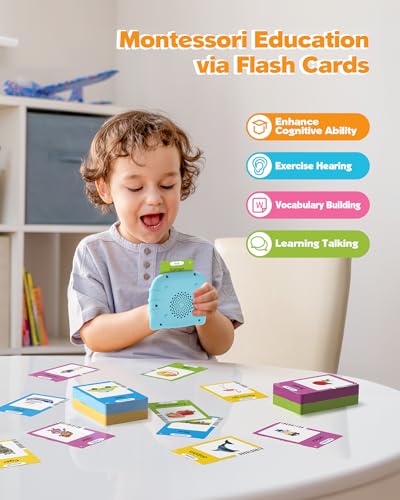

Airbition Talking Flash Cards for Toddlers 1 2 3 4 Year Olds, Montessori Language Learning Toys with 224 Words, Pocket Speech Therapy Toys, and Speech Development Educational Playthings for Children
- Toddler Montessori Learning Toys: This educational talking flash card features 224 colorful illustrations and
- Speech Therapy and Sensory Toys: Talking flashcards are a valuable tool for children. The sound-image combo he
- Easy to Use: Simply turn on the switch, insert a card into the reader, and hear content in a standard American
4. The Role of Play: Choosing Toys That Actually Teach
Not all toys are created equal. The toy industry uses the word "educational" loosely — but developmental science gives us clear criteria for what genuinely supports learning at this age.
The best toddler learning toys share four features: they are open-ended (no single "right" answer), they require the child to act on them, they grow with the child's ability, and they invite adult interaction.
Toys That Deliver Real Developmental Value
Puzzles build spatial reasoning, fine motor control, and persistence. The TOY Life Wooden Animal Puzzles check all four criteria — the bright animal pieces invite naming and storytelling, not just fitting.
Sorting and sequencing games build pre-mathematical thinking. The Gserin Montessori Bead Sequencing Set introduces pattern recognition, colour matching, and lacing — three distinct skill streams in one compact toy.
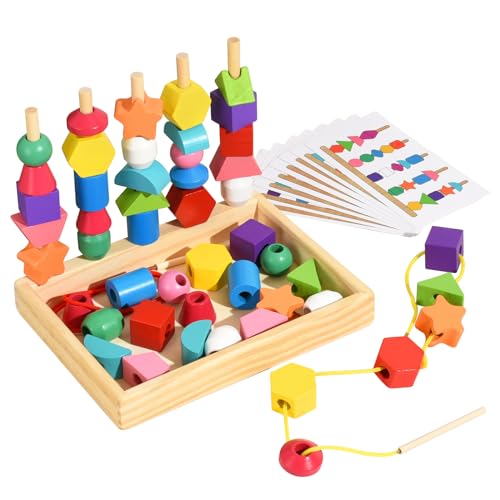
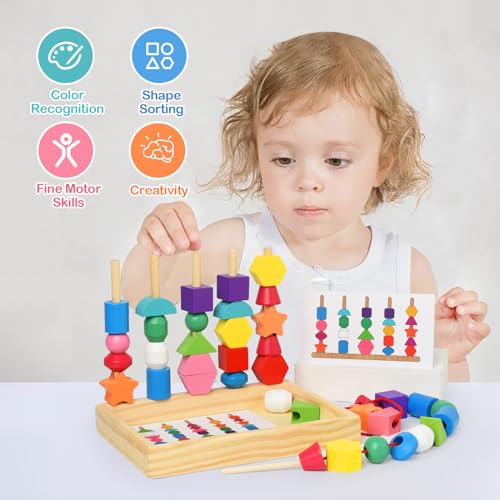
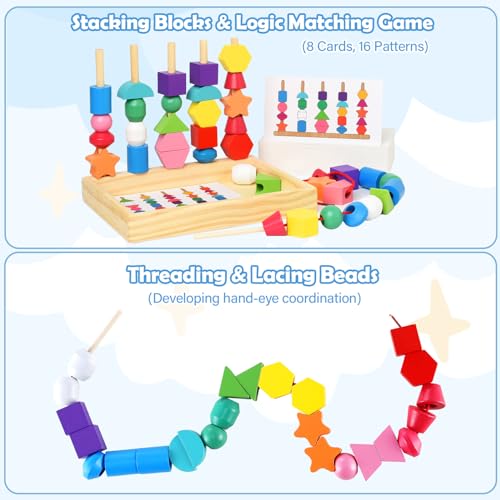
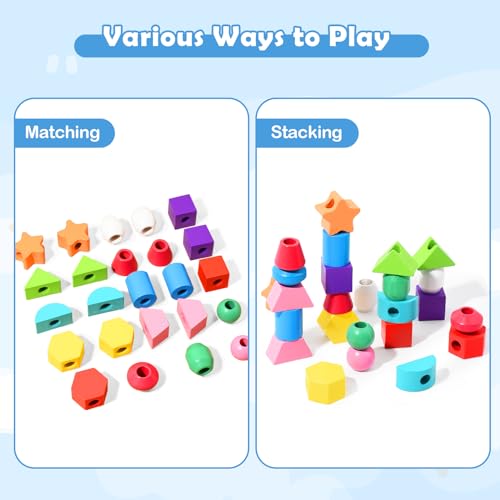
Montessori Bead Sequencing Set for Kids, Wooden Lacing Beads Toys for Toddlers, Matching Color Shape Stacker for 2 3 4 5 Years Old, Preschool Learning Educational Toys Gifts
- Montessori Wooden Toy: This Bead sequencing set includes 1 wooden box, 5 pillars, 25 wooden beads of 11 colors
- Interesting Bead Sequencing Game: Kids can stack the wooden blocks in the correct position on the wooden stand
- Threading Toy: The wooden stick at the top of the lace helps the child to thread beads into string more smooth
Colour and matching activities build categorisation, a core cognitive skill. The MUONE Montessori Busy Book layers vocabulary development onto colour sorting — children see the word alongside the image, naturally building pre-reading skills.
Art and mark-making are not just creative outlets — they are early writing preparation. Free drawing develops pencil grip, spatial planning, and self-expression. The Basytodio Kids Art Easel with its double-sided chalk and whiteboard surfaces gives toddlers a dedicated, low-stakes space to experiment.

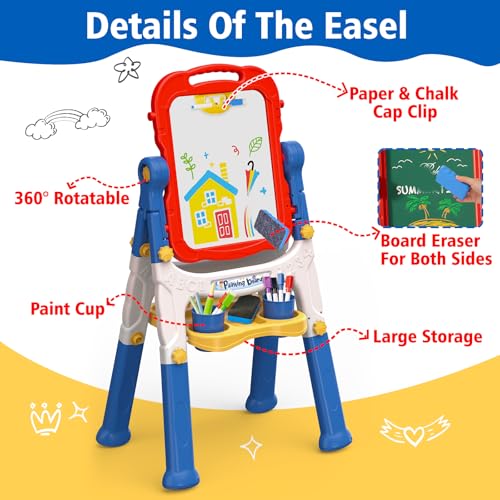
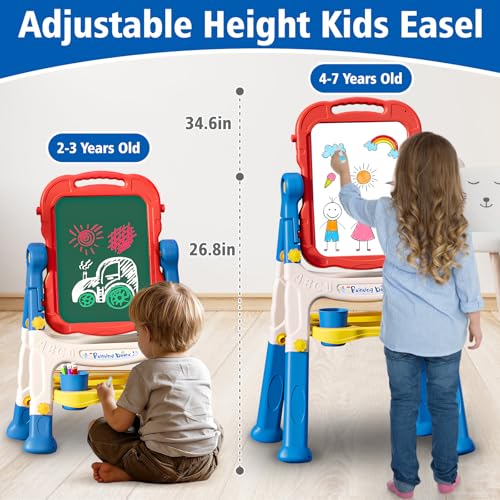
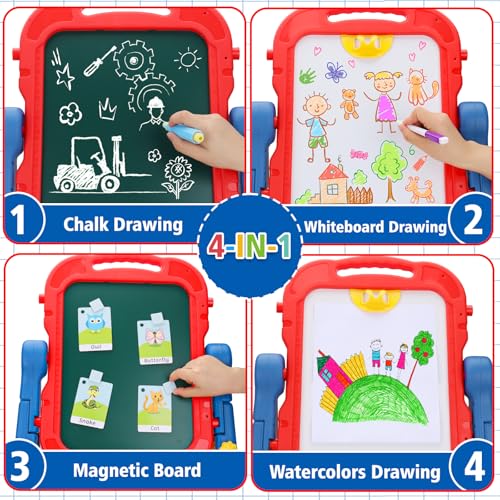
Kids Easel for Toddlers Age 2-4 Art Magnetic White Board & Chalkboard Double Side Adjustable Stand Drawing Writing Learning Educational Toy for 2 3 4 Year Boys Girl Birthday Gifts
- [360ºDouble-Sided Magnetic Art Easel] Our art easel for kids 2-4 is equipped with a magnetic blackboard, a dry
- [Safe & Durable & Portable] Made with high-quality material, high strength, good toughness which can make your
- [Learning & Education Toys Gift For Kids] This kids easels for toddlers art supplies helps children express th
5. Screen Time, Apps, and Digital Learning: The Evidence
The World Health Organization (WHO) recommends zero screen time for children under 2 (except video-calling with family) and no more than one hour of high-quality programming per day for ages 2–4. The AAP aligns closely with this guidance.
The reason isn't moral panic — it's neuroscience. Toddlers learn language and concepts most efficiently through live, contingent interaction. A screen cannot respond to your child's pointing finger, adjust its pace, or follow their gaze. This "video deficit effect" — the well-documented finding that toddlers learn significantly less from screens than from identical content delivered by a person — has been replicated across dozens of studies.
When Digital Tools Can Help
That said, context matters:
6. Nursery and Group Settings: Making the Transition Easier
Starting nursery or a playgroup is often harder for parents than for toddlers — but the transition does require thoughtful preparation on both sides.
Practical Transition Strategies
For settings that use circle time or group learning, the NASHRIO Magnetic Wooden Fishing Game is the kind of low-pressure group activity that supports letter and number recognition through play — ideal for the 2.5–3 year range when many children begin group settings.
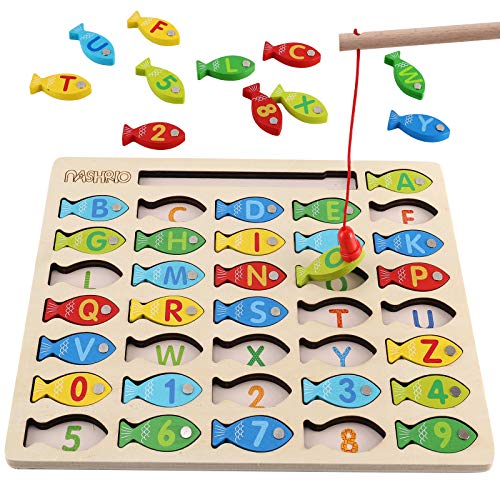


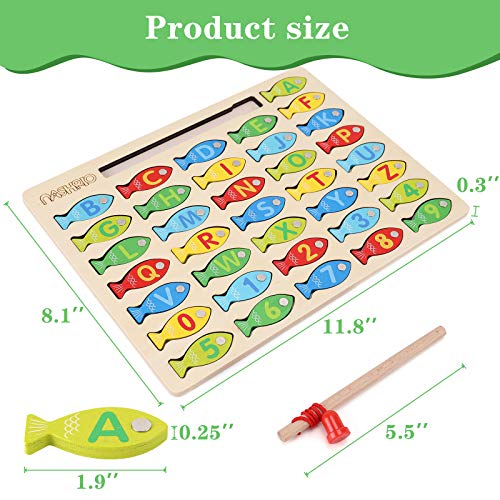
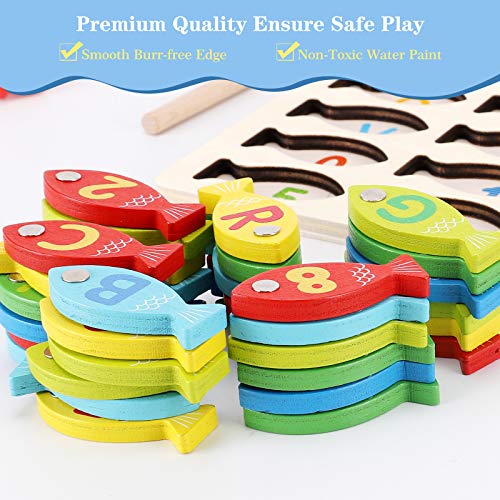
Magnetic Wooden Fishing Game Toy for Toddlers, Alphabet Fish Catching Counting Games Puzzle with Numbers and Letters, Preschool Learning ABC Math Educational Toys 3 4 5 Years Old Girl Boy Kids
- DESIGNED FOR KIDS: Fun never stops with our wooden fishing game! This interactive fishing toy is a great learn
- HOW IT WORKS: Our fishing game puzzle consists of a wooden board with a multitude of colorful fish pieces with
- HIGH STANDARDS: The motor skills toys for toddlers 3-5 are made entirely out of well-polished wood. It feature
7. Comparing Early Education Approaches: A Parent's At-a-Glance Guide
| Approach | Best Age | Core Philosophy | Key Benefits | Potential Drawbacks | Recommended Tool |
|---|---|---|---|---|---|
| Home-based learning | 1–3 yr | Parent as primary educator; play-led | Maximum attachment security; tailored pace | Relies heavily on parent time and knowledge | MUONE Montessori Busy Book |
| Playgroup / parent-child class | 12 mo+ | Social exposure; structured play | Peer interaction; parent community | Inconsistent quality; not always evidence-based | TOY Life Wooden Puzzles |
| Nursery / daycare | 9 mo–3 yr | Key-person model; routine-based | Language exposure; social skills; working parents | Separation stress; variable staff quality | NASHRIO Fishing Game |
| Montessori (0–3) | 18 mo–3 yr | Child-led; prepared environment | Strong executive function outcomes; intrinsic motivation | Cost; quality varies widely by setting | Gserin Bead Sequencing Set |
| Reggio Emilia-inspired | 2–3 yr | Project-based; child as researcher | Creativity; deep inquiry; documentation | Less common; harder to find quality provision | Basytodio Art Easel |
| Structured academic programme | Not recommended under 3 | Direct instruction; rote learning | May suit some children with specific needs | Premature for most; risk of anxiety and disengagement | Airbition Talking Flash Cards |
Expert Insights
Here's the truth that every piece of research in early childhood education circles back to: your toddler doesn't need the most expensive programme, the cleverest app, or the trendiest toy. They need you — your voice, your presence, your delight in their discoveries. The science is unusually unified on this. A parent who talks, reads, plays, and responds is providing a world-class early education.
The years from 1 to 3 pass faster than anyone warns you they will. The best investment you can make isn't a curriculum — it's showing up curious and present, every ordinary day.
Save this guide, share it with your parenting village, and come back to tinymindsworld.com for more evidence-based support at every stage.
Sources & References
- American Academy of Pediatrics. "The Power of Play: A Pediatric Role in Enhancing Development in Young Children." Pediatrics, 2018. https://doi.org/10.1542/peds.2018-2058
- Centers for Disease Control and Prevention. "Early Brain Development and Health." CDC.gov, 2023. https://www.cdc.gov/ncbddd/childdevelopment/early-brain-development.html
- World Health Organization, UNICEF, World Bank Group. "Nurturing Care for Early Childhood Development: A Framework for Helping Children Survive and Thrive to Transform Health and Human Potential." WHO, 2018. https://www.who.int/publications/i/item/9789241514064
- Lillard, A.S., et al. "Montessori Preschool Elevates and Equalizes Child Outcomes: A Longitudinal Study." Frontiers in Psychology, 2017. https://doi.org/10.3389/fpsyg.2017.01783
- Hart, B., & Risley, T.R. Meaningful Differences in the Everyday Experience of Young American Children. Paul H. Brookes Publishing, 1995.
- Harvard University Center on the Developing Child. "Serve and Return Interaction Shapes Brain Circuitry." developingchild.harvard.edu, 2023. https://developingchild.harvard.edu/science/key-concepts/serve-and-return/
- National Association for the Education of Young Children (NAEYC). "NAEYC Early Learning Program Accreditation Standards and Assessment Items." NAEYC.org, 2018. https://www.naeyc.org/accreditation/early-learning
- UK Department for Education. "Statutory Framework for the Early Years Foundation Stage (EYFS)." Gov.uk, 2024. https://www.gov.uk/government/publications/early-years-foundation-stage-framework
- Shonkoff, J.P., & Phillips, D.A. (Eds.). From Neurons to Neighborhoods: The Science of Early Childhood Development. National Academies Press, 2000.
- Royal College of Paediatrics and Child Health. "The Health of Children and Young People in the UK." RCPCH.ac.uk, 2023. https://www.rcpch.ac.uk
Frequently Asked Questions
At what age should my toddler start nursery or preschool?
My 2-year-old isn't talking much. Should I be worried?
Is Montessori actually better than conventional nursery?
How much structured learning should I do at home with my toddler?
Are wooden toys really better than plastic ones?
Should I be teaching my toddler letters and numbers?
What's the best thing I can do for my toddler's education right now?
Was this helpful?
Thanks — your feedback helps us pick what to write next.