Convertible vs. Combination vs. All-in-One: Which Seat Type Fits Your Family?
The best convertible and combination car seats for 2026 grow with your toddler through multiple stages — saving money, reducing transitions, and keeping your child safer for longer.
In this article
Here's a number that tends to land hard: according to the National Highway Traffic Safety Administration (NHTSA), nearly 46% of car seats are installed or used incorrectly — and one of the most common mistakes is transitioning a child out of a rear-facing or harnessed seat too soon, often because parents feel they've "outgrown" it. The real culprit? Seats that don't grow with the child, pushing families through expensive, confusing upgrades every 18 months.
The good news for 2026 is that the market has genuinely caught up with what parents need. Today's convertible and combination booster seats are engineered to span the full toddler journey — and well beyond — without sacrificing safety or your sanity at installation time.
What you'll understand after reading this guide:
1. Convertible vs. Combination vs. All-in-One: Which Seat Type Fits Your Family?
Choosing the right category of seat matters more than any individual feature. These three terms are used interchangeably in marketing, but they describe genuinely different products with different timelines.
True Convertible Seats
A convertible seat starts rear-facing and flips to forward-facing with a harness. Most cover roughly 5–65 lbs. They're ideal if your child is still in the rear-facing stage or you're buying ahead of a newborn. The Graco Extend2Fit 3-in-1 goes further, adding a high-back booster mode (up to 100 lbs), so it bridges the gap toward the combination category.Combination (Harness-to-Booster) Seats
These begin forward-facing with a 5-point harness and convert to a belt-positioning booster. They typically cover 22–110 lbs. If your toddler has already cleared the rear-facing limits on their infant seat, a combination seat is a natural next step.All-in-One Seats
The most versatile — and usually the best long-term value. The Graco Grows4Me 4-in-1 and Joie Saffron SI 4-in-1 both span rear-facing infant use through backless booster, covering up to 10 years in a single purchase.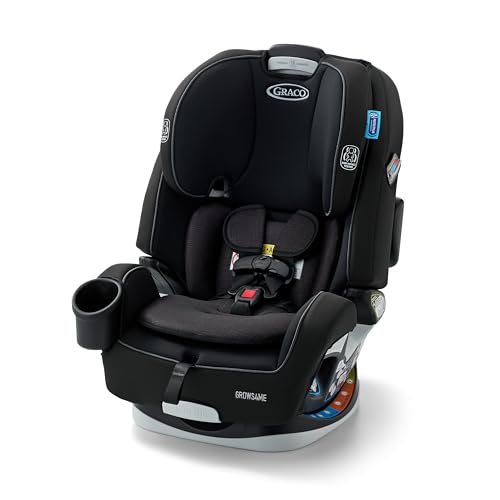
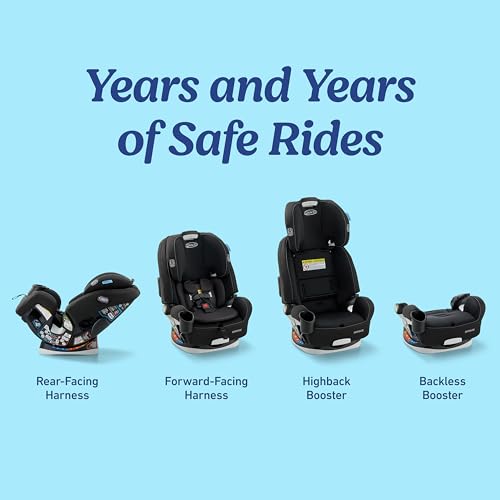
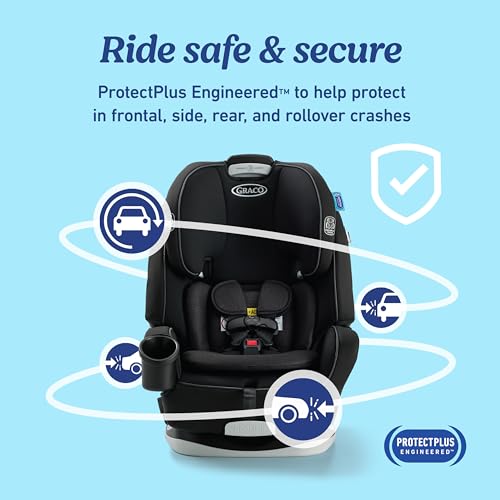

Graco Grows4Me 4-in-1 Convertible Car Seat, 10 Years of Use - Infant Car Seat to Toddler, 4 Stages of Use - Rear Facing, Forward Facing, High Back Booster, Backless Booster Seat, West Point Design
- 4-in-1 seat gives you 10 years of use--it seamlessly transforms from rear-facing harness (5-40 lb), to forward
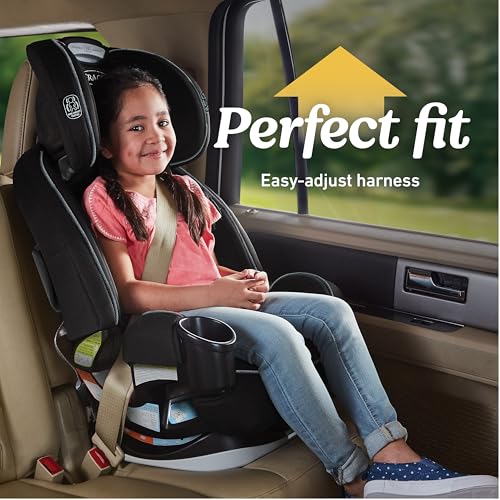
- Simply Safe Adjust Harness System adjusts the height of your harness and headrest, in one motion, to ensure th
- Graco ProtectPlus Engineered: a combination of the most rigorous crash tests that helps to protect your child
2. What 2026 Safety Standards Actually Changed (and Why Toddler Parents Should Care)
The headline update for 2026 is the wider adoption of FMVSS 213a, the updated US federal motor vehicle safety standard that introduced more rigorous side-impact testing requirements. Previously, side-impact protection was largely voluntary. Now, manufacturers are engineering seats to absorb and redirect lateral crash forces in a way the older standard simply didn't require.
Children are best protected when they remain rear-facing as long as possible, until they reach the highest weight or height allowed by their car seat's manufacturer.
— American Academy of Pediatrics (AAP), 2023 Car Safety Seats Policy Statement
What this means practically for toddler parents:
The Joie Saffron SI 4-in-1 is certified to the newest side-impact protection standards, and the Graco TriRide 3-in-1 carries ProtectPlus engineering across all its modes. These aren't marketing claims — they reflect real changes in how crash energy is managed around a small child's head and torso.
3. Top Picks for Toddlers: Seats Ranked by Longevity and Real-World Usability
The best seat is the one installed correctly, used consistently, and sized appropriately for your child right now. Here's how the top 2026 options stack up for toddler-stage families.
Best Overall Value: Graco TriRide 3-in-1
At $199.99 with over 8,000 reviews averaging 4.7 stars, the Graco TriRide 3-in-1 is the seat most families will find hardest to fault. It covers rear-facing (5–40 lbs), forward-facing harness (26.5–65 lbs), and high-back booster (40–100 lbs). The No-Rethread Simply Safe Adjust system means you adjust the headrest and harness together in one motion — a genuinely useful feature when your toddler grows three inches overnight.
Best for Maximum Longevity: Graco Grows4Me 4-in-1
If you want to buy once and be done, the Graco Grows4Me 4-in-1 is the answer. Four stages, 10 years of use, backless booster mode up to 120 lbs. The Simply Safe Adjust harness system and ProtectPlus engineering make it the most complete safety package in the lineup.
Best for Budget-Conscious Families: Safety 1st Grow and Go
The Safety 1st Grow and Go All-in-One at $159.99 is the highest-reviewed seat in this guide by volume — over 34,000 reviews at 4.7 stars. Three stages (rear-facing to 40 lbs, forward-facing to 65 lbs, booster to 100 lbs), a washer-dryer-safe seat pad, and dishwasher-safe cupholders. For families prioritising value without cutting safety corners, this is the standout pick.
Best for Extended Rear-Facing: Graco Extend2Fit 3-in-1
The Graco Extend2Fit 3-in-1 earns its name with a 4-position adjustable extension panel that adds up to 5 inches of legroom — the most common reason parents feel pressured to flip their toddler forward-facing before the seat's weight limit is reached. Rear-facing to 50 lbs is exceptional, and it continues through to a 100-lb high-back booster.
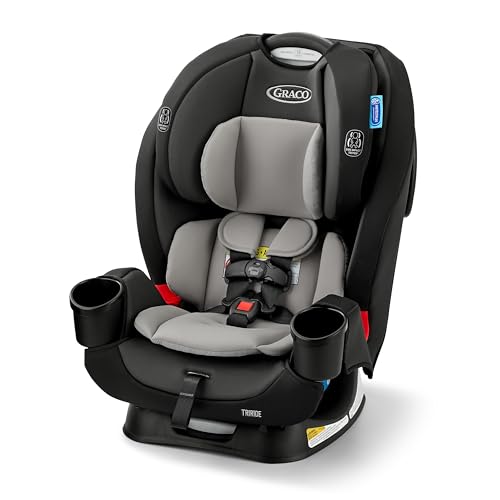
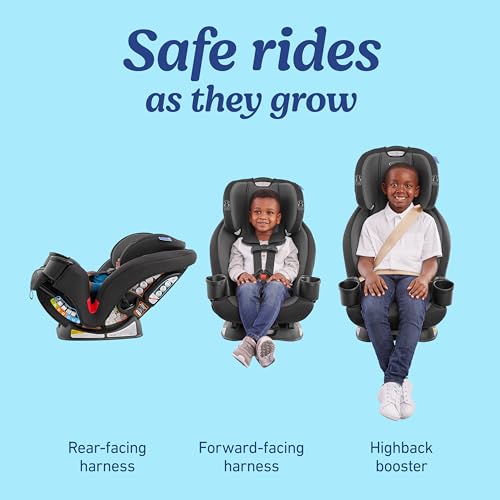
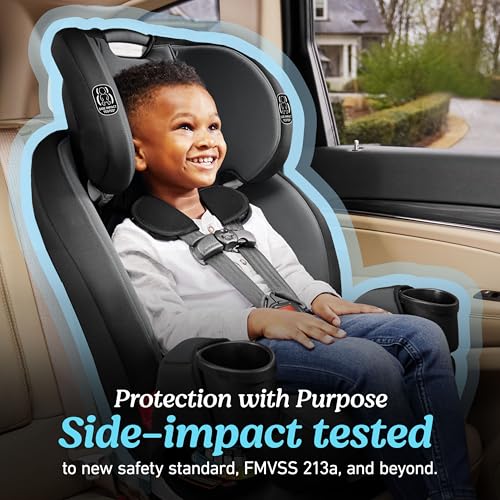
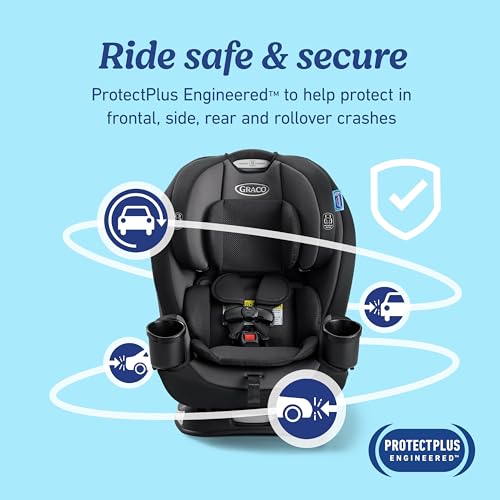
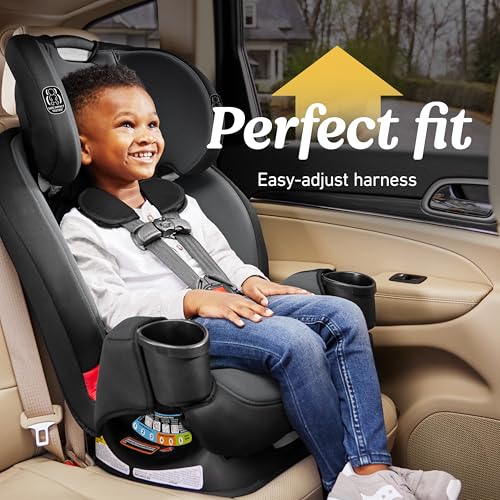
Graco® TriRide 3-in-1 Convertible Car Seat - Highback Booster, Forward & Rear Facing Modes, Suitable from Newborn to Preschooler, Perfect for Long Journeys in Redmond Color
- 3-in-1 car seat grows with your child from rear-facing harness (5-40 lb) to forward-facing harness (26.5-65 lb
- Graco ProtectPlus Engineered to the newest testing standards for side impact and beyond—because the safety of
- No-Rethread Simply Safe Adjust Harness System allows the headrest and harness to adjust together in one motion
4. The Multi-Child Problem: Fitting Two or Three Seats Across the Back Seat
This is the question that doesn't get enough airtime: can you actually fit multiple car seats in your vehicle? For families with a toddler plus a newborn, or toddler twins, seat width is as important as any safety rating.
The Safety 1st Grow and Go and Joie Saffron SI 4-in-1 both feature slimmer profiles that help with multi-seat configurations. The general rule from Safe Kids Worldwide is that seats under 19 inches wide give you the best chance of a three-across fit in a standard SUV or minivan.

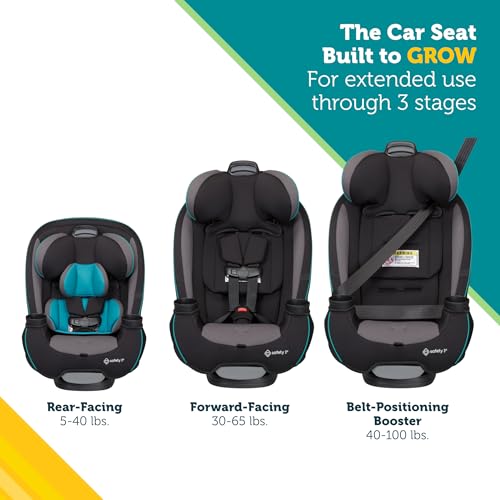
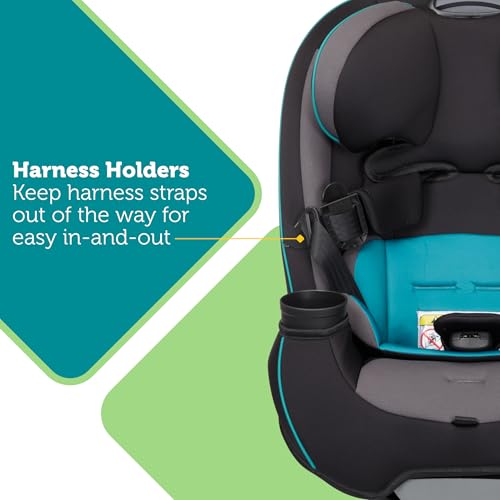
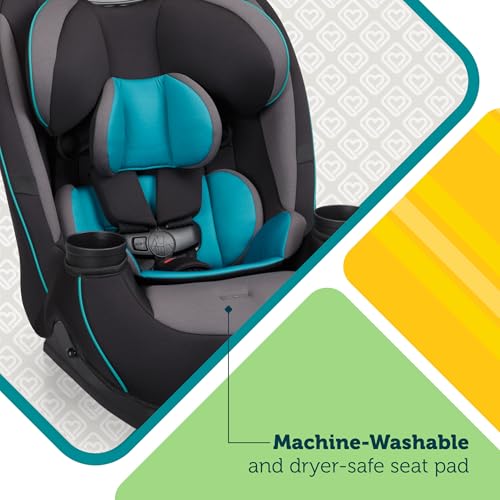

Safety 1st Grow and Go All-in-One Slim Convertible Car Seat, Rear Facing, 5-40 lbs, Forward Facing (30–65 lbs), High Back Booster Seat 40-100 pounds, Alaskan Blue
- GROW WITH ME CAR SEAT The Safety 1st Grow and Go All-in-One Convertible Car Seat is a car seat for extended us
- GETTING A GOOD FIT IS QUICK AND EASY The Grow and Go All-in-One Convertible Car Seat with QuickFit harness sim
- SIMPLE TO CLEAN The washer-and-dryer-safe seat pad features snaps that make it easy to remove from the convert
5. The Real Cost of Getting This Right: Long-Term Value Analysis
Families who buy a separate infant seat, then a convertible, then a booster can easily spend $600–$900+ across three purchases over eight years. A single all-in-one seat at $230–$270 changes that equation dramatically.
| Seat Type | Stages Covered | Weight Range | Approx. Years of Use | Recommended Product | Price |
|---|---|---|---|---|---|
| Infant seat only | Rear-facing | 4–35 lbs | 1–2 years | Joie Rue Infant Seat | $169.99 |
| 3-in-1 Convertible | RF → FF → High-back booster | 5–100 lbs | 6–8 years | Graco TriRide 3-in-1 | $199.99 |
| 3-in-1 Extended RF | RF (extended) → FF → High-back booster | 4–100 lbs | 7–8 years | Graco Extend2Fit 3-in-1 | $269.99 |
| 4-in-1 All-in-One | RF → FF → High-back → Backless booster | 4–120 lbs | 10 years | Joie Saffron SI 4-in-1 | $249.99 |
| 4-in-1 Budget All-in-One | RF → FF → High-back → Backless booster | 5–120 lbs | 10 years | Graco Grows4Me 4-in-1 | $229.99 |
| 3-in-1 Value Pick | RF → FF → High-back booster | 5–100 lbs | 6–8 years | Safety 1st Grow and Go | $159.99 |
The math is straightforward: a $230 all-in-one versus three separate seats at an average of $150–$200 each saves $220–$370 — and eliminates two installation headaches, two learning curves, and two opportunities for user error.
6. Installation Done Right: The Details That Actually Keep Your Toddler Safe
A $300 seat installed incorrectly is less safe than a $160 seat installed perfectly. The NHTSA's 46% misuse statistic is sobering — and the most common errors are entirely preventable.
The Two-Finger Harness Check
After buckling your toddler in, try to slide two fingers under the harness at the collarbone. If you can fit more than two fingers, the harness is too loose. If you can't fit one, it's too tight. This single check catches the most common harness error.The Inch Test
Grab the seat at the belt path and try to move it side to side and front to back. More than one inch of movement in any direction means the installation needs to be redone — either via LATCH or seat belt, not both simultaneously (unless the manufacturer explicitly permits it).Rear-Facing Recline Angle
For toddlers still rear-facing, the seat must be reclined at the angle specified by the manufacturer — typically indicated by a built-in level indicator. A seat that's too upright can cause a toddler's head to fall forward, compromising their airway in a crash.
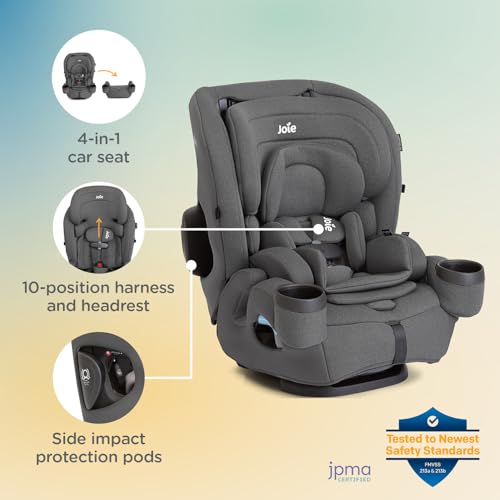
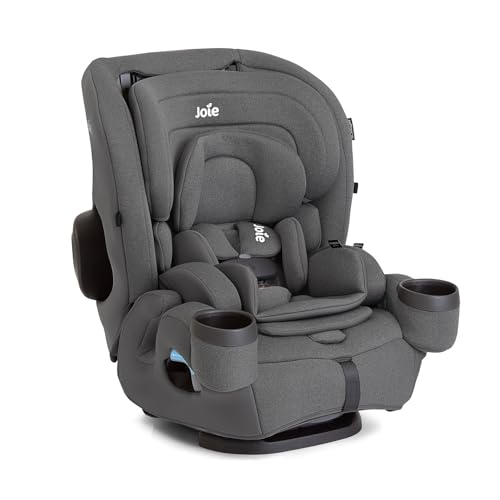
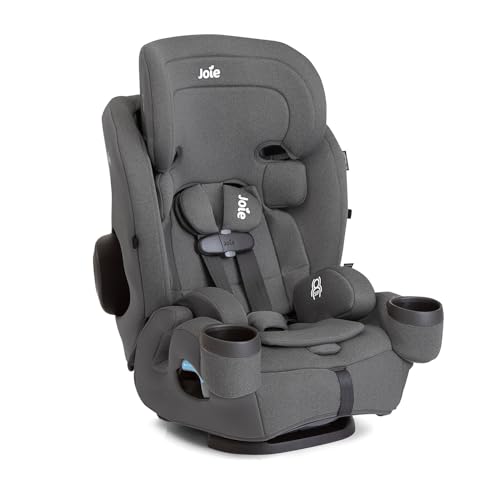
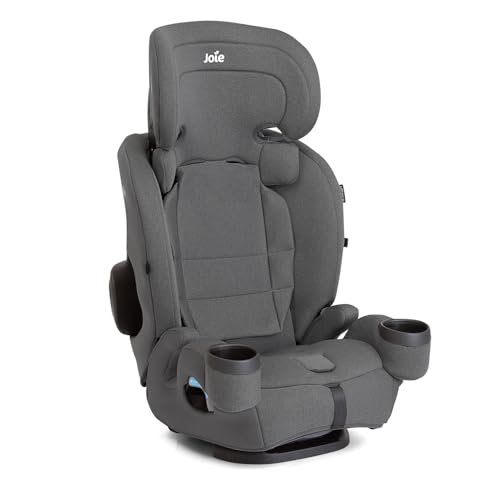
Joie Saffron SI 4-in-1 Car Seat – Car Seat for Infants to Toddlers to Big Kids - 4 Modes, 10-Position No-Rethread Headrest & Harness (Thunder)
- 4-in-1 Car Seat for Long-Term Use: The joie saffron SI 4-in-1 Car Seat grows with your child, transitioning fr
- Tested to the newest safety standards: Certified with the newest side impact protection standards to absorb an
- 10-Position No-Rethread Headrest & Harness: With the GrowTogether no-rethread headrest and harness you can adj
Expert Insights
Choosing a car seat is one of the few parenting decisions where the stakes are genuinely non-negotiable — and also one where a little research pays off enormously. The good news is that 2026's best seats are better engineered, easier to install correctly, and longer-lasting than anything available even five years ago. Whether you go with the budget-friendly Safety 1st Grow and Go, the extended rear-facing power of the Graco Extend2Fit, or the full decade of use promised by the Graco Grows4Me, the right seat is the one that fits your child today, installs correctly in your vehicle, and keeps them safely harnessed for every trip ahead.
The safest car seat is the one your child is in correctly, every single time.
If this guide helped you narrow down your choice, save it to your parenting folder and share it with a fellow parent navigating the same decision — it might be the most useful thing you pass along this year.
Sources & References
- American Academy of Pediatrics. "Car Safety Seats: Information for Families." HealthyChildren.org, 2023. https://www.healthychildren.org/English/safety-prevention/on-the-go/Pages/Car-Safety-Seats-Information-for-Families.aspx
- National Highway Traffic Safety Administration (NHTSA). "Child Passenger Safety." 2024. https://www.nhtsa.gov/campaign/car-seats
- National Highway Traffic Safety Administration (NHTSA). "Car Seat Misuse Rates." Traffic Safety Facts Research Note. 2023.
- American Academy of Pediatrics. "AAP Updates Recommendations on Car Seats for Children." Policy Statement, 2023. https://publications.aap.org/pediatrics
- Safe Kids Worldwide. "Car Seat Safety Tips." 2024. https://www.safekids.org/car-seat-safety
- National Highway Traffic Safety Administration. "Federal Motor Vehicle Safety Standard 213a (FMVSS 213a)." 2024. https://www.nhtsa.gov/laws-regulations/fmvss
- Benjamin Hoffman, MD. Chair, AAP Council on Injury, Violence and Poison Prevention. Public statements and AAP policy guidance, 2022–2023.
Frequently Asked Questions
When should I switch my toddler from rear-facing to forward-facing?
Is a 4-in-1 seat always better than a 3-in-1?
Can I use the same car seat in two different cars?
How do I know if my car seat has been recalled?
Is the LATCH system safer than using the seat belt?
What does "no-rethread harness" mean and why does it matter?
At what age can my child use a backless booster?
Was this helpful?
Thanks — your feedback helps us pick what to write next.