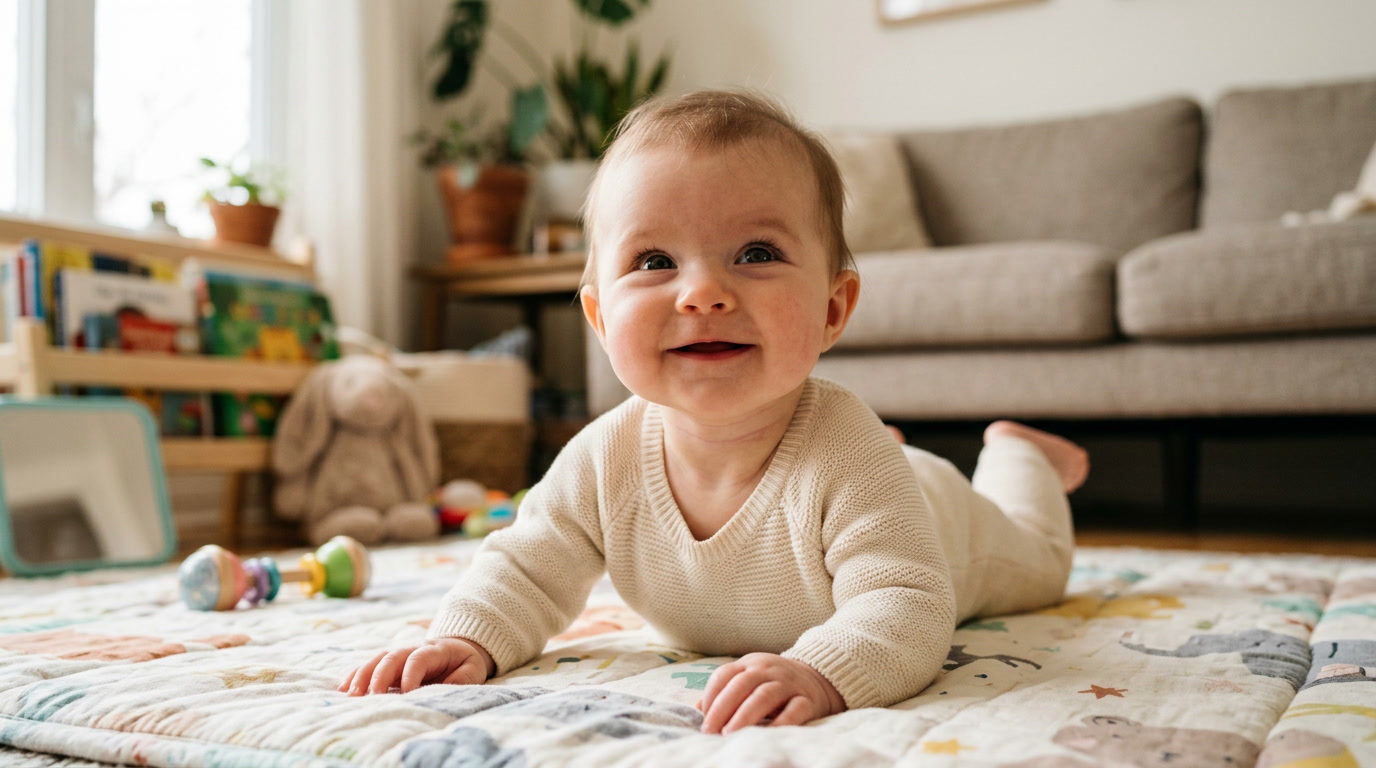
9 Months to 1 Year: Your Baby's Development Milestones Explained
Between 9 and 12 months, your baby progresses through some of the fastest developmental changes of their entire childhood, spanning mobility, language, cognition, and emotional bonding.
In this article
Your baby's first year is, biologically speaking, the most compressed period of brain growth a human being will ever experience. According to the CDC's "Learn the Signs. Act Early." programme, the brain doubles in size during the first year of life, with 1 million new neural connections forming every single second in early infancy. By the time you're blowing out that first birthday candle, you are looking at a child who communicates with intention, understands basic instructions, recognises familiar faces across a crowded room, and may already be taking their first steps.
This guide walks you through everything that happens between 9 and 12 months across five developmental domains, what to watch for, when to seek guidance, and how to make the most of this extraordinary window.
After reading this guide, you'll understand:
1. Physical Development: From Crawler to Cruiser
Your baby's body is building the strength and coordination to move independently, and the 9 to 12-month window is when most of that groundwork pays off visibly.
Mobility milestones
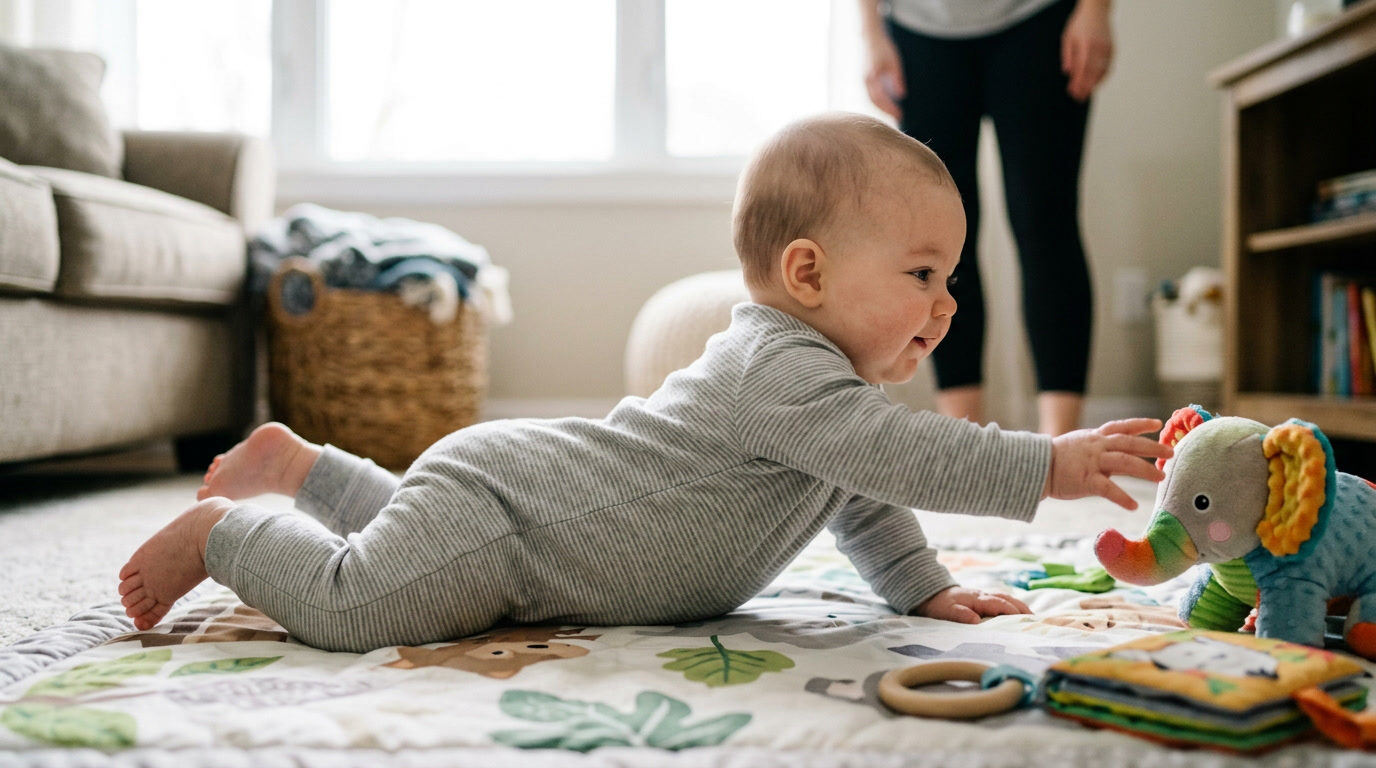
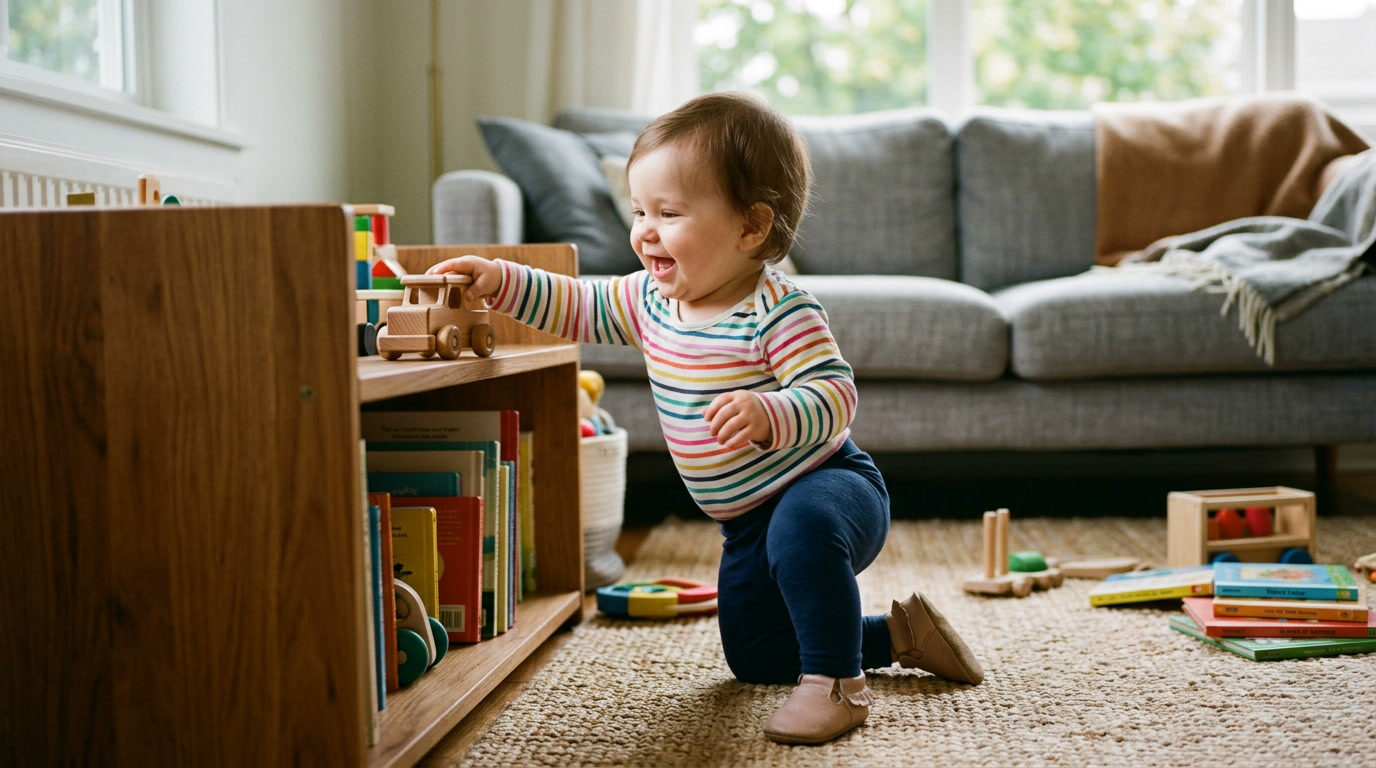
By 9 months, the majority of babies are crawling in some form (belly crawl, classic hands-and-knees, or even a bottom shuffle). Pulling up to a standing position typically follows shortly after, and "cruising" (walking while holding onto furniture) usually appears between 9 and 12 months. The American Academy of Pediatrics (AAP) notes that independent walking can emerge any time between 9 and 18 months, so a baby who is not walking at 12 months is not automatically behind.
Fine motor milestones
Hand skills leap forward between 9 and 12 months. Look for:
Understanding how physical development progresses from first steps to full sprints can help you keep a realistic perspective on the wide range of "normal" timing.
2. Cognitive Development: The World Is Starting to Make Sense
Between 9 and 12 months, your baby shifts from reacting to the world to actively reasoning about it.
Object permanence
Before roughly 8 to 9 months, "out of sight" quite literally means "out of mind." After that, your baby will search for a toy you've hidden under a cloth, a skill Piagetian developmental theory labels as the emergence of object permanence. This is foundational to memory, problem-solving, and eventually language comprehension.
Cause and effect
Watch your baby drop a spoon from a high chair, look at you, and drop it again. This is not mischief; it is science. Cause-and-effect understanding is one of the building blocks of later mathematical and logical thinking. Classic games like peekaboo reinforce this same principle in a socially rich way.
Imitation and instruction
By 10 to 11 months, most babies begin copying simple gestures and actions (clapping, waving, blowing kisses). By 12 months, they can follow simple one-step instructions when paired with a gesture ("give me the cup"). Understanding early cognitive development and how the brain's blueprint forms helps explain why these leaps feel so sudden.
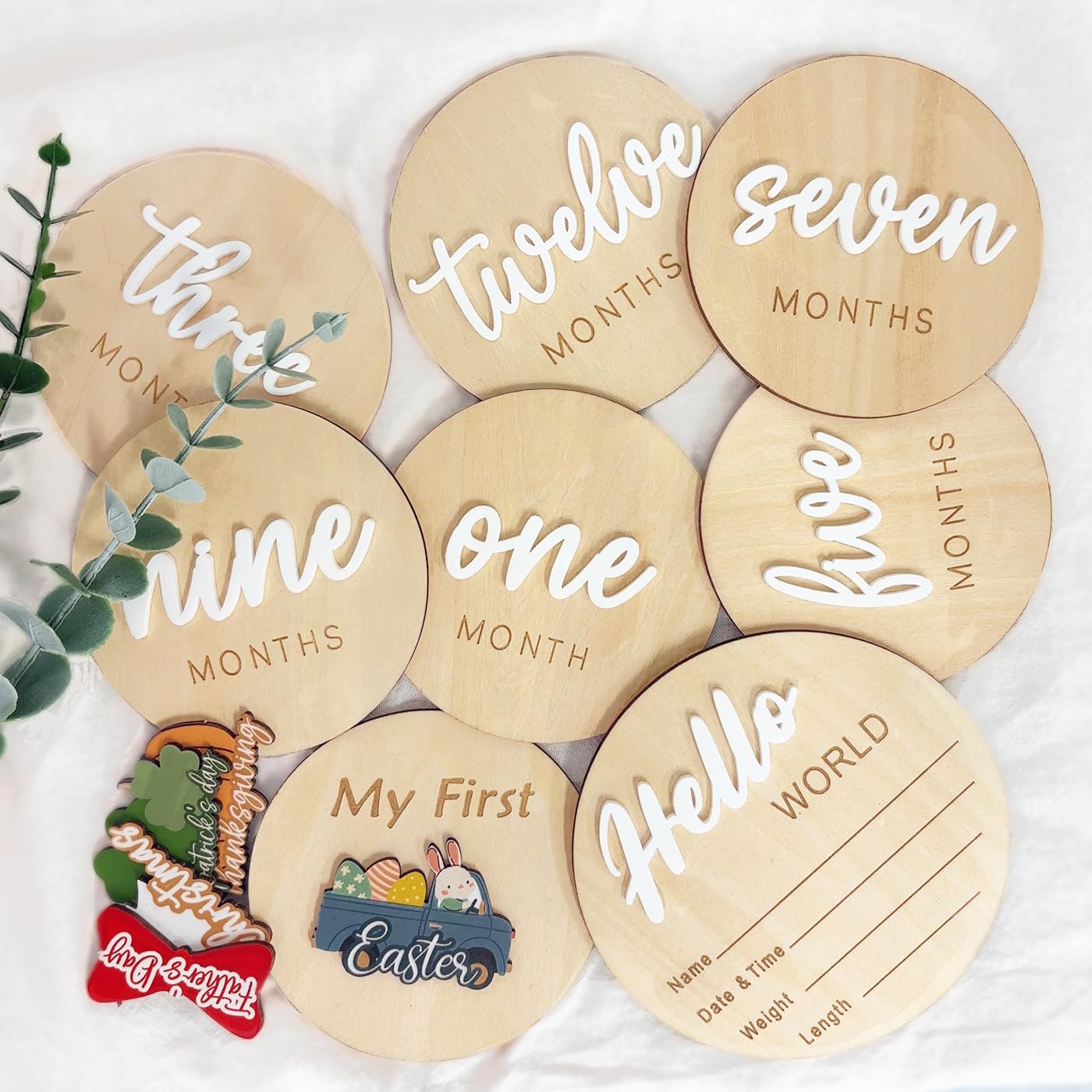
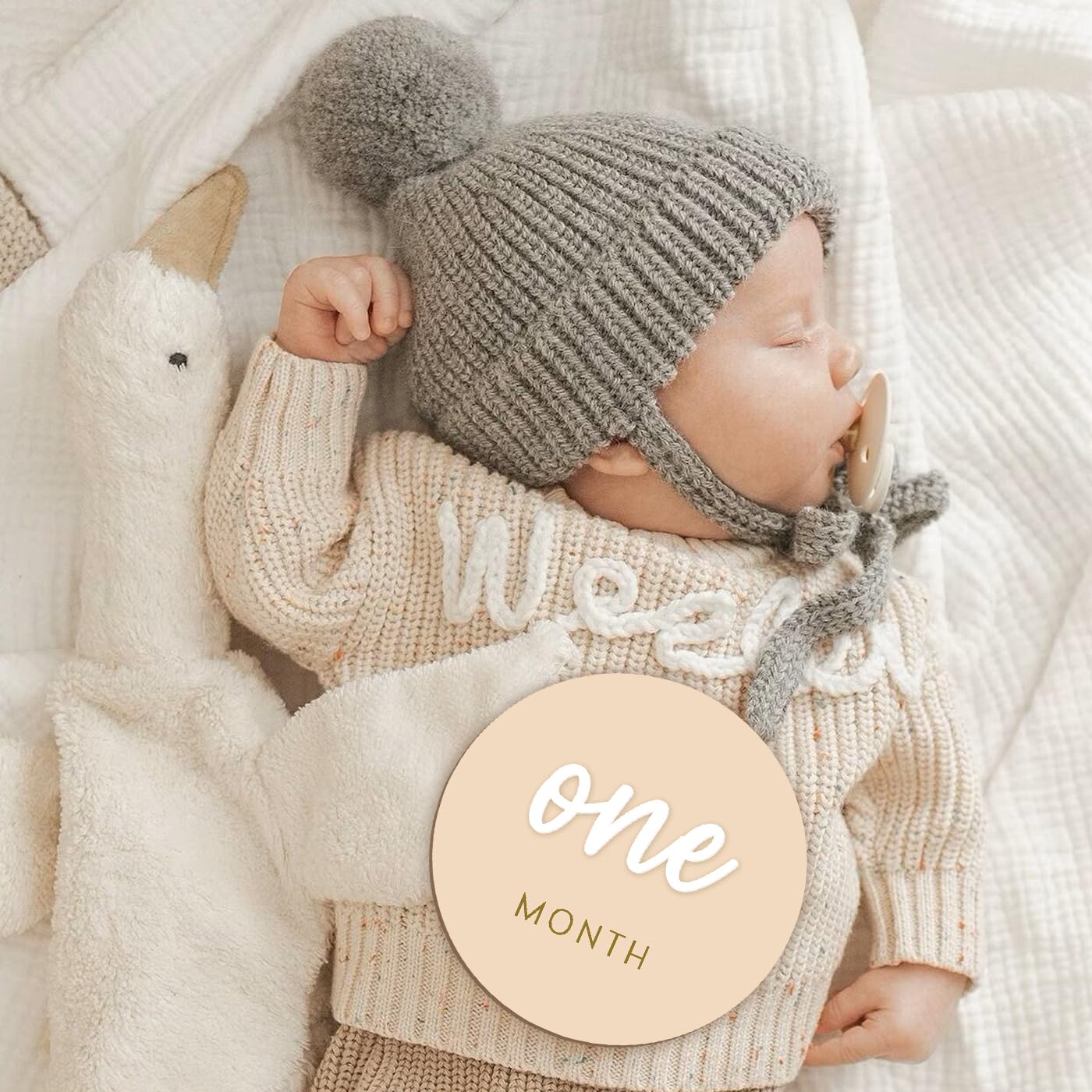
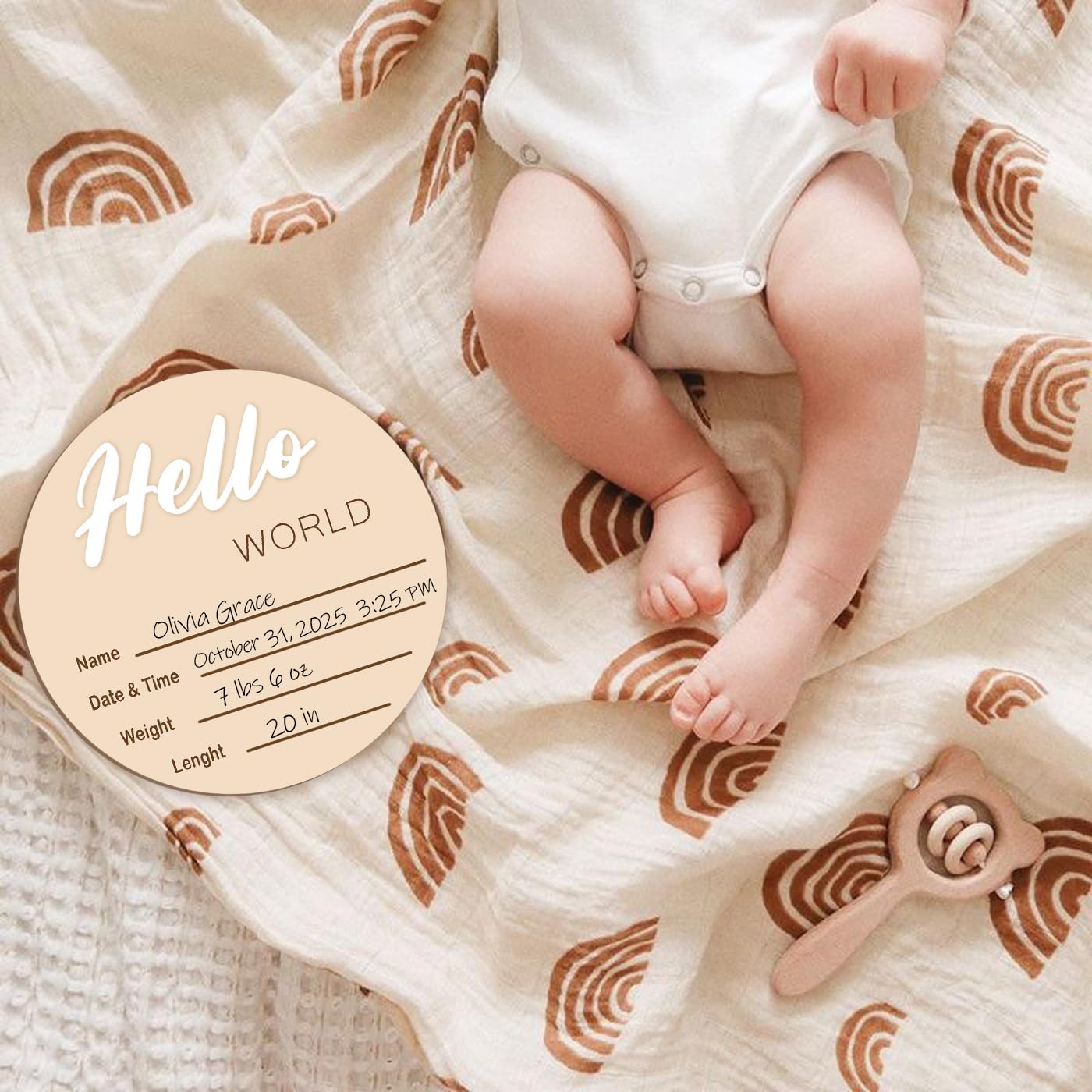
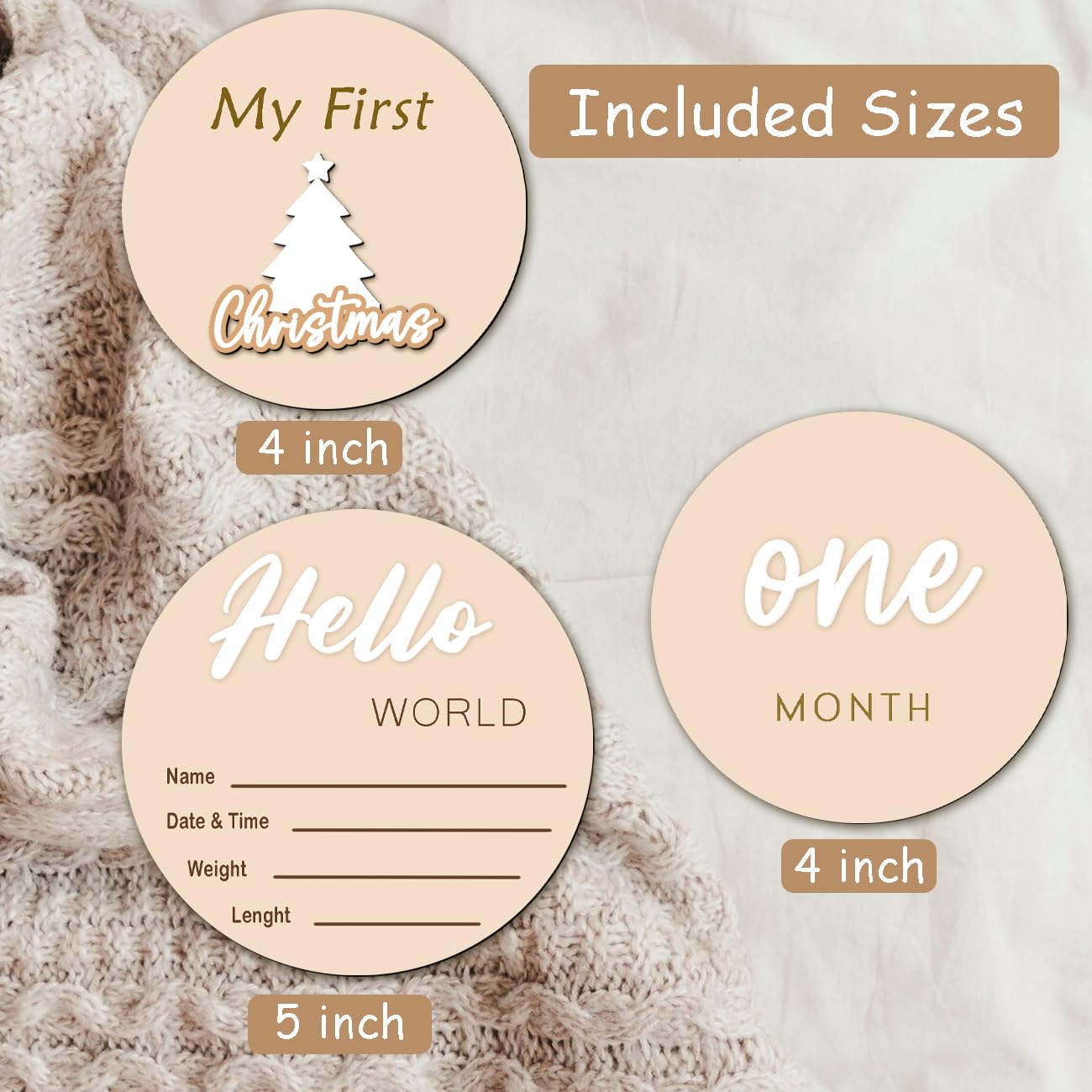
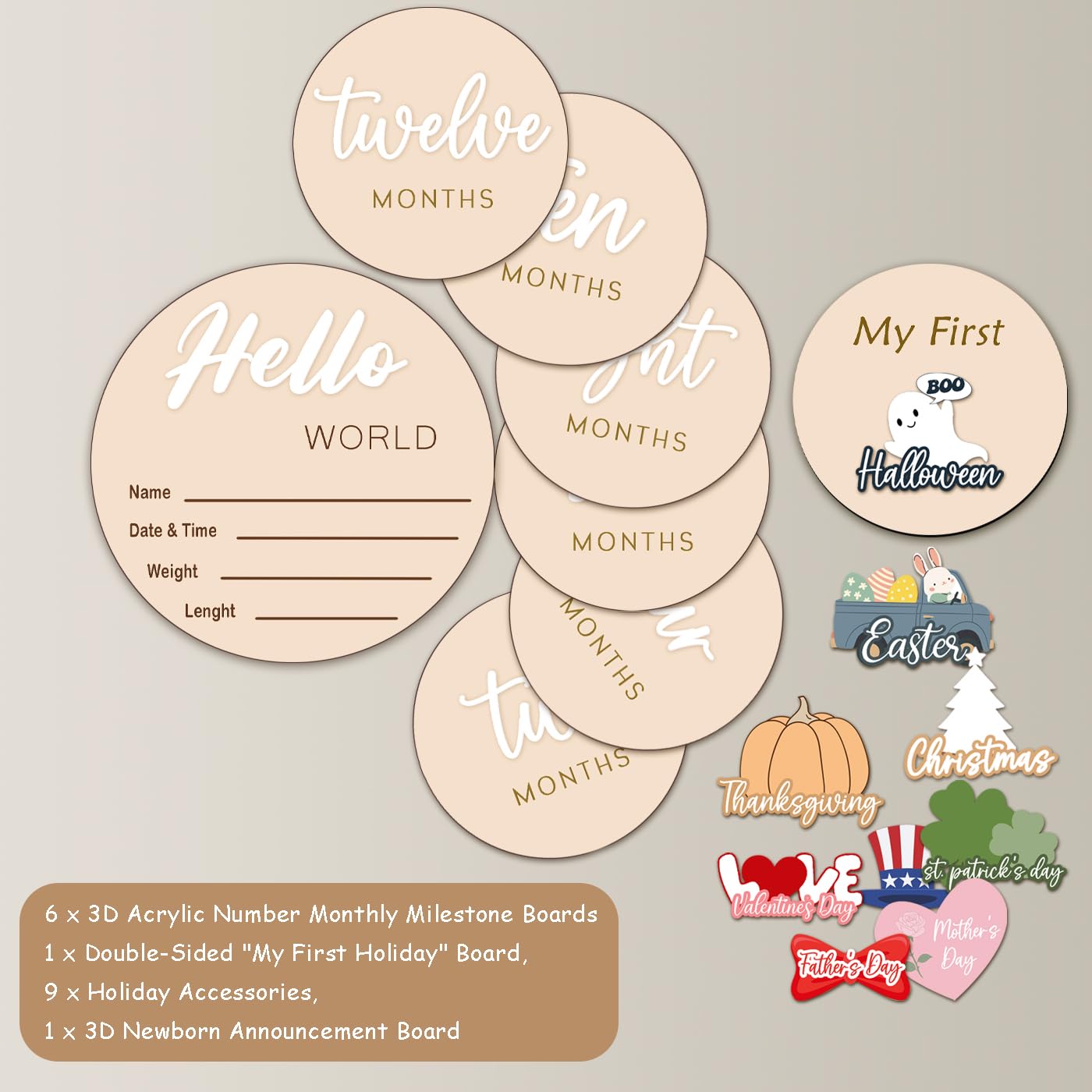
Monthly Baby Milestone Maker Discs, Baby Milestone Signs for Newborn Baby, Hello World Newborn Sign for Baby Girl & Boy, Baby Announcement Sign for 1-12 Month, Milestone Wooden Circles (White)
- 【Track Baby’s Growth with Milestone Boards】 This set includes a double-sided wooden board to record milestones
- 【Capture Baby's First Holidays 】 Includes a "My First Holiday" board with 9 festive milestone stickers to docu
- 【Premium Quality & Safe Materials】 Made from high-quality, eco-friendly wood, this milestone set is safe for b
3. Speech and Language: First Words Are Just the Beginning
Most babies say their first recognisable words somewhere between 10 and 14 months, but receptive language (what your baby understands) races ahead of expressive language (what they can say) by several months.
What to expect
By 9 months:
By 12 months:
How to support language growth
The single most evidence-supported strategy is narrated conversation: describing what you're doing, naming objects as you interact with them, and responding to your baby's babbles as though they are words. The AAP calls this "serve and return" interaction, and it builds neural pathways more effectively than any screen or audio programme.
4. Emotional and Social Development: Attachment in Full Bloom
Separation anxiety, stranger wariness, and increasingly deliberate bids for your attention are not phases to manage. They are signs that your baby's attachment system is working exactly as nature intended.
Separation anxiety peaks around 9 to 10 months
Before 6 to 7 months, babies lack the cognitive ability to hold a mental image of you when you leave the room. Object permanence, discussed in Section 2, changes that. Now your baby knows you exist somewhere beyond that closed door, and they have no sense yet of when you'll return. Brief, predictable goodbyes (always say goodbye, do not sneak away) and consistent caregiving routines ease this significantly over time.
Social milestones to watch for
When to raise a concern
- Little or no interest in social interaction with familiar people - No eye contact or joint attention by 12 months - Does not smile spontaneously or in response to caregiver smiles

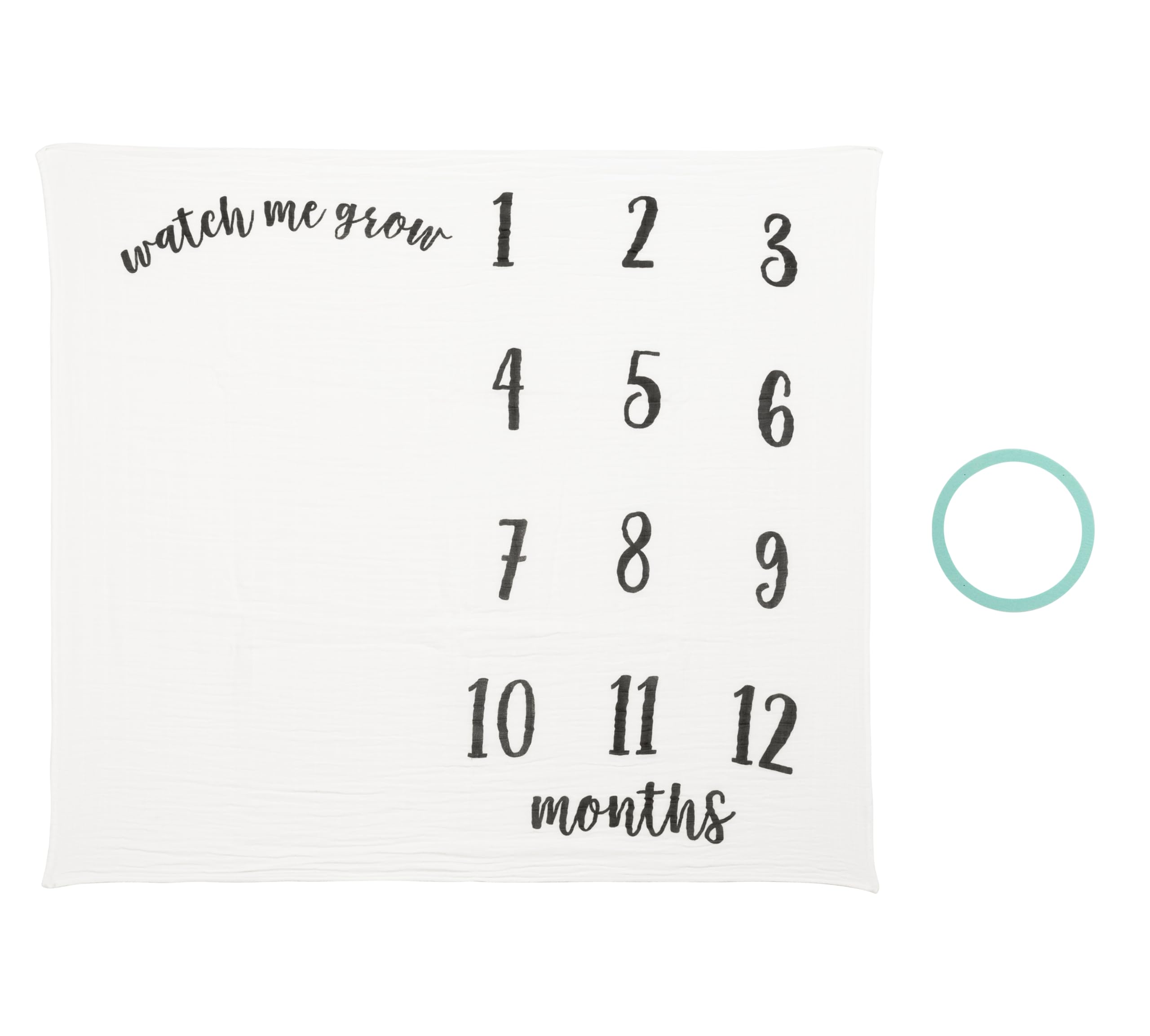
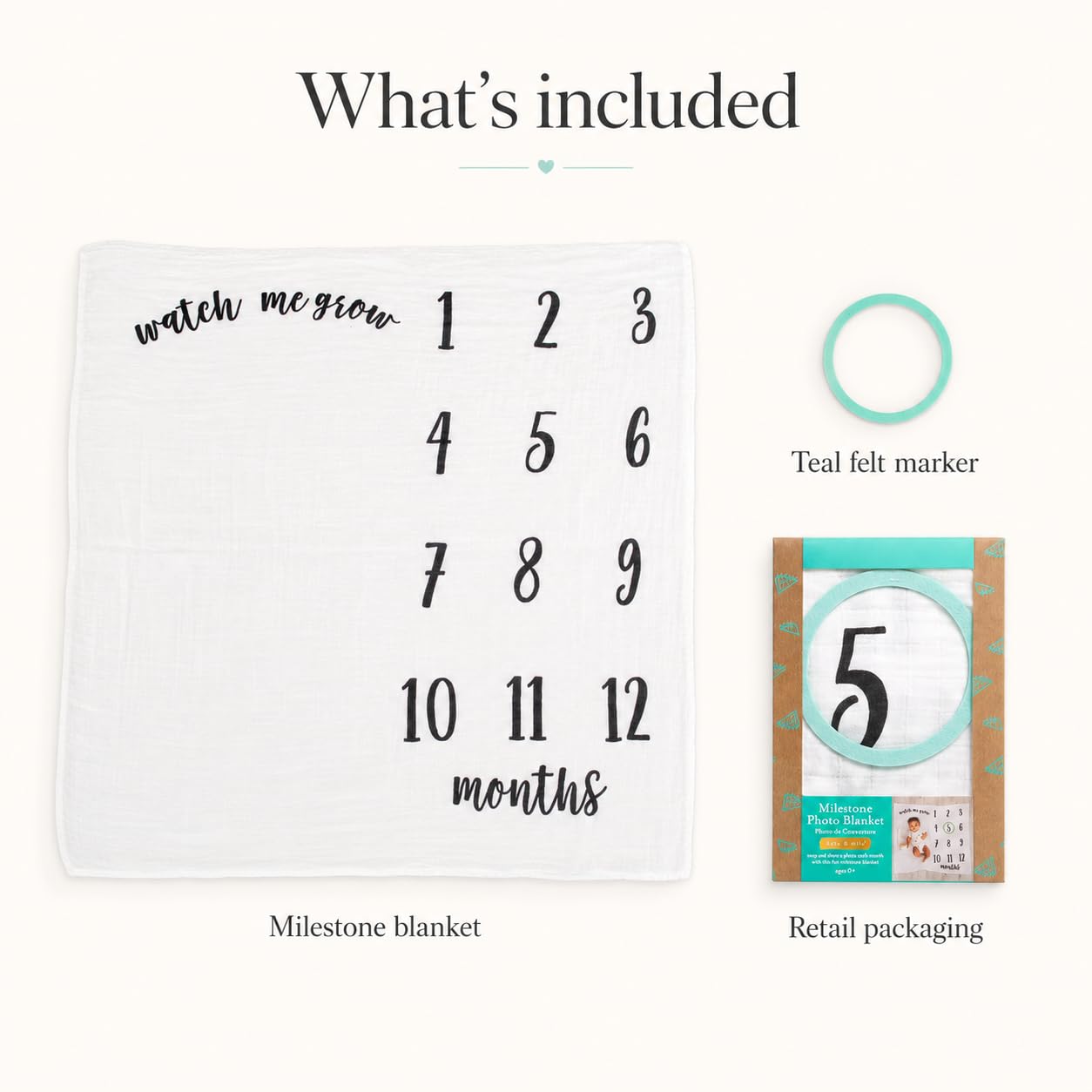
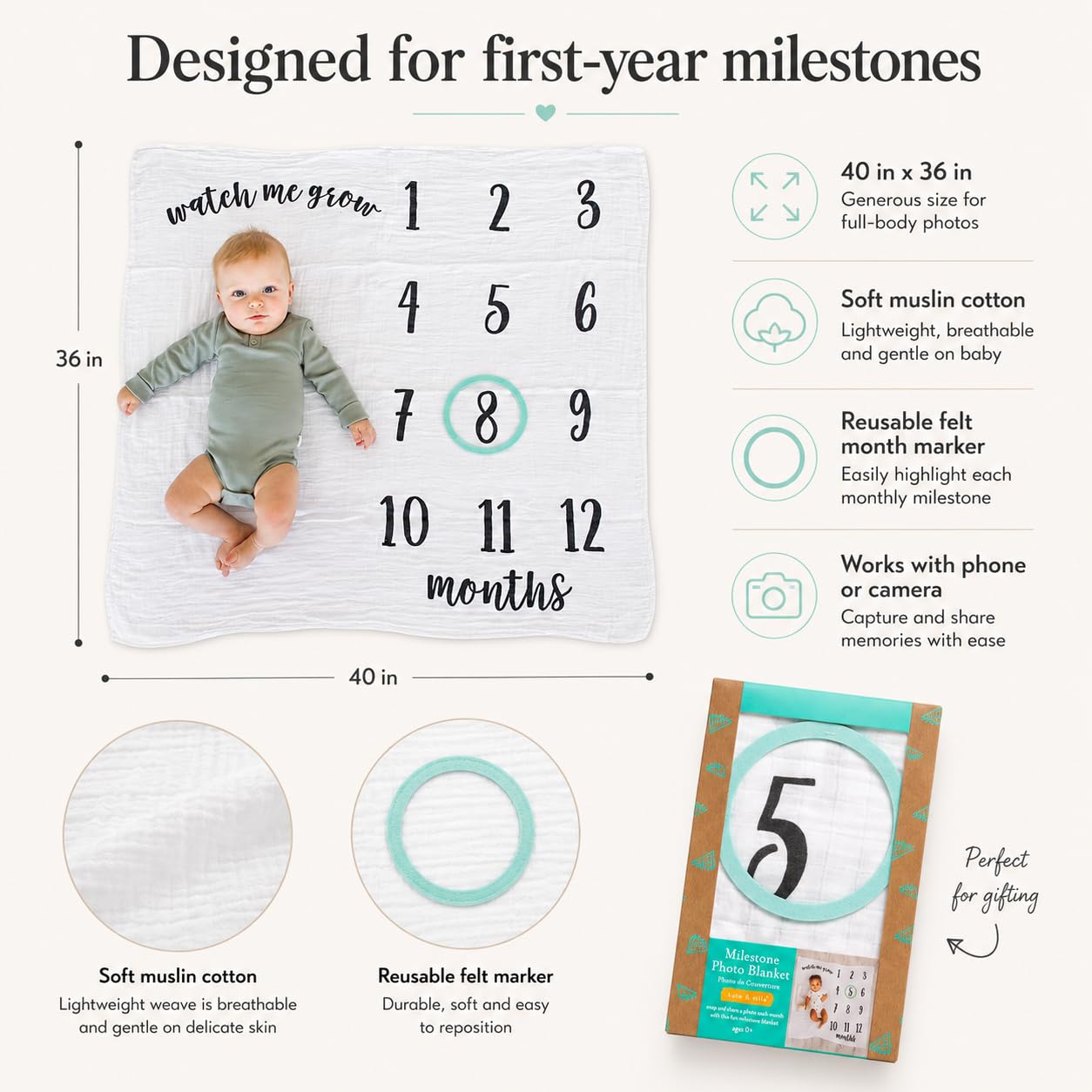
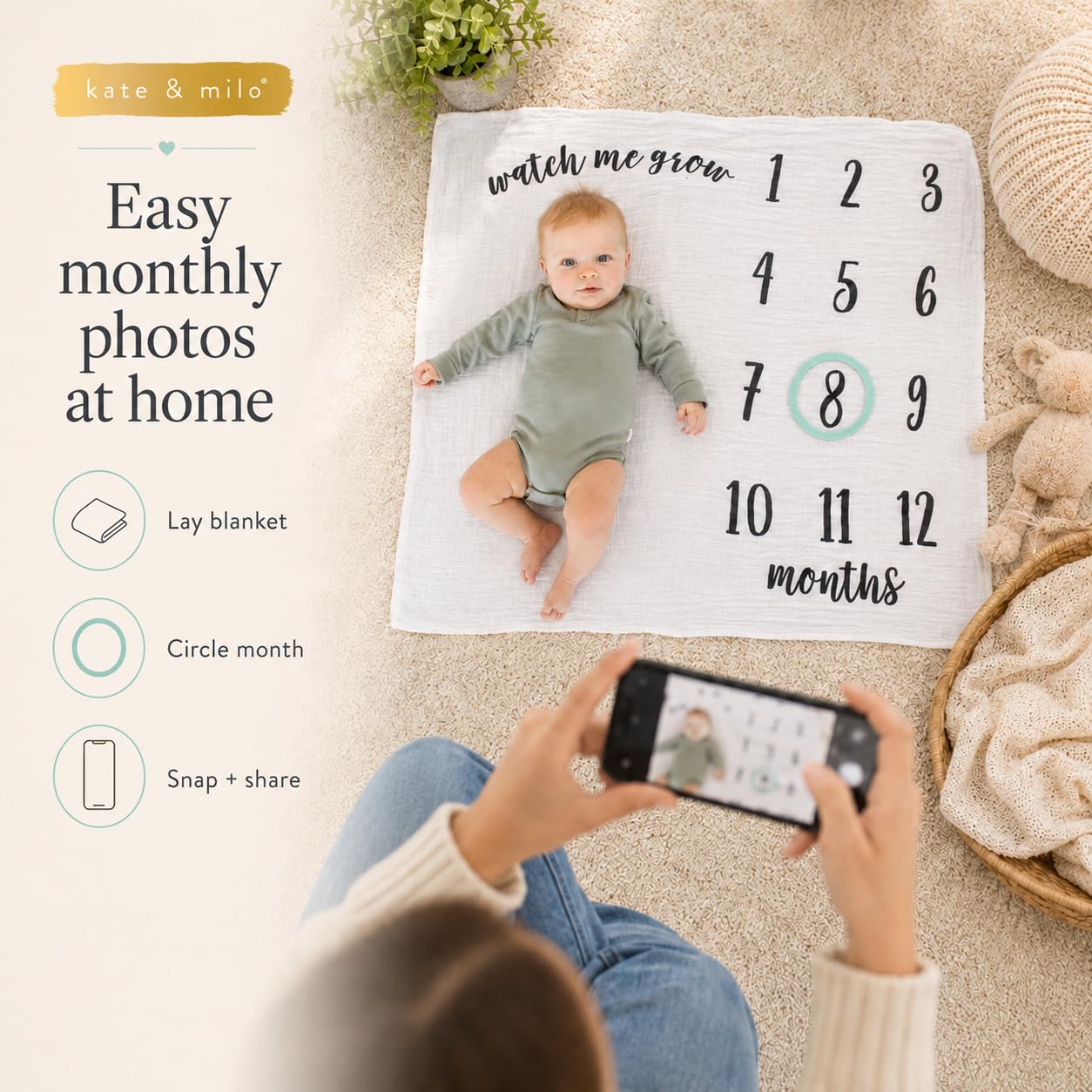
Kate & Milo Baby Milestone Blanket with Monthly Markers, Muslin Cotton Infant Photo Prop Blanket for Newborn Photos and First Year Milestones
- Muslin Cotton
- Modern Baby Milestone Blanket: This all-in-one milestone prop makes the best baby shower gift. Our timeless me
- Perfect for Photo Sharing: This newborn milestone blanket is designed for effortless photo sharing, you’ll lov
5. Nutrition and Health: Fuelling a Growing Brain and Body
At 9 months, most babies are established on solid foods alongside breast milk or formula, and the nutritional landscape shifts meaningfully toward the end of the first year.
Breast milk or formula remains central
The WHO and AAP both recommend breast milk (or suitable formula) as the primary drink for the full first year, complemented by a growing variety of solid foods from around 6 months. Breast milk or formula should still contribute the majority of calories at 9 months, with solids gradually increasing. For precise volume guidance, the article on how much breast milk or formula your baby needs covers this in detail.
Introducing texture and self-feeding
By 9 to 10 months, most babies are ready for:
The NHS and AAP both recommend exposing babies to a wide variety of flavours and textures in this window; early variety is associated with reduced fussiness later.
Iron matters
Iron requirements rise sharply at 6 months as foetal iron stores deplete. Iron-rich foods (meat, lentils, fortified cereals, leafy greens with a vitamin C source) should appear at most meals.

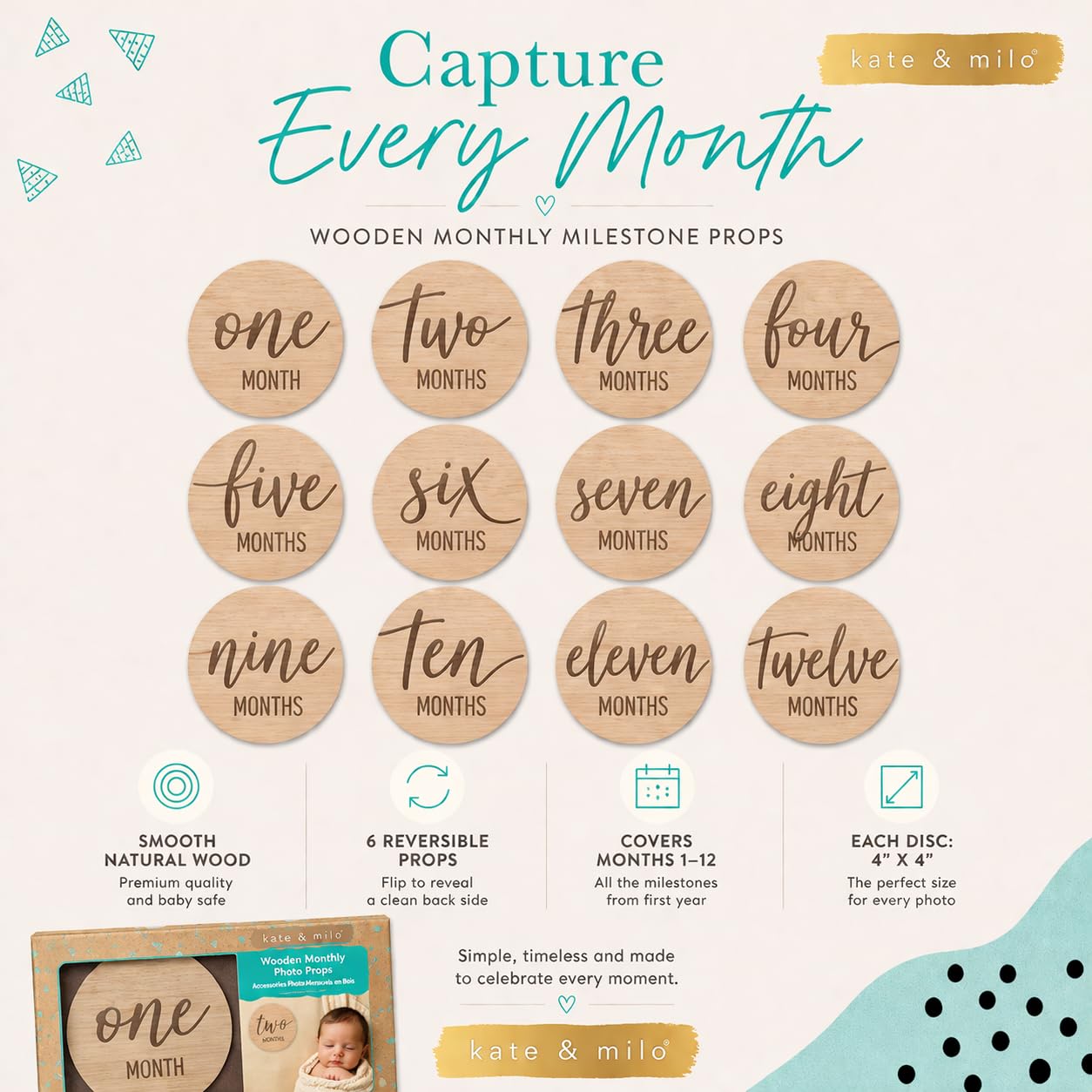
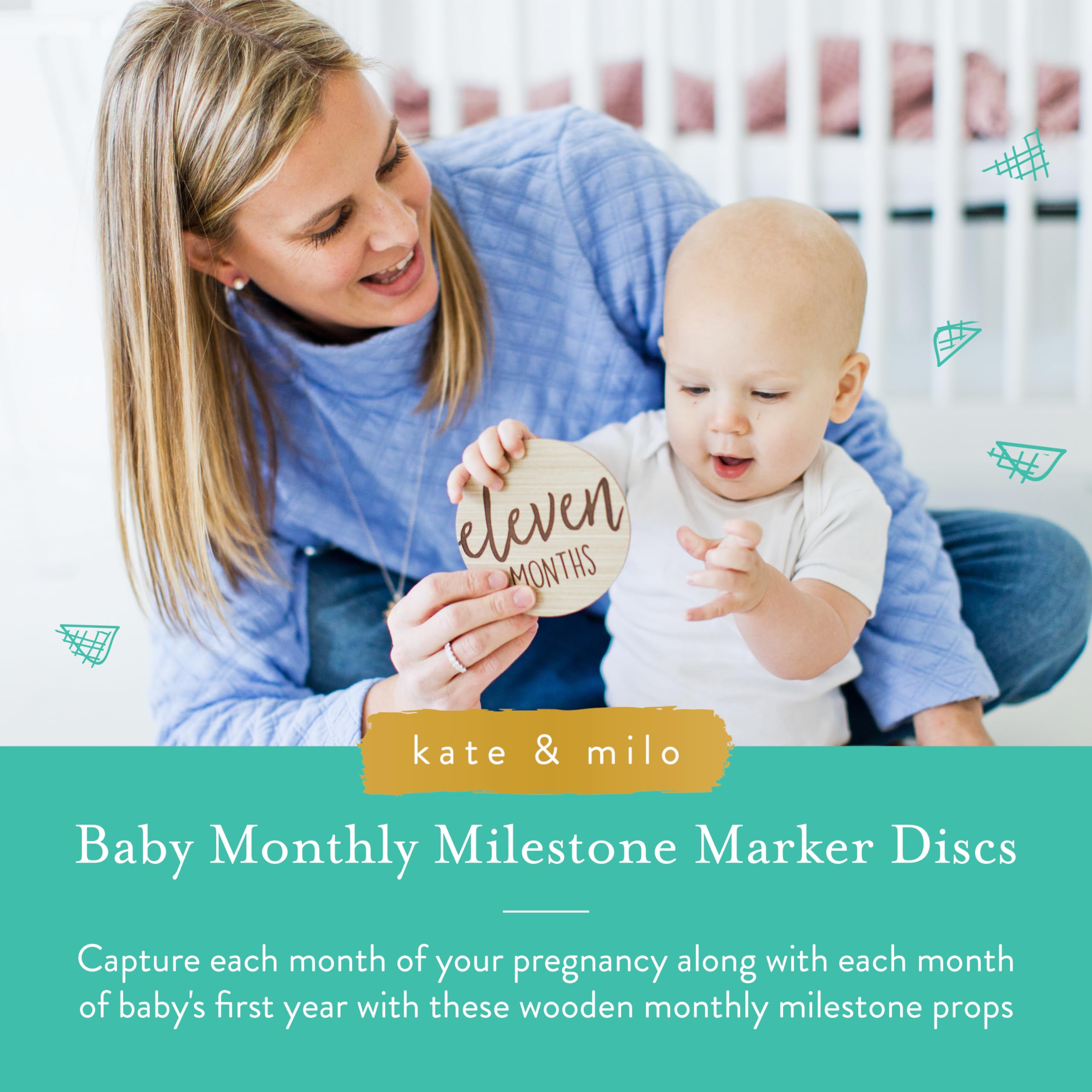


Kate & Milo Baby Monthly Milestone Marker Discs - Classic Cursive Script Wooden Discs with Reversible Photo Props for Baby Announcement and Milestones, Gender-Neutral Gift for Newborn Boy and Girl
- Capture Precious Moments: Track your baby's monthly growth with Kate & Milo’s Baby Milestone Marker Discs. Per
- Reversible and Stylish: This set includes six double-sided wooden milestone discs featuring beautifully contra
- Ideal for Social Sharing: Use these charming discs for your baby’s monthly photoshoots and share your little o
6. Tracking Milestones: Making It Practical and Meaningful
Milestone tracking does two things: it helps you celebrate how far your baby has come, and it creates a useful clinical record that your paediatrician will genuinely appreciate at well-baby visits.
Monthly photo documentation
A consistent monthly photo ritual, same spot, same prop, different month, is the simplest way to visualise your baby's growth trajectory. At 9 months versus 12 months, the physical difference alone is striking, but if you capture facial expression and posture too, you can also see emerging personality.
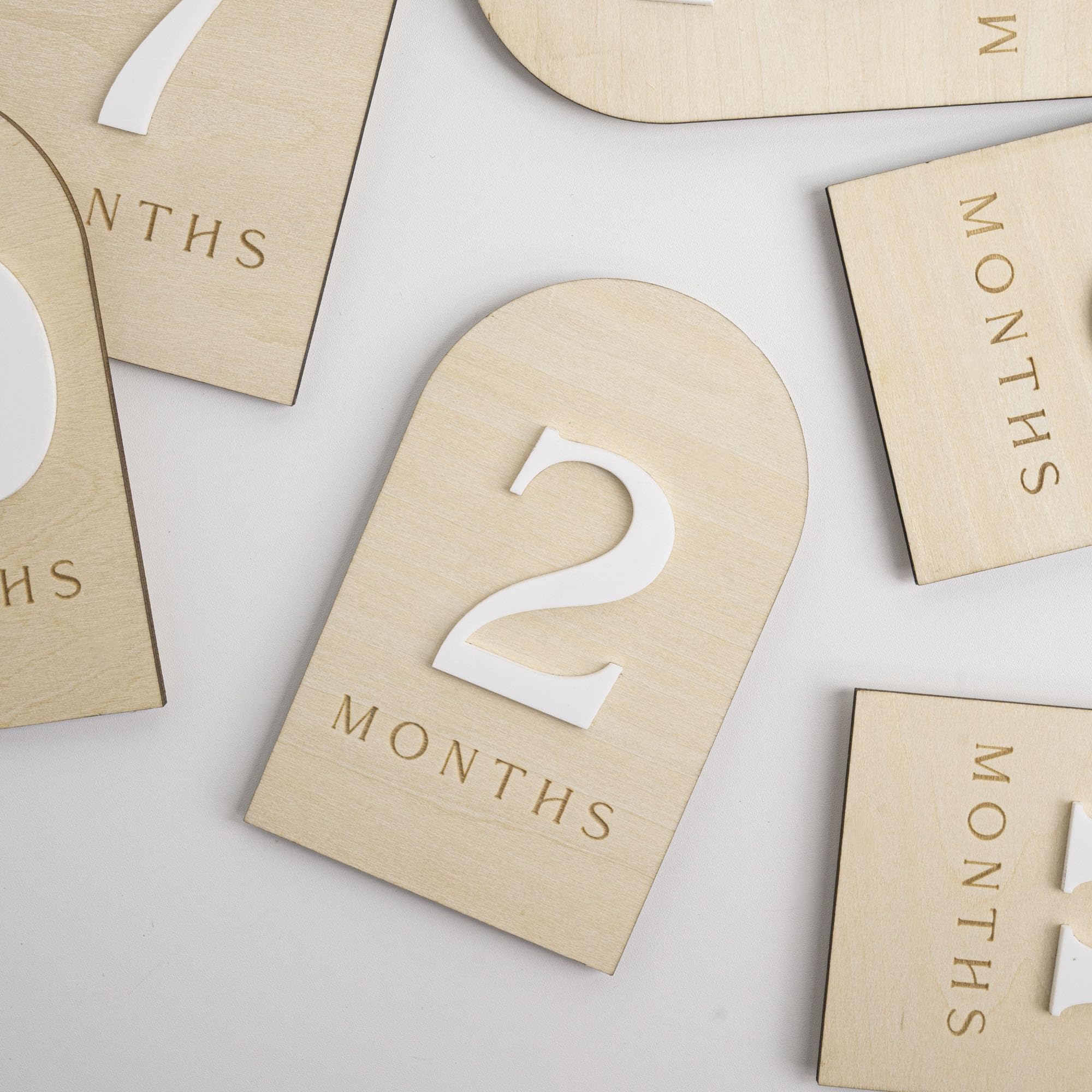
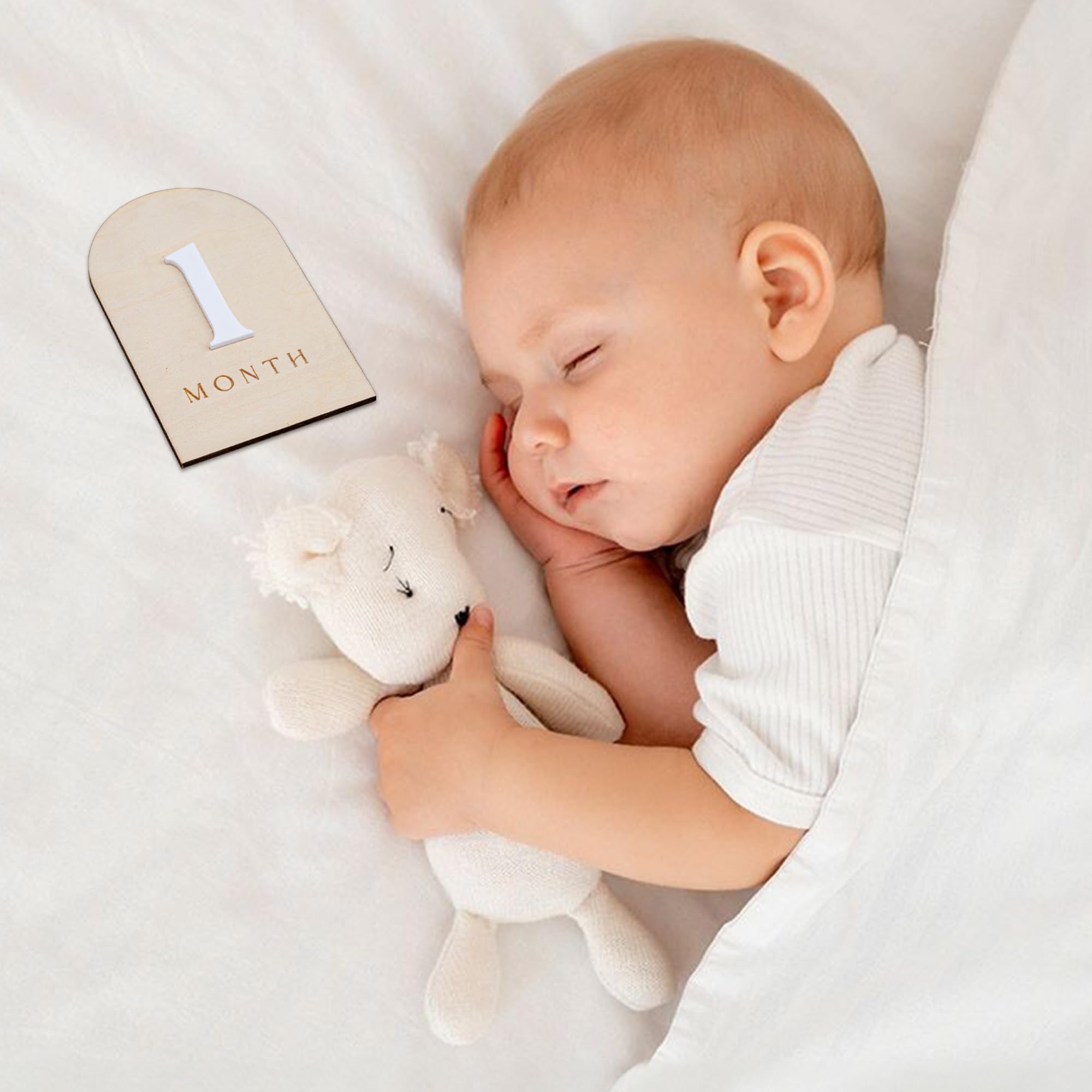
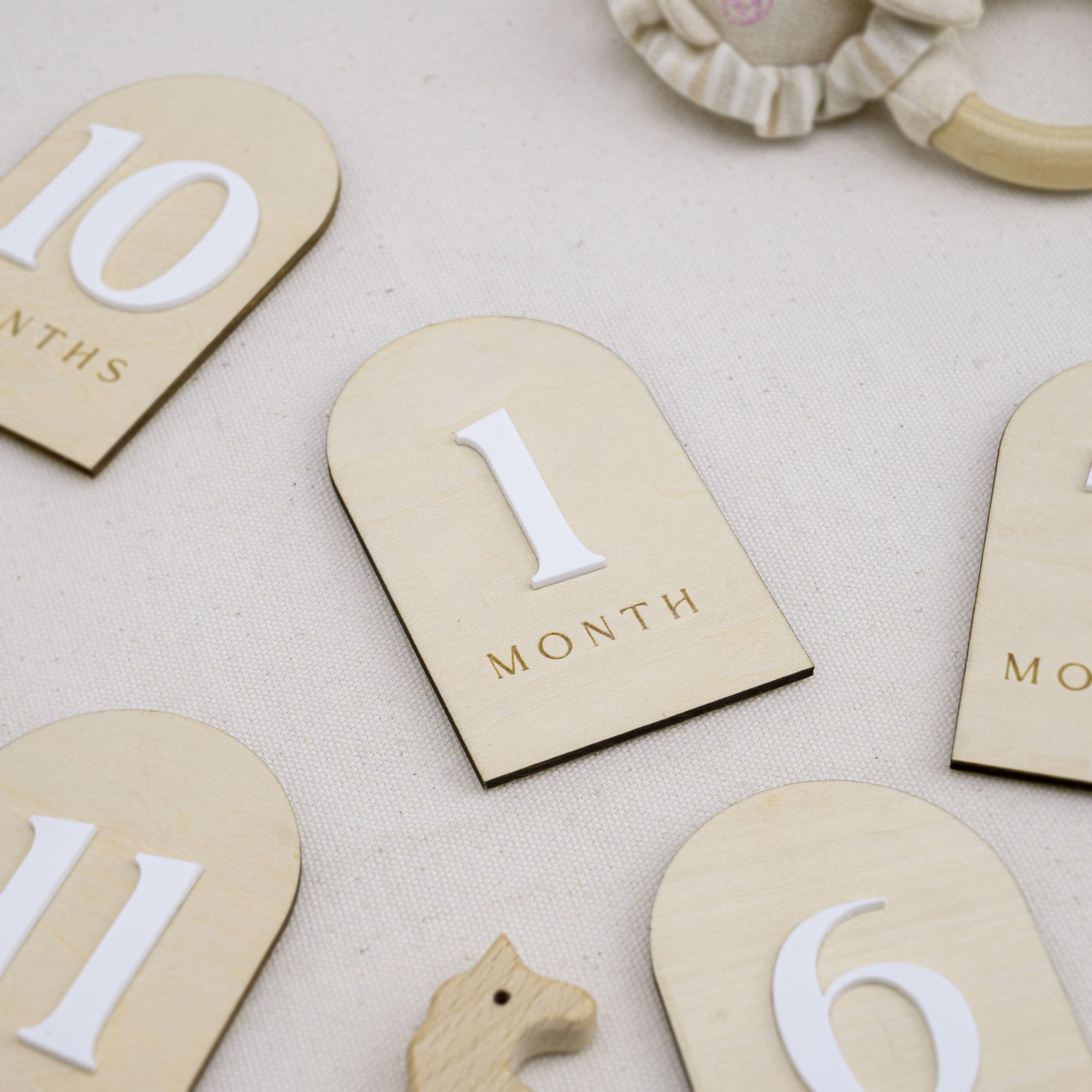
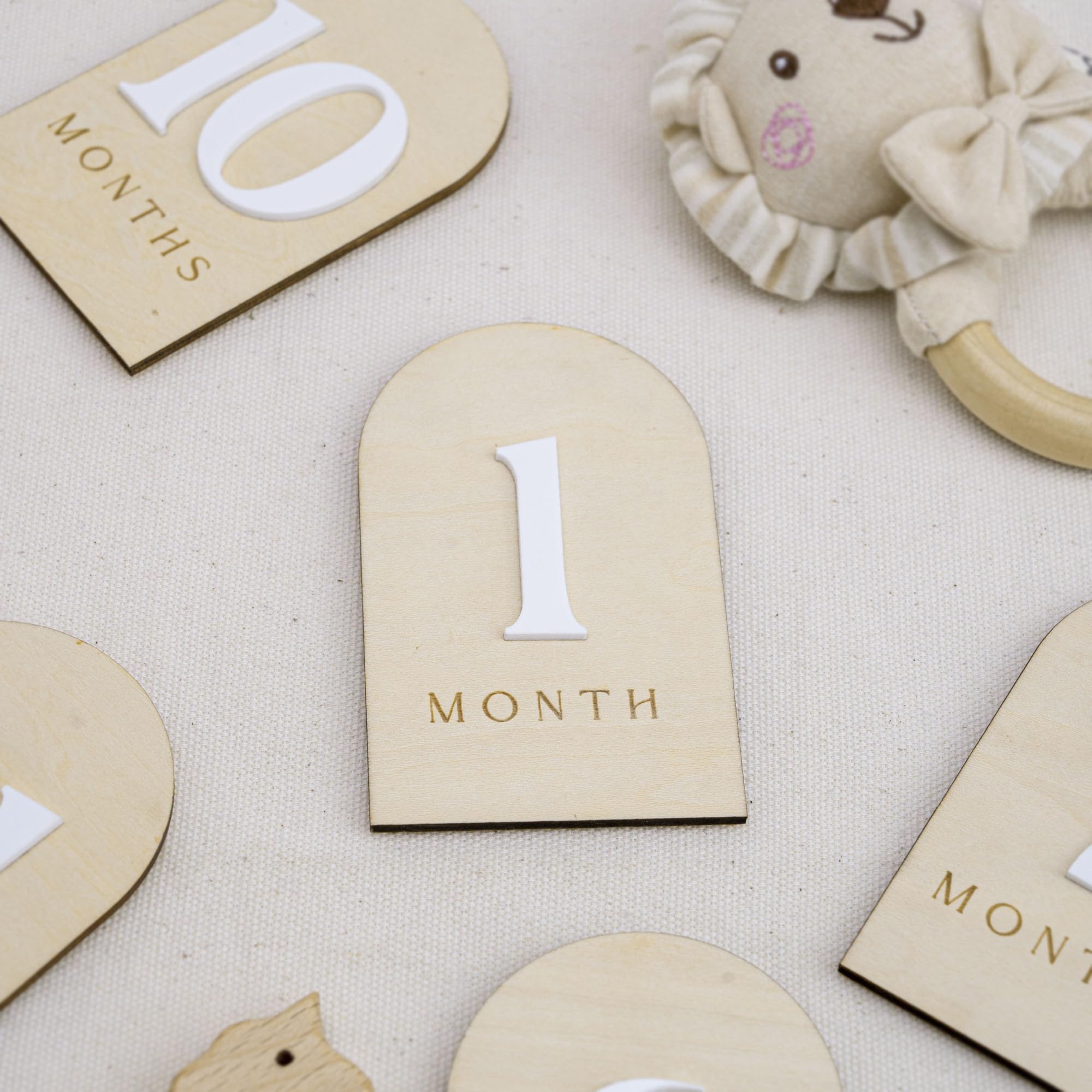
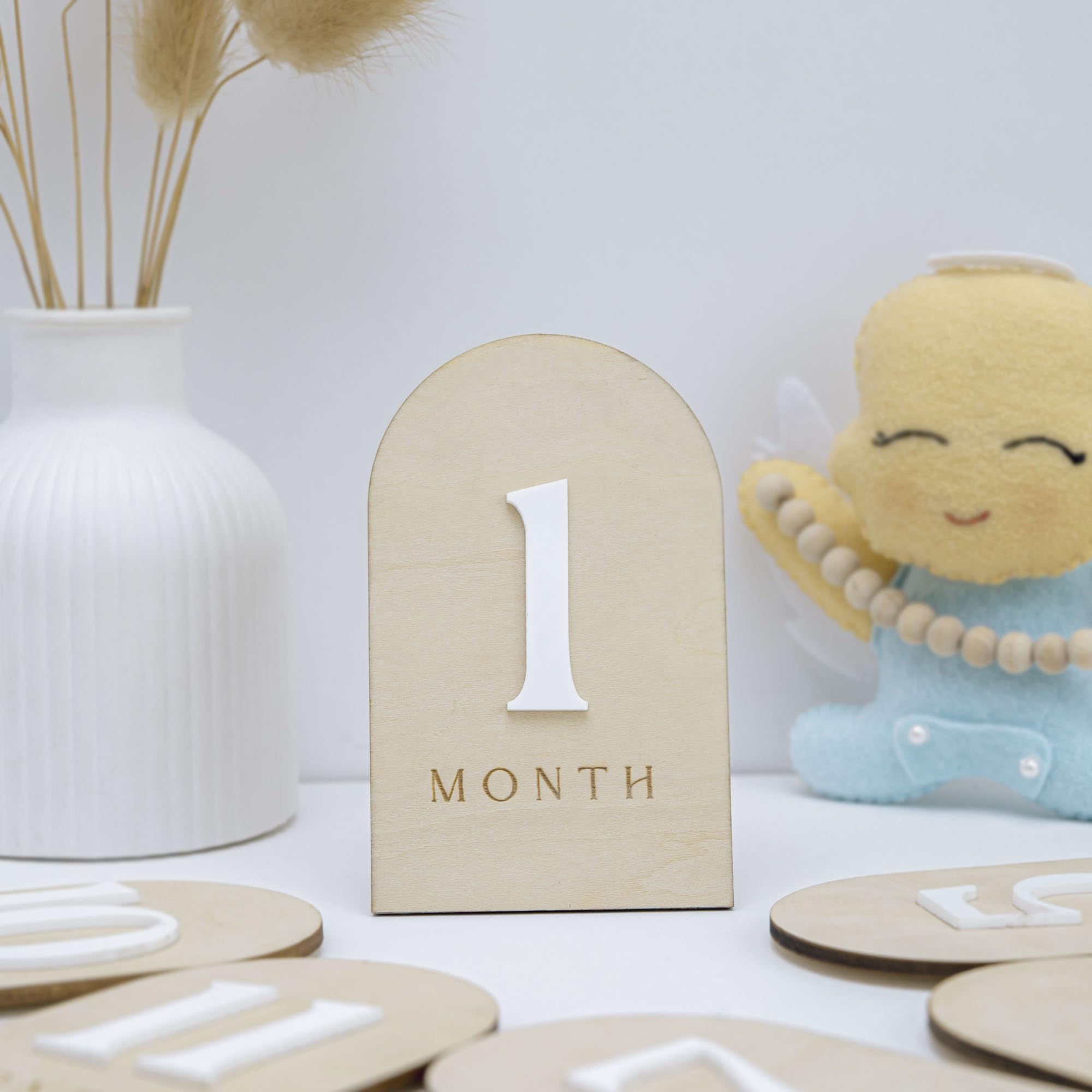
Baby Monthly Milestone Photo Sign, Wooden Floral Design with Pink Bows, Baby Girl Growth Tracker, 1-12 Months (Arch)
- DESIGN FEATURES: Beautiful wooden floral-shaped milestone sign with delicate pink bow accents and white flower
- MONTHLY TRACKING: Includes numbers 1-12 for documenting each month of baby's first year with elegant script te
- PHOTO READY: Perfect photo prop for professional-quality milestone pictures, featuring a natural wood finish a
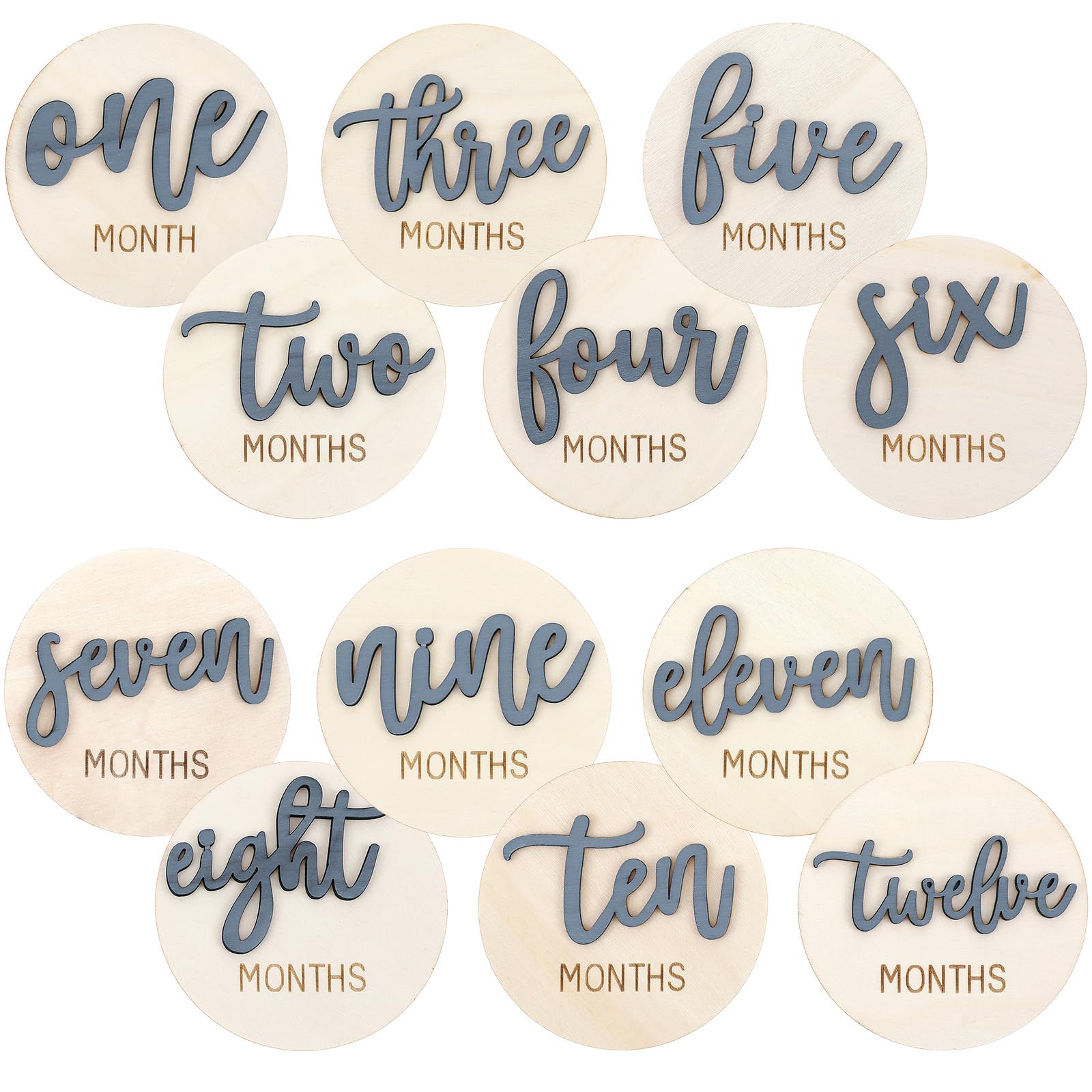
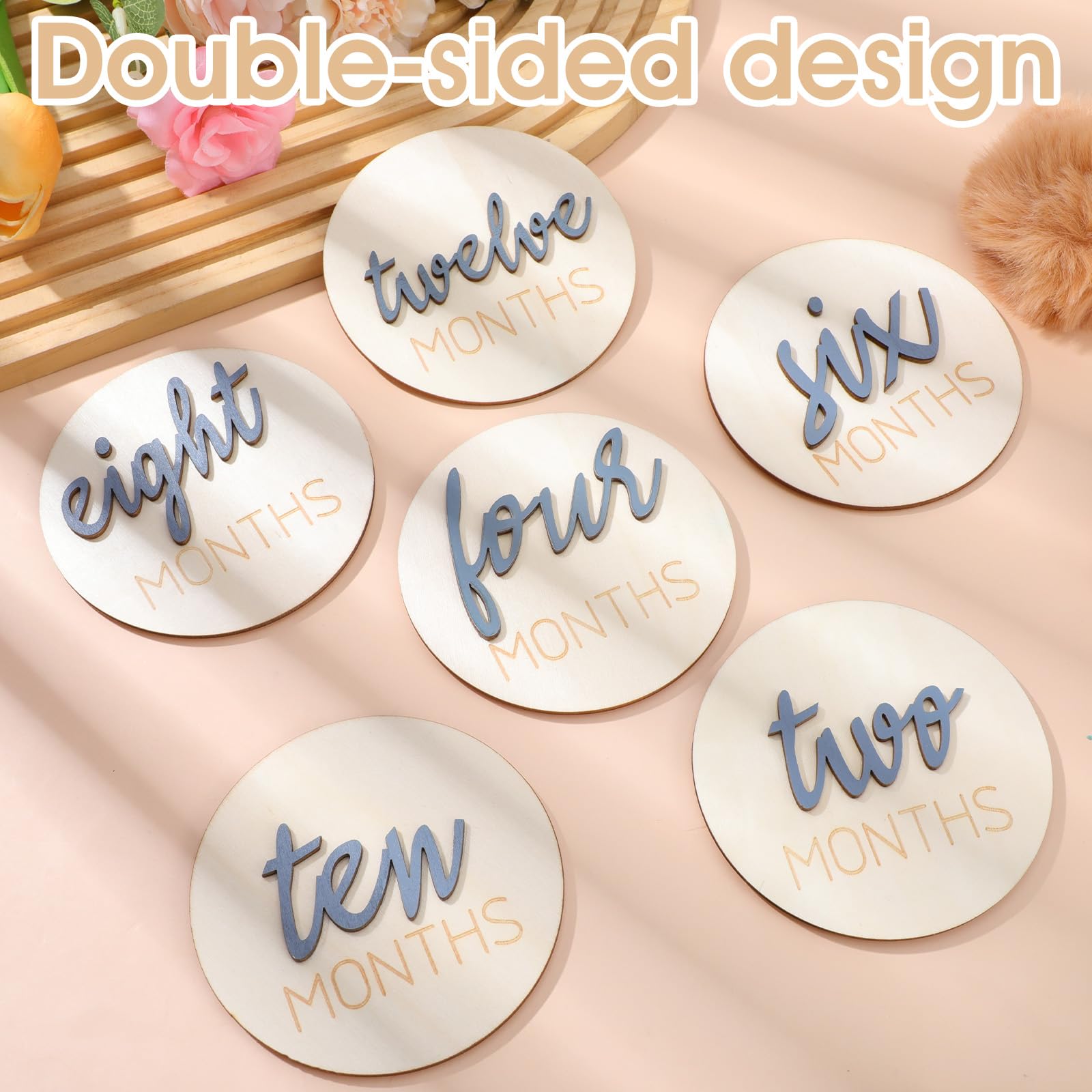
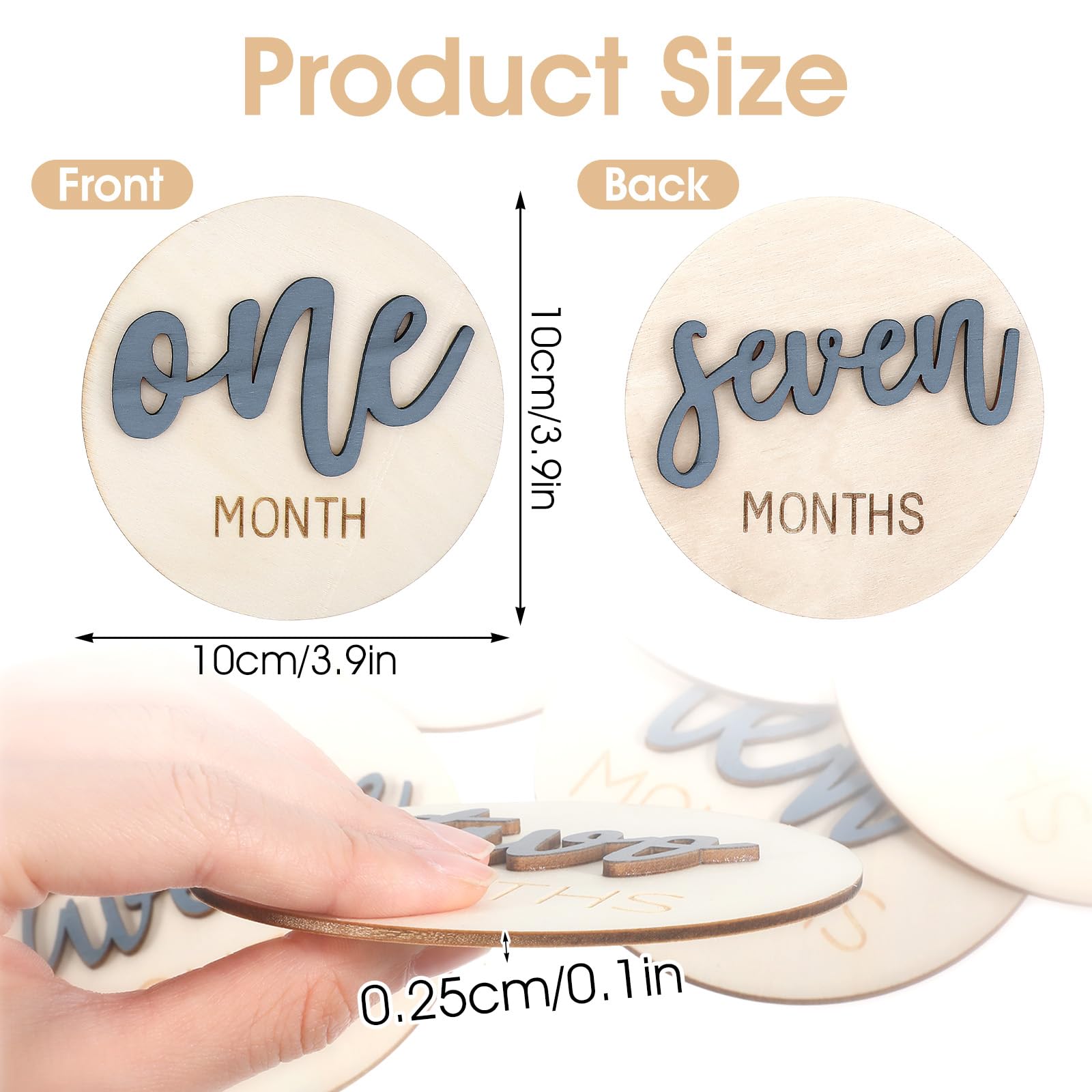
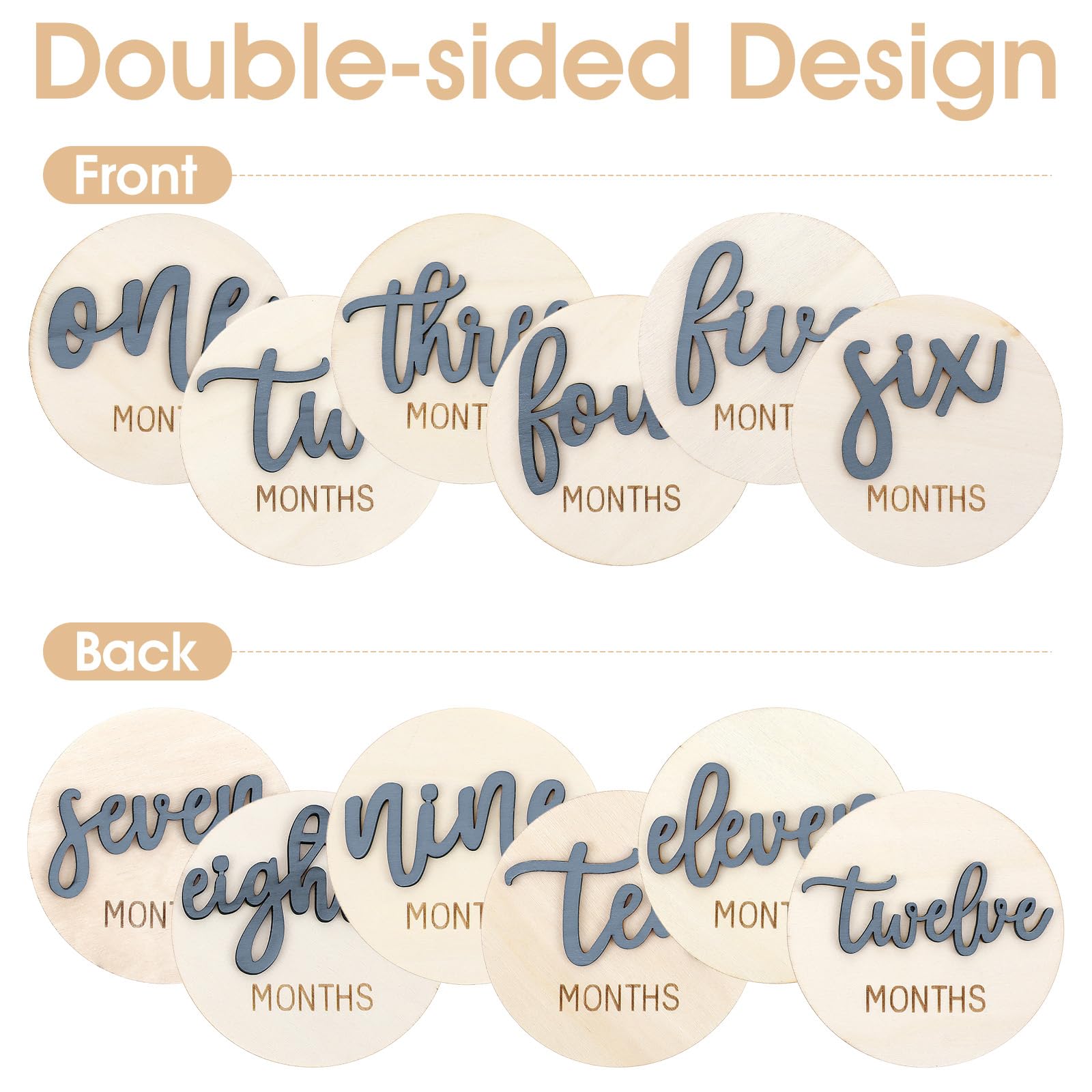
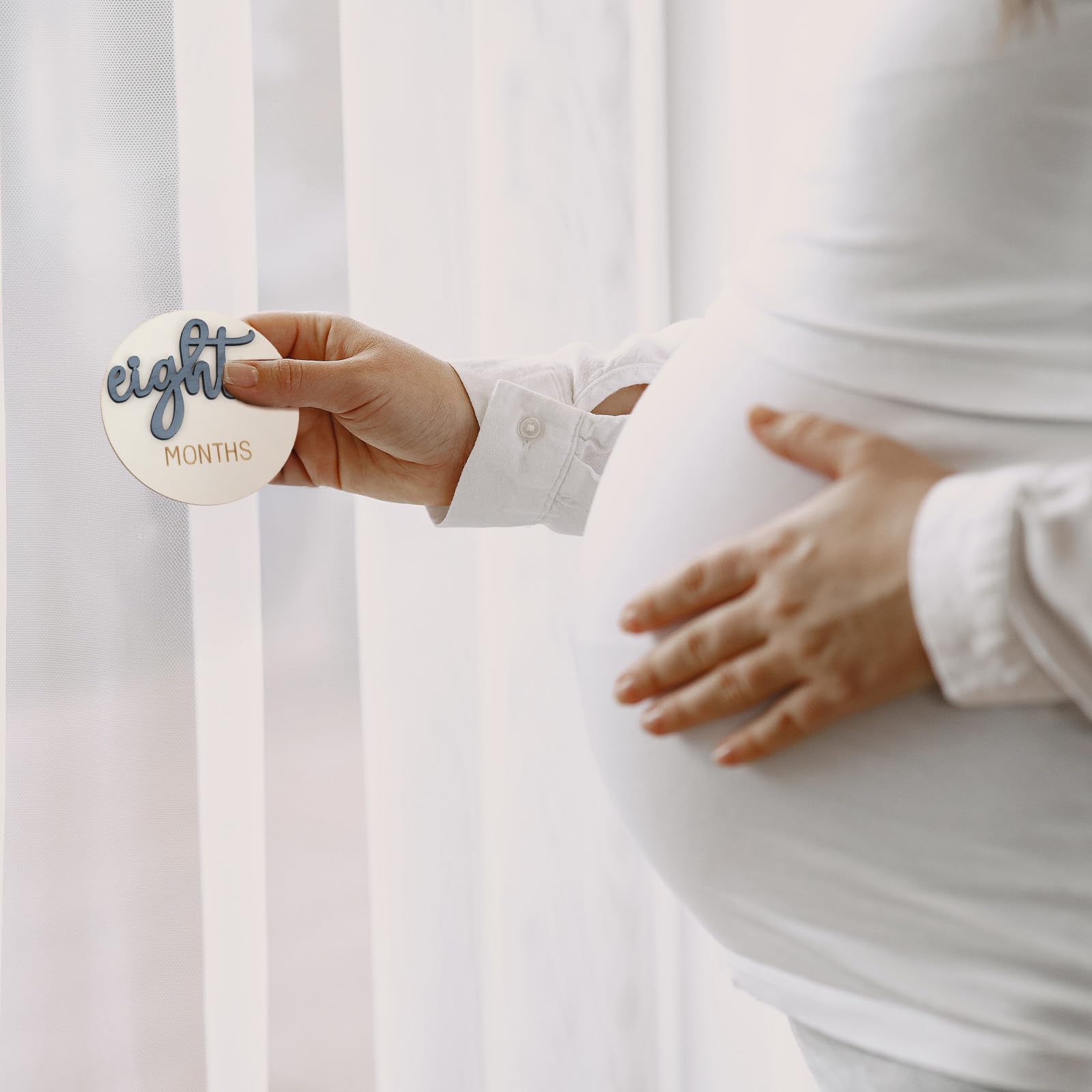
6 PCS Baby Monthly Milestone Cards, Double Sided Wooden 3D Milestone Cards Signs for Photos Announcement Sign 1-12 Months Photography Photo Newborn Keepsake Gift(Blue)
- 【Complete 1-12 Month Set】Capture every precious first year moment with our PEOVLVN baby monthly milestone sign
- 【Premium & Safe Material】Crafted from high-quality, natural wood with a smooth, sanded finish, these baby mont
- 【Artistic Double-Sided Design】Maximize value and variety! Each of the 6 baby milestone cards features two dist
What to note beyond photos
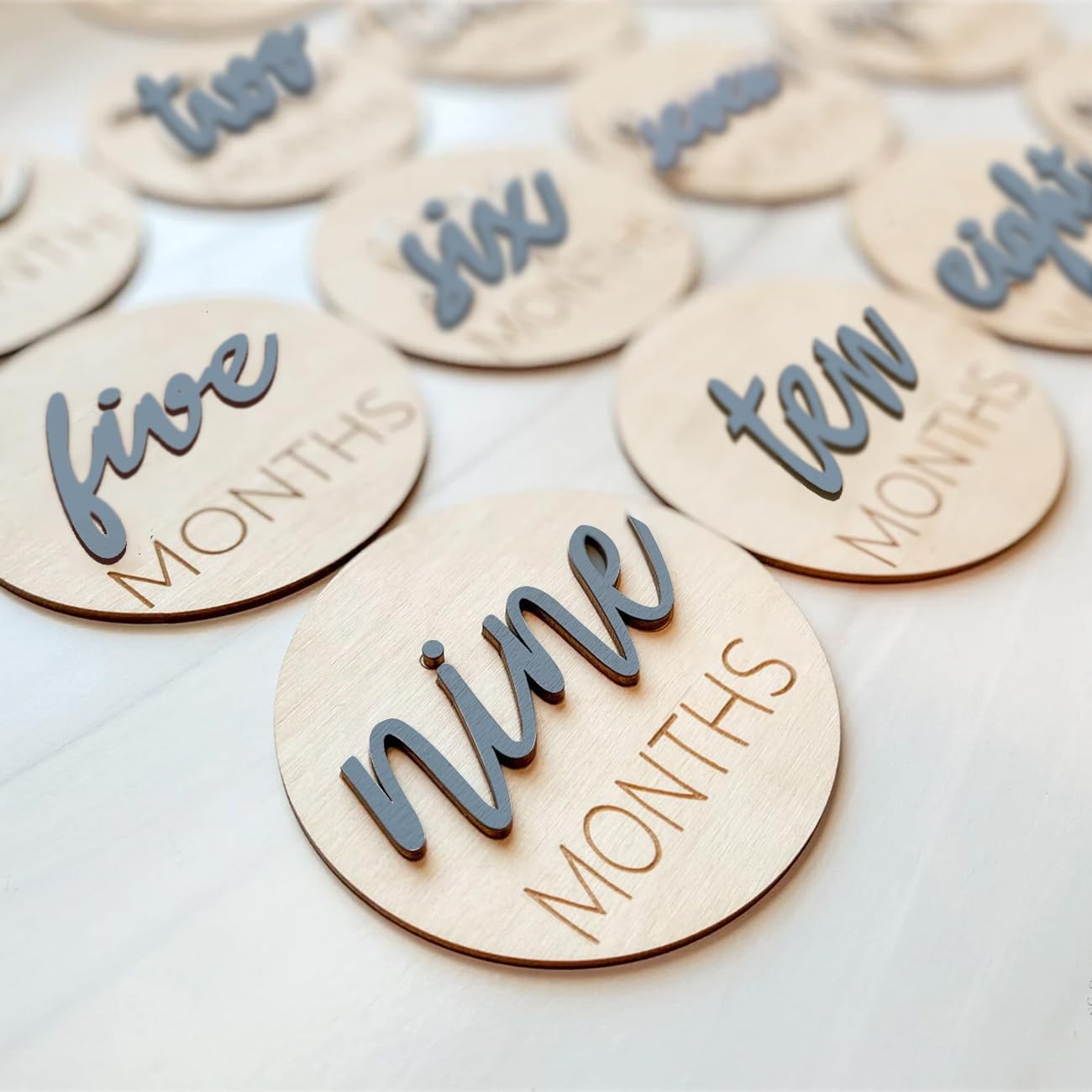
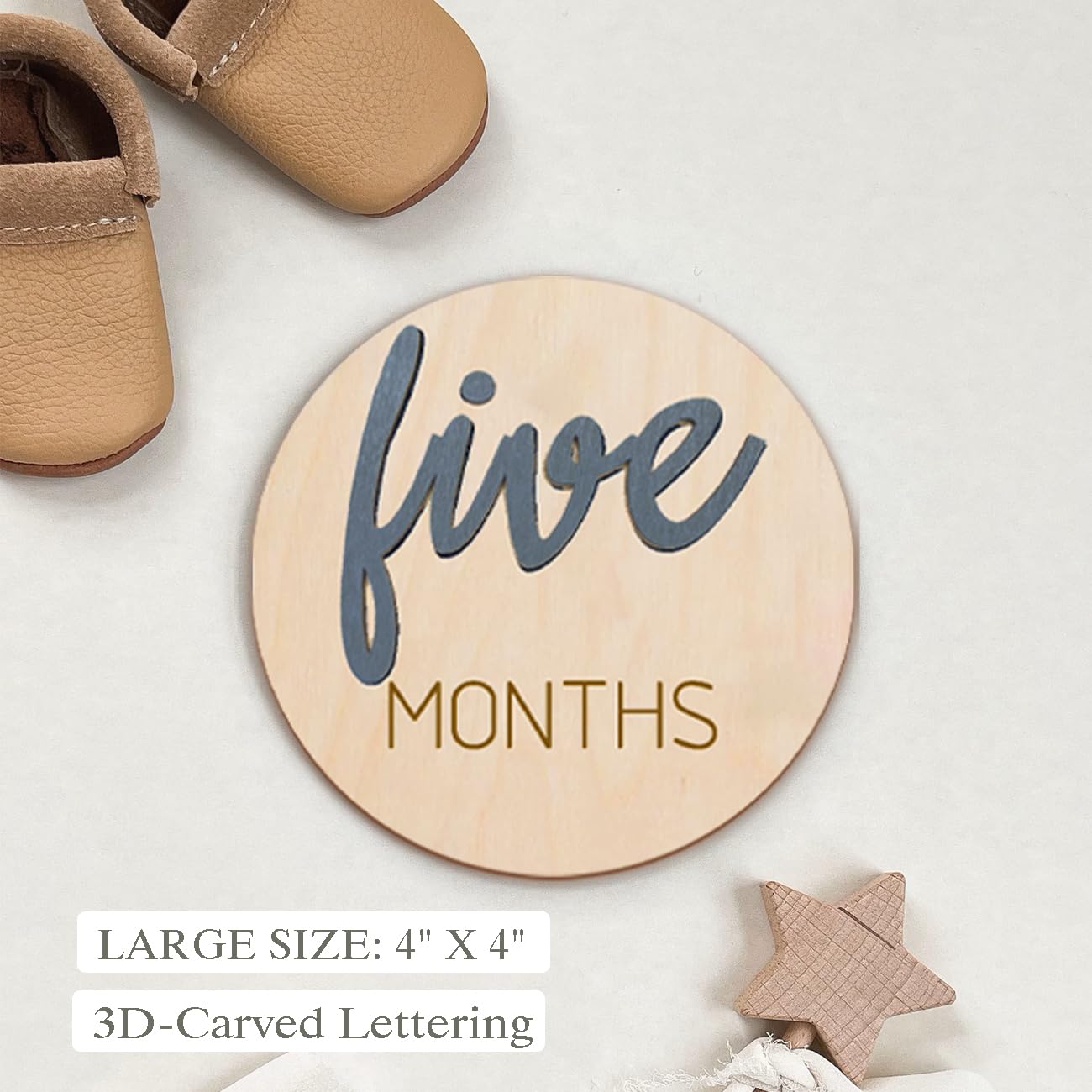
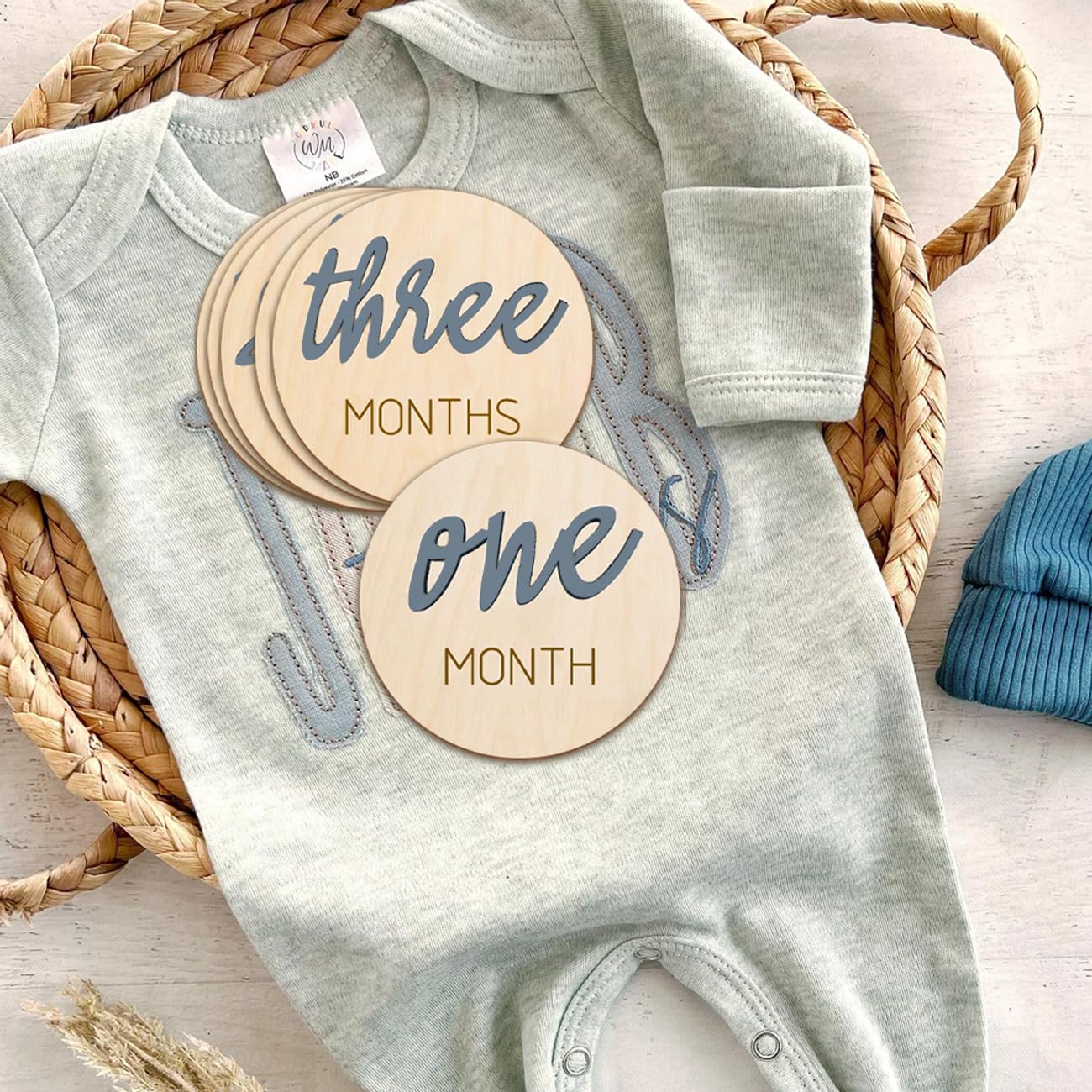

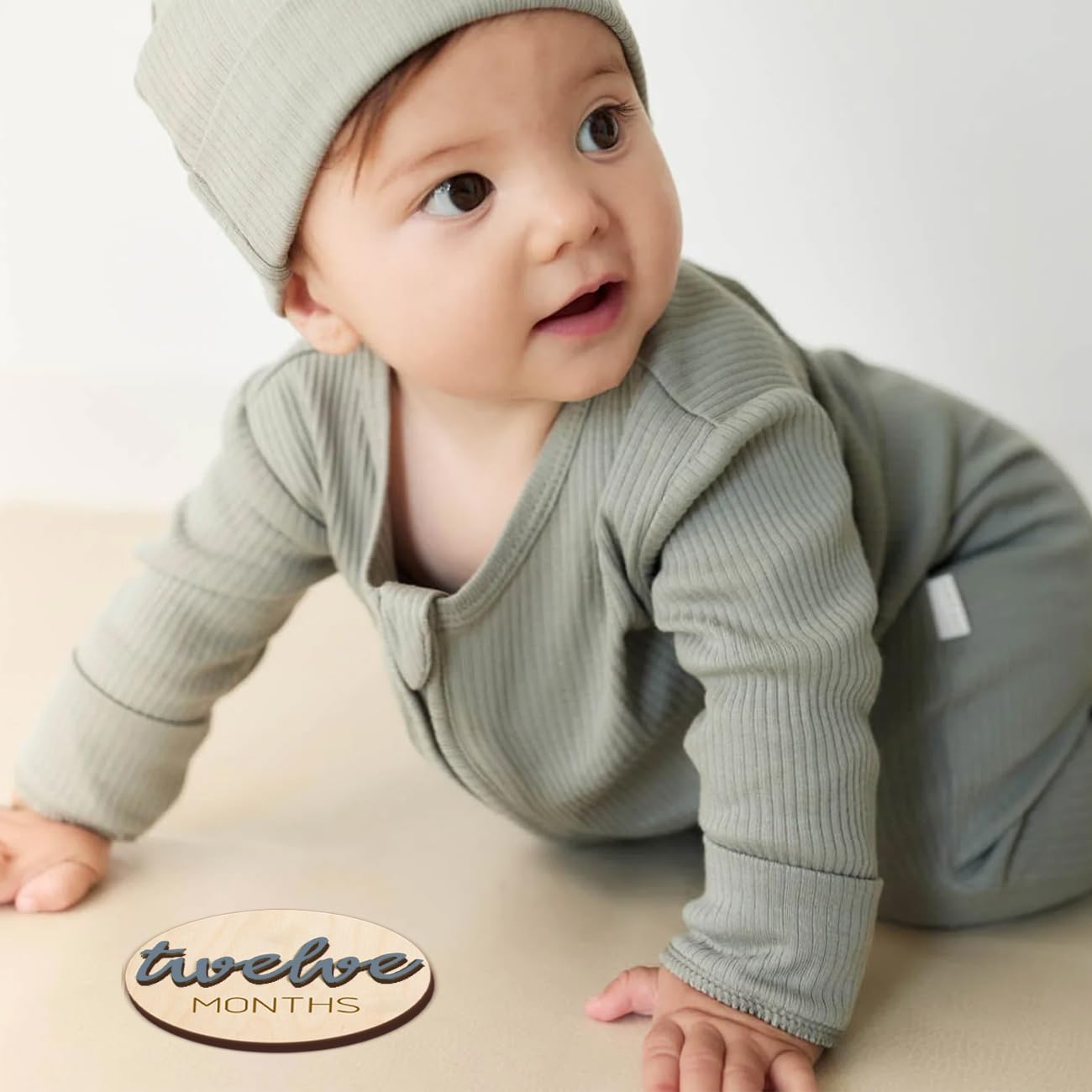
Baby Monthly Milestone Markers Disc, Wooden 3D Milestone Cards for Photos, Baby Announcement Sign,Slate Blue, 1-12 Months, 4 Inches in Size.
- High-Quality Wooden Material: This wooden 3D monthly milestone marker disc is crafted from premium wood, ensur
Milestone Tracking Options Compared
| Tracking Method | Best For | Key Benefits | Main Drawbacks | Recommended Product | Price Range |
|---|---|---|---|---|---|
| Wooden disc markers (monthly) | Monthly photo shoots | Durable, gender-neutral, reusable | No written journalling space | Kate & Milo Milestone Discs | $7–10 |
| Reversible wooden discs (double-sided) | Parents who want variety in photos | 12 months covered with 6 discs | Smaller surface area | PEOVLVN Milestone Cards | $6–7 |
| Arch/floral milestone sign | Baby girl-themed monthly shots | Decorative keepsake piece | Single design, less versatile | TTMerriwood Arch Sign | $9–10 |
| Slate blue disc set | Modern minimalist aesthetic | Classic look, 4-inch easy-to-read size | Single colour option | eoscasely Milestone Discs | $9–10 |
| Milestone blanket | Tracking growth in scale | Shows size change month-to-month | Bulkier to store and use | Kate & Milo Milestone Blanket | $7–8 |
| Double-sided board with stickers | Parents who want holidays captured too | Includes "Hello World" and holiday boards | Stickers are single-use | cephira Milestone Maker Discs | $9–10 |
Expert Insights
Your baby's journey from a 9-month-old who is just beginning to pull up on the sofa to a 1-year-old who might be cruising, waving, and saying "dada" with intention is remarkable by any measure. Every milestone in this guide is a window into how your baby is building the neural architecture they will use for the rest of their life. You don't need to accelerate it or engineer it; you mainly need to show up, respond, talk, play, and watch. The moments you capture along the way, with a quick monthly photo and a wooden disc marking month 10 or month 12, become the family record of something that cannot be repeated.
Save this guide, share it with your co-parent or carer, and bring your milestone notes to every well-baby appointment. You are doing better than you think.
Sources & References
- Centers for Disease Control and Prevention (CDC). "Learn the Signs. Act Early: Developmental Milestones." 2023. https://www.cdc.gov/ncbddd/actearly/milestones/index.html
- American Academy of Pediatrics (AAP). "Developmental Milestones: 9 Months." HealthyChildren.org. 2023. https://www.healthychildren.org/English/ages-stages/baby/Pages/Developmental-Milestones-9-Months.aspx
- American Academy of Pediatrics (AAP). "Developmental Milestones: 12 Months." HealthyChildren.org. 2023. https://www.healthychildren.org/English/ages-stages/baby/Pages/Developmental-Milestones-12-Months.aspx
- World Health Organization (WHO). "Infant and Young Child Feeding." 2023. https://www.who.int/news-room/fact-sheets/detail/infant-and-young-child-feeding
- Center on the Developing Child, Harvard University. "Serve and Return." 2023. https://developingchild.harvard.edu/science/key-concepts/serve-and-return/
- Royal College of Speech and Language Therapists (RCSLT). "Early Communication Development." 2022. https://www.rcslt.org
- NHS. "Your baby's development: 9 to 12 months." 2023. https://www.nhs.uk/conditions/baby/babys-development/
- National Institute of Child Health and Human Development (NICHD). "Infant and Toddler Development." 2022. https://www.nichd.nih.gov
Frequently Asked Questions
Is it normal that my 12-month-old isn't walking yet?
How many words should my baby say at 12 months?
My baby suddenly hates being left with grandparents. What changed?
When should I call the doctor about developmental delays?
How much should my 9 to 12-month-old eat?
Is screen time okay for my 9 to 12-month-old?
What does "social referencing" mean and why does it matter?
Was this helpful?
Thanks — your feedback helps us pick what to write next.